
Reviewed · HERCULANEUM TOURS
Pompeii: Small-Group Tour of Pompeii and Herculaneum
What makes Pompeii plus Herculaneum such a great choice is the contrast. You see two Roman cities from the same eruption, then compare what volcanic ash preserved in one place and what mud preserved in the other, with an archaeologist guide bringing it to life, like Sergio, Diego, or Alfredo.
I especially like two things. First, the archaeologist guide approach, where you hear why each wall, street, and object matters, not just what it looks like. Second, it is a small-group walk capped at 20 people, so you can actually ask questions and keep moving at a human pace, even with crowds.
One thing to consider: it is a long day in the ruins. The Pompeii break is about 30 minutes, and if you want a proper sit-down lunch, you may feel the time squeeze.
Key highlights worth caring about
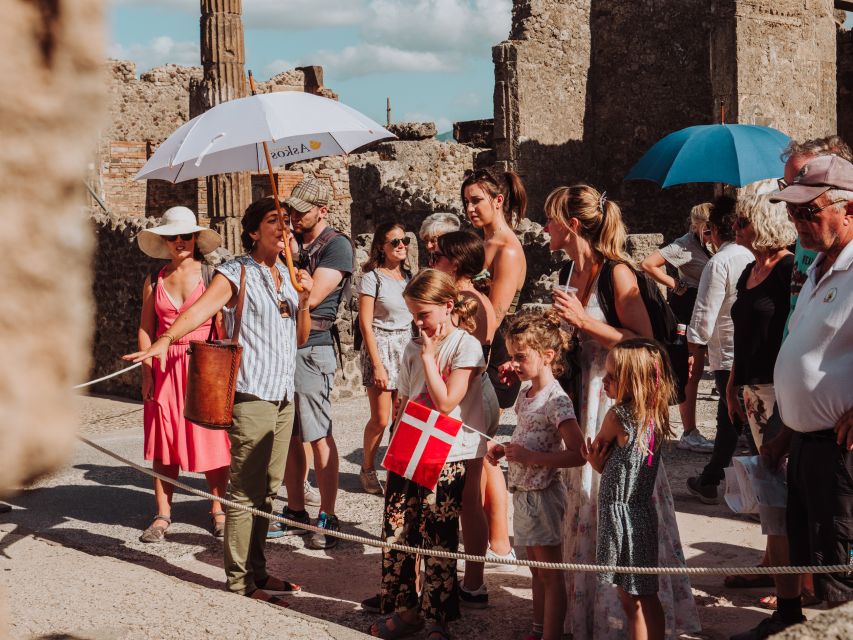
- Archaeologist-led explanations that turn ruins into real Roman daily life, often delivered with real humor (Sergio, Diego, Antonio, and others got praised for this)
- Small group size up to 20 for easier navigation through Pompeii and more focus in Herculaneum
- Headsets provided for groups larger than 10, which helps a lot in busy sections
- Skip-the-line entry for both sites, so you spend more time inside the archaeological zones
- Pompeii to Herculaneum by train on the Circumvesuviana, a simple transfer that keeps the day efficient
- Herculaneum’s preservation: second floors, carbonized wood, and intact paintings and mosaics make the city feel close to “then”
Meeting at Porta Marina Inferiore, then stepping into Pompeii’s streets
This tour starts right at Pompeii, at Piazza Porta Marina Inferiore, 1. Meet at the left side of the Pompeii entrance called Porta Marina Inferiore, near the Arte bus stop, and look for a sign that says Askos Tours.
Getting this first step right matters. A lot of Pompeii visitors wander around for too long trying to figure out which gate is correct, and you lose precious time. If you arrive a bit early, you can spot the Circumvesuviana area nearby and then settle before the walk starts.
The tour runs in English (and Italian too), and you will be moving as a group. The good news is the format is simple: guided time in Pompeii, a short break, then the transfer, and another guided walk in Herculaneum.
More Herculaneum tours in Pompei Campania:
- Pompeii and Herculaneum: Guided Tour with an Archaeologist
★ 5.0 · 164 reviews - From Naples: Pompeii and Herculaneum VIP Tour with Lunch
★ 4.4 · 129 reviews - From Herculaneum to Pompeii: Audioguides + Entrance Tickets
★ 3.6 · 19 reviews
Pompeii guided walk for 2 hours, with context you can actually use
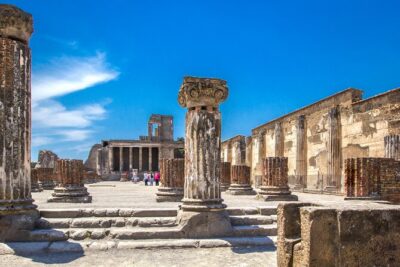
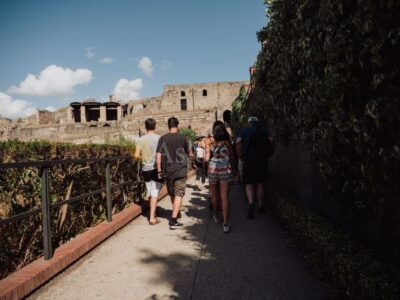
Pompeii is big, crowded, and easy to misunderstand without help. The best value here is that you are not left to decode everything on your own, because the guide explains what you are seeing as you walk.
Expect about two hours inside Pompeii with a focused route. The point is not to cover every corner, it is to help you understand key building types and everyday life. People often say the same thing in different words: without a guide, Pompeii can feel like ruins. With a guide, you start connecting streets to social life, and buildings to how people lived, worked, and spent time.
A standout theme in the tour style is how the guide frames the city’s systems. You get the sense of where people gathered, how households functioned, and what looks like decoration or “random stuff” is really part of daily habits. Several guides on this tour, including Diego and Paulo, are praised for answering questions quickly and clearly, with stories that are hard to get from signage alone.
You may also run into Pompeii’s more haunting material. One reason this site hits people so hard is the presence of dramatic displays tied to the eruption, including the plaster casts that help you picture what happened when the city died.
The 30-minute break in Pompeii, and how to plan for real food
After the Pompeii guided portion, you get a 30-minute break. This is enough time to use the restroom, grab something quick, and regroup, but it is not built for a slow lunch.
This is the most common practical complaint from people who love the tour. They want at least more time to eat properly and cool down indoors for a bit. If you are the type who needs a sit-down meal, I would treat lunch as a “snack-plus” plan here, and then plan for a proper meal after Herculaneum or back in your base.
What helps: eat earlier than you think you need to. If you wait until the last minute, the area can feel busy, and you end up standing rather than resting.
Circumvesuviana train transfer to Ercolano, a smooth change of scenery
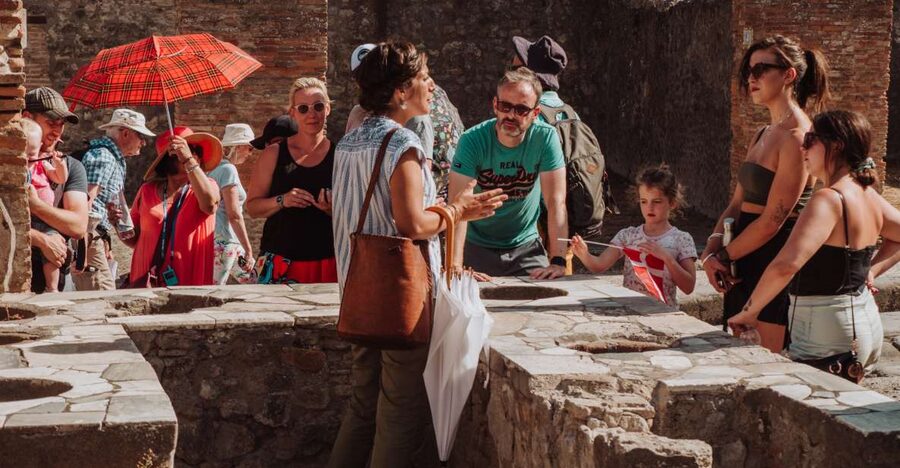
Between the two sites, you take the Circumvesuviana train from Pompeii toward Ercolano. The overview frames it as about 20 minutes, while the itinerary stretches it closer to 30 minutes, which makes sense if you factor in waiting time and boarding.
This transfer is part of the tour’s value. You are not trying to find a taxi, you are not stressing a long drive, and you get a clean handoff from Pompeii’s archaeology to Herculaneum’s mood.
It is also a mental reset. Pompeii can feel like a lot, especially on a first visit. The train ride gives you breathing room, and the guide often uses that time to set up what you will see next, so Herculaneum lands with more meaning instead of feeling like a second, similar walk.
If weather is hot, the train segment also helps break the day into two manageable halves.
More Pompeii tours and tickets in Pompei Campania:
- Pompeii: Entry Ticket and Guided Tour with an Archaeologist
★ 4.8 · 19,459 reviews - Pompeii: Small Group Tour with an Archaeologist
★ 4.8 · 12,264 reviews - Pompeii: Skip-the-Line Entrance Ticket with Audio Guide
★ 4.0 · 2,509 reviews - Naples: Pompeii and Mt. Vesuvius with Lunch and Wine Tasting
★ 4.5 · 2,454 reviews
Herculaneum in 2 hours, smaller city, better preserved details
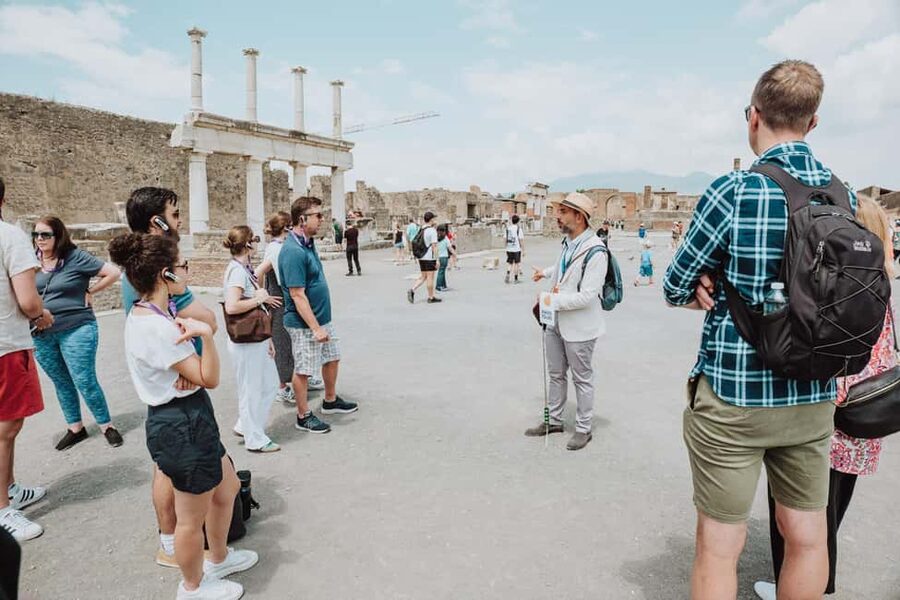
Then comes the reason Herculaneum deserves its own spotlight. Pompeii was buried under about four meters of ash, while Herculaneum was buried by an enormous mud avalanche, described as roughly 20 meters thick. The difference is why Herculaneum looks so intact, almost unfairly well preserved.
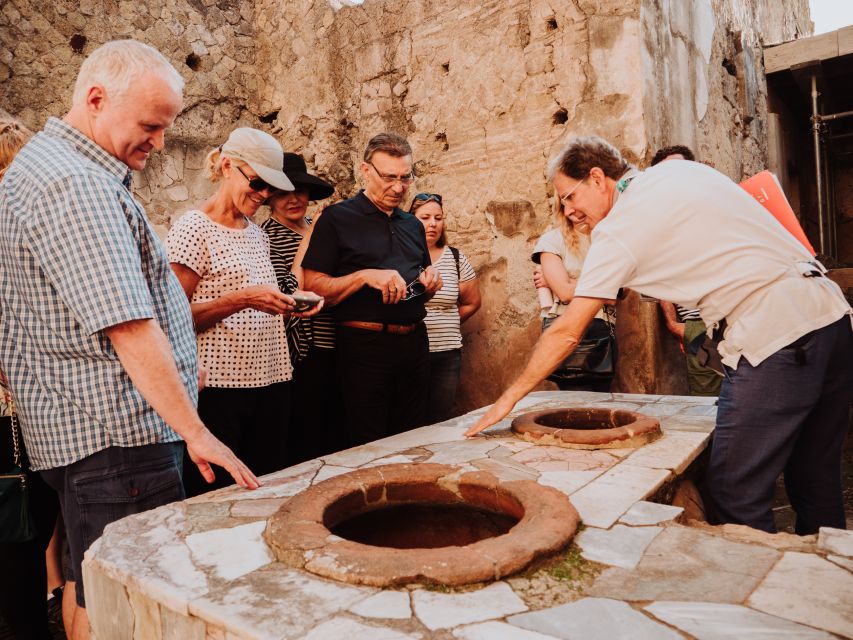
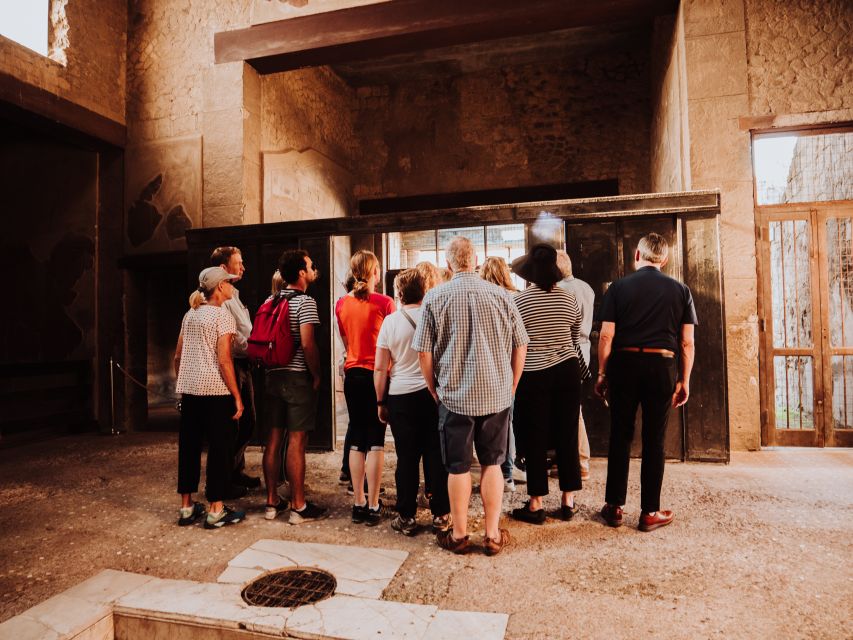
Your guided visit here lasts about two hours. And yes, it is smaller than Pompeii, but that is exactly why it can feel more vivid. Instead of constantly moving past partial walls, you get to see how the city’s upper levels, surfaces, and decorative elements survive.
What you are likely to notice when you walk:
- Second floors and the way rooms and levels connect, which helps you imagine daily movement through a home
- Carbonized wooden objects, which can feel shocking because you can sense material life, not just stone structures
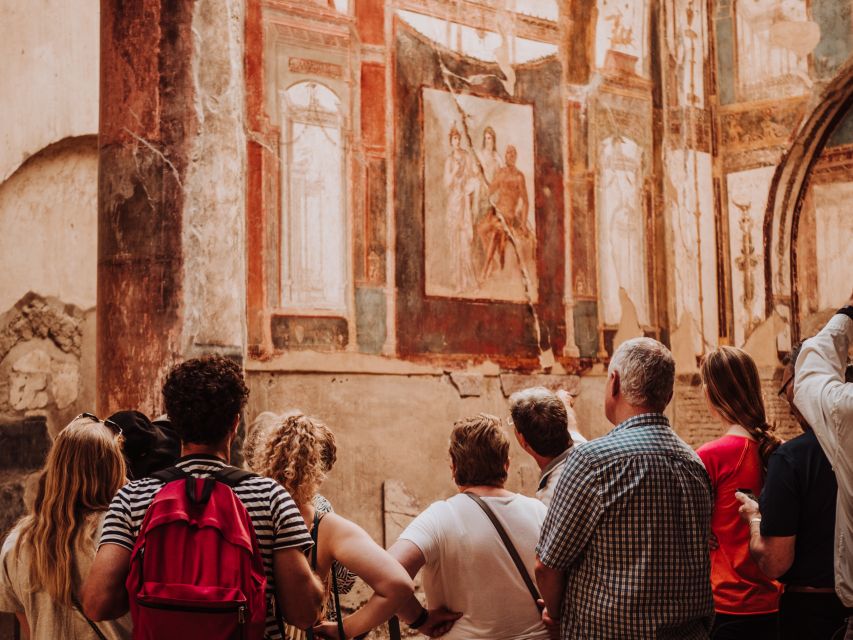
- Intact paintings and mosaics, the kind of details that make you stop and look twice
This is the “glimpse into lives” part that people remember. You get the sense of an opulent lifestyle, especially tied to the wealthier citizens of the Roman Empire. The guide helps you interpret what those visuals mean, not just where they are.
Guides on this tour, like Julia and Alfredo, are often praised for keeping the route organized and for staying flexible so the group can experience quieter sections even when the sites feel busy.
How small-group pacing changes what you notice
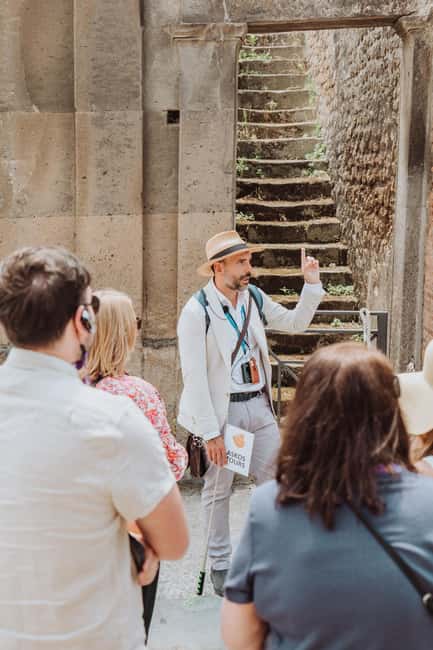
Pompeii and Herculaneum are crowded places by nature. What you are paying for with the small-group format is control: fewer people, less waiting, and less wandering.
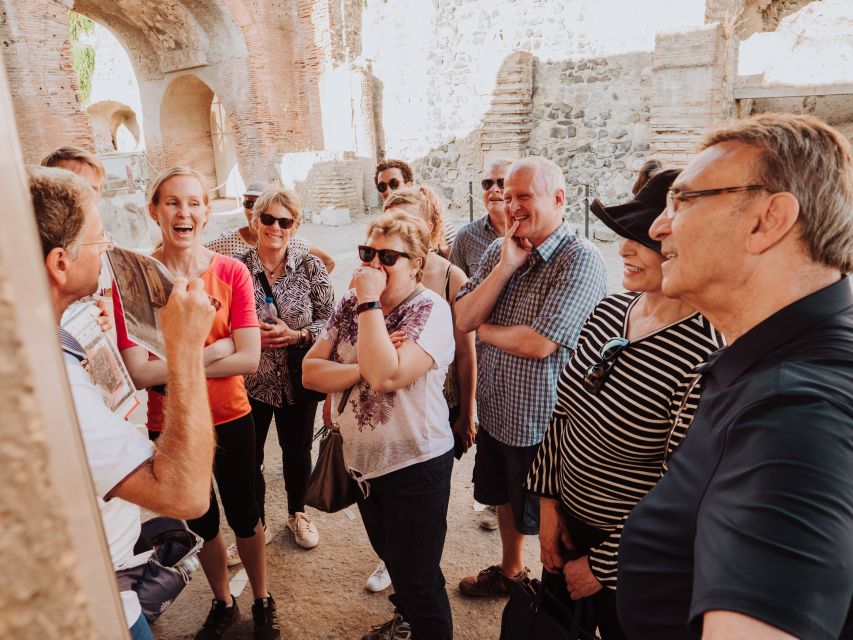
With up to 20 people, your group moves more like a unit. That matters when the guide wants you to stop and focus. It also matters for questions, because you can actually speak up instead of feeling like you are shouting into a wall.
Another practical win: headsets are provided for groups of more than 10 participants. That turns the experience from “I hope I can hear” into “I can follow the explanation even in noisy, busy sections.” This came up repeatedly as a helpful tool.
What makes the guides so important here
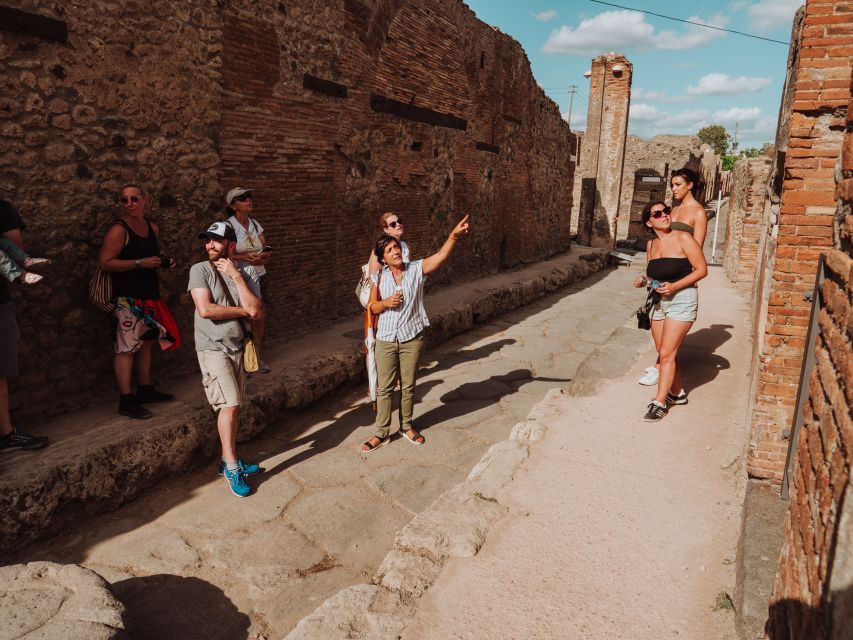
This is one of those tours where the guide is not a bonus, they are the product. Multiple names show up with strong praise, including Sergio, Diego, Alfredo, Julia, Paulo, Antonio, Vincenzo, and Amadeus.
What people keep liking is the combination of archaeology and storytelling. These guides are not just reciting dates. They explain inscriptions and everyday objects in a way that makes Roman life feel concrete, including the contrast between Pompeii’s busier feel and Herculaneum’s preserved elegance.
They also handle logistics well. A good example is how some guides keep the group in shade during hot weather, and how they guide you to the most interesting spots without turning it into a sprint. That pacing is why a day that might otherwise feel overwhelming turns into something you can enjoy.
Tickets, timing, and the real value of “skip the line”
You get entry arranged for both sites, and you also skip the ticket line. In busy seasons, that alone can be worth it, because time spent in a queue is time you cannot spend learning or looking closely.
You should also know the specific entry cost mentioned for Herculaneum: 16 euros for adults, and 2 euros for EU citizens age 18 to 25. Even if you do not obsess over ticket math, that number helps you judge the overall value. Pair two major sites plus guided interpretation, and the tour becomes a way to buy back your time and reduce your guesswork.
So the best way to think about pricing here is not just cost versus tickets. It is cost versus how much you would struggle without guidance in Pompeii and how quickly you could feel lost in Herculaneum.
Comfort checklist for summer heat and sudden rain
This tour is outdoor-heavy, and you should dress like you are walking all day on uneven ground. The basics are simple and you will be happier for it.
Bring:
- Passport or ID card
- Comfortable clothes
- Sunglasses, a hat, and water in summer
- A raincoat or poncho for sudden showers
Footwear matters too. Pompeii and Herculaneum require lots of walking, and stone surfaces can be hot. I would wear shoes you can handle for hours, not something cute that you regret.
Sunscreen helps, even if the tour includes shade breaks depending on the route and guide choices.
End point at Parco Archeologico di Ercolano, plan your ride back
The tour finishes at Parco Archeologico di Ercolano. Importantly, this means you are not automatically returned to Pompeii at the end of the day.
A practical note from experience: you can use local transport from Ercolano back toward where you started, and it may involve walking uphill depending on your connection. If you are renting a car, you can also drive, but most people will rely on trains or local options.
The smart move is to plan your next step before you go. If you are day tripping, line up a plan for dinner or transportation so you do not end your tour stressed.
Who this tour fits best, and who might look elsewhere
This is a great match for people who want structure and clarity. If you love history but hate being overwhelmed by massive sites, this format is tailor-made. It is also a strong choice if you are visiting for the first time and want the “what am I looking at” answers.
It is also a good choice for independent travelers who still want the freedom to ask questions and follow a route that avoids wasting time.
Not suitable for:
- People with mobility impairments
- Wheelchair users
So if accessibility is a priority for you, you will likely need a different option with step-free access designed for your needs.
Should you book Pompeii and Herculaneum with Askos Tours?
I would book this tour if you want both sites in one day and you care about understanding what you are seeing, not just taking photos. The archaeologist guide element is the real differentiator, and the small-group size keeps it from feeling chaotic.
I would think twice if you need a longer lunch and a slower pace. The Pompeii break is short, and the day is still a full chunk of time. Also, if you are sensitive to crowds and heat, plan your comfort gear carefully.
Bottom line: if your goal is Pompeii plus Herculaneum with real context, skip-the-line entry, and a guide who can explain the ruins in plain language, this is a strong way to do it.
FAQ
Where do I meet the guide for Pompeii and Herculaneum?
Meet at Piazza Porta Marina Inferiore, 1, at the left side of the Pompeii entrance called Porta Marina Inferiore near the Arte bus stop. Your guide will have an Askos Tours sign.
What is the total duration of the tour?
The tour lasts about 5.5 hours.
How long is the guided time at each site?
Pompeii is about 2 hours of guided time, and Herculaneum is about 2 hours of guided time.
How do you get from Pompeii to Herculaneum?
You take the Circumvesuviana train leading to Ercolano, then you start the walk through Herculaneum.
Is the tour in English?
Yes, the tour is in English. Italian is also offered.
Do you get a headset for hearing the guide?
Headsets are provided for groups of more than 10 participants.
What entry ticket cost should I know for Herculaneum?
Herculaneum entry costs 16 euros for adults, and 2 euros for EU citizens age 18 to 25.
What should I bring or wear?
Bring your passport or ID card. Wear comfortable clothes, and in summer bring sunglasses, a hat, and water. Carry a raincoat or poncho in case of rain.
Is the tour suitable for wheelchair users or mobility impairments?
No, it is not suitable for people with mobility impairments or wheelchair users.
Recently reviewed around Pompei Campania
- Pompeii Audioguide – TravelMate app for your smartphone★ 3.9 · 10 reviews
- Pompeii: Entrance Ticket – Skip the Line★ 3.8 · 64 reviews
- Pompeii: AR Glasses Augmented Reality Tour★ 5.0 · 3 reviews
- Pompeii: Entry Ticket & Guided Tour with an Expert Historian★ 5.0 · 4 reviews
- Pompeii Small Group Tour – Tickets Included★ 4.7 · 72 reviews
- Pompeii and Oplontis: Small Group Tour with an Archaeologist★ 4.5 · 3 reviews
- Pompeii and House of Vettii Guided Tour★ 3.7 · 3 reviews
- Pompeii 2H Private Guided Tour with Optional Tickets★ 5.0 · 3 reviews
Herculaneum Tours, compared.

Pompeii and Herculaneum Small Group Tour with an Archaeologist
Read our review →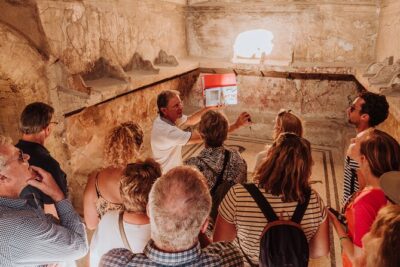
Herculaneum Small Group Tour and Ticket With an Archaeologist
Read our review →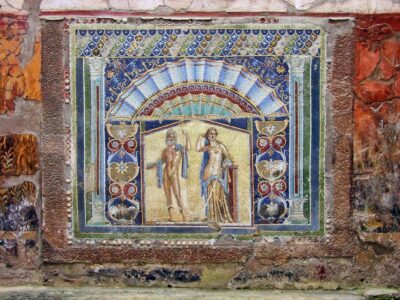
Pompeii & Herculaneum with Archaeologist Guide
Read our review →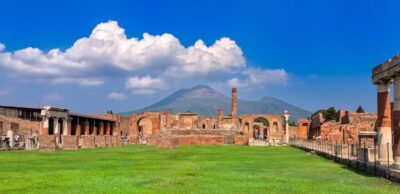
Pompeii, Herculaneum, & Vesuvius Full-Day Tour
Read our review →
Ercolano: Herculaneum Entry Ticket with Optional Audio Guide
Read our review →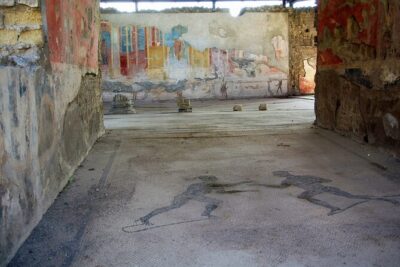
Day Trip of Pompeii, Herculaneum and Vesuvius from Naples
Read our review →Browse the lists this tour appears in