
Reviewed · HERCULANEUM TOURS
Pompeii and Herculaneum: Guided Tour with an Archaeologist
What makes this Pompeii and Herculaneum tour so interesting is that you see both cities in one day, with an archaeologist guiding your feet and your questions. I love the small-group pace (up to 10 people), and I also love that you get a true expert archaeologist, so the ruins come with real context, not just dates. One possible drawback: it is a walking-focused day, and it is not suitable for wheelchair users or people with mobility impairments.
The format is built for understanding: Pompeii first, then a short train ride to Herculaneum. You’ll spend time on the big public spaces, the everyday homes with mosaics and frescoes, and the famous casts and remains from the disaster. You should also be ready for crowds at Pompeii, even with a smaller group, because Pompeii is still Pompeii.
Quick Reasons This Tour Works
Two-site day trip with a single archaeologist lens
Small group up to 10 people, so you can ask questions
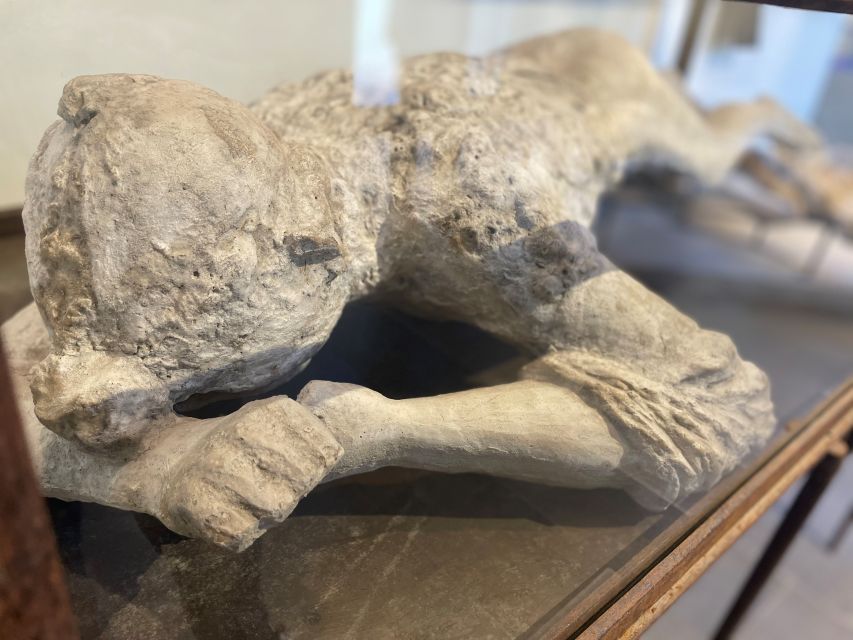
Pompeii house details, plus frescoes, mosaics, and victims’ plaster casts
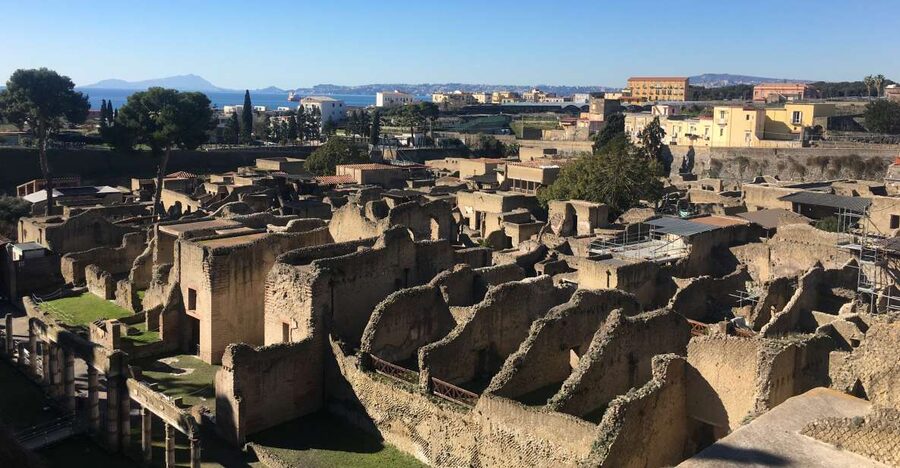
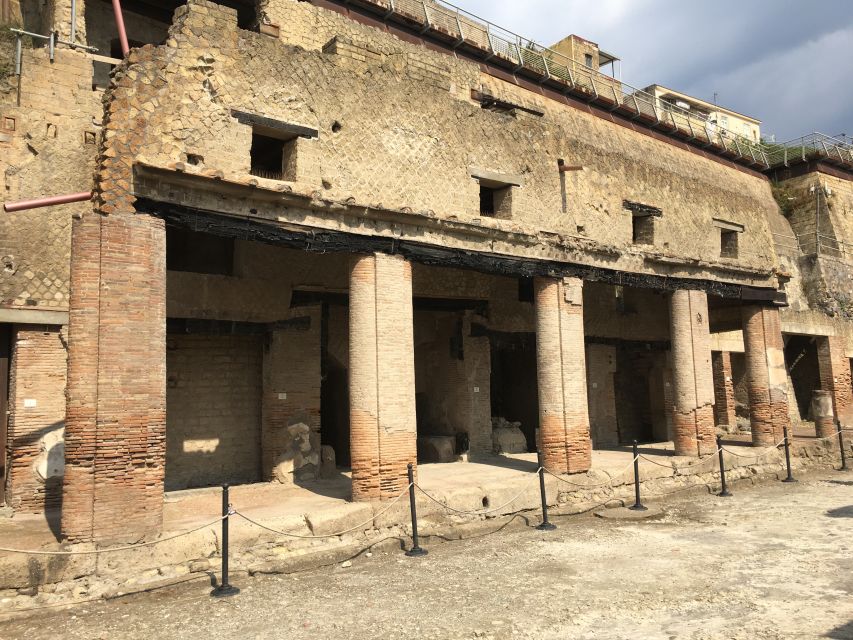
Herculaneum’s better preservation, including wood, jewelry, and skeletal remains
Skip the ticket line, plus headsets for groups larger than 8
Why Pompeii Plus Herculaneum Feels Different Than Either One Alone
Pompeii is the loud lesson. It hits you with scale, variety of buildings, and the shock of a whole Roman city frozen in time. Herculaneum is the quieter lesson, and that contrast is the point. After you’ve spent time watching Pompeii’s layout take shape, Herculaneum shows you how the same disaster could produce a completely different kind of record.
This tour is scheduled as a single, continuous story. You start with Pompeii’s famous streets and landmarks, then you shift to Herculaneum, where preservation is unusually strong. That means you do not just look at ruins, you read them more like a “surviving snapshot” of daily life.
And because your guide is an archaeologist named Benedetto, you get the extra layer that changes how the day feels. He is described as funny, but also serious about connecting what you see to how Romans actually lived.
More Herculaneum tours in Pompei Campania:
- Pompeii: Small-Group Tour of Pompeii and Herculaneum
★ 4.8 · 867 reviews - From Naples: Pompeii and Herculaneum VIP Tour with Lunch
★ 4.4 · 129 reviews - From Herculaneum to Pompeii: Audioguides + Entrance Tickets
★ 3.6 · 19 reviews
Meeting Point at Ristorante Suisse, and How the Day Gets Rolling
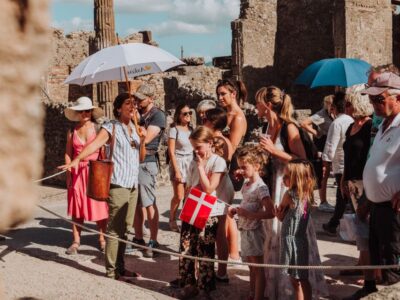
The tour starts at Suisse Restaurant. Your guide waits for you there with a sign that has your name on it. This matters more than you might think. Pompeii and Herculaneum can be chaotic on your own. A clear meeting point helps you start the day calm, not searching for the group while you’re already packed in.
The day is also designed with your energy in mind. You get a guided Pompeii section first, a lunch break, and then a guided Herculaneum section. That rhythm is key when you have limited time and you want to cover both sites without feeling like you’re sprinting.
Bring passport or ID card, wear comfortable shoes, and plan for sun. A hat and water are strongly suggested for a reason, especially if your visit falls in warmer months.
Pompeii Walk: Porta Marina Inferiore to Theaters, Shops, and Homes
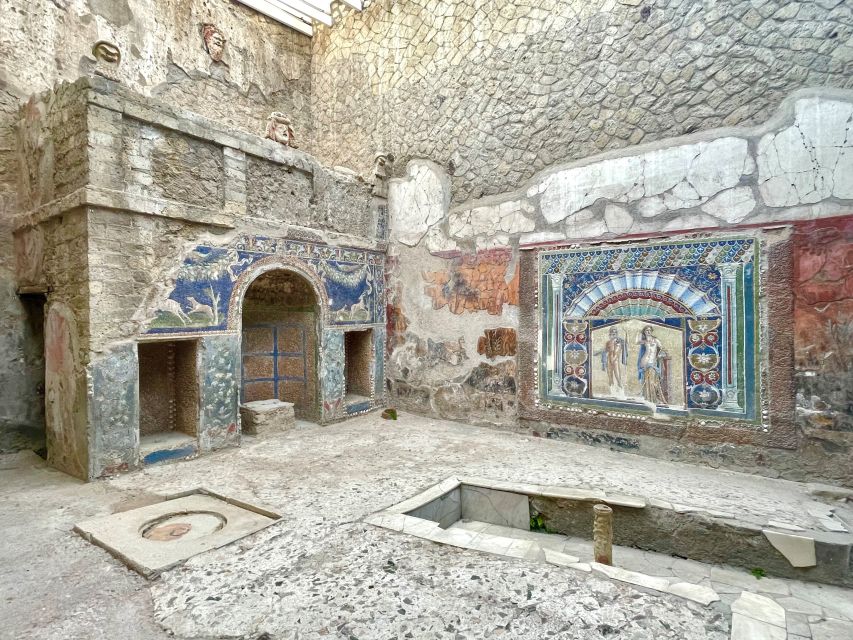
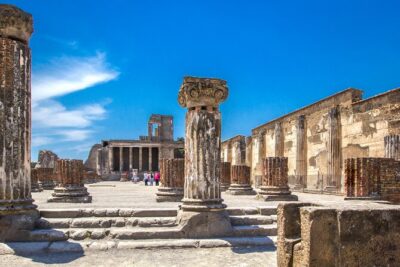
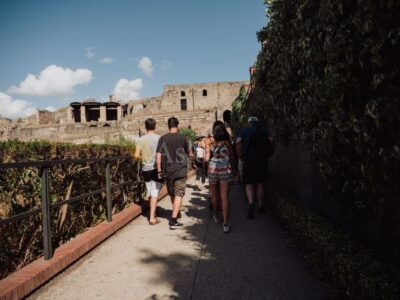
You’ll begin inside the Pompeii Archaeological Site at Porta Marina Inferiore. From there, the tour moves through the area of the theatres, then into ancient houses where decoration is a big part of the story. This is where Pompeii stops being a “tour of buildings” and becomes a tour of daily taste and routines.
Here’s what that Pompeii section is built to show you:
- How wealthy and middle-class homes were decorated, with mosaics and frescoes
- How streets held a mix of public life and private life, including shops, old Roman bakeries, and snack bars
- How “normal” daily commerce fits next to religious and civic spaces
A practical advantage of the archaeologist-led format is that you do not just hear that a building existed. You learn what the spaces meant. When you see a decorated floor or painted wall in context, your brain starts placing it into a full Roman routine: movement through the city, meals, work, gossip, and leisure.
Also, this is a walking route. Even with a small group, expect uneven ground and lots of stone steps and paths.
Pompeii’s Big Targets: Baths, Lupanare, Forum, and the Victims’ Casts
After walking through homes and street life, the tour pushes you toward major public spaces. You’ll reach the public baths and then the Lupanare, a place often mentioned because it reflects the darker edges of everyday urban life.
Then comes one of the most talked-about segments: the Forum and the area connected to plaster casts of the victims. If you only visited Pompeii once in your life, you might remember the shock of those casts. With a guide, you understand what you’re seeing better, including why these remains are so important for understanding the eruption’s impact in a physical, human way.
One helpful detail from the tour description is that you get both the “famous” places and the “lived-in” places. The baths and Forum tell you about public power and civic religion. The houses, painted rooms, and street-side food stops tell you about private habits.
That mix is why a guided plan here is worth it. Pompeii can overwhelm you fast, and a strong guide helps you keep the big picture instead of only collecting snapshots.
More Pompeii tours and tickets in Pompei Campania:
- Pompeii: Entry Ticket and Guided Tour with an Archaeologist
★ 4.8 · 19,459 reviews - Pompeii: Small Group Tour with an Archaeologist
★ 4.8 · 12,264 reviews - Pompeii: Skip-the-Line Entrance Ticket with Audio Guide
★ 4.0 · 2,509 reviews - Naples: Pompeii and Mt. Vesuvius with Lunch and Wine Tasting
★ 4.5 · 2,454 reviews
Lunch Break Between Ruins: Rest, Refill, and Stay On Schedule
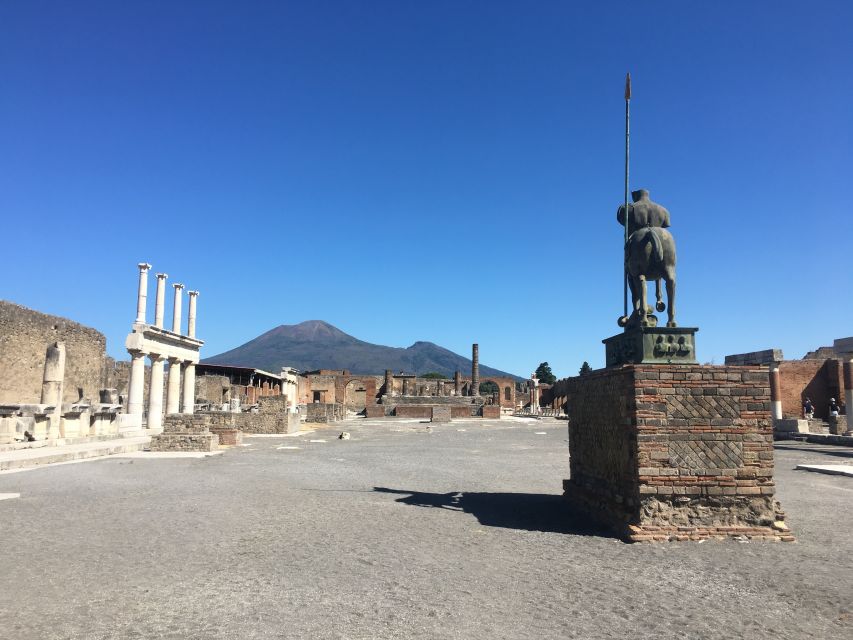
Pompeii gets a break time and lunch window of about 1 hour. Food and drink are not included, so you’ll want to use the time wisely. The day is long enough that you should plan hydration and shade early, not as an afterthought.
A small practical tip: when you pause for lunch, try to keep your pack lightweight. You’ll likely carry water and your hat throughout the morning. A simple routine helps you avoid stress when you meet back up to head toward the train.
This is also a good moment to reset your eyes. Pompeii morning is visually intense. A real pause improves your next section at Herculaneum, because Herculaneum’s preservation details reward close looking.
The Train Transfer to Herculaneum, and Why the Timing Matters
Between the sites, the itinerary includes a train stop, about 30 minutes in the plan, and the overall transfer is described as about 20 minutes. Either way, it’s short enough that the day still feels like one connected journey rather than two separate trips.
Why this matters for your planning: you keep momentum. After Pompeii, your brain is already tuned to Roman streets and architecture. Herculaneum then becomes a “compare and contrast” moment, not a brand-new orientation task.
Also, because the tour operator lists transportation as not included, you should think of this train ride as part of the day’s structure, not an automatic promise that your external transport costs are covered. If you are coming from elsewhere in the region, make sure you know how you’ll reach the meeting point before the start time.
Herculaneum Highlights: Frescoes, Marbles, Jewelry, Skeletons, and Preserved Wood
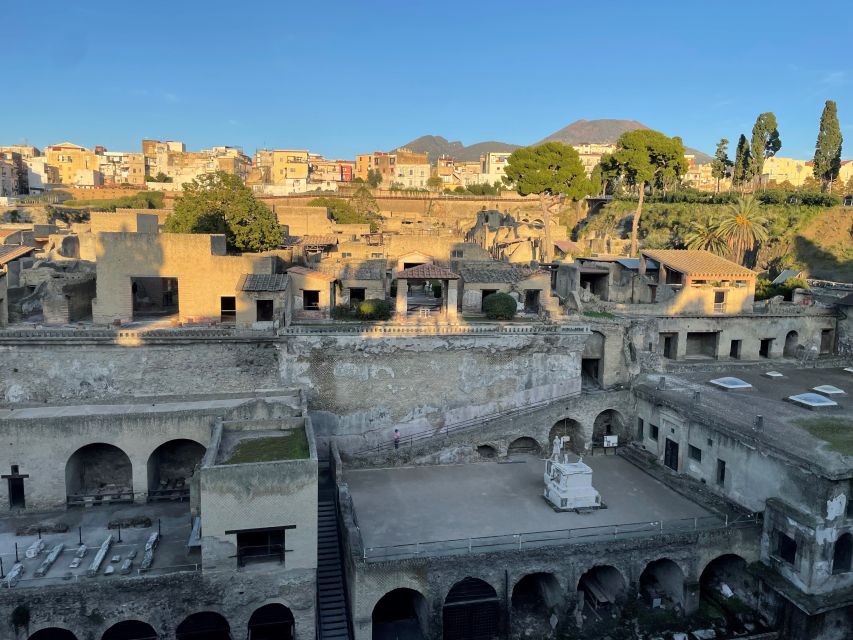
Herculaneum is where the tour earns its keep. The key idea you should walk in with is simple: the burial and conservation conditions differ, so the site feels more intact and more detailed in small ways.
You’ll spend about 1.5 hours with a guided visit inside the Archaeological Site of Herculaneum, and the focus is on residences and their decoration. The tour description specifically highlights:
- frescoes, marbles, mosaics, and jewelry
- skeletons
- exceptionally well-preserved wood
That last detail is a big deal. Wood preservation is not something you get at every archaeological site. Here, it helps you picture the city’s material life, not just its stone shells.
Compared with Pompeii, Herculaneum also tends to feel more manageable in size, and the tour description calls it a “small jewel.” You’ll likely notice that once you arrive: fewer crowds can mean more time to look closely at painted surfaces and household details.
The Value of a Real Archaeologist Guide, Plus Benedetto’s Style
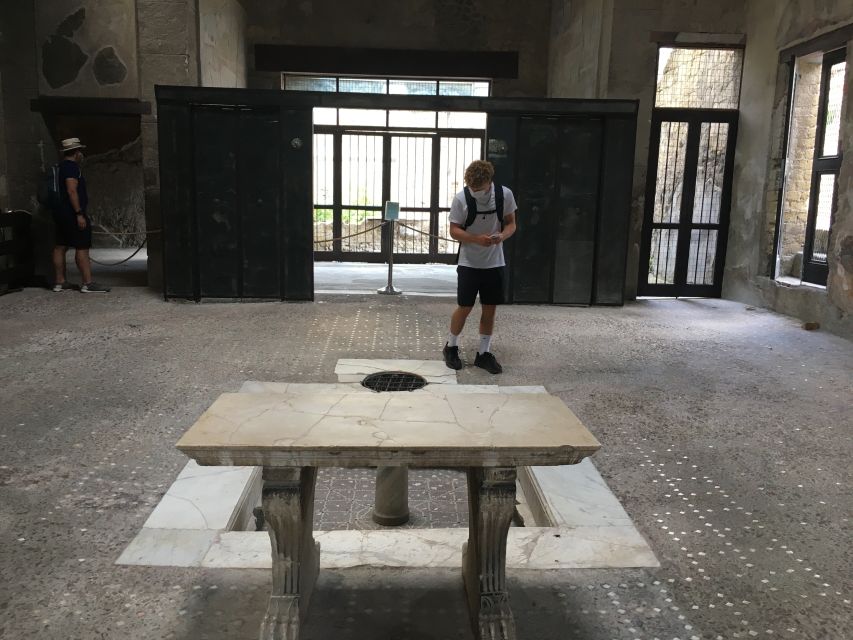
A big part of the tour’s reputation is the guide. The archaeologist leading this day is Benedetto Tourist Guide. Multiple visitors emphasize that he is not only professional, but also entertaining and very good at making complex information make sense.
What you feel during the walk is that the guide connects layers:
- the eruption event in 79 AD and what it meant for people in the moment
- Roman life before the disaster, including how people moved through streets, shopped, ate, bathed, and lived
- why specific buildings matter, not just where they are
And yes, humor shows up. Several notes describe the guide as very funny, with a tone that makes long ruins days feel lighter. For families, that matters. For adults, it keeps you from falling into the classic museum mode where you stop listening after the third wall.
One more advantage you may notice: with a small group and a guide who knows the sites, your time is less wasted. You see the highlights, but you also get pointed out details you might miss when you’re wandering on your own.
Logistics That Affect Your Comfort: Walking, Headsets, and What to Bring
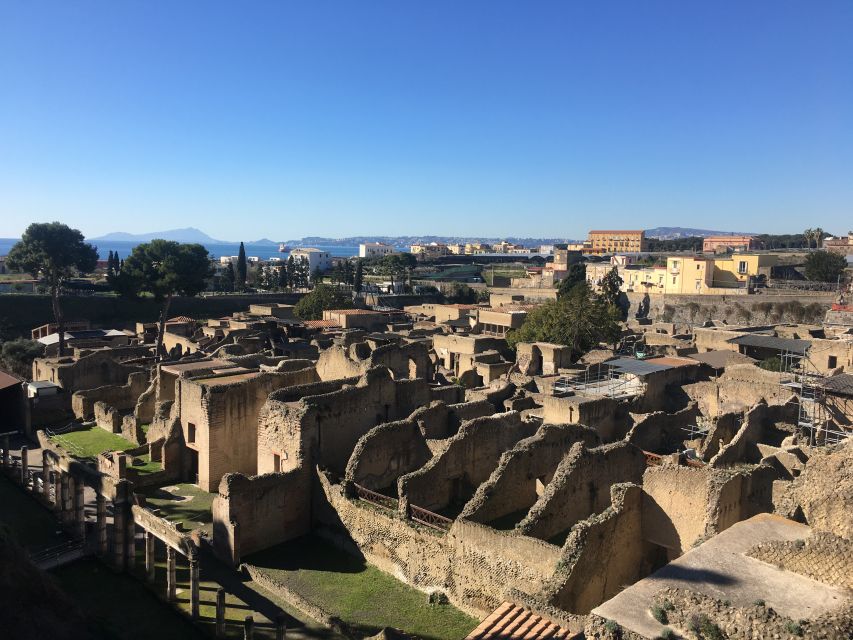
This tour is not suitable for wheelchair users or people with mobility impairments. The route is inside archaeological areas, which means uneven ground and lots of walking.
You should also plan for how sound travels in crowded ruins. For groups larger than 8, the tour includes headsets. If you’re in a smaller group, you may not need them, but either way you’ll have the guide speaking clearly as you move.
Bring:
- passport or ID card (original, not a copy)
- comfortable shoes
- hat
- water
One additional heads-up: Pompeii tickets are named. After booking, you’ll need to provide a list with the first and last name of all participants. That’s worth doing promptly so you do not get stuck scrambling later.
Price and Value: What You Pay For (And What You Don’t)
At $141.61 per person for about 5 hours, this tour is not cheap, but it is also not just “a guide walking beside you.”
You get:
- an archaeologist guide
- entry tickets to the sites
- skip the ticket line
- headsets for groups larger than 8
- free time for lunch
You do not get:
- transportation (like getting to the meeting point yourself)
- food and drink during your lunch break
So the value comes from packing two major sites, tickets, and expert interpretation into one half-day plan. If you were to do Pompeii and Herculaneum separately with no archaeologist and with two separate entry processes, the total cost and time usually climbs fast. Here, the structure helps you spend your limited hours seeing the right things with the right context.
If you care about museums and want your visit to connect to how Romans lived, this is one of those “pay for meaning, not just access” arrangements.
Who This Tour Fits Best, and Who Might Want a Different Plan
This is a family-friendly setup and a good match if you like photography and archaeology. Small group size helps keep it engaging for kids, and a guide who can keep a pace without rushing makes a difference.
It also suits:
- history lovers who want context beyond basic dates
- anyone who wants Pompeii and Herculaneum on the same day
- people who prefer fewer people around them instead of huge crowds
It may not suit:
- anyone who cannot handle lots of walking and uneven surfaces
- people who want a totally free-form visit with no structure
- travelers who hate the idea of train logistics between sites
Should You Book This Pompeii and Herculaneum Tour?
If you want one day that teaches you how two Roman cities differed, I think this is a strong pick. The biggest selling points are the small-group feel, the archaeologist-led explanations, and the way the day is structured around the most important areas of Pompeii and Herculaneum.
Book it if you:
- want to see both sites without planning the day yourself
- care about frescoes, mosaics, and the human side of the eruption story
- prefer a guide who can keep things moving and interesting
Skip it or reconsider if:
- you need wheelchair-accessible routes
- you want to avoid any walking on archaeological terrain
- you plan to do Pompeii and Herculaneum as a purely self-guided experience
If you’re on the fence, I’d make the decision based on one question: do you want Roman ruins explained by a working archaeologist? If yes, this tour is built for you.
FAQ
How long is the Pompeii and Herculaneum guided tour?
The tour duration is 5 hours.
Where do we meet the guide?
You meet at Suisse Restaurant. The guide will wait for you at the meeting point with a sign that has your name written on it.
What group size should I expect?
It is a small group format, with up to 10 people. Private or small groups are also available.
Is there an archaeologist guide?
Yes. The tour includes an archaeologist guide.
Are entry tickets included?
Yes. Entry tickets are included, and the tour also offers skip-the-ticket-line access.
Do we get help with audio in larger groups?
Yes. Headsets are included for groups larger than 8.
What languages is the tour offered in?
The live tour guide is available in English, Italian, and French.
Is lunch included?
Lunch food is not included, but you do get free time for lunch during a break in Pompeii.
How do you get from Pompeii to Herculaneum?
The itinerary includes a train transfer between the two sites, about 20 minutes by train, with a stop listed for train time.
Do I need to provide my ID or passenger names?
You should bring your passport or ID card in original form. The Pompeii ticket is named, so you need to provide the first and last name of all participants after booking.
Is this tour wheelchair accessible?
No. It is not suitable for wheelchair users or people with mobility impairments.
What is the cancellation policy?
Free cancellation is available up to 24 hours in advance for a full refund.
Recently reviewed around Pompei Campania
- Pompeii Audioguide – TravelMate app for your smartphone★ 3.9 · 10 reviews
- Pompeii: Entrance Ticket – Skip the Line★ 3.8 · 64 reviews
- Pompeii: AR Glasses Augmented Reality Tour★ 5.0 · 3 reviews
- Pompeii: Entry Ticket & Guided Tour with an Expert Historian★ 5.0 · 4 reviews
- Pompeii Small Group Tour – Tickets Included★ 4.7 · 72 reviews
- Pompeii and Oplontis: Small Group Tour with an Archaeologist★ 4.5 · 3 reviews
- Pompeii and House of Vettii Guided Tour★ 3.7 · 3 reviews
- Pompeii 2H Private Guided Tour with Optional Tickets★ 5.0 · 3 reviews
Herculaneum Tours, compared.

Pompeii and Herculaneum Small Group Tour with an Archaeologist
Read our review →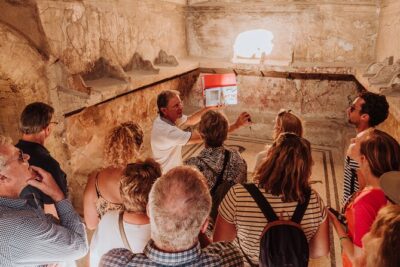
Herculaneum Small Group Tour and Ticket With an Archaeologist
Read our review →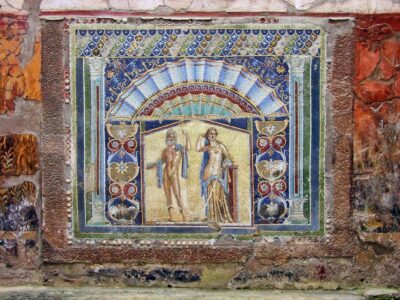
Pompeii & Herculaneum with Archaeologist Guide
Read our review →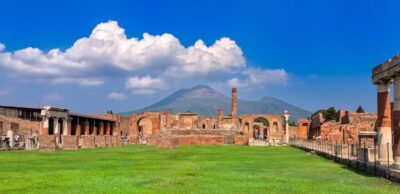
Pompeii, Herculaneum, & Vesuvius Full-Day Tour
Read our review →
Ercolano: Herculaneum Entry Ticket with Optional Audio Guide
Read our review →Browse the lists this tour appears in