
Reviewed · HERCULANEUM TOURS
Pompeii and Herculaneum Small Group Tour with an Archaeologist
Pompeii plus Herculaneum is the kind of combo day that makes ancient Rome feel shockingly real. You’re not just looking at ruins. You’re walking through places where daily routines, public life, and private homes survived in fragments. I especially like the skip-the-line tickets and the fact that the plan is guided, so you’re not wandering and second-guessing what you’re seeing.
Two more things I love: the archaeologist-led explanations bring the city layout to life, and the small group size helps the guide actually answer questions. You’ll hear names like Michele, Diego, and Antonio showing up again and again in day-of-day feedback, and that tracks with what the tour is built for. One possible drawback is that the day is efficient, not slow. Pompeii is huge, and some people felt the pace and time inside Pompeii left them wanting more.
If you’re picky about lunch, plan for that reality too. Meals are on your own, and at least one experience reported a stop that felt too mall-like for the magic of the sites. If you want this day to feel more romantic and less logistical, pack a few snacks or plan to eat near where you’re dropped off.
Key highlights you’ll care about
- Skip-the-line entry for Pompeii and Herculaneum, so your time goes to ruins, not queues
- Headsets for the whole group, which matters when you’re walking through busy areas
- Two focused guide-led blocks: about 2 hours in Pompeii and about 2 hours in Herculaneum
- Circumvesuviana option if you start in Pompeii, with the train ticket included one way
- Max 20 travelers, small enough for questions without a long bottleneck
How the small-group format keeps your day from turning into chaos
This is a small group tour with a maximum of 20 people, and that is a big deal on sites as packed as Pompeii and Herculaneum. The tour runs for roughly 6 to 11 hours depending on your start location and how the transport day is set up. You also get headsets for everyone, so you can follow along without constantly craning your neck.
Meeting points depend on where you’re staying:
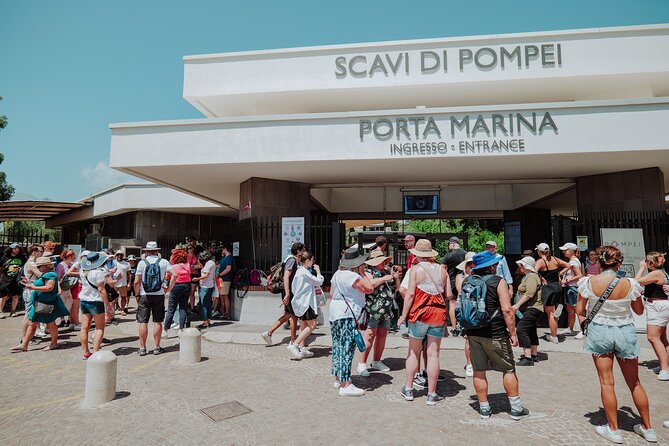
- If you’re starting in Pompeii, meet at Porta Marina Superiore.
- If you’re starting from Naples and Rome, meet at Starhotels Terminus.
- If you’re starting from Sorrento, meet at Piazza Angelina Lauro.
Then the day splits into two different logistics tracks:
- If you start in Naples, Rome, or Sorrento, you travel by modern minibus with your guide to Herculaneum after lunch.
- If you start in Pompeii, you get an included Circumvesuviana train ticket to reach Herculaneum with your tour guide, plus a short walk.
At the end, you do not all finish at the same place. Your drop-off matches your departure option. If you start in Pompeii, the tour ends with you inside the Herculaneum ruins area. If you start in Naples or Sorrento, you’re returned toward your starting city. If you start in Rome, you’re dropped back at Naples station for your Rome connection. Read that last part carefully, because it changes how you plan the rest of your evening.
More Herculaneum tours in Pompeii:
- Pompeii: Small-Group Tour of Pompeii and Herculaneum
★ 4.8 · 867 reviews - From Naples: Pompeii & Herculaneum with Archaeologist Guide
★ 4.8 · 665 reviews - From Naples: Pompeii, Herculaneum, & Vesuvius Full-Day Tour
★ 3.9 · 602 reviews
Pompeii with an archaeologist: from main square energy to eerie detail
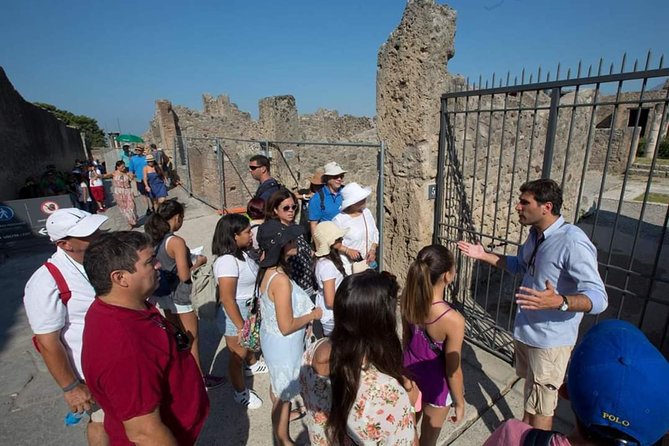
Pompeii is the big show. The tour begins there, with about a 2-hour guided walk through the most meaningful highlights, plus time to orient you so the site makes sense instead of feeling like a random maze.
The day includes skip-the-line entry (via an included Pompeii express style setup), which means you start exploring sooner. You also get an archaeologist guide, and you’ll feel the difference in how things get connected: street layout, building purpose, and what the eruption changed. Several guides named in feedback, including Michele, Diego, Tomas, Alfredo, and Michael, are praised for turning buildings into stories you can picture.
What the guided stops are actually telling you
Pompeii isn’t just one monument. It’s a whole city in layers. The stops are chosen to represent different parts of Roman life:
- Commerce and civic space
- Entertainment and religion
- Thermal culture
- Wealthier private residences
- Even the darker corners of daily entertainment
Here’s how that plays out.
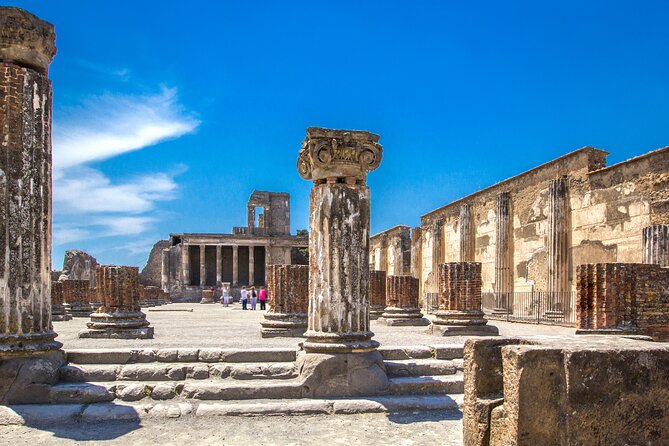
Basilica, Forum, and the House of Menander: how the tour teaches you to read a city
The tour kicks off with short, targeted visits designed to give you “anchors” in your brain.
Basilica (open portico)
This covered public space was used by merchants and others for real transactions, not just ceremonial stuff. Even in a ruin, you can understand why crowds gathered here.
Forum square
You get a look at Pompeii’s main square. This stop helps you see why the forum worked as the city’s meeting point for politics, trade, and community life.
House of Menander
This one matters because it’s a high-status home in terms of architecture, decoration, and contents. When a guide points out layout and artwork, you stop seeing “beautiful wall fragments” and start seeing what people valued and displayed. In a city with lost roofs and damaged upper floors, decoration still signals social identity.
Granaries of the Forum
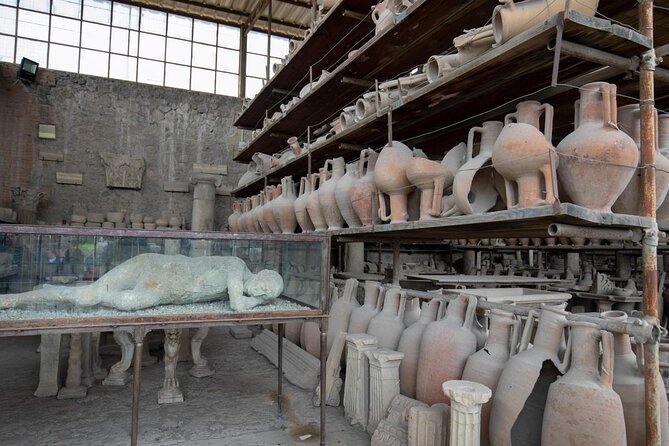
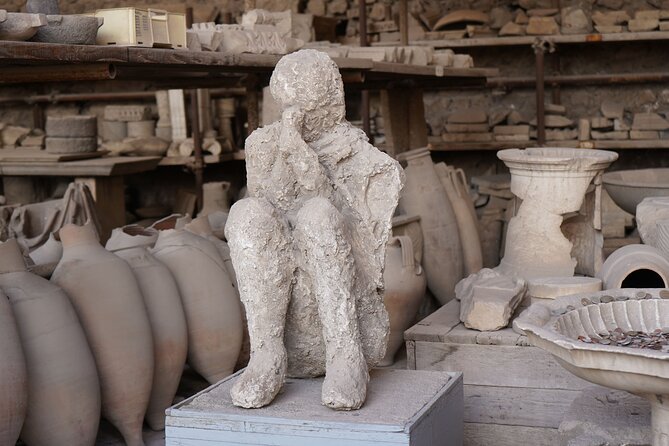
This is one of those Pompeii stops that feels practical and strange at the same time. You can see marble tables and water-related features at the entrances of houses, plus casts connected to the eruption. A guide helping you connect the dots makes those details hit harder, because you understand this wasn’t a “museum moment.” It was storage, plumbing, and daily movement.
The time on each stop is short, but that’s part of the plan: it’s built to cover a lot without trapping you in one area for half the day.
More Pompeii tours and tickets in Pompeii:
- Pompeii: Entry Ticket and Guided Tour with an Archaeologist
★ 4.8 · 19,459 reviews - Pompeii: Entry Ticket with Optional Audio Guide
★ 4.2 · 12,360 reviews - Pompeii: Small Group Tour with an Archaeologist
★ 4.8 · 12,264 reviews - From Naples: Pompeii Ruins & Mount Vesuvius Day Tour
★ 4.3 · 11,459 reviews
Baths, brothel lane, and two theatres: the best kind of contrast
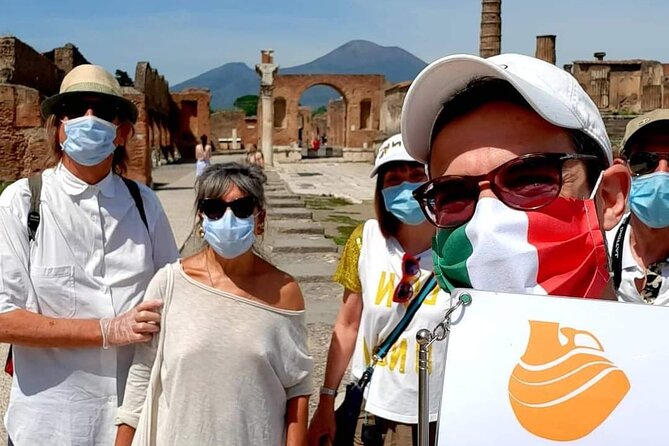
From the civic core, the tour moves into places that show what people did for health, fun, and status.
Stabian Baths (Terme Stabiane)
These baths take up a vast area and represent the oldest thermal complex in the city. Baths were not just hygiene. They were community centers. If you’ve ever wondered why ancient cities were so socially dense, this is where you feel it.
Lupanar (the famous brothel)
This is one of the most talked-about sites in Pompeii, and guides use it to explain how Roman entertainment and services operated. It’s not comfortable, but it’s part of the complete picture of daily life. If you want to understand Pompeii honestly, you can’t skip the topic areas that modern visitors might avoid.
Odeon (Teatro Piccolo) and Teatro Grande
You get both a smaller entertainment venue and the main theater. The tour frames them as different scales of audience life. If you like architecture, you’ll appreciate how the structures connect to streets and crowds. If you’re more into human stories, the guide turns “seats and walls” into “how people gathered and waited and watched.”
House of the Faun and the plaster cast factor
House of the Faun is one of Pompeii’s biggest private residences. It’s impressive visually, but the real value comes when your guide helps you interpret why it’s laid out the way it is and what its decorations say about the household’s reach.
There’s also a mention of plaster casts in the tour overview, and one feedback note said visitors only saw one plaster mold. That’s a gentle reality check: time is limited, so you may not see every cast or every room that’s theoretically possible. If you want maximum cast viewing, this guided format is still great for context, but you should consider adding your own time later.
The lunch reality: you’re on your own, and pacing is the trade-off
Lunch is not included. You get a short lunch break (own expense) before moving to Herculaneum.
In one piece of feedback, a lunch stop at a mall-style location killed the vibe for that person, and the tour felt rushed. I don’t treat that as a deal-breaker, but it is the main place where the day can feel like it shifts from awe to logistics.
If you’re the type who gets grumpy when a tour schedule interrupts the emotional high of ruins, I’d do two things:
- Bring a snack or two so you can keep moving during the break.
- If the break location looks bland, eat fast and get back to the site quickly.
A guided day like this can’t be a slow cinematic stroll through the streets of Pompeii. It’s built to help you see the right pieces.
From Pompeii to Herculaneum: train or minibus, and why the transport matters
The transfer is one of the tour’s underrated benefits. You’re not solving transit while hungry, tired, and holding a timetable.
If you start in Pompeii, you use the included Circumvesuviana train (about 30 minutes plus a short walk). The guide keeps you oriented, and you arrive with a plan instead of guessing platforms.
If you start from Naples, Rome, or Sorrento, you go by modern minibus directly to Herculaneum with your guide. For people optimizing time, this removes a lot of friction.
In both cases, there’s typically a quick lunch break before the transfer. The overall goal is to protect your guided time inside the ruins.
Herculaneum’s preserved houses: smaller city, bigger “how did this happen” feeling
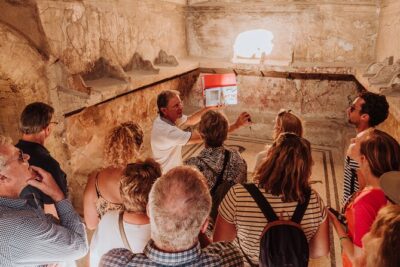
Then you hit Herculaneum, where the mood changes. Pompeii is dramatic and sprawling, but Herculaneum can feel more intimate. The tour gives you about 2 hours guided here as well, including entry ticket access.
One practical plus: the guide helps you get to the ticket office when you arrive. From Naples, Sorrento, or Rome, you’re dropped off near the entrance. From the train stop (Ercolano Scavi), it’s a short walk.
Your included Herculaneum entry tickets make this part of the day smoother. The tour also uses a guided route through notable structures so you don’t waste time hunting for what’s important.
The stops that make Herculaneum feel different
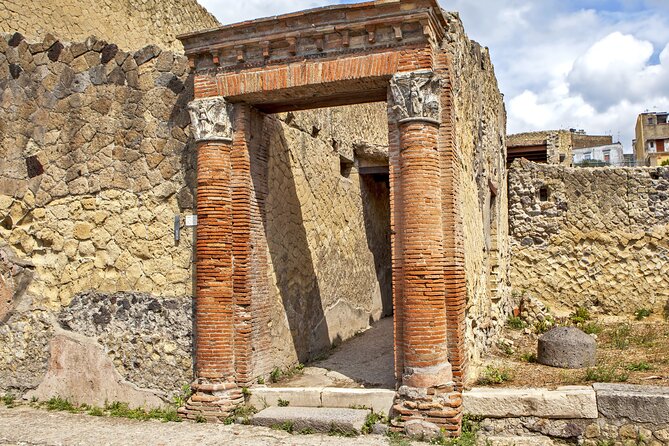
A lot of Herculaneum’s “wow” comes from how buildings are preserved enough for visitors to understand spaces and purposes.
Some of the key highlights include:
- House of the Deer, named for marble stags or deer found in the peristyle
- La Terrazza di M. Nonio Balbo, tied to the city’s major benefactor and a long inscription on his funeral altar
- College of the Augustales, thought to relate to the cult of Emperor Augustus
- Casa del Rilievo di Telefo, connected to Marcus Nonius Balbus and notable for private access to the adjacent Suburban Thermae
- Partem Domus lignea, Casa del Tramezzo di Legno, where an elegant wooden partition remained
- House of the Skeleton, named for human remains found in 1831
- Central Thermae, divided into men’s and women’s bath areas with separate entrances
- House of the Black Salon, known for its luxurious feel and carbonised door remnants
- Casa Sannitica and Casa del Bel Cortile, both showing unusual layout choices and decor
- House of the Grand Portal, with its charred wooden parts and multiple environments
If Pompeii is about recognizing the city’s “public system,” Herculaneum is about recognizing daily spaces. Your guide’s job here is crucial. They connect small architectural clues to how people lived, not just what buildings were called.
Getting real value for your money: what’s included, what to plan, and what to expect
For the price (listed at $77.09 per person), you’re paying for more than entrance tickets. Included items matter because they remove your biggest time sinks:
- Guided tour in both Pompeii and Herculaneum
- Skip-the-line entry setups for Pompeii and Herculaneum
- Headsets for every participant
- Transport between the sites, either minibus or included train for the Pompeii starting option
- Entrance ticket coverage for Herculaneum (and Pompeii express style entry for Pompeii)
Meals are not included. That means you should treat lunch like a personal choice. If you’re the type to eat slowly, your best bet is to bring simple snacks. The day is built around timed site blocks, so you do not control the full rhythm.
Also keep your expectations aligned with the format. Several feedback notes praised how much you see, but you won’t get the “wander without pressure” experience. This tour is about highlights and clarity.
Who should book this archaeologist-led tour, and who should choose something else
Book this if you want:
- A high-clarity overview of both sites, with a guide who connects the layout to real life
- A small group day that keeps you moving efficiently
- The ability to ask questions without feeling like a number in a mass tour
- Included transport help so you’re not wrestling transit between Pompeii and Herculaneum
I’d think twice if:
- You’re trying to spend most of the day in Pompeii alone, because some people felt Pompeii time can feel short for how huge the site is.
- You need the pace to be slow and flexible. This is a structured day, and that’s the trade-off for covering two sites.
- You’re sensitive to interruptions. Lunch break is part of the schedule, and one report flagged a mall-like stop that didn’t match the vibe.
One more practical note: feedback included headsets working well, but there were also mentions of connection issues when the guide moved fast. If you notice your audio cutting out, raise it right away. The tour setup is built for listening, so it should work.
Should you book Pompeii and Herculaneum with an archaeologist?
In my view, this is a smart choice if you want both sites in one day and you care about understanding what you’re looking at. The value is strongest when you compare it to building a DIY day that includes tickets plus figuring out transport plus trying to navigate what matters. This tour handles the key friction points: entry access, guided route, and between-site transportation.
If you’re the type who wants to linger and take photos at every corner of Pompeii, you may still want this tour for the overview, then plan a second visit later for a slower deep walk. But for a first-time, time-efficient day with strong guide energy, this is absolutely the kind of trip that can turn ruins into a real sense of Roman life.
FAQ
FAQ
How long is the Pompeii and Herculaneum small group tour?
The duration is listed as approximately 6 to 11 hours, depending on your start location and how the day’s transport works.
Do I need tickets for Pompeii and Herculaneum?
You do not need to buy them separately for this tour. Entrance fees for Herculaneum are included, and Pompeii entry uses an included express ticket setup.
Is transportation between Pompeii and Herculaneum included?
Yes. If you start in Pompeii, you receive an included Circumvesuviana one-way train ticket to reach Herculaneum. If you start in Naples, Rome, or Sorrento, the tour includes travel by modern minibus with your guide to Herculaneum.
Where do I meet the guide?
If you select Pompeii, meet at Porta Marina Superiore. If you select Naples or Rome, meet at Starhotels Terminus. If you select Sorrento, meet at Piazza Angelina Lauro.
What do we actually do inside the ruins?
You get a guided visit in Pompeii for about two hours, covering major highlights like the Forum, major buildings including the House of Menander and the House of the Faun, the Stabian Baths, the Lupanar, and the theatres. Then you visit Herculaneum for about two hours with guided stops at notable houses, baths, and public buildings.
Is lunch included?
No. Meals and drinks are not included. A lunch break is available before the transfer, and it’s at your own expense.
How big is the group?
The tour has a maximum of 20 travelers.
Are headsets provided?
Yes. Headsets are provided for all participants.
Can I cancel for a full refund?
Yes, free cancellation is offered. You can cancel up to 24 hours in advance for a full refund.
Is the tour suitable for visually impaired guests?
It is not recommended for visually impaired guests unless accompanied by a dedicated personal assistant.
Recently reviewed around Pompeii
- Pompeii Audioguide – TravelMate app for your smartphone★ 3.9 · 10 reviews
- Pompeii: AR Glasses Augmented Reality Tour★ 5.0 · 3 reviews
- Pompeii: Entrance Ticket – Skip the Line★ 3.8 · 64 reviews
- Pompeii: Entry Ticket & Guided Tour with an Expert Historian★ 5.0 · 4 reviews
- Pompeii: Skip-the-Line Ticket and Virtual Museum★ 4.5 · 66 reviews
- Pompeii Small Group Tour – Tickets Included★ 4.7 · 72 reviews
- From Naples: Pompeii & Mount Vesuvius Full-Day Private Tour★ 4.5 · 4 reviews
- Pompeii with Wine Tasting Private Tour★ 4.7 · 6 reviews
Herculaneum Tours, compared.

Herculaneum Small Group Tour and Ticket With an Archaeologist
Read our review →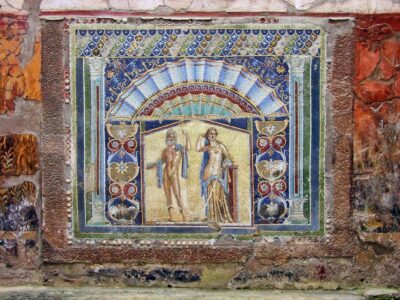
Pompeii & Herculaneum with Archaeologist Guide
Read our review →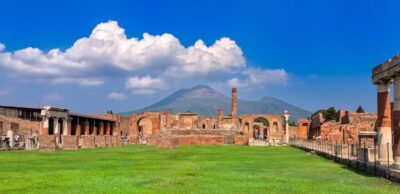
Pompeii, Herculaneum, & Vesuvius Full-Day Tour
Read our review →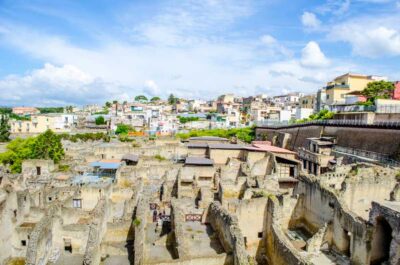
Ercolano: Herculaneum Entry Ticket with Optional Audio Guide
Read our review →
Day Trip of Pompeii, Herculaneum and Vesuvius from Naples
Read our review →Browse the lists this tour appears in