

Reviewed · POMPEII TOURS
Pompeii: Small Group Tour with an Archaeologist
Pompeii feels like a time machine when you walk it with an archaeologist, because the ash-preserved streets turn into a real city you can read. I love the expert guidance that explains what you are seeing, and I also love that you can keep exploring after the tour. The main drawback to plan for is the site terrain, with steps and uneven ground, so it is not a good fit for wheelchair users or many mobility needs.
This tour works well if you want structure. You start at Porta Marina Superiore, then move through Pompeii’s core spaces like the Forum, basilica, baths, temples, and big public buildings, with plenty of close-up art like mosaics and frescoes. If you go for the longer option, the Villa of the Mysteries adds famous wall paintings and is a strong reason to choose the extra hour.
A nice touch is the human element. Guides like Roxanne, Alexandra, Alessandra, Paulo (Pablo), Teresa, Nicoletta, Anna, Mario, and Juliana show up in the tour experience in different languages and styles, but the goal stays the same: help you understand daily life in 79 AD, not just point at ruins.
Key things to know before you go
- Archaeologist-led storytelling: You learn how Pompeii worked, block by block, not just what is standing today
- Skip-the-ticket-line entry: You get straight into the site experience with less waiting
- 2 hours or 3 hours: The 3-hour option adds the Villa of the Mysteries visit
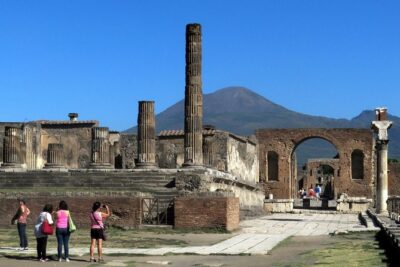
- Forum to Vesuvius views: You get a sense of the city’s geography from the center of public life
- Art you can study up close: Frescoes, mosaics, and preserved wall details become the focus
- Plan for steps: This is a walking tour with uneven surfaces and ramps
Pompeii made practical with an archaeologist guiding your route
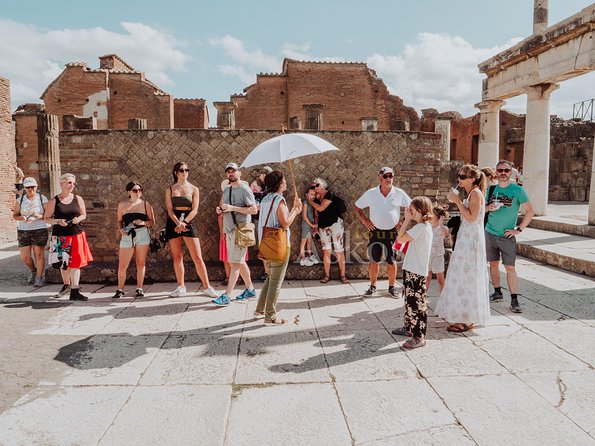
Pompeii is famous, but it can still feel confusing. The streets are laid out, yet it is hard to picture what each space actually meant when you are standing inside someone else’s city plan. That is where the archaeologist guide changes the whole experience. You are not just looking at stones, you are learning how the city functioned: where people gathered, where business happened, where everyday routines played out, and how buildings fit into Roman life.
I like that the tour is designed for real comprehension. You start early enough in the site journey to build a mental map. Then your guide keeps connecting details as you move, so you begin to recognize the difference between public space, religious space, and private domestic space.
Another practical win: the tour includes the entry ticket, so you avoid the usual “buy, find, wait” friction. And because the tour is small-group focused, you tend to get better back-and-forth, especially when the guide encourages questions.
More Pompeii tours and tickets in Pompei Campania:
- Pompeii: Entry Ticket and Guided Tour with an Archaeologist
★ 4.8 · 19,459 reviews - Pompeii: Skip-the-Line Entrance Ticket with Audio Guide
★ 4.0 · 2,509 reviews - Naples: Pompeii and Mt. Vesuvius with Lunch and Wine Tasting
★ 4.5 · 2,454 reviews
2-hour or 3-hour: what changes when you add the Villa of the Mysteries
You have two time options. The 2-hour tour is a strong choice if you want a solid orientation plus the biggest hits. The 3-hour tour is for when you want more wall art and more time inside Pompeii’s preserved interiors, including the Villa of the Mysteries.
Here is the value math in plain terms. The Villa of the Mysteries visit is not a random add-on. It is a major reason people specifically plan Pompeii days around frescoes. If you care about painting and how Romans decorated rooms, that extra hour can feel like the difference between seeing ruins and actually studying Roman visual culture.
If you are traveling with limited time, or you want to keep your afternoon open for slower wandering, the 2-hour version is also smart. Many visitors are happy to treat the guided portion as their Pompeii “primer,” then spend later time revisiting the spaces that stuck with them from the tour.
Meeting options and the fast start at Porta Marina Superiore
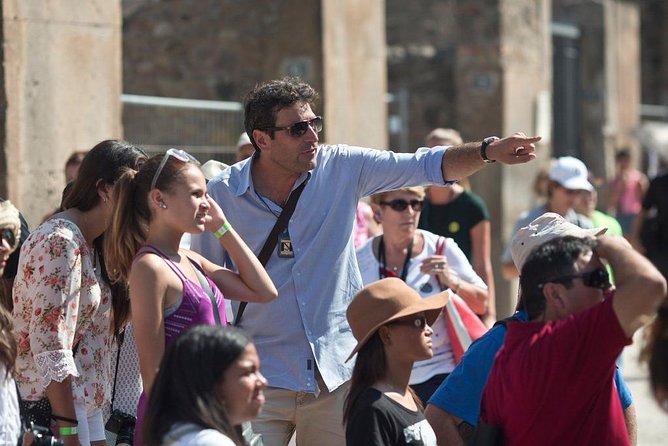
Your meeting point can vary depending on the starting option you book. You might meet near Via Villa dei Misteri or at Hortus Pompei Restaurant & Garden Bar, with other options also listed around the area. The key is simple: confirm your exact pickup spot when you book, then aim to arrive a bit early so check-in does not slow you down.
Once you are in the right place, the tour starts at Porta Marina Superiore, one of Pompeii’s main city gates. This matters more than it sounds. Entering through a gate helps you understand Pompeii as a city with controlled access and designed flow. Instead of wandering in at random, you begin the experience at a real entry point, and your guide helps set the tone for what you will see next.
From there, you move through main streets toward the heart of public life. This is where you start getting the broad city picture, including the sense of elevation and the sight of Mount Vesuvius over the city.
Forum first: the public heart where Pompeii makes sense

If you want one area that helps Pompeii click, it is the Forum area. In this tour, you spend time in the Forum and other civic spaces around it, so you see the city’s “public room,” not only private homes.
This is the point where you learn why certain buildings were built where they were. The guide points you toward the basilica, which served business and legal functions, and you start to understand daily Roman rhythms in a way that is hard to get from self-guided wandering.
You also get an overview of key nearby sites tied to public activity, including thermal baths and the temples. Walking through this zone with an archaeologist is especially useful because the ruins look similar if you do not know the job each building was built to do. With the guide’s explanations, your eyes start catching the differences.
One small drawback to keep in mind: the Forum and surrounding highlights can be busy. The tour is designed to keep the route moving, and many guides work to avoid the most crowded pinch points when possible. Still, if you are sensitive to crowds, plan to treat Pompeii as a popular site and expect some busy stretches.
A different sort of day around the Bay of Naples:
- Pompeii: Skip-the-line-Ticket and Guided Tour
★ 4.6 · 1,152 reviews - Pompeii: Small-Group Tour of Pompeii and Herculaneum
★ 4.8 · 867 reviews - Pompeii: Guided Tour with Skip-the-Line Entry
★ 4.9 · 812 reviews - Pompeii: Skip-the-Line Entry Ticket with Digital Guide App
★ 4.1 · 770 reviews
Temples, theaters, and the everyday machinery of Roman life
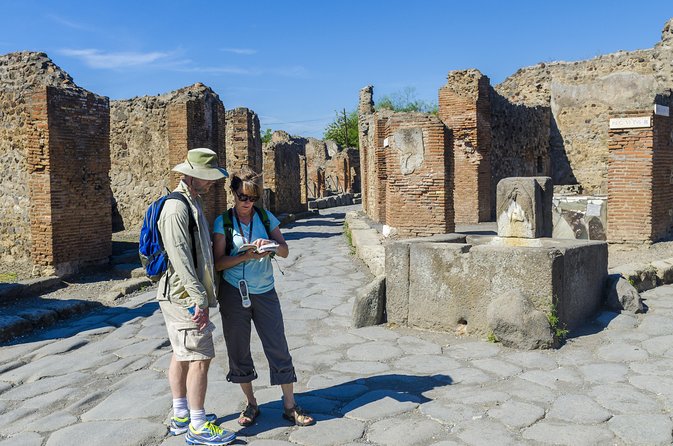
After the civic core, you shift into a more complete “city day” view. You visit temples such as the Temple of Apollo and the Temple of Jupiter, plus other major religious sites. You also pass by places tied to entertainment and spectacle, including the Large Theatre.
What I like about including these stops is that it shows Roman life was not just work and homes. Religious spaces shaped public identity. Theaters shaped shared culture. Even if you never go to a play in your regular life, you can feel how theaters were built for crowds and communal moments.
This part of the tour also makes the city feel less like a museum. It reminds you Pompeii was a place where people baked, shopped, debated, bathed, and gathered. Your guide’s anecdotes help connect those dots as you move through streets and building clusters.
If you are taking the tour in the afternoon, do not worry about “missing” anything. The route is intentionally built for orientation plus a hit list of core landmarks, so even a shorter time slot gives you enough to understand what you will want to return to later.
Houses, mosaics, and frescoes: why the art changes your viewpoint
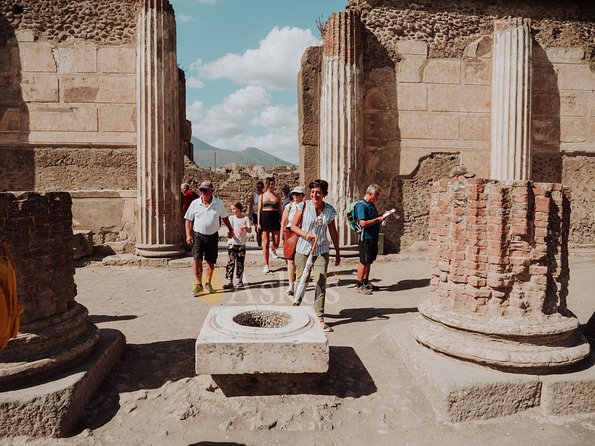
Pompeii’s preserved interiors are a huge part of what makes the site unforgettable. In this tour, you get close to preserved artworks, including mosaics, frescoes, and wall paintings in key homes like the House of the Vettii and the House of Menander, plus additional notable houses such as the House of the Faun.
These stops are where you stop seeing Pompeii as distant history and start seeing it like a lived environment. The art choices were not random. Frescoes and mosaics communicate taste, status, and personality. When your guide points out what you are looking at, you can begin to read what the Romans wanted guests and residents to feel.
Two homes in particular come up as highlights in the tour experience. The House of the Vettii is a major stop for preserved detail, and it tends to be one of the places where people slow down because the textures and painting survive so well. The House of Menander is another interior stop that gives you a sense of how a private residence could still be full of public-facing visual impact.
Practical note for your day: frescoes and mosaics often require you to look up and get close. Wear shoes that let you comfortably stand and shift positions. This is not a “sit and watch” kind of tour.
The Lupanar and the adult realities of Pompeii
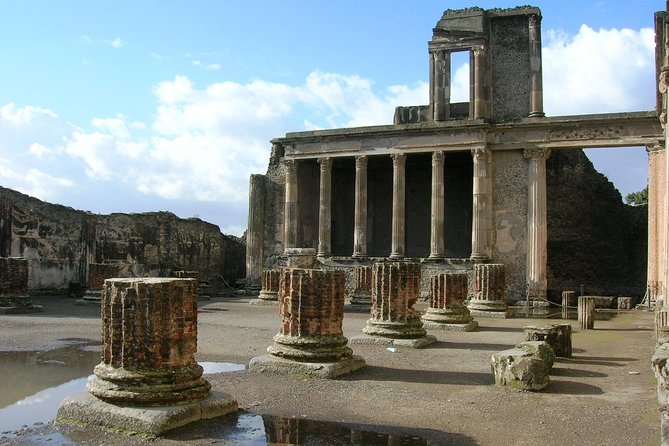
One of the most talked-about stops is the Lupanar, the famous brothel area. This is also one of the clearest reminders that Pompeii held adult life, not just decorative art and family-friendly romance.
On this tour, you see the preserved stone beds and wall paintings connected to the site. If your comfort level with explicit themes is sensitive, you should treat this as an adult-focused stop. If you are traveling with kids, it is worth thinking about the age and what kind of explanations you want them to hear. The guide approach can be considerate, but the location itself is adult in theme.
Even if you skip the emotional reaction and focus only on the historical meaning, this stop is valuable. It helps you understand that Pompeii included many economic and social layers, including spaces that handled human desire, money, and reputation in a very real way.
The best way to get value here is to listen for context. Ask what the name refers to and how the space functioned in daily life. When you connect the visuals to the social reality, you leave the stop with a deeper understanding than a quick glance would ever give you.
Plaster casts, 79 AD, and how the story becomes personal
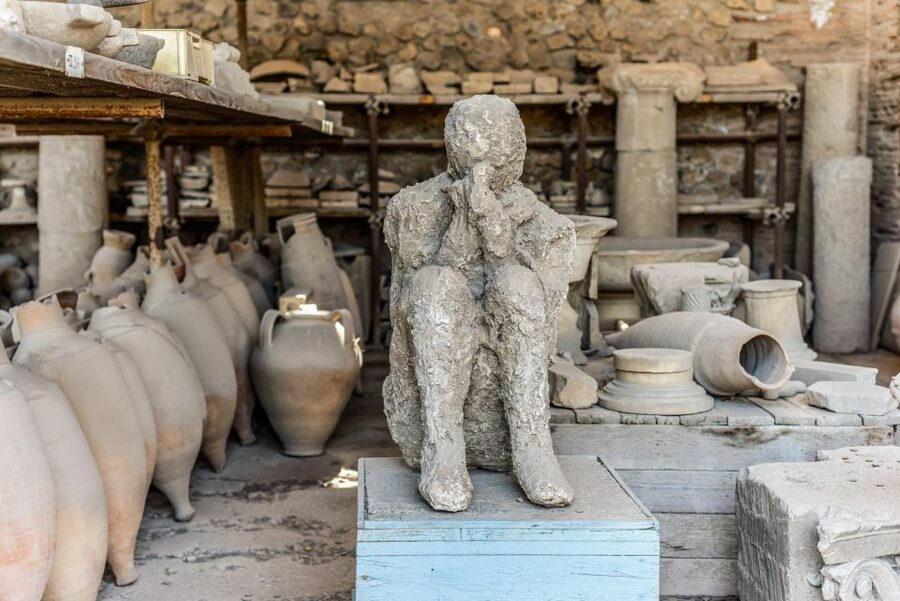
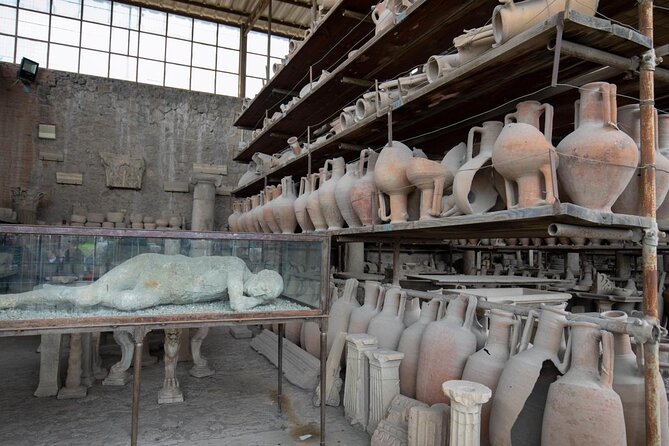
Pompeii’s famous catastrophe is 79 AD, when Mount Vesuvius erupted and preserved the city under volcanic ash. This tour brings that story into sharper focus by including a moment with plaster casts of people who were in the city at the time of the eruption.
You will also hear about how the victims and the eruption changed the city, but the plaster casts make it personal in a way that dates and timelines alone cannot. It is hard to keep it abstract once you see the shapes preserved and presented for study.
One detail to expect: you are not always viewing plaster casts inside the dwellings where people originally lived. In the current site presentation, there may be a limited number displayed in sealed glass cases. So if plaster casts are a top priority for you, do not assume you will see them “in place.” Instead, focus on the fact that the tour sets this moment up as one of the emotional and educational checkpoints.
Villa of the Mysteries: frescoes worth your extra hour
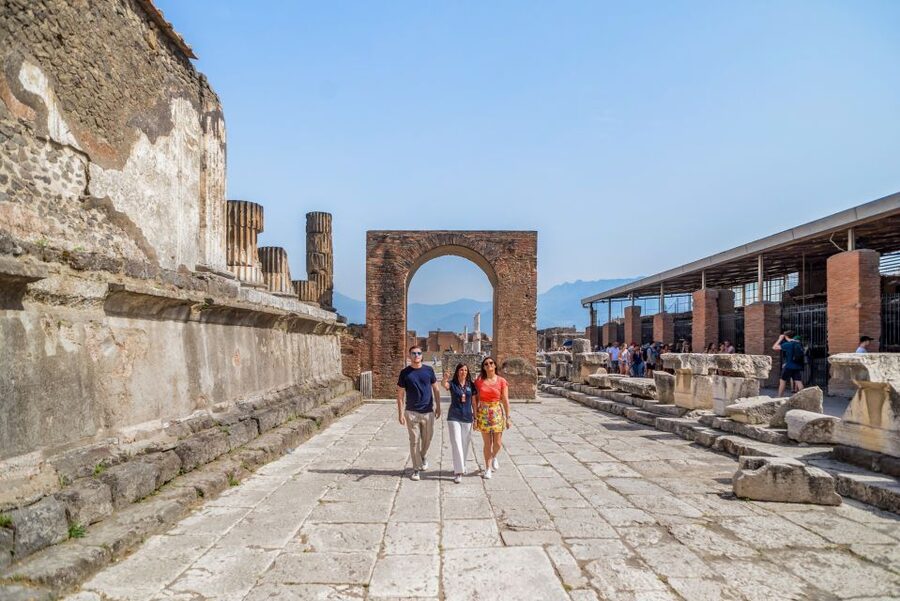
If you choose the 3-hour option, you add the Villa of the Mysteries. This visit is built around frescoes, and it is easy to see why it matters. Wall painting inside a villa gives you a different view of Pompeii than the street-level public sites.
This stop is especially compelling because it shifts from civic life and public routine to a more private, room-by-room experience. You start to understand how Romans used artwork to shape mood and meaning inside homes and villas.
If you love studying art details, this is the reason to pick the longer tour. If you are more interested in the overall city map and want time later for self-guided wandering, you can still have an excellent day with the 2-hour option. The best choice depends on whether frescoes are your priority or city orientation is.
What $40 gets you in real value, not just a ticket
At around $40 per person, this tour is good value for what you get. You pay for an archaeologist-led guided walk plus the Pompeii entry ticket, which is where many “cheap” tours start to fall apart. Here, the ticket is included, so your money goes directly to the guided experience and to getting you into the site efficiently.
You also get headsets for groups of 16 or more, which can help when you are walking and listening on the move. It is not glamorous, but it is practical. If you have hearing sensitivity, this is a detail worth being glad you have.
And then there is the freedom factor. After the guided segment ends, you are free to explore the archaeological park on your own. I like this structure because it solves a common problem: Pompeii is huge. A guide helps you understand where to go, and then you can slow down for the areas that really grab you.
Just remember the tour is short on purpose. It gives you the highlights and context, not every inch of the park. That is why leaving time for your own return visits is such a smart move.
Who this Pompeii tour suits best
This experience fits you if:
- You want a clear Pompeii introduction without getting lost in a huge site
- You care about how Romans lived, not only what survived
- You want the most important civic and domestic highlights in a manageable time window
- You like learning through stories as you walk from place to place
It may be a poor fit if:
- You use a wheelchair or have mobility impairments, because the tour is not recommended for those needs
- You need a low-step, low-ramp route. The site terrain and internal steps are part of the reality here
- You strongly prefer to avoid adult-themed locations like the Lupanar
Should you book this Pompeii small-group tour?
Yes, book it if you want Pompeii to feel clear and personal fast. The archaeologist guidance, the focus on major public and domestic areas, and the option to add the Villa of the Mysteries are a strong combination for the price.
Choose the 2-hour tour if you want a fast Pompeii orientation, then you plan to spend extra time wandering on your own. Choose the 3-hour tour if frescoes are a big deal for you and you want the Villa of the Mysteries as part of the same guided arc.
Skip this tour and look for a more accessible plan if mobility is an issue for you. Also, if adult themes are a concern for your group, decide in advance how you want to handle the Lupanar stop.
FAQ
How long is the Pompeii tour?
The guided tour lasts 2 or 3 hours, depending on the option you choose.
Is the Villa of the Mysteries included?
The Villa of the Mysteries is included with the longer 3-hour tour option.
Is the entry ticket included?
Yes. The Pompeii Express entry ticket is included in the tour.
Where does the tour start inside Pompeii?
The tour enters Pompeii at Porta Marina Superiore.
Does the tour include a guided visit with an archaeologist?
Yes. You get a 2- or 3-hour guided tour led by an archaeologist.
What languages are available for the guide?
The tour offers live guides in French, Spanish, German, Portuguese, English, and Italian.
Is the tour suitable for wheelchair users or mobility impairments?
No. The tour is not recommended for travelers with mobility issues and it is not suitable for wheelchair users.
What should I bring or avoid bringing?
Bring your passport or ID card (a copy is accepted). Smoking is not allowed, and luggage or large bags are not allowed on site.
Recently reviewed around Pompei Campania
- Pompeii Audioguide – TravelMate app for your smartphone★ 3.9 · 10 reviews
- Pompeii: Entry Ticket & Guided Tour with an Expert Historian★ 5.0 · 4 reviews
- Pompeii: Entrance Ticket – Skip the Line★ 3.8 · 64 reviews
- Pompeii: AR Glasses Augmented Reality Tour★ 5.0 · 3 reviews
- Pompeii Small Group Tour – Tickets Included★ 4.7 · 72 reviews
- Pompeii and Oplontis: Small Group Tour with an Archaeologist★ 4.5 · 3 reviews
- Pompeii and House of Vettii Guided Tour★ 3.7 · 3 reviews
- Pompeii 2H Private Guided Tour with Optional Tickets★ 5.0 · 3 reviews
Pompeii Tours, compared.
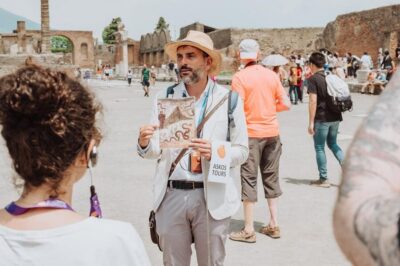
Entry Ticket and Guided Tour with an Archaeologist
Read our review →
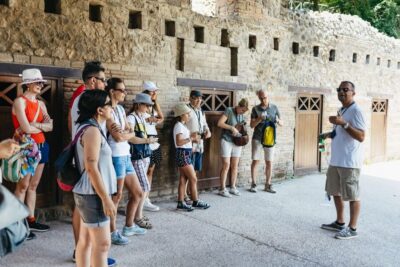

Pompeii Small Group Tour with an Archaeologist
Read our review →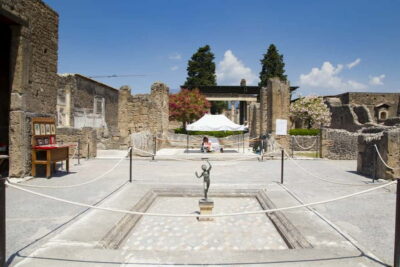
Naples or Sorrento: Full-Day Pompeii and Mount Vesuvius Tour
Read our review →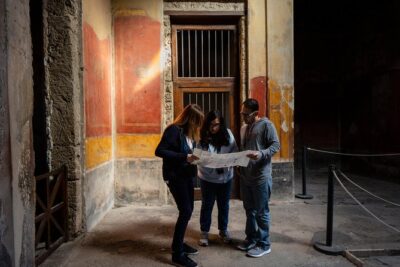
Pompeii & Mt.Vesuvius Day Tour from Naples with Pizza Lunch
Read our review →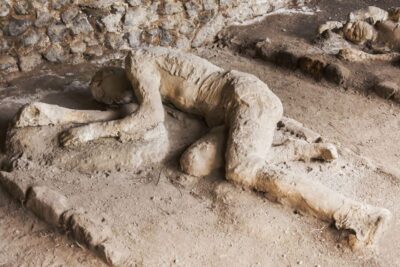
Pompeii & Mt Vesuvius All-Inclusive Small Group w/ Lunch
Read our review →Browse the lists this tour appears in