
Reviewed · HERCULANEUM TOURS
Herculaneum: Skip-the-Line Entry Ticket with Audio Guide
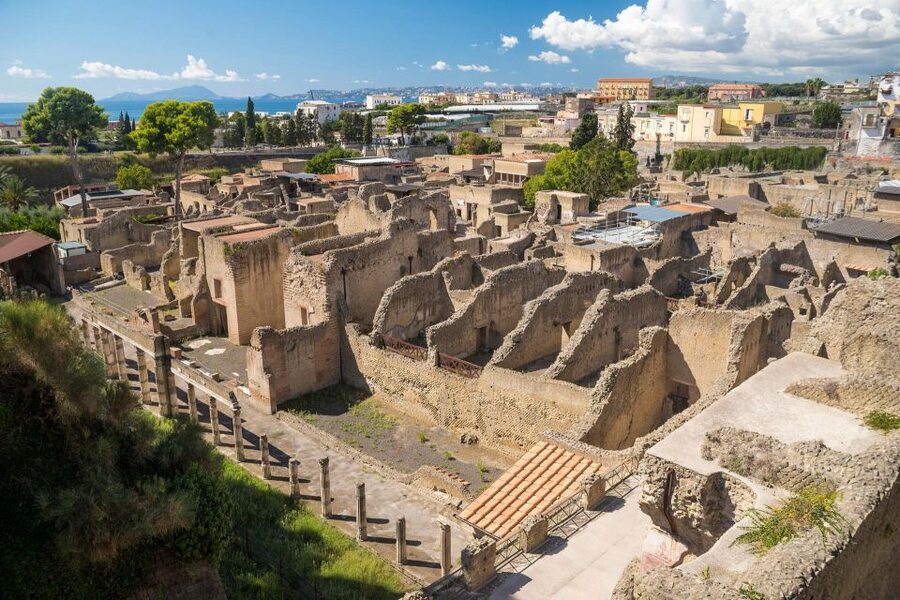
Herculaneum is the Roman disaster you can actually walk through, with houses, wall paintings, and even wooden details preserved under volcanic ash from 79 AD. I love how small and close-up it feels compared with Pompeii, so you notice the stuff you usually miss in big ruins.
I also like the audio guide plus map setup for a self-paced visit. You can bounce between the market area, public fountains, the theatre, and the villas without feeling locked into one rigid group tour route.
One drawback to plan for: audio stop cues and the numbering system do not always match what you see on the ground, and the entry versus audio-collection flow can feel confusing if you arrive with zero buffer time. Give yourself a little extra time to get oriented.
Key Things I’d Focus On
- Skip-the-line entry that often works fast, especially if you go earlier in the day
- Audio guide in English, French, German, Italian, Spanish, with a map to help you move around
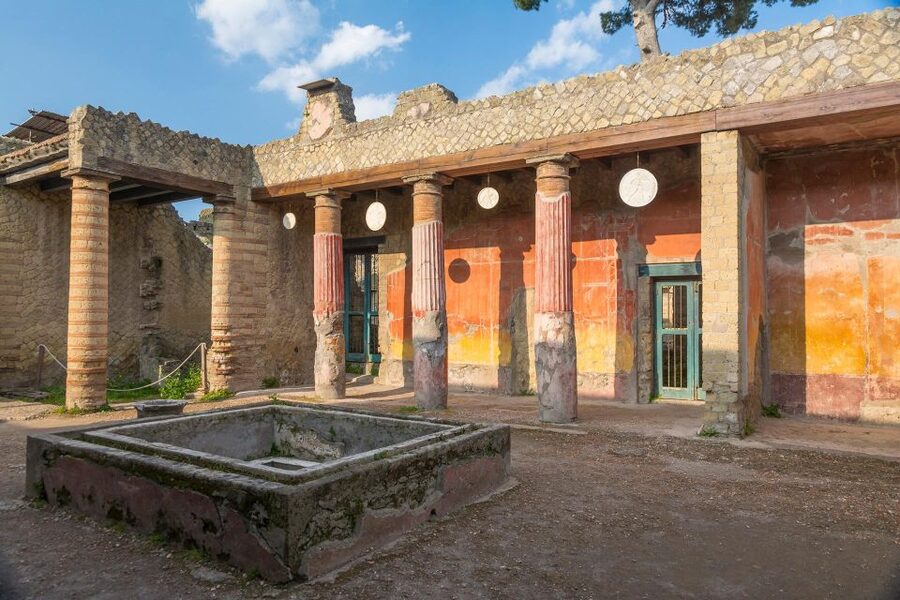
- Well-preserved villas, paintings, and wooden doors, giving you a rare look at everyday Roman life
- Market, fountains, theatre, and temples, so you get more than just fancy homes
- A somber stop near where people perished by the sea, which hits harder than you expect
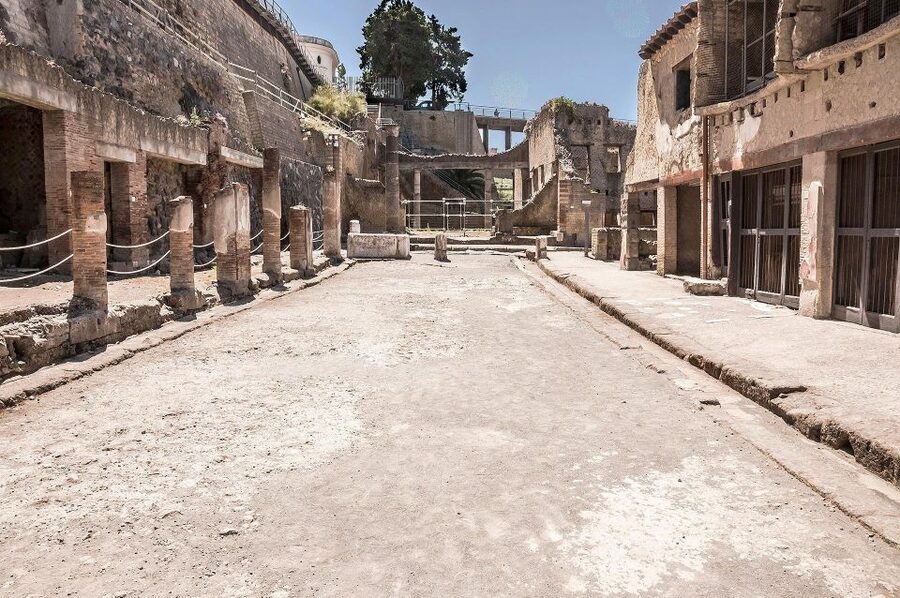
- Cobbles and steep steps, so plan for real walking on real stone
Herculaneum’s Real Advantage: It Feels Human-Scale
Herculaneum’s big superpower is preservation. Pompeii gets the fame, but Herculaneum feels more intimate, like the city was paused mid-day. As you move from home to home, you get a sense of what daily routines looked like, not just a list of monuments.
The site is also naturally less overwhelming. You spend more time looking closely at wall paintings, floors, and doorways, and less time fighting a crowd shuffle. That means your visit can be quieter and more personal, even though it is still a popular stop on the Naples circuit.
More Herculaneum tours in Naples:
- Herculaneum: Skip-the-Line Guided Tour with Archaeologist
★ 4.8 · 3,439 reviews - Herculaneum Small Group Tour and Ticket With an Archaeologist
★ 5.0 · 994 reviews - From Naples: Pompeii & Herculaneum with Archaeologist Guide
★ 4.8 · 665 reviews
Skip-the-Line Entry and the Audio Setup That Makes or Breaks Your Morning
This experience is built around a simple idea: get in, then explore at your own pace with an audio guide and map. You show your ticket at the Herculaneum Archaeological Park office and start from there.
Here is what matters in real life. Sometimes the process feels like two steps: ticket-related entry on one side, then audio collection at nearby desks. A few people reported getting turned around between desks before they finally got everything needed. It usually is not a disaster, but it is annoying when you are excited and hungry to start walking.
Quick tips to avoid the hassle
- Arrive earlier when possible, so any minor line or desk chaos stays minor.
- Keep your ID or passport handy. You may need it for audio guide collection.
- Don’t assume the first line you see is the one for your exact ticket type. Ask staff where to go if it feels unclear.
Once you have the audio system, you get the freedom to roam. That freedom is the point, because Herculaneum is best when you slow down and look.
What the Audio Guide Does Best (and Where It Can Go Off the Rails)
The audio guide is included, and it is available in English, French, German, Italian, and Spanish. It focuses on key points across the park, with stories and details that help you understand what you are looking at, not just that it is old.
A big win is that it is designed for wandering. You can pick up a new stop when you feel like it, and the map helps you connect the audio content to the physical layout. Many people found it easy to use after they got oriented.
Still, I would plan for imperfections. Multiple visitors noted that some audio cues and numbered points can be out of sync with what you see in the ruins. So instead of trusting it blindly, use the map, watch for the stop markers, and be ready to switch to your own eyes when something seems off.
Also, one practical note: some people wanted Bluetooth options for earbuds. If hands-free is a must for you, bring earbuds you already use, and be prepared that the audio setup might not match what you expect.
More self-guided routes around Naples:
- Pompeii: Skip-the-Line Entry Ticket with Audio Guide or Tour
★ 4.1 · 1,364 reviews - Naples: Pompeii Self Guided Audio Tour
★ 3.9 · 211 reviews - Naples: National Archaeological Museum audio guide
★ 4.0 · 155 reviews - Naples: Royal Palace Entry Ticket with Digital Audio Guide
★ 4.1 · 146 reviews
Villas, Frescoes, and Doors: Your Main Mission Here
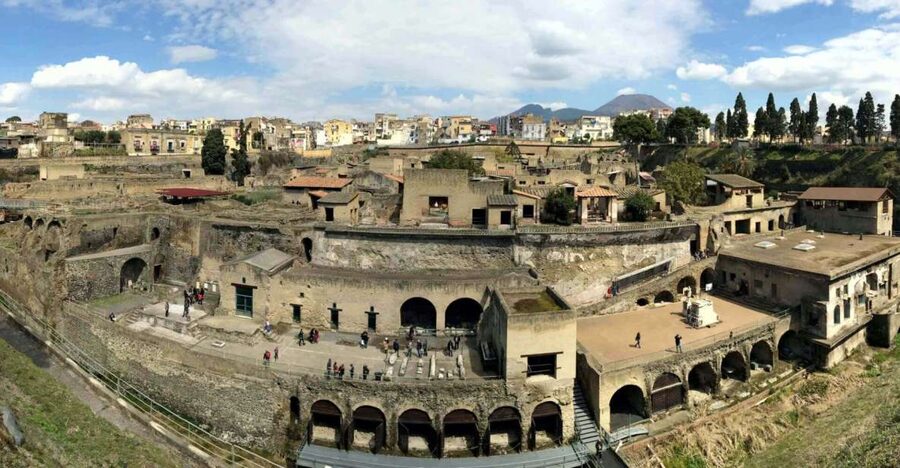
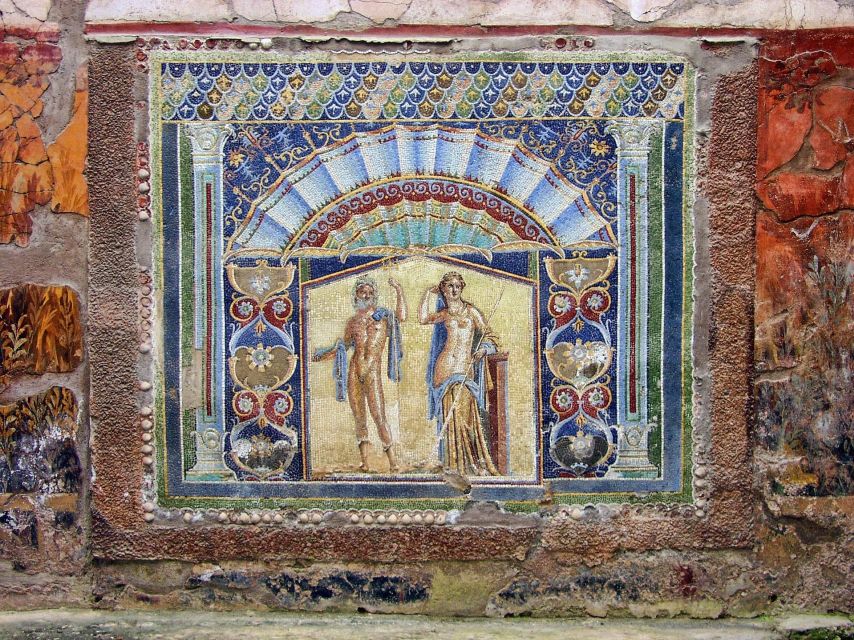
If you care about Roman interior life, Herculaneum rewards you fast. You’ll see well-preserved paintings, and you can also spot preserved architectural features, including wooden doors and beams in places where you’d expect everything to be gone.
This is where the audio guide earns its keep. Without context, frescoes can look pretty but disconnected. With the narration, you start to understand what spaces were for, what kinds of rooms mattered, and how the design signaled status.
How to move through the villas
Go slow in the rooms that look most intact. Those are the spots where the story details help you see the big picture: daily movement through spaces, how light landed on walls, and how art turned private rooms into statements.
If you notice the urge to hurry, resist it. Herculaneum’s best moments are the ones where you pause long enough for the details to click. And yes, there are places to sit down, so you can take breaks without losing your place in the flow of the visit.
The Market, Public Fountains, and the Theatre: Roman Life Beyond the Rich Houses
Herculaneum is not only about wealthy villas. The site includes parts that feel closer to street life, like the ancient market area and public fountains. You’ll also move toward the theatre, which adds a social layer to the visit.
This is a smart use of your self-guided time. While ruins in general can feel like a museum display, these public areas help you imagine how people gathered, traded, drank, and watched events. The audio narration ties those spaces to daily behaviors, so it’s not just archaeology, it’s a day in the life.
What I think you should look for
- In the market area, pay attention to how movement likely worked. Ask yourself where people would pause and where they would pass through.
- At the fountains, look at the setting as a social hotspot. Water access was not just practical, it was part of the rhythm of the neighborhood.
- In the theatre zones, focus on how public entertainment shaped community identity.
Temples, Gods, and the Social Gap You Can See in Stone
Herculaneum includes temples and areas with depictions of ancient gods. This part of the visit helps you see how religion and everyday space were tangled together, not separated into some distant category.
Then there is the other reality check: the contrast between living situations. The site allows you to compare how enslaved people were housed versus the more lavish spaces of wealthier Romans. That difference comes through in layout and room quality, and the audio guide helps connect those physical differences to the social system.
This is one of those moments where Herculaneum can feel more moving than Pompeii. You are not only looking at art and architecture. You are looking at human divisions made visible.
The Most Poignant Stop: The Sea Rescue Story and the People Who Didn’t Make It
There is an especially heavy area linked to where 300 people perished, hoping for rescue from the sea. Visiting this section changes the tone of the whole day.
If you are going in expecting a purely educational walk, this part catches people off guard. It is not a gore show, but it is emotionally direct. After you’ve been admiring artwork and rooms, the story reminds you this was not a finished product for tourists. It was real people, real fear, and real endings.
I’d treat this as your mid-to-late visit anchor point. Plan around it so you do not rush into it at the end when your brain is tired.
Museum Time Near the Exit: Artifacts That Add Context
There is a museum component near the entrance and exit area where you can see artifacts and additional context. In particular, people mention strong displays near the end of the walk, including furniture and other finds that help explain what you saw in the houses.
If you only have one realistic window for extra context, this museum is a good choice because it feels connected to your route. You leave the ruins with a clearer sense of how archaeologists interpret what is preserved.
Some guests also call out a boat and an Antiquarium, so if those are on your audio route or map, try to give them time rather than treating them as optional.
How Much Time You Need: 2 to 3 Hours Works, 4 Hours If You Can
A 1-day ticket does not mean you must be there all day. Many people finish in about 3 hours when they stay focused, and others stretch to 4 hours when they take it slow and stop for breaks.
My practical recommendation: plan for at least 2 to 3 hours, and build an extra hour if you want time for the museum and a real lunch break. If you arrive early, crowds typically are lighter and you can actually enjoy wandering instead of zig-zagging around people.
Wear the right shoes
Herculaneum is cobblestone and can include steep steps. Comfortable shoes are not optional. If you have knee issues or you hate uneven ground, take your pace seriously and plan more frequent pauses.
Best Timing and Getting There From Naples and the Pompeii Side
Timing matters here. Going earlier tends to mean fewer people on your feet, and it keeps your self-guided pace enjoyable. One common theme is arriving early so the crowds build more slowly around you.
On transport, if you are staying in Naples, you can reach Herculaneum by train. One helpful detail shared by visitors: take an EAV train from Garibaldi, then expect about a 12 minute walk afterward.
If you are also planning Pompeii, Herculaneum pairs well because you get a different vibe. Pompeii feels huge. Herculaneum feels personal.
Should You Upgrade to a Live Guide Like Tony or Fabio?
This ticket is self-guided, and a guide is not included. That said, upgrades to a guided tour are available sometimes, and several people praised specific guides.
Names that came up include Tony (fun, mindful of heat, strong storytelling) and Fabio (excellent pacing and historical explanation). Amara was also mentioned as very knowledgeable.
So how do you decide? If you love architecture and want the audio to be your main layer, the self-guided ticket is a solid choice. If you want someone to steer you to the most meaningful details and explain what you might otherwise miss, consider the upgrade.
Value Check: Is $15 Worth It?
At $15 per person, you are paying for three things: a skip-the-line style entry, an audio guide, and a map. That is good value because the audio guide is doing real work. It turns random ruins into a guided experience without the pressure of a group pace.
Where the value gets even better is when you visit with the right mindset. If you show up expecting a quick photo stop, the value feels lower. If you show up ready to listen and look, the audio guide helps you make sense of what you see, which is the whole point of paying for this format.
And remember, Herculaneum’s preservation means you are not just buying access to old stones. You are buying a rare look at a Roman city that still carries the feel of daily life.
Who This Works For Best
This self-guided audio format is a great fit if you:
- Like exploring at your own pace without being stuck with a slow or fast group
- Want a structured narrative, but still want freedom to linger in the rooms that grab you
- Prefer a less intense alternative to Pompeii, with a quieter feel and closer details
It is less ideal if you:
- Struggle with navigation and hate any chance of confusion over stop numbering
- Need perfectly reliable, GPS-like guidance
- Want a fully guided explanation from start to finish (since a live guide is not included)
A Small Note on Rules and Practicalities
For check-in, show your ticket at the ticket office. Bring passport or ID card and wear comfortable shoes. Audio guide collection may require you to leave identification as security.
Also, one interesting practical detail from visitor notes: on the first Sunday of every month, entry is free. If that matches your travel dates, you could save money by planning around that.
Should You Book This Herculaneum Audio Guide Ticket?
Yes, I think you should book it if you want a self-paced way to see Herculaneum without sacrificing context. The audio guide and map give you enough structure to make the visit feel purposeful, and the preservation here is strong enough that you will feel satisfied even without a live guide.
Book with extra confidence if you are going earlier, you wear good shoes, and you are okay with a bit of on-site navigation effort. I would not base your whole day on the audio numbering system working perfectly in every spot, but when you use the map and your eyes together, the experience is very rewarding.
If you want maximum clarity, especially for the deeper meaning of the spaces and contrasts, consider an upgrade to a live guide like Tony or Fabio when available.
FAQ
What is included with the Herculaneum skip-the-line audio ticket?
You get the Herculaneum entry ticket, an audio guide, and a map. A guide is not included.
Where do I meet or check in?
Show your ticket at the Herculaneum ticket office.
How long does this experience take?
The duration is listed as 1 day. In practice, it is a self-guided visit that many people complete in a few hours.
What languages are available for the audio guide?
The audio guide is available in English, French, German, Italian, and Spanish.
What should I bring with me?
Bring a passport or ID card and wear comfortable shoes.
Is this really skip-the-line?
This is described as a skip-the-line entry ticket. Some people reported quick entry, but the exact desk flow for audio collection can still feel a bit confusing, so plan a little extra time.
Can I cancel for a full refund?
Yes, free cancellation is available up to 24 hours in advance for a full refund.
Is there a guided tour option instead of only the audio guide?
A guide is not included with this ticket, but an upgrade to a guided tour was mentioned by some visitors.
Is audio guide collection dependent on ID?
The information provided says to bring a passport or ID card, and audio collection may require leaving identification as security.
Recently reviewed around Naples
- From Naples: Pompeii & Mount Vesuvius Full-Day Private Tour★ 4.5 · 4 reviews
- Pompeii with Wine Tasting Private Tour★ 4.7 · 6 reviews
- Pompeii, Amalfi, Ravello Day Tour with Private Transfer★ 5.0 · 3 reviews
- Ruins of Pompeii & the Amalfi Coast: Full-Day Private Tour★ 5.0 · 7 reviews
- Pompeii and Herculaneum: Private Tour from Naples★ 4.6 · 12 reviews
- From Naples: Pompeii Private Tour with Transfer and Guide★ 4.7 · 23 reviews
- Pompei: Private tour of Pompei and Vesuvius from Sorrento★ 5.0 · 8 reviews
- Pizza lesson★ 5.0 · 3 reviews
Herculaneum Tours, compared.


Pompeii and Herculaneum Small Group Tour with an Archaeologist
Read our review →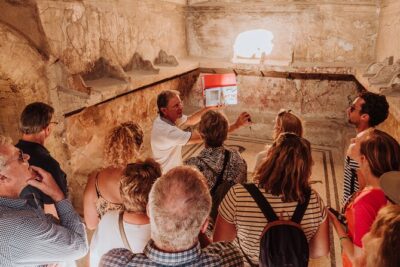
Herculaneum Small Group Tour and Ticket With an Archaeologist
Read our review →
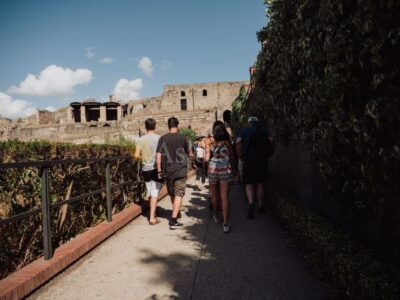
Pompeii & Herculaneum with Archaeologist Guide
Read our review →
Pompeii, Herculaneum, & Vesuvius Full-Day Tour
Read our review →
Ercolano: Herculaneum Entry Ticket with Optional Audio Guide
Read our review →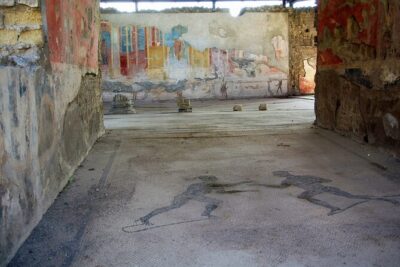
Day Trip of Pompeii, Herculaneum and Vesuvius from Naples
Read our review →Browse the lists this tour appears in