

Reviewed · HERCULANEUM TOURS
Herculaneum: Skip-the-Line Guided Tour with Archaeologist
Herculaneum is interesting because it is not just ruins, it is a town that was smothered so fast in 79 AD that everyday life survived in surprising ways. This archaeologist-guided format helps you connect the dots quickly, from wealthy homes and shops to the waterfront tragedy.
I especially like two things. First, the skip-the-line entry means you spend your energy inside the site, not waiting outside it. Second, your guide keeps the highlights anchored in real Roman life, including stops such as the House of Neptune and Amphitrite and the Temple of the Augustales.
A possible drawback to think about is the pace. The visit is only 2 hours, and Herculaneum is exposed and spread out, so if you want a slow, DIY wander or you have mobility limits, this may feel a bit rushed.
Key things that make this tour worth your time
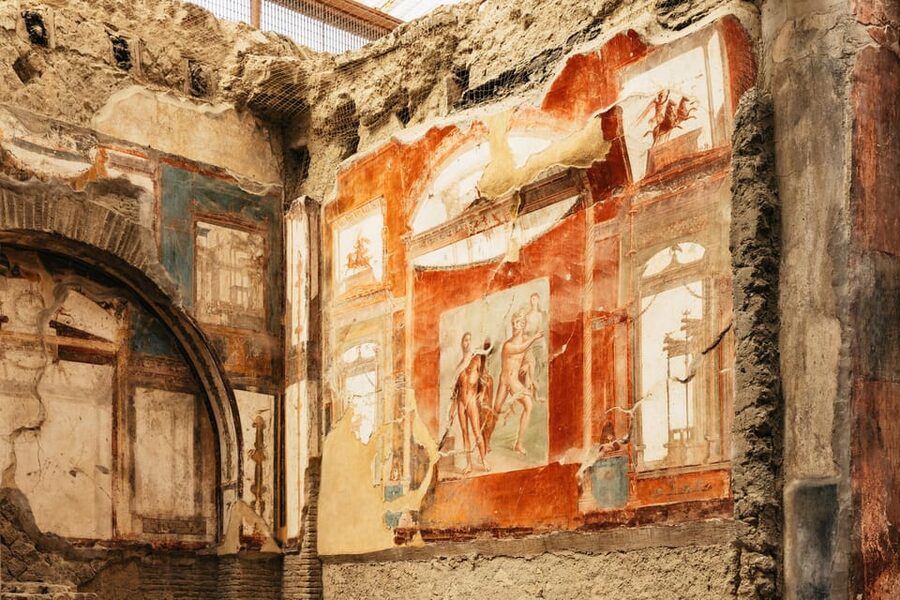
- Archaeologist-led storytelling that explains what you are seeing, not just what it is called
- Skip-the-line entry so you get more moments inside the ruins
- Headsets included, which makes a big difference in a busy outdoor site
- Herculaneum vs Pompeii comparisons, including why the eruption looked different here
- Packed-with-life stops, from thermal baths and forum areas to major house sites
- Memories of the disaster in physical details, including carbonized wood and preserved art fragments
A Roman town you can actually read, without needing a history degree
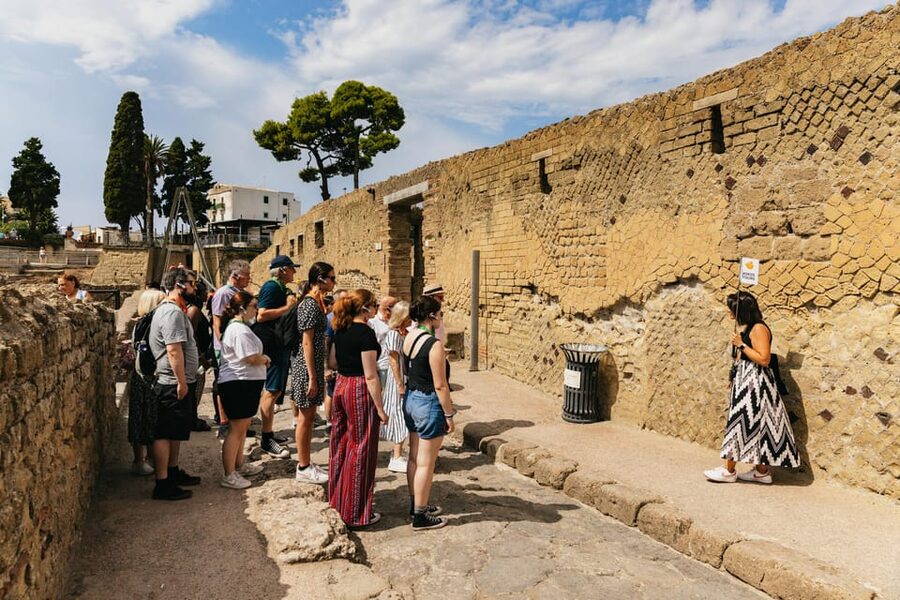
Herculaneum is one of those places where you do not need imagination. The site has a way of doing it for you. You look at walls, floors, and household details, and then an archaeologist guides you through what those spaces meant day to day. You learn how nobility and merchants lived in a port town, how the waterfront worked, and how quickly life ended when Mount Vesuvius erupted nearly 2,000 years ago.
You also get a very practical advantage. With skip-the-line access and a structured 2-hour walk, you can see the big features without losing half your day to ticket lines and indecision. This is especially helpful if you are pairing Herculaneum with Pompeii, because the guide will help you spot the contrast fast.
More Herculaneum tours in Naples:
- Herculaneum Small Group Tour and Ticket With an Archaeologist
★ 5.0 · 994 reviews - Herculaneum: Skip-the-Line Entry Ticket with Audio Guide
★ 4.3 · 870 reviews - From Naples: Pompeii & Herculaneum with Archaeologist Guide
★ 4.8 · 665 reviews
Price and what you really get for your money
This tour is listed at $53 per person for a 2-hour experience, and it includes admission fees, an archaeologist guide, and headsets. That matters. At sites like this, admission plus a guide plus the time-saving factor can cost much more when booked separately.
Also, the small details add value:
- The guide is an archaeologist, so questions about objects, buildings, and excavation methods get real answers.
- Headsets help you follow directions and explanations as you move around.
- You are not just watching a slideshow. You are walking the streets and stepping into the kind of spaces where Romans actually lived.
If you are the type of person who wants one well-timed, high-impact guided visit rather than a long, self-guided day, this pricing structure usually feels fair.
Entering Herculaneum through the ticket office, then into the action
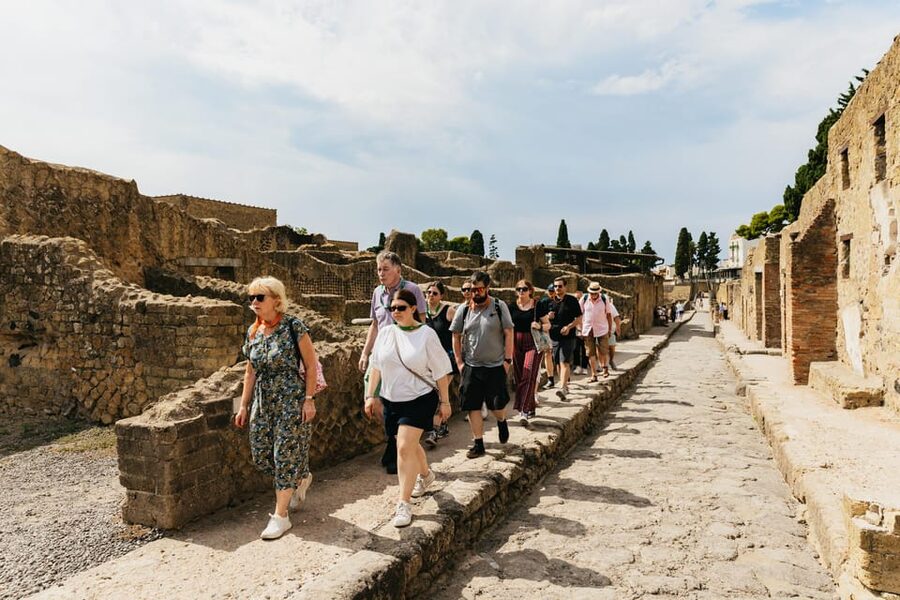
You meet at the ticket office of the Herculaneum Ruins, where the guide holds an Askos Tours sign. From there, the day becomes straightforward. You are already at the site, and the tour format is designed to get you moving quickly to the key areas.
One smart tip: wear closed-toe shoes. Herculaneum is difficult underfoot, and you will cover enough ground that sandals can feel like a bad idea within the first 20 minutes. Bring sunscreen and a hat too. Even when you think you are just walking between ruins, this site can bake in open sections.
The disaster story, told where it actually happened
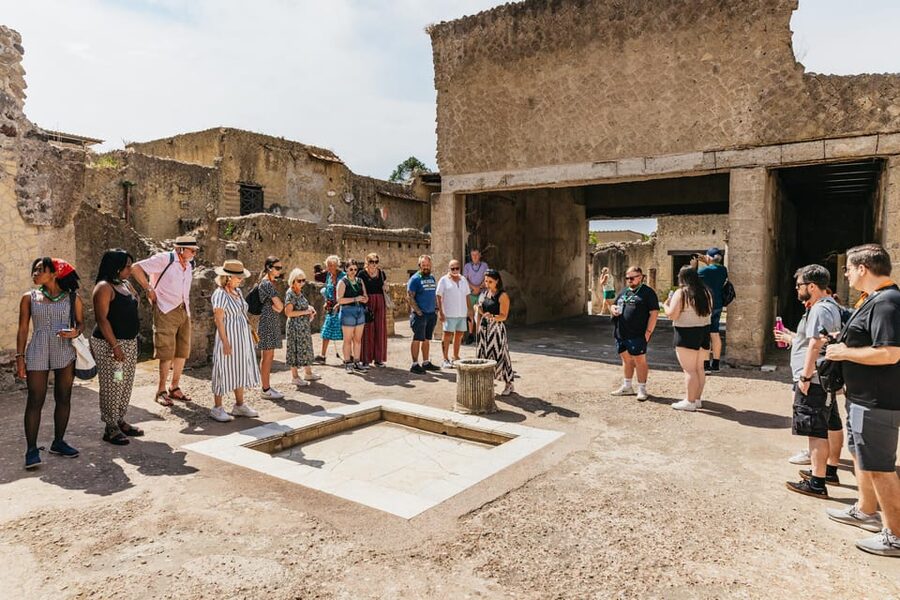
Most visitors come for the architecture, and that is valid. But what makes Herculaneum hit hard is how the guide ties the city to the eruption. You will hear how the port town connects to the final moments, including the waterfront area where the remains of more than 300 people are associated with people who tried to escape by taking to the ocean.
Here is the key difference you should pay attention to. The guide will explain the comparison with Pompeii, and why Herculaneum can look and preserve things differently. That contrast is not just trivia. It changes how you read what is in front of you, especially the preserved materials.
A few more Naples trips worth comparing
- Mount Vesuvius: Skip-the-Line Ticket and Smart Digital Guide
★ 4.2 · 2,780 reviews - From Naples: Pompeii Skip-the-Line Entry Ticket and Tour
★ 4.4 · 2,753 reviews - Pompeii: Skip-the-Line Entry Ticket with Audio Guide or Tour
★ 4.1 · 1,364 reviews - From Naples: Pompeii Guided Tour with Skip-the-Line Tickets
★ 4.8 · 1,171 reviews
How the guide turns the houses into real homes
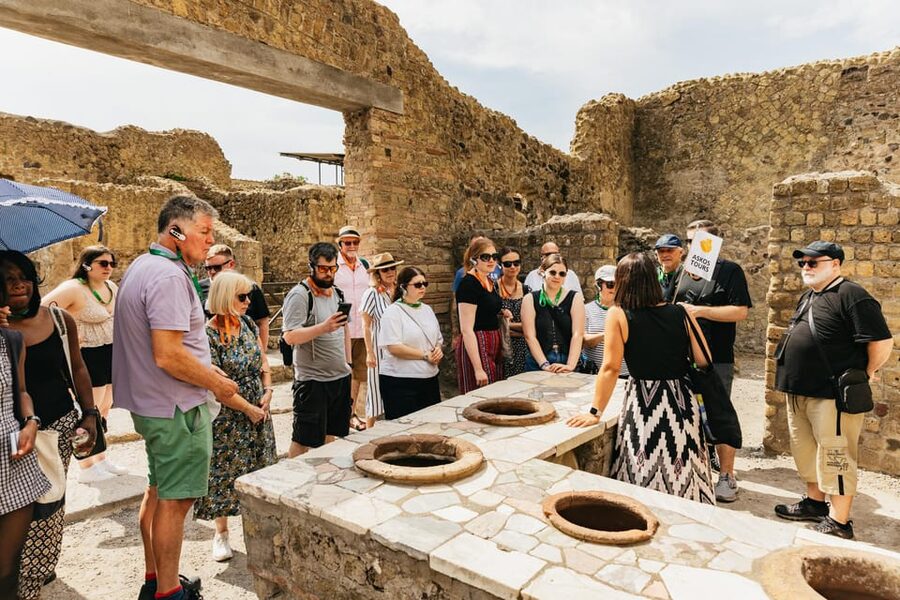
After you get the larger picture, the tour shifts into specific household sites. This is where a good archaeologist guide earns their keep. Names like Casa dei Cervi or House of Skeletons are not exciting by themselves. The excitement comes from what you learn to notice once someone tells you where to look.
Casa dei Cervi: details that make Roman rooms feel lived-in
In a place like Herculaneum, the big win is often the small win: floor layout, decorative fragments, and the way rooms relate to each other. Casa dei Cervi gives you a chance to see how a Roman home was organized and decorated, and why it is so meaningful that so much survived.
If you like archaeology because you enjoy connecting art, design, and daily routine, this stop is a good one. You will likely focus less on one single object and more on how the spaces worked.
Casa di Nettuno ed Anfitrite, the House of Neptune and Amphitrite
This is one of the tour highlights for a reason. The House of Neptune and Amphitrite is the kind of site where the guide can point out symbolism and decorative style in a way that makes the walls feel like culture, not just stone.
And this is also a perfect stop to think about class. The homes of wealthy citizens, with their decorative attention and household layout, are a window into the social world of Herculaneum’s nobility and merchants.
House of Skeletons: the grim reminder built into the architecture
The House of Skeletons is exactly what it sounds like in name, but the value is what it helps you understand. It is a reminder that what preserved a city also captured its final moments. The guide can connect this to the broader story of how people faced the eruption.
If you are a sensitive visitor, this can feel heavy, but it is also one of the places that makes the story concrete. The site does not let you treat 79 AD like a vague chapter in a textbook.
Casa dell’Albergo and Casa del Salone Nero: the in-between spaces
These stops help you see more than elite villas. They give you a better sense of how buildings functioned within the city fabric. Even when you are not looking at a famous artwork, you are learning about Roman building use, movement through rooms, and how decoration fit different property types.
This part of the tour tends to be a sweet spot for people who want context. You start to recognize patterns: where people gathered, how spaces were divided, and how everyday life differed across households.
The civic and ceremonial side: thermal baths, forum areas, and the Augustales
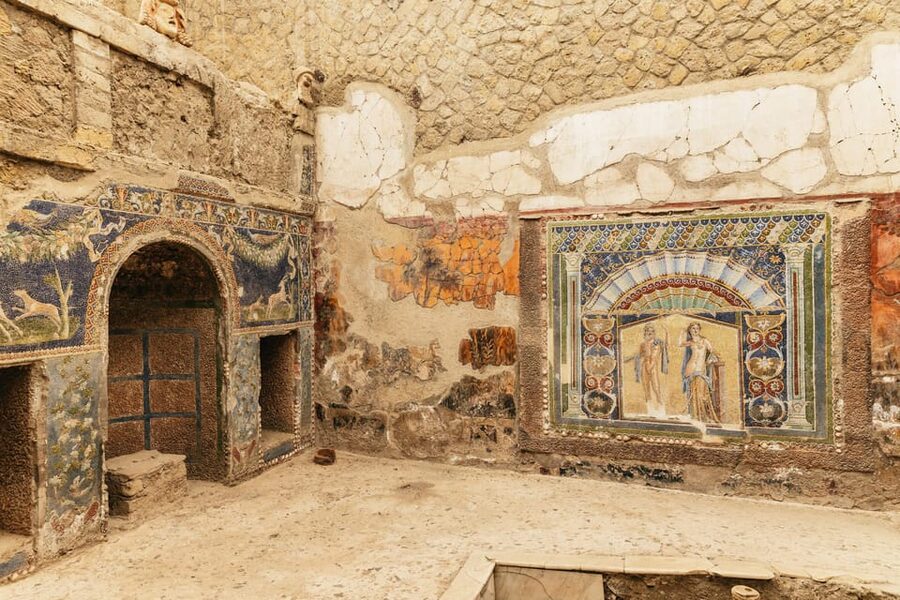
Herculaneum is not only about homes. It is also about the city’s public rhythm. The tour includes major civic and ceremonial features, and this is where an archaeologist guide really helps you keep everything straight.
Thermal baths and forum areas: life in public spaces
Roman thermal baths were about more than cleanliness. They were a social hub, and the guide will help you imagine the routines that went with it. Watching the way people would have moved through bath spaces, then comparing it with how those spaces look in preservation, makes the town feel active.
You also cover areas tied to the forum and broader public life. This gives you the sense that Herculaneum worked like a community, not just a collection of houses.
Temple of the Augustales, also tied to the Sacellum of the Augustales
The Sacellum of the Augustales and the Temple of the Augustales help you understand religious and social organization. A guide can connect who worshipped, what symbols mattered, and why these areas were important in daily civic identity.
This stop is especially useful if you want the “why” behind the stones. You are not only looking at art or architecture, you are learning what it signaled.
The preserved art and materials: why this site feels different from Pompeii
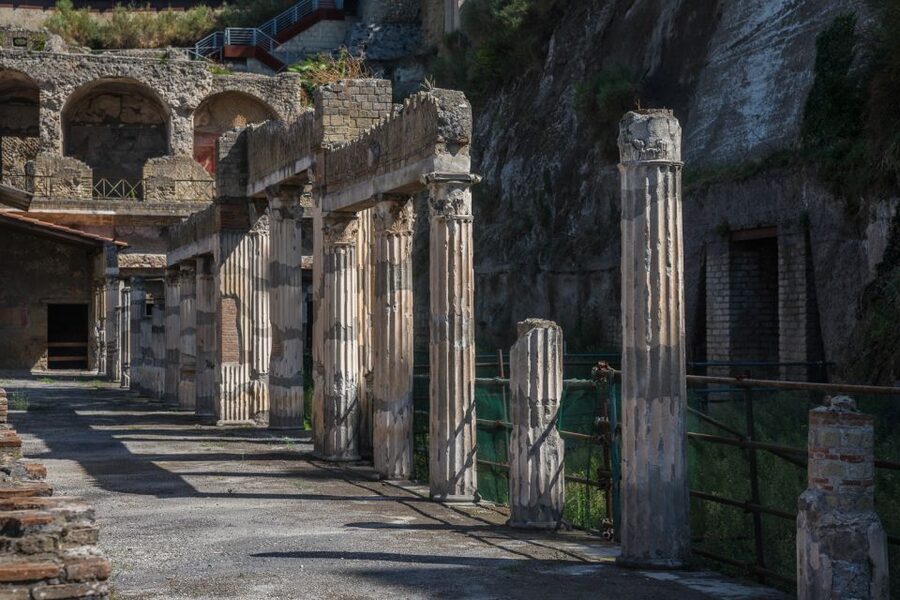
One of the biggest reasons people get emotional about Herculaneum is what survived. You will see preserved stone, marble, and ceramics. You may also learn about carbonized wood and surviving fragments tied to paintings and mosaics.
These details change your perspective. At Pompeii, many visitors focus on buildings. At Herculaneum, you can focus on objects and textures that feel closer to what people touched and saw.
Also, the guide may show comparisons and visuals to help you connect the eruption timeline with what you see today. In some cases, guides use binders, books, and photos with overlays to illustrate what the structures looked like before the disaster layers formed.
Group size, headsets, and why you should stand where you can hear
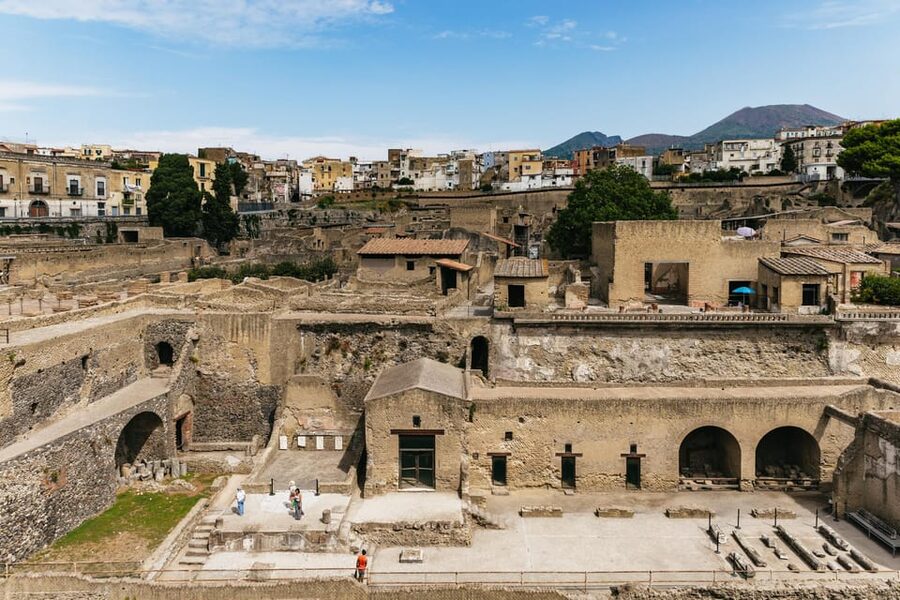
The tour includes headsets, which is a big deal in an outdoor site where your guide can move ahead. From the way the tour is described, groups are often sized for control, typically not massive crowds, and that helps.
Still, if you want the best experience, do not hang back. A few guide moments can get harder to catch if you are at the far edge of the group. If you are sitting or standing in a spot where the audio drops out, you will miss part of the story.
You do not need to be right beside the guide, but you do want a position where you can follow both the walk and the explanation.
Timing: 2 hours feels short, but the highlights are packed
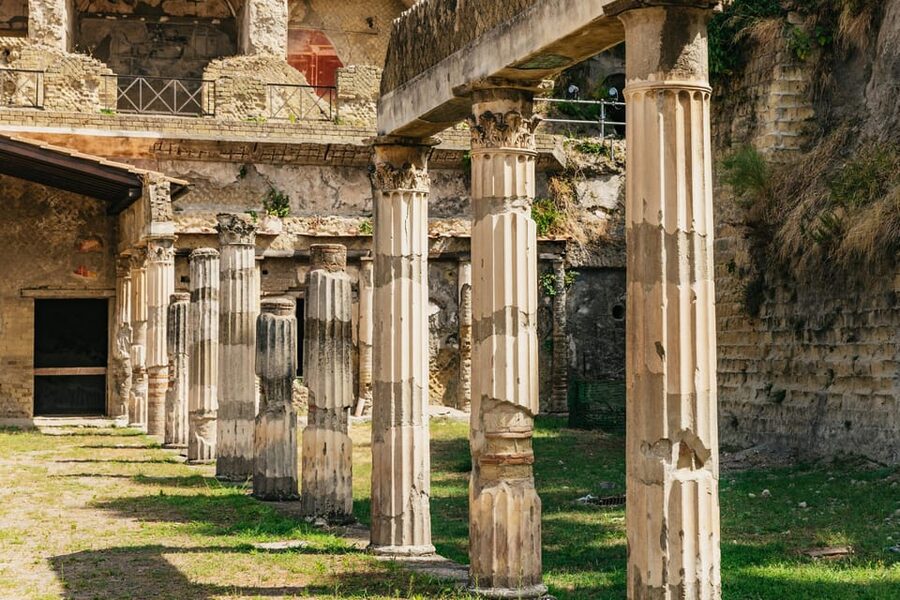
Expect a walk that moves through major highlights without turning into a long school lecture. Many guides cover a lot by focusing on what matters: how life worked, how the eruption unfolded, and what is special about each stop.
The practical note is simple. Because Herculaneum is vast and very exposed, you should plan for weather and sun. The tour happens rain or shine, so bring a raincoat if the forecast looks questionable. Cold hands and wet shoes happen fast here.
Who this tour is best for
This is a strong choice if:
- You want a guide-led visit to understand what you are seeing in a meaningful way
- You are comparing Herculaneum with Pompeii and want the differences explained clearly
- You like archaeology that connects buildings to people and daily life
- You prefer a structured, time-efficient outing rather than a full-day self-guided scramble
It is not a great fit if:
- You have mobility impairments or use a wheelchair, since the site is not suitable for those needs
- You want a slow, pick-any-route kind of day
- You do not want to walk on uneven ground for a couple of hours, even with breaks built into the flow
Practical checklist before you go
Bring:
- Passport or ID card
- Comfortable closed-toe shoes
- Sunscreen and a hat
- A raincoat if needed
Plan for:
- No luggage or large bags
- Unaccompanied minors are not allowed
- The site is exposed, so shade breaks may be limited depending on where you are walking
Also, this is worth saying plainly: if you are visiting with kids, you will probably do best if they are interested in stories and visuals, because the tour is designed to keep you moving through multiple standout areas.
Should you book this Herculaneum skip-the-line archaeologist tour?
If your goal is to see Herculaneum’s best preserved highlights and come away understanding the story behind them, I think this is a smart booking. The skip-the-line access, archaeologist-led guide, and headsets combine into a strong value package at $53, especially when admission fees are part of the deal.
Book it if you want your visit to feel organized and meaning-filled, with stops such as the House of Neptune and Amphitrite and the Augustales areas explained in context. Skip it or consider a different style of visit if you need long, unhurried wandering time, or if mobility is a concern.
If you only have one guided shot at Herculaneum, take this one. It is built to help you read the city fast, and that makes the site hit harder.
FAQ
How long is the Herculaneum skip-the-line guided tour?
The guided tour lasts 2 hours.
What is included in the tour price?
The tour includes a guided visit to Herculaneum, admission fees, an archaeologist guide, and headsets. Food and drinks and transportation are not included.
Where do I meet the guide?
Meet at the ticket office of the Herculaneum Ruins. The guide will be holding an Askos Tours sign.
Do I need to bring an ID or passport?
Yes. You should bring a valid passport or ID card.
Is the tour suitable for wheelchair users or people with mobility impairments?
No. It is not suitable for wheelchair users or people with mobility impairments.
What should I wear or bring for the visit?
Wear closed-toe shoes and bring sunscreen (and a hat is recommended). The tour runs rain or shine, so a raincoat can help if needed.
Recently reviewed around Naples
- From Naples: Pompeii & Mount Vesuvius Full-Day Private Tour★ 4.5 · 4 reviews
- Pompeii with Wine Tasting Private Tour★ 4.7 · 6 reviews
- Pompeii, Amalfi, Ravello Day Tour with Private Transfer★ 5.0 · 3 reviews
- Ruins of Pompeii & the Amalfi Coast: Full-Day Private Tour★ 5.0 · 7 reviews
- Pompeii and Herculaneum: Private Tour from Naples★ 4.6 · 12 reviews
- From Naples: Pompeii Private Tour with Transfer and Guide★ 4.7 · 23 reviews
- Pompei: Private tour of Pompei and Vesuvius from Sorrento★ 5.0 · 8 reviews
- Pizza lesson★ 5.0 · 3 reviews
Herculaneum Tours, compared.
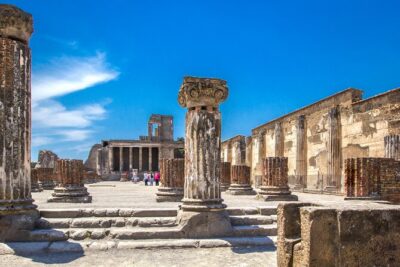
Pompeii and Herculaneum Small Group Tour with an Archaeologist
Read our review →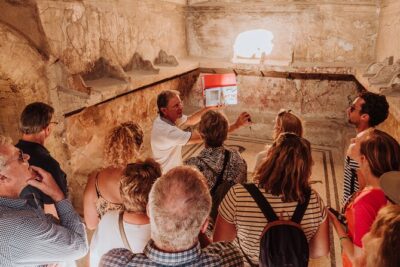
Herculaneum Small Group Tour and Ticket With an Archaeologist
Read our review →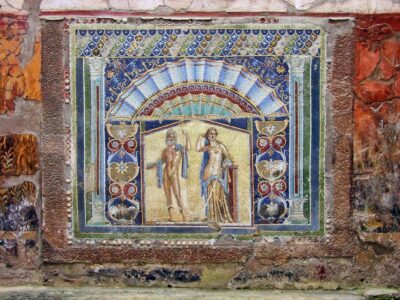

Pompeii & Herculaneum with Archaeologist Guide
Read our review →
Pompeii, Herculaneum, & Vesuvius Full-Day Tour
Read our review →
Ercolano: Herculaneum Entry Ticket with Optional Audio Guide
Read our review →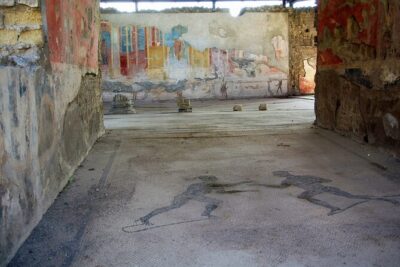
Day Trip of Pompeii, Herculaneum and Vesuvius from Naples
Read our review →Browse the lists this tour appears in