
Reviewed · HERCULANEUM TOURS
Herculaneum – Small Group Tour (admission included)
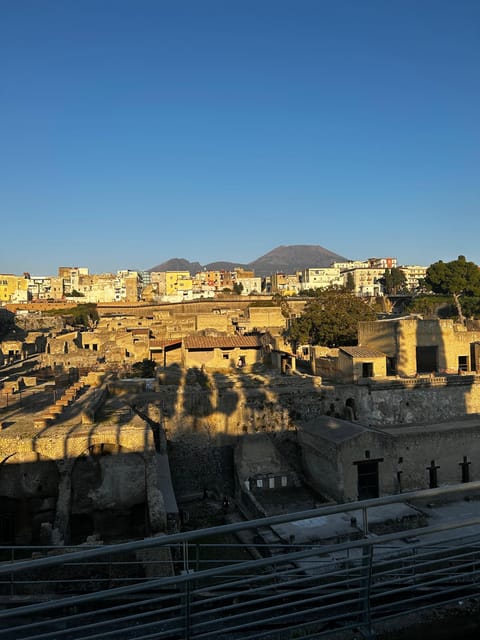
Herculaneum is interesting because the Vesuvius eruption did two things at once, it destroyed the town and also preserved it in a way that lets you study everyday Roman life at close range. Vesuvius shaped everything here, and the results are visible in the ruins you walk past today.
I love how this tour is built around the story of the eruption first, then shifts into what you can actually see, from house decorations to the layout of the settlement. Small group size is another win, and it shows in the way guides like Roberta or Marzia can stop for questions and keep explanations at a good pace.
One consideration: it is a 2-hour tour, so if you love lingering, you may want to plan extra time to revisit areas on your own after the guided portion ends.
Key things you’ll like on this Herculaneum tour
- Skip-the-line admission so you lose less time waiting outside the site
- Regione Campania licensed guide who leads the walk and keeps the story grounded
- Eruption-focused intro that explains how and why Herculaneum looks the way it does
- Boat museum stop tied to the area’s coastal, daily life
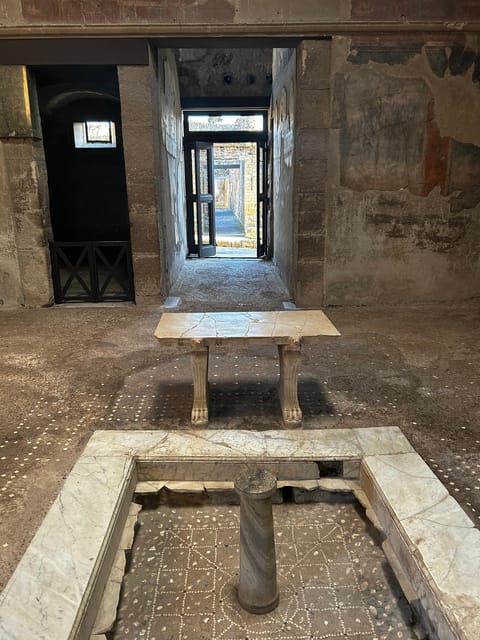
- Wealthy-residential feel with attention to elegant details in private houses
- Question time in a small group so the ruins feel more personal, not rushed
Herculaneum’s preserved streets feel more personal than Pompeii
If Pompeii is the big, dramatic postcard of Vesuvius, Herculaneum is the more intimate study. The same 79 A.D. eruption buried Herculaneum, but the outcome looks different. Here you get a sense of a residential town, one that was smaller than Pompeii but often richer, where the wealthy decorated homes in ways you can still recognize.
This tour leans into that idea from the start. You do not just get a list of walls and columns. You get a “how this happened” explanation that makes the preservation feel logical instead of random. And once it clicks, the site becomes easier to read: you start noticing textures, layout, and those refined details in private houses that hint at how people lived.
In other words, you are not just viewing ruins. You are learning how a disaster can freeze daily life in place. That is why Herculaneum feels different, and why a guided walk helps so much here.
More Herculaneum tours in Ercolano:
- Ercolano: Herculaneum Entry Ticket with Optional Audio Guide
★ 4.1 · 581 reviews - Herculaneum: Skip The Line Entrance ticket + Audioguide
★ 4.3 · 266 reviews - Naples: Pompeii and Herculaneum Tour with Tickets and Lunch
★ 4.4 · 136 reviews
Where you meet at Corso Resina, 187 and what small-group touring changes
This tour starts at Corso Resina, 187, and the meeting point is just outside the Herculaneum ticket office. Knowing that matters because Herculaneum can be busy around entry times, and starting cleanly keeps the first minutes from turning into a scavenger hunt.
The group size is described as small. In practice, that means you are more likely to hear explanations clearly and have time for questions. One group experience described being four people, which is the kind of ratio that lets a guide answer in a way that actually fits your interests, whether that is how the eruption worked, what a room’s decoration implies, or what daily routines might have looked like.
You also get a live guide in German, Italian, or English. That matters at ruins where it is easy to feel like you are reading your own guesses. With a guide on your side, you can connect the visible details to the broader story of Roman life on the Bay of Naples.
The eruption story: how Vesuvius buried a city under 60 feet of ash
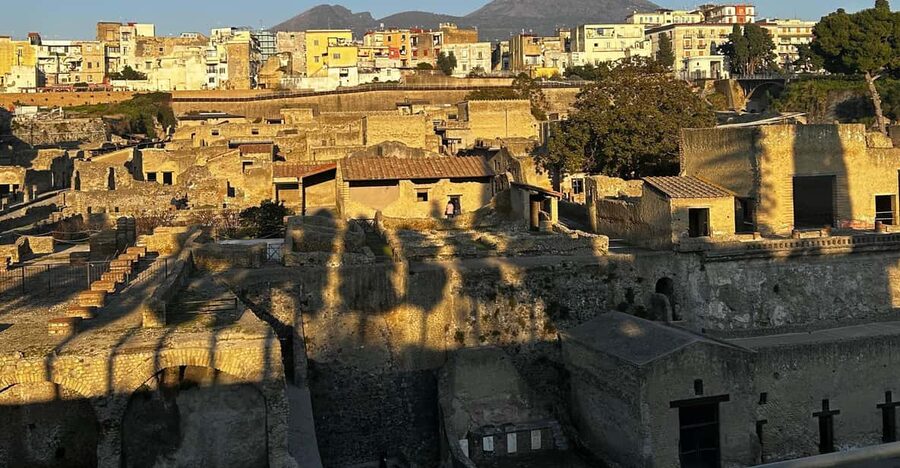
The heart of this tour is the introduction that focuses on the eruption and the nature of the city. You start with the big picture of 79 A.D., then the guide brings it down to what it meant on the ground. The important idea to remember is that Herculaneum was covered by pyroclastic flows, and the remains ended up under about 60 feet of cinder.
That number is not trivia. It is the reason the site can feel so “still there.” Instead of only a scattered layer of debris, you get a dramatic kind of burial that helped preserve parts of the town in a way that people can still study today.
You will likely hear the comparison angle too: both Herculaneum and Pompeii were hit by the same eruption, but the effects were not the same. That helps you avoid a common mistake, treating these sites as identical versions of the same disaster. Herculaneum has its own personality because it was shaped differently by the eruption’s forces.
Why Herculaneum looks the way it does, preservation explained clearly
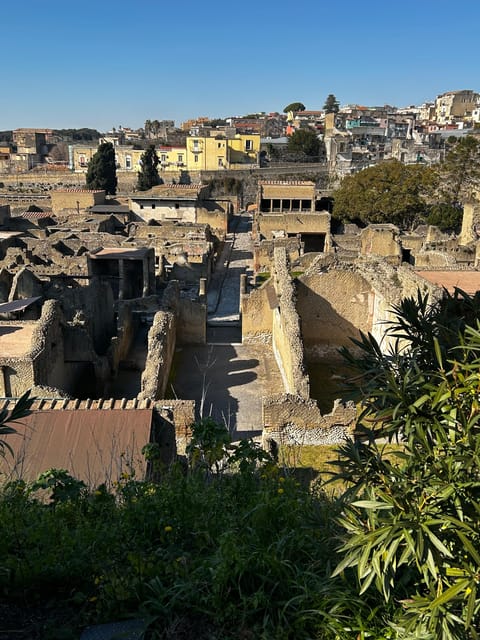
A big part of the value here is the explanation of why the preservation is peculiar. Herculaneum’s charm is tied to that. You can stand in the ruins and understand that the town was not preserved as a museum display. It was preserved because the catastrophe trapped and protected materials in unusual conditions.
That is where the tour becomes more than sightseeing. The guide helps you “read” the site, including how the settlement structure and building styles reflect a wealthy residential center. You will hear that Herculaneum was a home base for the upper classes, and that it is smaller but in some ways richer than Pompeii.
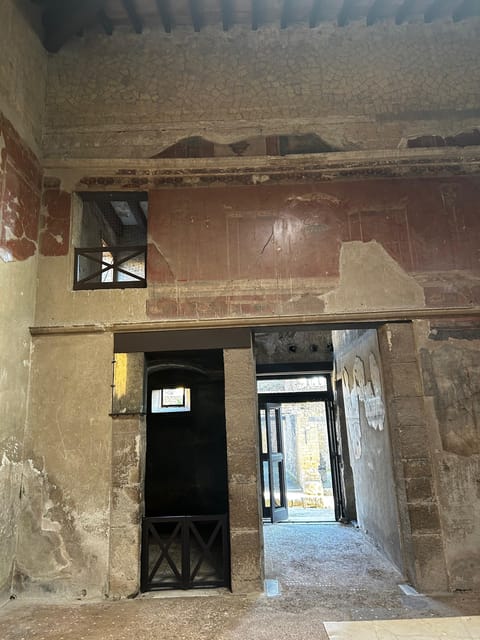
As you walk, the emphasis tends to shift to what still shows through: original building styles and elegant decorations in private houses. Those details matter because they give you something concrete to imagine, what daily life might have been like, and why Roman domestic spaces could communicate status.
A different sort of day around the Bay of Naples:
- Vesuvio Skip The Line Ticket With Digital Audioguide
★ 3.2 · 91 reviews - Herculaneum Archaeological Park smart Audio Tour
★ 3.8 · 70 reviews - Herculaneum: Private Walking Tour with Archeologist Guide
★ 5.0 · 59 reviews - From Naples_ Vesuvius transfer+ticket and digital audioguide
★ 3.7 · 58 reviews
Boat museum stop: coastal life made physical
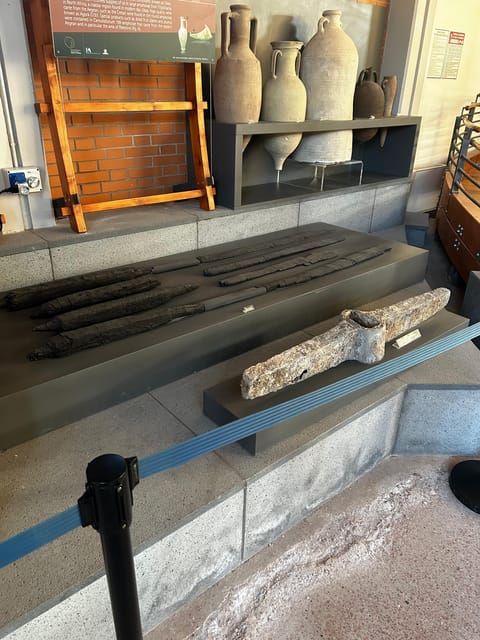
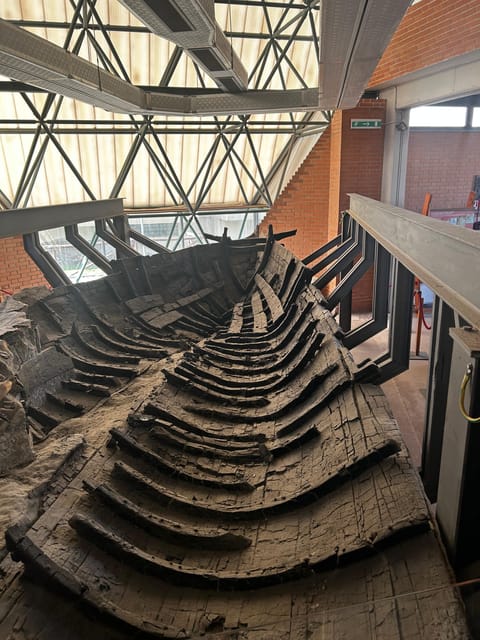
One of the highlights is the explanation of preservation plus a visit connected to the boat museum. This is a smart inclusion because it widens the story beyond buildings. Coastal towns run on trade, travel, and supply routes, and the harbor side of a disaster can reveal a different angle than a streets-and-villas-only tour.
Even without drowning in technical detail, the boat museum stop helps you picture Herculaneum as a working place, not just a set of decorative homes. It also reinforces the eruption story in a tangible way. You are seeing how preserved remains can act like evidence, letting you connect the Roman world to real objects tied to everyday movement and commerce.
If you like tours that balance “look at this” with “why it matters,” this is the kind of stop that keeps Herculaneum from becoming repetitive. The site can be visually striking, but the boat museum helps you understand the human systems behind it.
Typical Roman daily life, from painted rooms to wealthy house details
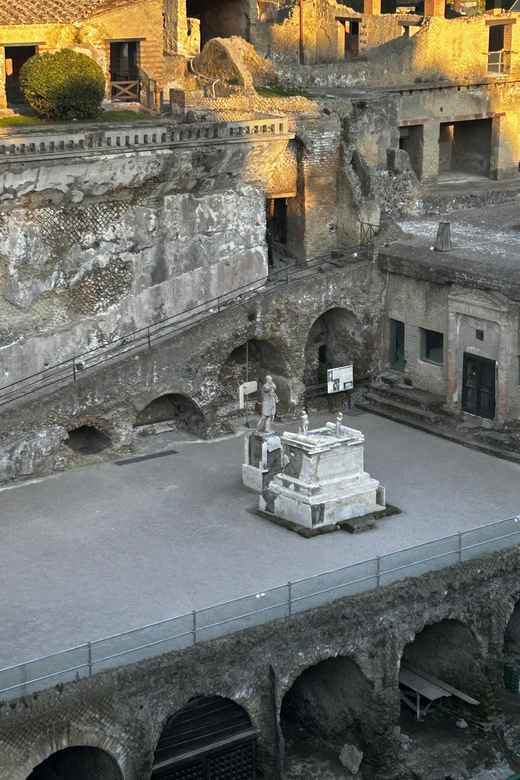
After the eruption foundation and preservation context, you get a walking focus on typical life in an ancient Roman center. This is where the tour earns its keep, because guides can turn archaeology into something you can picture: spaces for living, routines implied by room structure, and the social meaning of decoration.
Expect attention to private houses, including decorations and paintings that signal the wealth of the area. This is not about impressing you with pretty surfaces. It is about showing how art, design, and layout worked together to communicate comfort and rank. When you understand that, the ruins become more than stone shells.
One practical thing you will appreciate is how guides handle questions. People have described guides taking the time to answer thoughtfully and going into great detail without turning the tour into a lecture. If you are traveling with family, you may also find the guide adjusts explanations to the group’s curiosity. One guide named Gabriella has a reputation for keeping children engaged by matching explanations to what kids actually want to know.
Even if you are not traveling with kids, that approach tends to benefit adults too. When a guide pitches explanations at the right level, the ruins click faster, and your brain stops treating the site like an outline.
How long it lasts, what fits in 2 hours, and what might not
The tour runs about 2 hours. That is long enough to get the eruption framing, cover major areas of the walking route, and include the boat museum stop. It is also short enough that you will not feel dragged around.
But because it is time-limited, you will not have endless freedom to linger in every corner. If you are the type who reads every inscription and sketches floor plans, you might want to treat this as the guided “first read,” then plan time afterward to go back where you felt the strongest connection.
Some guides may also add a bit of extra context at the end. One experience described Marzia taking the group to a nearby Antiquarium to show exhibits connected to the town. That sounds like the kind of helpful bonus that can turn your visit from a walk into a fuller sense of place, but it is best to see it as optional extra context rather than guaranteed.
Price and value: $75 for admission, guide time, and skip-the-line entry
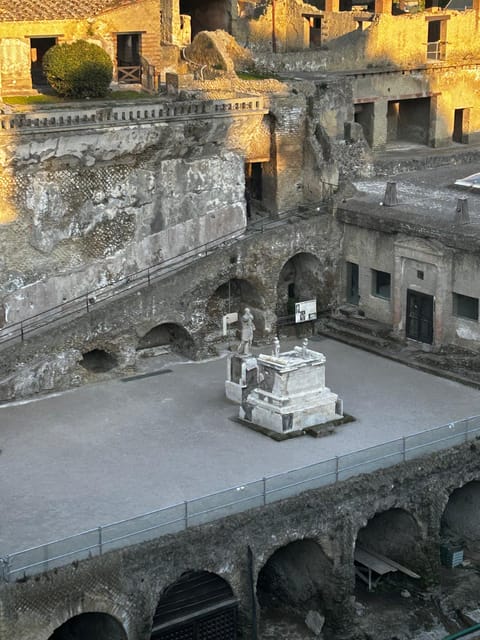
At $75 per person, the value comes from what is included. You get a licensed tour guide, live interpretation, and an admission ticket without the ticket-line hassle. For a site where waiting can eat up your energy, skip-the-line access is a genuine time saver.
The other value is the guide’s role in making sense of the preservation and daily-life focus. You could wander Herculaneum on your own, but you would likely miss the “why” behind the look of the ruins. Paying for interpretation is what turns the visit into understanding, especially when the tour explains the eruption dynamics and the differences between Herculaneum and Pompeii.
You also have flexibility options, since free cancellation up to 24 hours in advance and a reserve now, pay later setup are available. If your plans are still moving around, that reduces stress and helps you lock in a guide.
For whom is this price point ideal? If you want a guided, high-meaning visit without spending all day, this fits well. If you are mainly looking for a self-paced photo walk, you may not need a guide for the same cost.
Should you book this Herculaneum small-group tour?
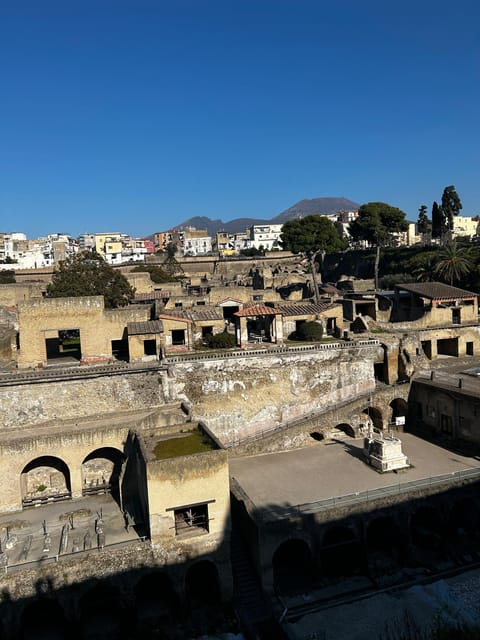
Book it if you want the key advantage Herculaneum offers: the ability to understand Roman life through preservation. This tour is built around eruption context, the reasons the site survives in a unique way, and a focus on what daily life looked like in a wealthy residential town.
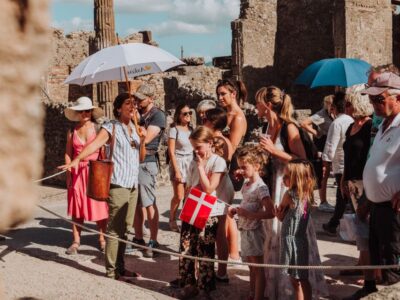
I would also book it if you care about group dynamics. The small-group setup is often the difference between hearing a guide passively and being able to ask questions that actually change how you see what is in front of you. Based on examples of guides like Roberta and Marzia, you can expect a tone that keeps learning moving at a human pace.
Skip it only if your top goal is a long, self-directed wandering session. The two-hour format is efficient, not sprawling. If you want to spend hours in one area, add extra time beyond this guided tour.
If you want your Herculaneum visit to feel like discovery rather than sightseeing, this is a strong choice.
FAQ
How long is the Herculaneum small-group tour?
The tour lasts 2 hours.
Is admission included?
Yes. You get a skip-the-line admission ticket included in the tour.
Where do we meet for the tour?
You meet just outside the Herculaneum ticket office, at Corso Resina, 187.
What languages are the live guides?
The live guide is available in German, Italian, and English.
Is it a small group?
Yes, it is offered as a small group tour.
Can I cancel and get a refund?
Yes. Free cancellation is available up to 24 hours in advance for a full refund.
Recently reviewed around Ercolano
- Herculaneum: Skip-The-Line Entrance Tickets + Audioguide★ 4.7 · 3 reviews
- Herculaneum: Private Tour with Driver from Naples★ 4.6 · 15 reviews
- Herculaneum: Private Walking Tour with Archeologist Guide★ 5.0 · 59 reviews
- Herculaneum Archaeological Park smart Audio Tour★ 3.8 · 70 reviews
- Herculaneum Guided Walking Tour with Entry Ticket★ 3.7 · 21 reviews
- Herculaneum: 2hour Shared Guided Tour + entry tickets★ 4.3 · 38 reviews
- Herculaneum: Entrance tickets + audioguide★ 2.7 · 4 reviews
- From Sorrento: Herculaneum & Pompeii Day Trip with Lunch★ 4.0 · 3 reviews
Herculaneum Tours, compared.

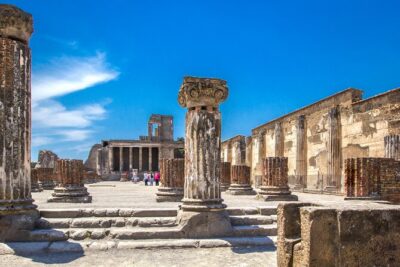
Pompeii and Herculaneum Small Group Tour with an Archaeologist
Read our review →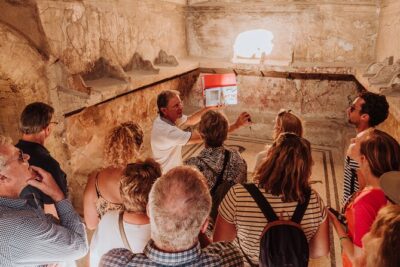
Herculaneum Small Group Tour and Ticket With an Archaeologist
Read our review →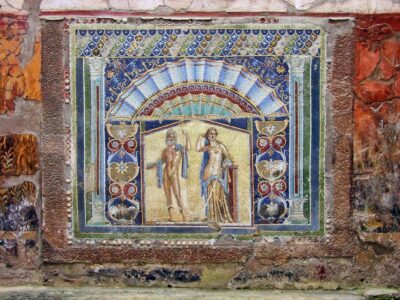
Pompeii & Herculaneum with Archaeologist Guide
Read our review →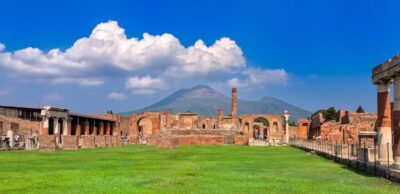
Pompeii, Herculaneum, & Vesuvius Full-Day Tour
Read our review →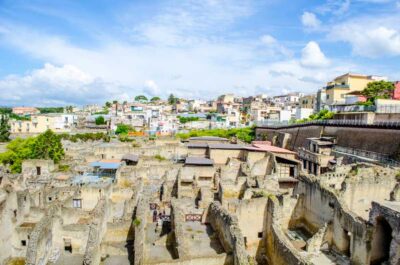
Ercolano: Herculaneum Entry Ticket with Optional Audio Guide
Read our review →Browse the lists this tour appears in