
Reviewed · POMPEII TOURS
Pompeii: Skip-the-Line Entry Ticket with Audio Guide or Tour
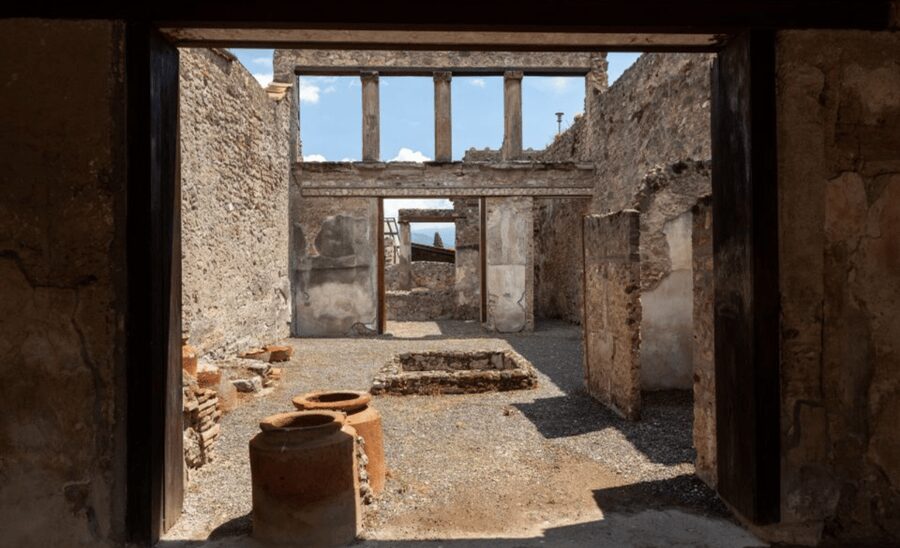
Pompeii is the kind of place that feels unreal, because you are walking through a whole Roman city that was preserved under volcanic ash. The smart part here is the skip-the-line fast-track entry, so you lose less time fighting queues and more time reading the city with your own eyes.
I also like the included audio guide with a digital map. It helps you connect what you are seeing to the big story, whether you choose to go self-guided or you tag along with a live art historian.
One thing to plan around: the ticket does not include access to the suburban villas, including the Villa of the Mysteries, Villa of Diomedes, and Villa Regina. If those villas are on your must-see list, you will need a separate plan.
Key highlights to know before you go
- Fast-track ticket pickup at Piazza Esedra at the Vox City info point, in front of Hotel Vittoria
- Skip-the-line entry into Pompeii so you start exploring sooner
- Audio guide in multiple languages with a digital map (plus downloadable content via a QR code)
- Optional live tour with an art historian in English, Spanish, or Italian
- A focused 2-hour route through major sights like the Forum area and the big temples
- Suburban villas are not included, so you stay within Pompeii proper
Piazza Esedra to Pompeii Gate: getting in without stress
This experience starts right where you want it to start, at Piazza Esedra. The Vox City info point is right in front of Hotel Vittoria, and that is where you exchange your voucher for the official entry tickets.
If you have ever arrived at Pompeii and watched the line grow, you will appreciate the logic of doing the ticket work outside the entrance area. With the fast-track entry, you bypass a big chunk of waiting and move toward the excavations faster, which matters because Pompeii is large and time goes quickly once you are inside.
Do yourself a favor and arrive a touch early. If you choose the optional guided tour, tours depart at your booked time slot, and arriving about 5 minutes early keeps everything smooth.
More Pompeii tours and tickets in Naples:
- From Naples: Pompeii Ruins & Mount Vesuvius Day Tour
★ 4.3 · 11,459 reviews - Naples or Sorrento: Full-Day Pompeii and Mount Vesuvius Tour
★ 4.6 · 4,235 reviews - Pompeii & Mt.Vesuvius Day Tour from Naples with Pizza Lunch
★ 4.0 · 2,901 reviews
Two ways to explore: live art historian tour or self-guided audio
You can take this as either a short guided walk or a self-guided visit with audio. That flexibility is a real value play because Pompeii works best when you can slow down at the places that grab you.
If you select the guided option, you get a professional guide described as an art historian, available in English, Spanish, or Italian. In that format, your guide handles the “what am I looking at and why does it matter” part, and you spend more time moving efficiently through busy zones.
If you skip the live guide, you rely on the audio guide and digital map. This is a good choice if you like wandering in your own rhythm or if your group has different interests. Just note the practical reality: your phone becomes the control center for audio, and you will want it charged.
Download the audio guide correctly, then use it like a map
Before you go, your voucher includes a QR code you scan to download the audio guide ahead of arrival. The package also includes a multilingual commentary track in English, French, Spanish, German, and Italian, but your phone still needs to do the heavy lifting.
Also, bring headphones and a charged smartphone. Headphones are not included, and you do not want to reach Pompeii with a dead battery and no way to listen.
Here is how I would use it once you are inside: think of the audio guide as short interpretive stops, not as a strict itinerary. Several points in Pompeii have obvious “pause and look” moments, like mosaics, inscriptions, and painted wall fragments. When the audio starts based on location, you get the context right when your eyes need it.
One heads-up based on real-world use: GPS-based autoplay can be inconsistent in large sites. If your audio does not start automatically, you may need to manually trigger the next clip from the map. Keep a little patience for that, and you will still get a lot out of the guide.
Core route in 2 hours: Forum, temples, theaters, and views
A 2-hour visit sounds short until you realize Pompeii is laid out like a city with “anchors.” This experience focuses you on the major zones so you do not waste your time zigzagging randomly.
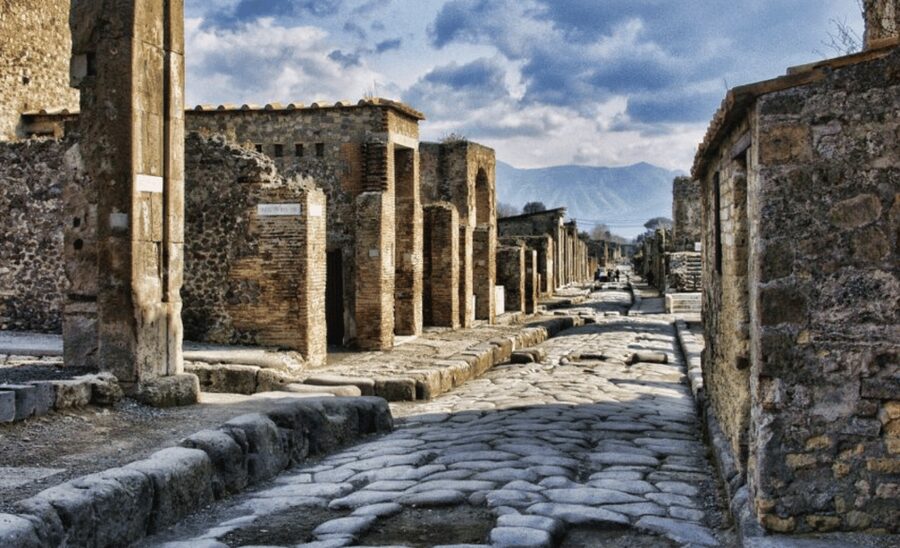
You will be walking streets that were buried under volcanic ash from the eruption in 79 C.E. and are now open for you to experience Roman daily life in fragments that feel incredibly specific. Pompeii is spread over roughly 44 to 50 hectares, so you will not see everything in two hours. But you can see enough to understand what mattered to Romans.
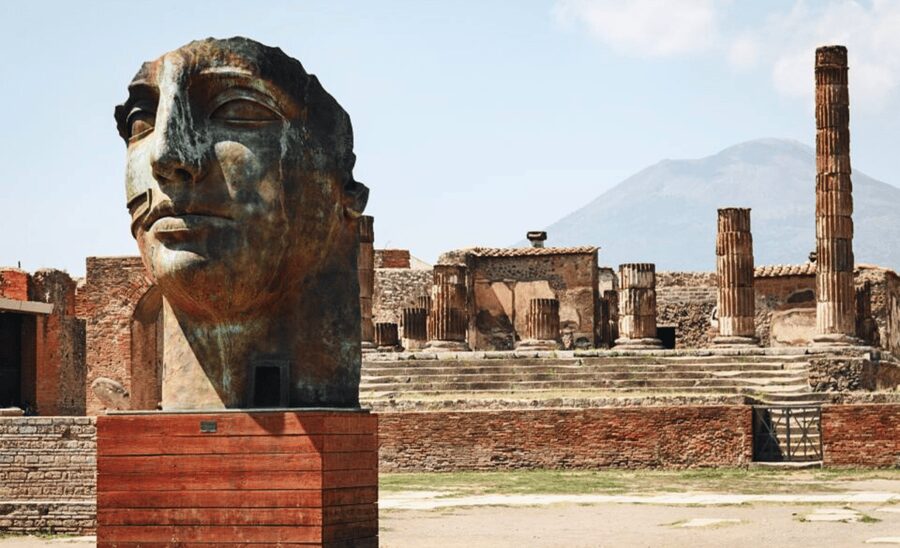
You can expect to encounter some of Pompeii’s big-name religious and civic spaces. The highlights built into this visit include grand temples dedicated to Venus, Apollo, and Jupiter, plus the Forum area with Mount Vesuvius in the background when weather and vantage points cooperate.
You will also get time near major public structures, such as theaters and parts of the city’s infrastructure like aqueduct remnants and fountains. Even without every side room, you still get the feel of how a Roman town managed movement, water, and crowds.
More self-guided routes around Naples:
- Herculaneum: Skip-the-Line Entry Ticket with Audio Guide
★ 4.3 · 870 reviews - Naples: Pompeii Self Guided Audio Tour
★ 3.9 · 211 reviews - Naples: National Archaeological Museum audio guide
★ 4.0 · 155 reviews - Naples: Royal Palace Entry Ticket with Digital Audio Guide
★ 4.1 · 146 reviews
Temples and the Mount Vesuvius backdrop: the photo you came for
Pompeii’s temples are more than impressive architecture. They are a quick way to understand Roman priorities: religion in the center of civic life, with public spaces designed for visibility and gathering.
When you look toward Mount Vesuvius, you instantly grasp the scale of the story. The volcano is not just a distant view. It is the reason the city is here at all, preserved in time rather than erased by centuries of rebuilding.
This is one of those places where your best photos come when you stop moving. Let the scene settle. Walk slowly enough to see the temple fronts and street alignments, then take a step back for the bigger composition with Vesuvius.
The House of the Faun and elite homes you can actually picture
One of Pompeii’s strongest powers is how well it shows different social levels. You might think you are seeing “ruins,” but elite houses make the city feel lived-in.
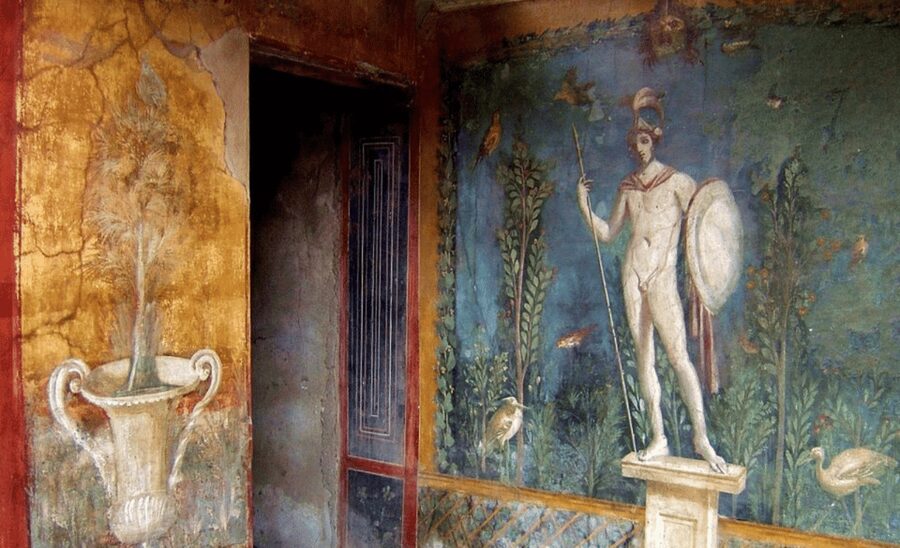
This visit includes time around famous residential areas, including the House of the Faun. Even if you do not know the Latin, the layout does the explaining: courtyards, room sequences, and spaces that show how privacy and status worked in Roman life.
You may also see details that feel oddly modern, like witty local writing and labeled storage. Two examples specifically highlighted in this experience are:
- The inscription in Sirico’s house, Salve lucru (which is presented as Welcome, profit)
- Wine jars labeled Vesuvinum, a playful nod connecting the volcano and wine (vinum)
These details help you move past awe and into understanding. Pompeii’s residents were not just victims of disaster. They were writers, shopkeepers, and hosts.
Public baths, mosaics, and the texture of everyday life
If you want to know Pompeii beyond the “big monuments,” you need the everyday spaces. The experience includes public baths where you can appreciate mosaics and the decoration Romans used to make ordinary routines feel special.
Look closely at mosaics and small painted fragments. They are easy to skim past if you are rushing, but in Pompeii the visual cues are the clues. Mosaics also help you understand where wealth showed up in daily settings, not only in palaces.
And since Pompeii is a city, not a museum hallway, you will keep passing marketplaces and civic corners that once held real routines. Even when sections are damaged, the layout still makes sense.
Plaster casts: the moment the story turns heavy
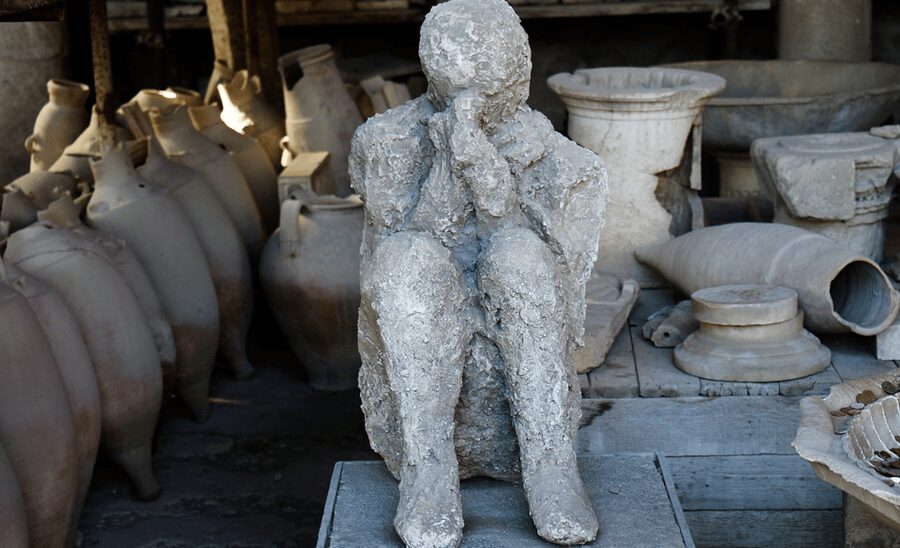
At some point during your walk, you will come across the plaster casts of victims. This is where Pompeii stops being “Roman sightseeing” and becomes human history in a way that is hard to forget.
The effect is straightforward: you see bodies shaped in the posture of the moment, frozen by the eruption and preserved by the ash. It is not comfortable, but it is meaningful, because it makes the disaster real instead of abstract.
Give yourself time here even if you want to keep moving. A fast pace is great for covering ground, but the casts are a place for stillness and reflection.
Audio guide vs live guide: what works best for different styles
For a lot of people, audio is the right call. It gives you control over your pace, and the short clips make it easy to stop for a building and then move on. In the feedback for this kind of experience, the GPS-style map has been called helpful because it lets you identify what you are standing in front of.
But audio also has limits. The phone experience depends on your setup: battery, signal, and app behavior. Some people found the autoplay feature not consistent, meaning they had to manually select clips more often than they expected. Others said the app felt manual when GPS locating was off.
A live guide can solve that. In guided sessions, your guide can point you through the key moments, keep you from getting lost, and explain connections you might miss if you are just listening to short descriptions.
If you are traveling as a mixed-age group, a live guide can also help you keep the energy up. One example from the guide names that has shown up in bookings is Grace and Maria, both described as friendly and clear, with English that worked well.
If you want the best of both worlds, consider taking the guided tour option and then staying longer with the audio afterward, if your energy holds.
What you get for $37: value math that makes sense
At about $37 per person for two hours with fast-track entry plus an audio guide and digital map, the price is basically paying for three things:
- Time saved by skipping the ticket line
- A guided layer of context via audio commentary and map support
- A smooth on-site process through the Vox City ticket exchange at Piazza Esedra
Pompeii’s baseline ticket gets you into the site. The add-on value here is what helps you use that entry efficiently. If you show up unprepared and end up wandering without context, you will feel that you paid for access but not for understanding.
At the same time, this is not a magic ticket that covers everything in Pompeii. It is still a 2-hour focus route. And it does not include the suburban villas. So for maximum value, I’d book it if:
- You are doing Pompeii as a priority highlight during a short Naples stay
- You want a plan that prevents wasted time inside a huge site
- You are comfortable using your smartphone with headphones
Practical tips that make the visit smoother
A few practical moves can turn Pompeii from “I saw a lot” into “I understood a lot.”
First, download your audio before you arrive. Then, once inside, don’t fight the app. Use the digital map to find the right area, and let the audio be a helpful prompt.
Second, assume you might spend more time than the 2-hour duration. Pompeii often makes people linger, and some people have reported staying around 4 hours when they were enjoying the flow and the weather cooperated.
Third, bring water and expect weather to affect pacing. Even in shoulder seasons, Pompeii can be hot or rainy in a way that changes how long you want to be outside.
Fourth, plan your must-sees before you arrive. If you only have a short window, pick a theme. For example, do you want elite homes and writing details, or do you want temples and public spaces? The audio guide has many points, so a small plan helps you avoid wandering in circles.
Should you book this skip-the-line Pompeii ticket?
I would book it if you want an efficient first visit. The fast-track entry is the headline, and pairing it with an audio guide and digital map makes it easier to get meaning from the ruins without needing a full-day plan. If you are short on time, the 2-hour focus route is a practical fit.
I would hesitate only if one of these is true: you specifically care about the suburban villas, because this ticket does not include Villa of the Mysteries, Villa of Diomedes, and Villa Regina. Also, if you strongly prefer a guaranteed, phone-free experience, you might feel frustrated by GPS and autoplay issues that can happen with app-based guides.
FAQ
Where do I pick up my ticket and exchange my voucher?
You exchange your voucher at the Vox City info point in Piazza Esedra, in front of Hotel Vittoria.
Do I need headphones for the audio guide?
Yes. Headphones are listed as not included, and you will need them to listen to the audio guide.
Can I download the audio guide on arrival?
You are instructed to scan the QR code on your voucher to download the audio guide prior to arrival.
What languages are available for the optional guided tour?
Guided tours are available in English, Spanish, or Italian.
Is the audio guide included even if I choose the guided tour?
Yes. The package includes an audio guide with digital map, and the audio commentary is multilingual.
Does this ticket include access to the suburban villas?
No. It does not include access to the suburban villas such as the Villa of the Mysteries, Villa of Diomedes, and Villa Regina.
How long will I spend inside Pompeii with this experience?
The experience duration is 2 hours. Visitors typically spend 2 to 4 hours inside Pompeii.
Where do I meet the guide if I booked the guided option?
You meet at the Vox City info point in Piazza Esedra, in front of Hotel Vittoria.
Is cancellation or pay later available?
Yes. You can cancel up to 24 hours in advance for a full refund, and there is a reserve now and pay later option.
Recently reviewed around Naples
- From Naples: Pompeii & Mount Vesuvius Full-Day Private Tour★ 4.5 · 4 reviews
- Pompeii with Wine Tasting Private Tour★ 4.7 · 6 reviews
- Pompeii, Amalfi, Ravello Day Tour with Private Transfer★ 5.0 · 3 reviews
- Ruins of Pompeii & the Amalfi Coast: Full-Day Private Tour★ 5.0 · 7 reviews
- Pompeii and Herculaneum: Private Tour from Naples★ 4.6 · 12 reviews
- From Naples: Pompeii Private Tour with Transfer and Guide★ 4.7 · 23 reviews
- Pompei: Private tour of Pompei and Vesuvius from Sorrento★ 5.0 · 8 reviews
- Pizza lesson★ 5.0 · 3 reviews
Pompeii Tours, compared.

Entry Ticket and Guided Tour with an Archaeologist
Read our review →


Pompeii Small Group Tour with an Archaeologist
Read our review →
Naples or Sorrento: Full-Day Pompeii and Mount Vesuvius Tour
Read our review →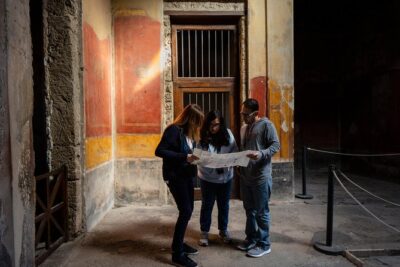
Pompeii & Mt.Vesuvius Day Tour from Naples with Pizza Lunch
Read our review →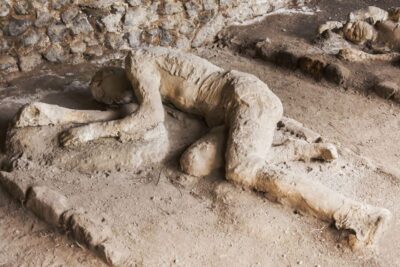
Browse the lists this tour appears in