
Reviewed · HERCULANEUM TOURS
Herculaneum Private Tour with an Archaeologist
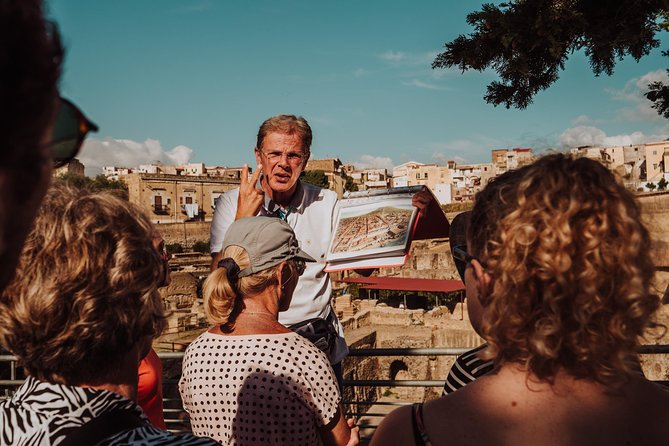
Herculaneum is interesting because it feels like the Roman world got paused in time. The eruption of Mount Vesuvius didn’t just destroy a city, it preserved streets, houses, baths, and everyday details in a way that is hard to grasp without standing inside it. What I really like about this private guide setup is how it turns a walk through ruins into a clear story, especially for people who want more than pretty walls and columns.
I also like the tight 2-hour plan with 11 focused stops, each one short enough to keep energy up but structured enough that you do not miss the major areas. One possible drawback is simple math: the tour price does not include the Herculaneum entrance ticket, so you will want to budget the extra €16 for adults (or €2 for EU citizens ages 18 to 25) before you go.
Key highlights you’ll care about
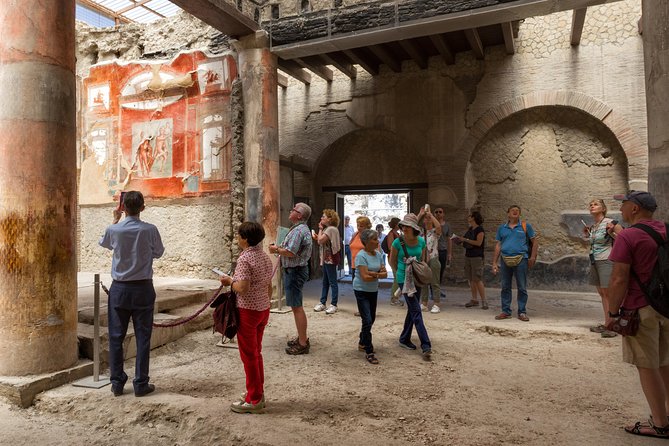
- A true private tour: only your group, so you can ask questions without feeling rushed.
- 11 stops in about 2 hours: you get breadth across houses and baths without burning a whole day.
- Family-friendly pacing: short segments like 10 minutes per stop keep kids and adults moving.
- English guide option: offered in English.
- Free luggage storage at the meeting point: handy if you are carrying bags.
- Guide quality is the make-or-break factor: most praise archaeologists by name, but credential wording matters, so confirm what you are getting.
Herculaneum in two hours: why this private loop works
If you only have part of a day in the Naples area, Herculaneum is one of the best Roman sites for focused time. It is smaller than Pompeii, and that helps here, because you can see a lot without sprinting. The result is a walk that feels orderly, not chaotic.
This tour is designed like a guided route through the key spaces people care about. You will spend brief, clear time at places like houses, a terrace, and the central baths, then move on. That means you are not stuck staring at one room for too long, trying to decode a floor plan alone.
And honestly, I love that the tour leans into “how people lived.” The guides highlighted in the feedback talk about everyday routines, the purpose of spaces, and what you would normally overlook. It is the difference between looking at ruins and understanding why those ruins were built that way.
More Herculaneum tours in Naples:
- Herculaneum: Skip-the-Line Guided Tour with Archaeologist
★ 4.8 · 3,439 reviews - Herculaneum Small Group Tour and Ticket With an Archaeologist
★ 5.0 · 994 reviews - Herculaneum: Skip-the-Line Entry Ticket with Audio Guide
★ 4.3 · 870 reviews
Price and what it covers, plus the real budget
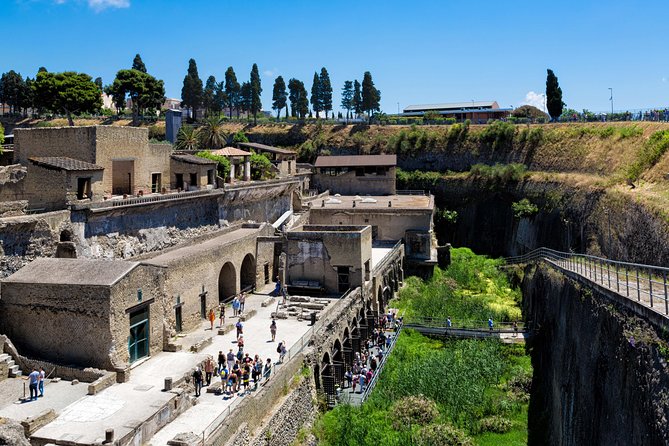
The tour cost is $178.38 per person for a private experience with an archaeologist guide. The price includes guidance and assistance by the guide, not just a person walking beside you.
What is not included is important: you still need the Herculaneum entrance ticket. Adults pay €16, and EU citizens ages 18 to 25 pay €2. Transportation, food, and drinks are also not included, so plan your day accordingly.
Here is the value angle: you are paying for interpretation. Several guides linked to this offer are praised for making the site feel human, not just archaeological. If you have ever done a major museum without a guide and wondered why it did not “click” faster, this is the fix.
Meeting point and how to start without stress
You meet outside the archaeological site ticket office, at the red building. The tour ends back at the same meeting point, so you do not have to worry about ending up across town from where you started.
One practical perk: there is a free luggage store at the meeting point. That matters if you are doing this as part of a longer Naples trip and you have bags you do not want to haul around the ruins.
The location is also near public transportation, so if you are not driving, you still have an easy path to get there. Service animals are allowed, and the tour notes that most travelers can participate, which usually means the route is doable for a wide range of visitors.
Stop-by-stop: 11 spaces that turn ruins into daily life
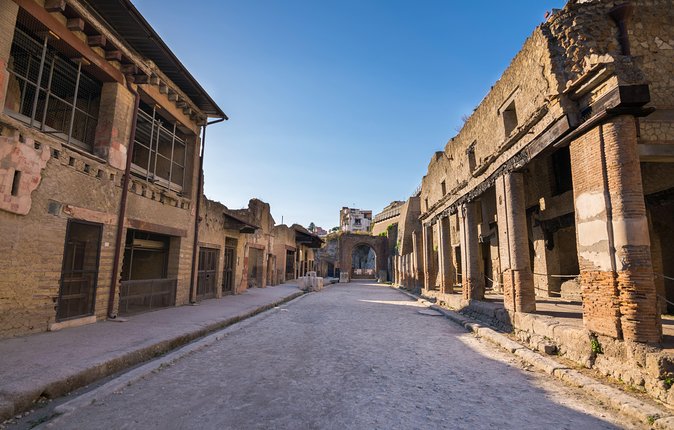
The tour is roughly 2 hours and each stop is about 10 minutes. That is short on paper, but it works because the guide is actively pointing out what to see and why it mattered. Think of each stop as a mini lesson, then you move on before fatigue sets in.
You will visit:
1) College of the Augustales
2) House of the Skeleton
3) Casa del Rilievo di Telefo
4) Partem Domus lignea (House of the Wooden Partition)
5) La Terrazza di M. Nonio Balbo
6) House of the Black Salon (Salon of Nero)
7) Casa Sannitica
8) Central Thermae
9) Casa del Bel Cortile (Fine Courtyard)
10) House of the Grand Portal
11) House of the Deer
Below is what each stop is really doing for your understanding, plus what to watch for when you are standing there.
More private tours in Naples:
- Exclusive Naples Private Food Tour: 6 or 10 Tastings
★ 5.0 · 596 reviews - Private Day Tour: Sorrento, Positano, Amalfi, Ravello from Naples
★ 4.5 · 546 reviews - Private Day tour of Positano, Amalfi and Ravello from Naples
★ 5.0 · 522 reviews - Private Amalfi Coast Tour – Enjoy it with our local english speaking driver
★ 5.0 · 475 reviews
College of the Augustales: the community layer
This is your first stop, and it sets the tone. Instead of jumping straight into private houses, you start with a public or semi-public space tied to how this community organized itself.
Why this matters on a guided tour: it anchors the rest of what you will see. When you later look at homes and baths, you can connect them to social life, not just architecture.
House of the Skeleton: seeing the story in one image
The House of the Skeleton is one of the most memorable names on the route, and it typically grabs your attention fast. This is a good moment to slow down mentally and let the guide explain what you are looking at and what it suggests about the event that ended daily life.
On a self-guided visit, many people miss the interpretive piece and focus only on shock value. With a guide, you get the context and the details tied to the layout around the remains.
Casa del Rilievo di Telefo: look for what the walls wanted to say
This stop is built around the relief connected to Telephus, so you will get a chance to connect decoration and meaning. The fact that the tour calls it out by name is a hint: the guide will point to the feature and explain why it was displayed there.
This is where I like to pay attention with my eyes, not just my ears. If you can, stand in the spot the guide points to and take a quick look before you move on.
Partem Domus lignea: what a wooden partition tells you
The Partem Domus lignea, the House of the Wooden Partition, sounds specific on purpose. It gives you a view into how spaces were divided and used.
A good guide here will help you picture the room function, and how transitions between spaces worked in real daily life. Even if you cannot “see” the original look perfectly today, your brain will connect the evidence to how it likely operated.
La Terrazza di M. Nonio Balbo: stepping back for the view
Terraces help you understand a city as lived-in, not just excavated. You get a change of perspective, both literally and in how you think about homes.
What to do here: listen for how the terrace relates to the house below or nearby. Terraces were not just for beauty, they were part of how people gathered, breathed air, and managed daily routines.
House of the Black Salon (Salon of Nero): the room where you feel status
This stop is all about the “Salon” name, and that usually means the guide will highlight its significance as a showpiece area. Even when a room is still a ruin, you can often tell what kind of space it was meant to be.
If you care about Roman social life, this is a good place to ask a question. A private guide can explain who used rooms like this and how décor and layout communicate rank.
Casa Sannitica: a style clue, not just a name
Casa Sannitica is a helpful stop because it gives you a way to think about regional influences and identity within the town. You are not only looking at what is left, you are learning how different styles fit into one place.
On a guided tour, style names become understandable. The guide’s job is turning labels like this into practical context you can carry forward.
Central Thermae: baths, routine, and the public rhythm
Roman baths are one of the biggest “aha” moments for many visitors, because bathing was social and scheduled. Central Thermae is where you get that public rhythm: a place built for routine, conversation, and health.
In a group setting, people tend to rush the baths. In a private tour, you can slow down long enough to understand how bath spaces work together as a sequence. Look for how the layout supports movement and different stages of bathing.
Casa del Bel Cortile: the courtyard that organizes life
Courtyards are where Roman buildings make sense. Casa del Bel Cortile, the Fine Courtyard, is designed to show you how open space and surrounding rooms work as one system.
When the guide explains this stop well, you start to see that courtyards were not filler. They organized light, air, movement, and daily living patterns.
House of the Grand Portal: entrances that announce you
The House of the Grand Portal is exactly what it sounds like: an entrance that signals importance. Portals often give you the quickest read on a building’s intended role.
If you want to understand status and privacy, this stop is valuable. A guide can explain how entry spaces shaped who got access, where visitors went, and how the home felt on the inside.
House of the Deer: a personal-feeling end point
The House of the Deer is a fitting final stop because it often brings you back to the human details, the kinds of things you can remember after the tour ends. Names like this are usually tied to a feature or theme, and that gives your brain an anchor.
At the end of the 11-stop circuit, I like having at least one moment that feels more personal than monumental. This is where you can ask one last question and really connect the whole walk into a mental picture.
The guide factor: when archaeologists make the site click
This tour is sold as a private Herculaneum experience with an archaeologist guide, and the feedback shows why that matters. Many guides praised by name are described as bringing daily life to the surface, explaining the purpose of spaces, and pointing out details you would likely miss on your own.
Some names that show up with strong praise include Mena, Michele Lamberti, and Dr. Luciano Leone. Others mentioned include Sara, Daniela, Lucio, Giuseppe, Antonella, and Jasmine. When an expert can connect architecture to habits, you stop seeing ruins as random pieces and start seeing them as decisions made by real people.
Now the balanced note. One review raised a credential concern, saying the paid archaeologist label did not match the guide’s background. If that distinction matters to you, do not just assume the title means what you think it means. Ask the operator before you book which type of expert is assigned and what their credentials are.
Timing, comfort, and how to get the best photos without slowing everyone down
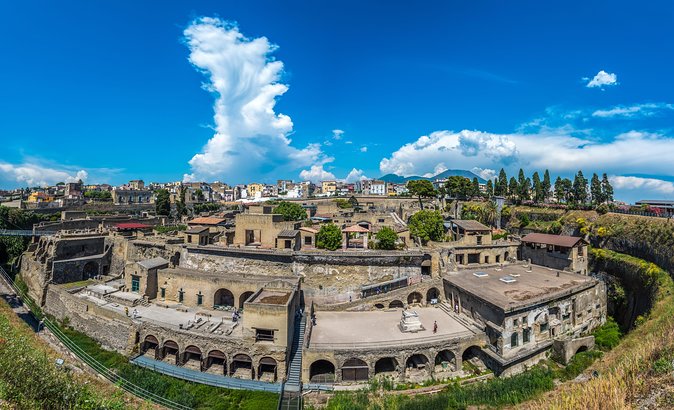
This tour runs multiple times throughout the day, and you can use timing to your advantage. If you visit in summer, choose an earlier slot when you can. One of the practical bits from the feedback is that by noon the heat can be a real factor.
Wear comfortable walking shoes. The site is an outdoor archaeological area, and you will be moving between stops. Also, bring water if your plan allows, because food and drinks are not included.
For the tour itself, have two types of questions ready:
1) questions about what you are seeing at each stop
2) questions that connect stops to one bigger theme, like daily life versus special occasions
A private guide can answer both, and you will feel the difference right away.
Who should book this private Herculaneum archaeologist tour
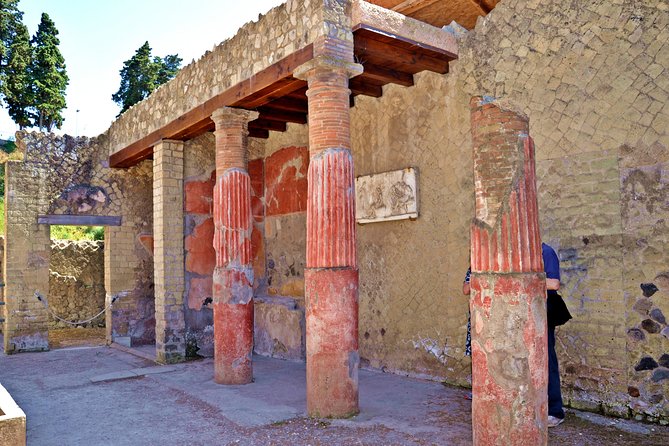
This tour is a good match if you:
- Want a high signal visit in about two hours, not a slow self-guided crawl
- Like history but also care about how ordinary people lived
- Prefer a format where you can ask questions and get direct answers
- Are traveling with kids or mixed ages and want pacing that stays manageable
It is also a smart choice if you are comparing Herculaneum with Pompeii. Several guides are praised for making comparisons, and that helps you decide which site fits your interests when you are choosing between them.
If you only want the broadest overview and you are happy to figure things out solo with signage, you might decide the private format is not needed. But if you want the “why” behind each building, this tour is built for that.
Should you book it?
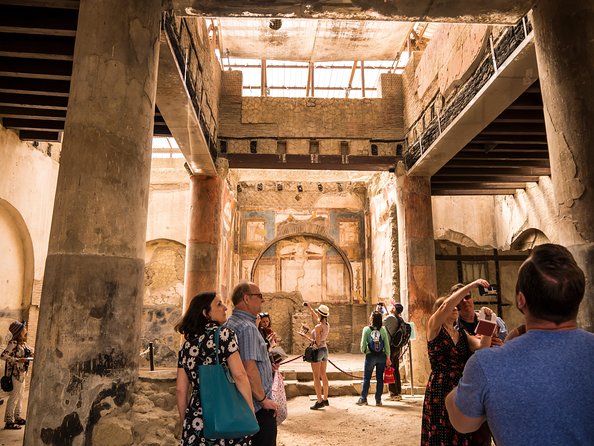
Yes, I think you should book this tour if your goal is understanding, not just sightseeing. The structure, with 11 stops in roughly two hours, gives you a full picture of Herculaneum’s key spaces, and the guide-led explanations are consistently what people rate highest.
Just do two things before you commit. First, budget the entrance ticket on top of the tour price. Second, if you care specifically about an archaeologist credential, confirm the background of the guide you will receive.
If you like learning fast, moving efficiently, and coming away with a real sense of everyday Roman life, this is one of the better ways to experience Herculaneum.
FAQ
Is the Herculaneum entrance ticket included?
No. You need to buy the Herculaneum entrance ticket separately. Adult tickets are €16, and EU citizens ages 18 to 25 pay €2.
How long is the private tour?
The duration is about 2 hours.
Where do we meet the guide?
You meet outside the archaeological site ticket office, at the red building.
What does the price include?
The price includes guidance and assistance by an archaeologist guide, and the tour is private for your group.
Is transportation or food included?
No. Transportation, food, and drinks are not included.
Is the tour offered in English?
Yes, it is offered in English.
Is this tour family-friendly?
Yes. The experience is described as family-friendly.
Can I store luggage before the tour?
Yes. There is a luggage store for free at the meeting point.
Are service animals allowed?
Yes, service animals are allowed.
What is the cancellation policy?
Free cancellation is available if you cancel up to 24 hours in advance for a full refund.
Recently reviewed around Naples
- Pompeii & Herculaneum Group Tour with tickets★ 4.9 · 13 reviews
- From Naples: Pompeii & Mount Vesuvius Full-Day Private Tour★ 4.5 · 4 reviews
- Pompeii with Wine Tasting Private Tour★ 4.7 · 6 reviews
- Pompeii, Amalfi, Ravello Day Tour with Private Transfer★ 5.0 · 3 reviews
- Ruins of Pompeii & the Amalfi Coast: Full-Day Private Tour★ 5.0 · 7 reviews
- Pompeii and Herculaneum: Private Tour from Naples★ 4.6 · 12 reviews
- From Naples: Pompeii Private Tour with Transfer and Guide★ 4.7 · 23 reviews
- Pompei: Private tour of Pompei and Vesuvius from Sorrento★ 5.0 · 8 reviews
Herculaneum Tours, compared.

Pompeii and Herculaneum Small Group Tour with an Archaeologist
Read our review →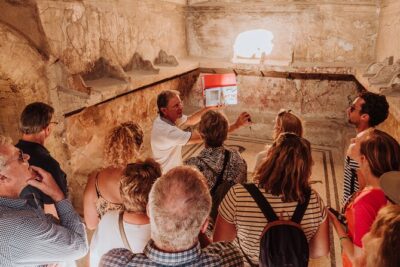
Herculaneum Small Group Tour and Ticket With an Archaeologist
Read our review →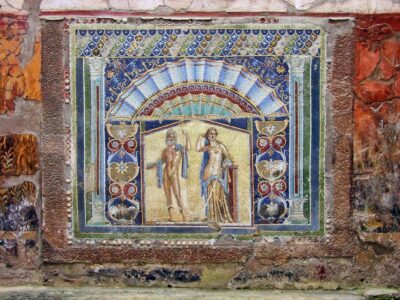
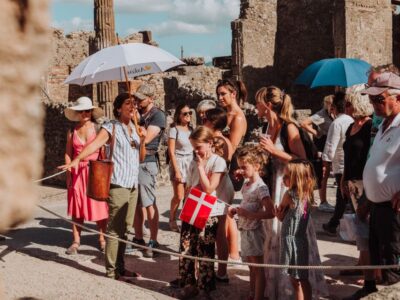
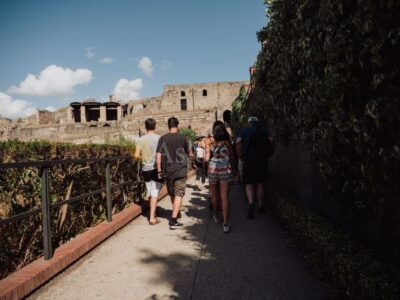
Pompeii & Herculaneum with Archaeologist Guide
Read our review →
Pompeii, Herculaneum, & Vesuvius Full-Day Tour
Read our review →
Ercolano: Herculaneum Entry Ticket with Optional Audio Guide
Read our review →Browse the lists this tour appears in