
Reviewed · HERCULANEUM TOURS
From Naples: 2-Hour Herculaneum Kid-Friendly Tour
Herculaneum is interesting because it is Roman life preserved in place, like the town froze mid-moment. This kid-friendly tour stands out because the guide uses tablets plus reconstructions and multimedia, so the ruins feel less like stones and more like a story you can walk through.
I love that it is a kid-customized experience with a local certified guide specialized in tours with children. I also love how much of the town you see in just two hours, from major public spaces to houses kids can actually enter.
One possible drawback: this is a walking tour with no transportation included, so you will want to bring water and be ready for steady footwork as your group moves site to site.
Key highlights you should know
- Tablet-based reconstructions help kids connect the ruins to what the spaces used to be
- A true walking tour through the buried city, including houses, temples, and the theater area (you will cover a lot in 2 hours)
- Northern Cardo to the forum gives you a clear “how the town worked” route
- Big emotional stop options, including the House of the Skeletons and the beach with victims
- Skip-the-ticket-line plus admission included, so you spend more time seeing and less time waiting
Herculaneum as a kid-friendly “Roman town” story
If your kids think ancient history is just dusty pictures, Herculaneum is one of the places that changes their mind fast. The site is well-preserved, and the best part is that you can move through real rooms and thresholds, instead of only looking at ruins from a distance.
What I like about this tour is the way it turns the visit into a guided experience designed for attention spans. You are not just following a route. You are stopping at specific places where everyday Roman life would have happened, and the guide keeps explaining in a kid-friendly way.
The “how it used to look” tools matter, too. With tablets, reconstructions, and multimedia support, kids can visualize what they are standing in. That is huge for families, because it means you spend less time saying try to imagine and more time seeing what the town likely looked like.
More Herculaneum tours in Naples:
- Herculaneum: Skip-the-Line Guided Tour with Archaeologist
★ 4.8 · 3,439 reviews - Herculaneum Small Group Tour and Ticket With an Archaeologist
★ 5.0 · 994 reviews - Herculaneum: Skip-the-Line Entry Ticket with Audio Guide
★ 4.3 · 870 reviews
Where the tour starts at Via dei Papiri Ercolanesi 21
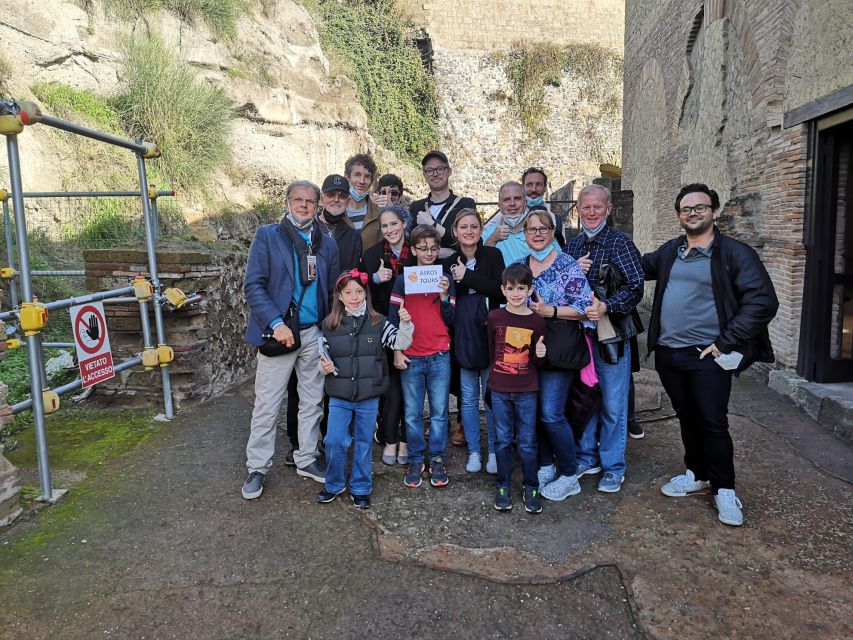
The tour begins at Via dei Papiri Ercolanesi, 21. Meet the guide at the ticket office of the Herculaneum ruins, and the guide will be holding a sign with your name so you can spot your group quickly.
Because this is a private group, the pacing can feel more manageable than a large join-in crowd. You still walk the site, but the guide can tailor explanations based on your kids’ reactions.
For planning, wear comfortable shoes with good traction. The tour is outdoors and moving from one part of the archaeological area to another. If you have a phone, it can help for quick check-ins, but you will likely rely on the guide’s tablets and multimedia materials for the main visual storytelling.
A 2-hour walking route that actually covers the town
This experience is scheduled for 2 hours and is a walking tour. There is no transportation included, so you will stay on foot from the start point to the return back to the same meeting location.
In practical terms, two hours at Herculaneum is enough time to see the high-impact highlights without turning it into a marathon. The route is built around key zones, so kids can connect the idea of a town layout, not just random buildings.
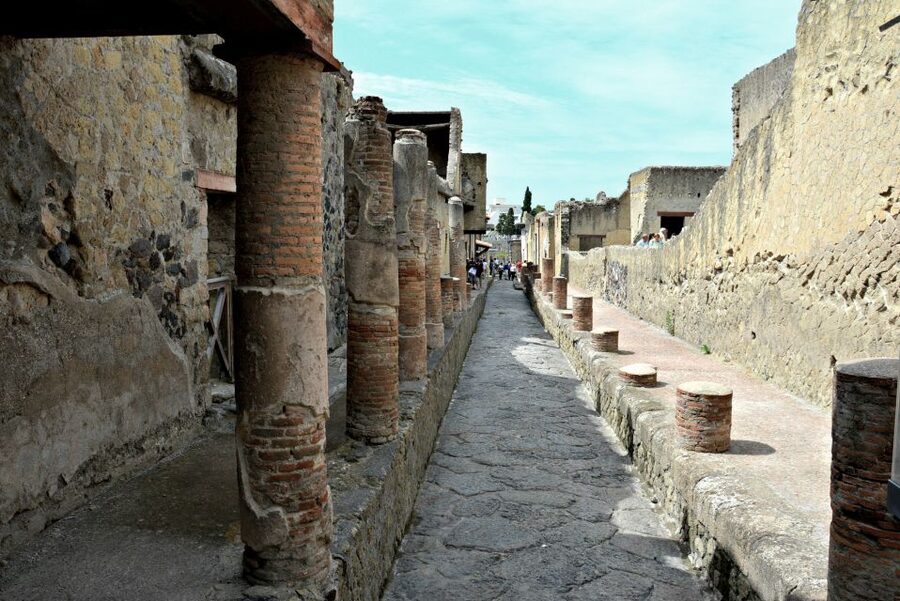
You will visit the Northern Cardo, which is the road oriented north-south. That is a useful anchor, because the rest of what you see connects back to how people moved through the city and where major spaces sat along the main routes.
Then the tour adds a strong mix of “wow” stops and everyday-life stops. Expect the guide to guide you into houses and key public areas, and to weave explanations into what your kids are actually looking at.
Northern Cardo, thermopolium, baths, and the town’s main rhythm
The route begins with the Northern Cardo, the backbone of town movement. Think of it as the line that helps your kids understand, in a simple way, how a Roman city would feel in motion. Streets matter here, because the ruins are laid out like a functioning place.
From there, you move through spaces that bring daily life into focus. A thermopolium is essentially a casual eat-and-drink spot in Roman culture, and it is exactly the kind of stop kids tend to latch onto because it feels familiar, even if the food would not be what they expect today.
You also see a men’s thermal bath area. Baths in Roman towns were not only about cleanliness. They were social spaces. When the guide explains what people did there, kids usually get the point quickly: this was entertainment and routine all wrapped together.
The tour includes the Temple of Augustali and the forum, the main square. The forum is important because it helps kids understand that Roman life was not only domestic. There were public gatherings, civic moments, and religious landmarks that shaped everyday behavior.
A possible downside at this stage is simple: the site has multiple key stops packed into a short time. If your child needs frequent breaks, you will need to work with the guide’s pacing and choose moments when you step aside for a quick reset.
A different sort of day around the Bay of Naples:
- From Naples: Pompeii Ruins & Mount Vesuvius Day Tour
★ 4.3 · 11,459 reviews - From Naples: Sorrento, Positano and Amalfi Full-Day Tour
★ 4.6 · 10,988 reviews - From Naples: Sorrento, Positano & Amalfi Coast – Small Group Tour
★ 5.0 · 8,643 reviews - Naples: Catacombs of San Gennaro Entry Ticket & Guided Tour
★ 4.6 · 7,941 reviews
Entering the houses: where Roman life becomes real for kids
One of the biggest reasons this tour works is that it includes houses kids can step into. Seeing a house from the outside is one thing. Walking through spaces designed for everyday routines is another.
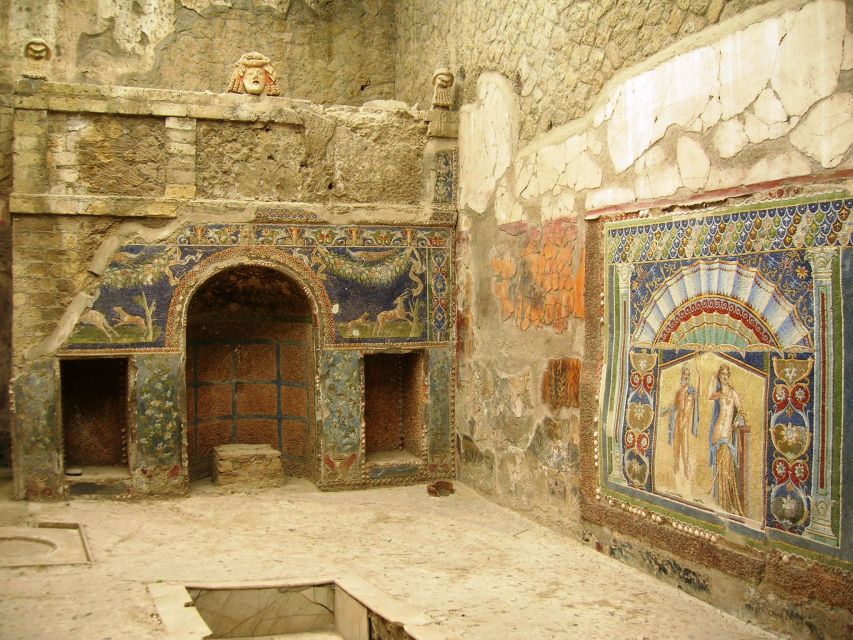
You visit Casa di Nettuno ed Anfitrite, which gives you a house experience tied to a named setting. Then you head to Casa del Salone Nero, known for its darker main space. Even without memorizing details, kids tend to remember contrasts, like the difference between bright open areas and darker rooms.
Another standout is Casa dei Cervi. Again, the value here is not only the name, it is the fact that you are exploring a residence as a sequence of rooms. The guide’s job is to connect what you see to how residents lived, cooked, hosted guests, and moved through daily rhythms.
You also visit the House of the Skeletons. This is one of the emotionally heavy parts of the Herculaneum story, because it ties preservation to human loss. The guide’s kid-focused approach matters here. With the right explanation, you can keep it age-appropriate while still being honest about what happened.
Then there is the House of Neptune and Amphitrite, plus other residential stops that deepen the picture of how varied homes could be across the city. You will also visit the House of Bel Cortile and the Samnite House, which helps show that Herculaneum was not one single style of living.
Everyday details: from bakery to gym to “how did they live?”
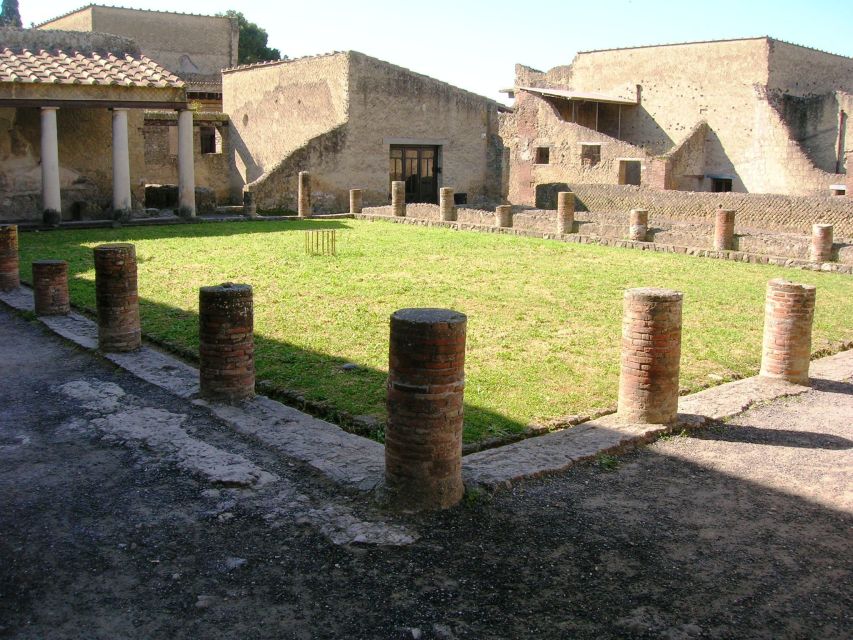
A big win of this tour is how it includes everyday anchors, not only dramatic ruins. After you’ve seen public spaces, and after the houses, the tour brings you into practical, human-scale stops.
You will visit a bakery and a gym. Those are excellent for families because they are specific. Kids understand what a bakery does and what a gym does, even if Roman equipment and training would have looked different.
You will also see the House of the Wooden Partition. Partition walls and room divisions help kids understand privacy, function, and how homes were arranged. The guide’s reconstructions and multimedia support are especially useful here, because a lot of what matters is in layout and imagined finishes.
You will also visit the Home of the Bucks. Even if the decorations do not mean much at first glance, the guide can connect the idea of symbols, status, and domestic identity. For kids, it becomes a scavenger hunt of sorts, with clear targets to look for.
All of this helps your family build a mental map of daily life, not just a list of buildings. You start to understand the town as a place where people ate, exercised, gathered, shopped, and lived.
Sacellum of the Augustales and the forum stops for context
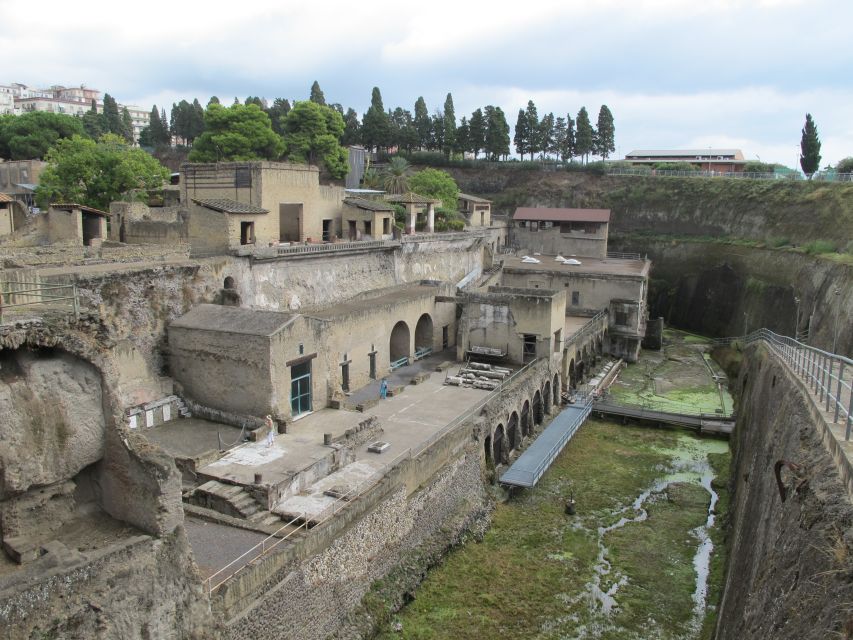
The tour includes the Sacellum of The Augustales. A sacellum is a small shrine space, and this stop is valuable because it shows how belief and community worked at ground level. When your guide explains it in simple terms, kids usually connect it to roles people played in the city’s culture.
Then the forum stop ties it together. The forum is where public life happened. It is also a good moment to orient your family. When you see the mix of religious space plus civic space, kids begin to grasp how Roman towns structured the day around shared areas.
For parents, this is one of the most helpful parts of a kids tour. It gives you an easy way to answer the question your kids will inevitably ask: what did people do here?
If your child is on the younger side, you might want to give them a quick job. For example, ask them to point out what looks like a main meeting area. That turns “watch me” into active participation.
The final stretch: Marina gate terrace and the beach story
The tour reaches the coast area near the Marina gate terrace of Marcus Nonius Balbus, then heads to the beach where hundreds of skeletons of the victims of the eruption were discovered.
This is the heaviest emotional moment on the route, and it is also one of the most unforgettable. You are looking at evidence of what happened when the eruption struck. The preservation here is why Herculaneum is so important to the world.
Because it is a kid-friendly tour, the guide’s approach is the difference between fear and understanding. You will likely get a careful explanation that helps children connect the place to the people lost, without making the story graphic in a way that overwhelms them.
The terrace is also interesting in a visual way. Being near the shoreline helps kids understand why the sea, the gates, and the movement of people around the city mattered.
After this, you return to the meeting point at Via dei Papiri Ercolanesi, 21, completing the loop.
Price and value: what $206.75 per person really includes
The listed price is $206.75 per person for a 2-hour private group walking tour. That sounds steep until you look at what is included.
Admission is included: 16 euros each goes into the Herculaneum admission fee. That matters because entry costs can add up quickly for families.
You also get a local certified guide specialized in tours with children. That is not the same as a generic guide reading a script. The guide is there to translate ruins into a kid level story, using tablets, reconstructions, and multimedia support.
You also get skip the ticket line, which can save time and reduce stress at the start. When you are traveling with kids, minutes matter. Waiting around in lines is usually the least fun part of a day.
The tour does not include transportation or meals. That means you should plan a snack or meal around it. If you are already in the Naples area, build your day so you are not rushing right afterward.
Bottom line on value: this tour feels like paying for specialized guidance plus included admission, not just paying for a walk through ruins. If you want your kids engaged and you want your time to feel structured, the price can make sense.
Who this tour suits best, and who should consider alternatives
This is a great fit for families who want an organized 2-hour experience without guessing where to go. It is also ideal if you want a guide who can keep kids interested, using tablets and multimedia reconstructions to connect the dots.
It can also work well for mixed ages, because a tablet-based explanation can meet different attention levels. One child might focus on the dramatic moments like the House of the Skeletons, while another is interested in daily life like the bakery and gym. The guide is geared to handle that kind of range.
If your group needs lots of slow, quiet time, consider that the format is a walking tour with a set route and limited time. It will not be a casual linger-all-day visit.
Also check the accessibility situation carefully. The activity information says wheelchair accessible, but another line says it is not suitable for wheelchair users. If anyone in your group needs wheelchair access, contact the provider before booking to clarify what is truly possible on this route.
Practical tips to make the two hours go smoothly
For the best experience, I would prepare like you are visiting a very busy outdoor classroom.
- Bring water and plan snacks around the tour, since meals are not included.
- Wear sturdy shoes for walking on archaeological terrain.
- Listen for the guide’s “why this matters” explanations, not only the facts. That is what helps kids remember.
- If your kids get overstimulated, ask the guide for a quick reset moment at a quieter stop, then rejoin the flow.
- Expect some emotional moments, especially near the House of the Skeletons and the beach. Let the guide set the tone for your kids.
If you want photos, take them quickly. Long photo pauses can break the storytelling rhythm, and the tour’s strength is the sequence of stops.
Should you book this Herculaneum kid-friendly tour?
If you are aiming for a short, high-impact visit where your kids stay engaged, I think this is a smart booking. You get a certified local guide specialized in children, included admission, skip the ticket line, and a route that covers the town layout from main streets to houses to emotional coastal evidence.
It is also a good choice if you want a structure that helps you understand what you are seeing. The mix of public spaces like the forum and religious sites like the Temple of Augustali, plus daily life spots like the thermopolium, bakery, and gym, makes the visit feel complete.
Choose a different option only if walking for two hours is a real problem for your group, or if you need clear confirmation on wheelchair suitability. Otherwise, this is exactly the kind of guided Herculaneum experience that turns ruins into a living town in a way kids can actually grasp.
FAQ
How long is the Herculaneum kid-friendly tour?
The duration is 2 hours.
Where do we meet the guide for this tour?
Meet the guide at the ticket office of the Herculaneum ruins at Via dei Papiri Ercolanesi, 21. The guide will be holding a sign with your name.
Is transportation included?
No. This is a walking tour, and no transportation is included.
What is included in the tour price?
Included are a local certified guide specialized in tours with children, and the Herculaneum admission fee (16.00 euros each).
Are meals included?
No. Meals are not included.
What languages is the live tour offered in?
The live guide offers English and Italian.
Is the tour a private group?
Yes, the group is private.
Is there free entry at Herculaneum on certain dates?
On the first Sunday of each month, entrance is free of charge, but tickets cannot be reserved ahead of time, so entry is not guaranteed.
Is the tour wheelchair accessible?
The information provided includes both wheelchair accessible and not suitable for wheelchair users. You should confirm with Askos Tours before booking if wheelchair access is needed.
Recently reviewed around Naples
- From Naples: Pompeii & Mount Vesuvius Full-Day Private Tour★ 4.5 · 4 reviews
- Pompeii with Wine Tasting Private Tour★ 4.7 · 6 reviews
- Pompeii, Amalfi, Ravello Day Tour with Private Transfer★ 5.0 · 3 reviews
- Ruins of Pompeii & the Amalfi Coast: Full-Day Private Tour★ 5.0 · 7 reviews
- Pompeii and Herculaneum: Private Tour from Naples★ 4.6 · 12 reviews
- From Naples: Pompeii Private Tour with Transfer and Guide★ 4.7 · 23 reviews
- Pompei: Private tour of Pompei and Vesuvius from Sorrento★ 5.0 · 8 reviews
- Pizza lesson★ 5.0 · 3 reviews
Herculaneum Tours, compared.

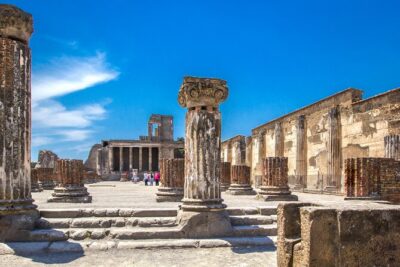
Pompeii and Herculaneum Small Group Tour with an Archaeologist
Read our review →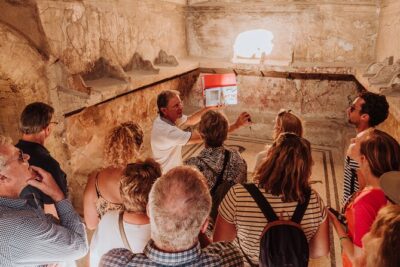
Herculaneum Small Group Tour and Ticket With an Archaeologist
Read our review →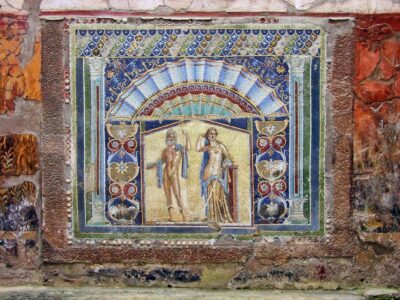
Pompeii & Herculaneum with Archaeologist Guide
Read our review →
Pompeii, Herculaneum, & Vesuvius Full-Day Tour
Read our review →
Ercolano: Herculaneum Entry Ticket with Optional Audio Guide
Read our review →Browse the lists this tour appears in