
Reviewed · POMPEII TOURS
Pompeii: Skip-the-Line Tickets and Tour with Archaeologist
Pompeii is the kind of place that can feel overwhelming on your own, but this small-group skip-the-line tour with an archaeologist helps you walk in with your questions already lined up. I love that you get immediate entry instead of burning time at the gates, and I also love how the guide turns what you see into everyday Roman life, not just dates and names. One thing to consider is that 2 hours is a taste, not a full sweep of Pompeii, so you’ll likely want more time afterward if you get hooked.
A big plus is that guides such as Lallo and Italo are described as funny, interactive, and great with families, even at a busy site. The only real drawback is the format: you move at tour pace, which is perfect for orientation, but not ideal if your goal is slow, solitary wandering for hours.
Key highlights worth prioritizing
- Skip-the-line entry through a separate entrance so you start exploring fast
- Archaeologist-led storytelling focused on daily Roman routines, not just monuments
- Walk on original volcanic stone pavement while you get context for what you’re seeing
- Small-group feel that keeps you from getting lost in a crowd
- Headsets provided in some tours, so you can hear clearly without hovering close
- End near the train station, which makes it easier to keep your day moving
Pompeii with a real archaeologist, not just a walking lecture
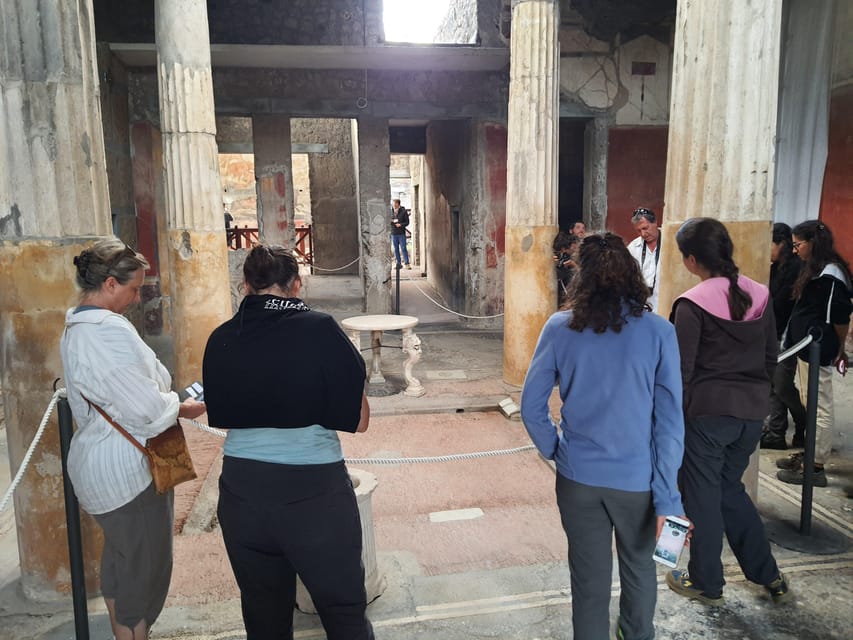
Pompeii is frozen in time by volcanic ash, and that makes it powerful. But power alone does not automatically make it understandable. This tour is built to connect the physical ruins to the human routines that happened there, which is exactly what most first-time visitors crave.
You’ll follow your guide through a curated slice of the site, with stories that connect spaces to life. Expect the kind of “wait, this is where people actually lived, worked, ate, and argued” feeling. That shift is usually what turns a good visit into a memorable one.
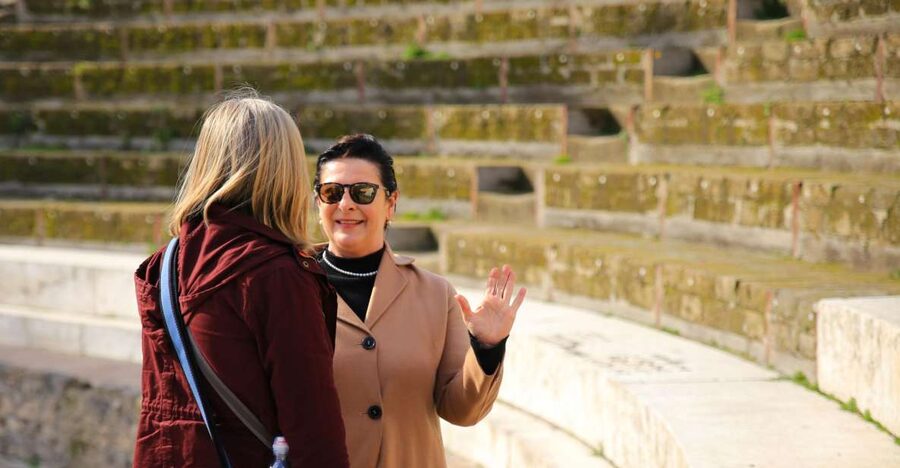
And yes, the tone matters. In the descriptions of this tour, guides like Lallo, Italo, and Lello are repeatedly praised for humor and energy, plus the ability to keep kids engaged without turning it into a circus. If you learn best by listening and asking questions, you’ll likely appreciate that style.
More Pompeii tours and tickets in Pompeii Archaeological Site:
- Pompeii: Entry Ticket with Optional Audio Guide
★ 4.2 · 12,360 reviews - Pompeii: Archaeological Park Tour with Ticket on request
★ 4.5 · 2,283 reviews - Pompeii Ruins Private Tour with Optional Skip-the-Line Entry
★ 4.9 · 732 reviews
Meeting at Coffee Shop Vittoria, then heading straight for the action
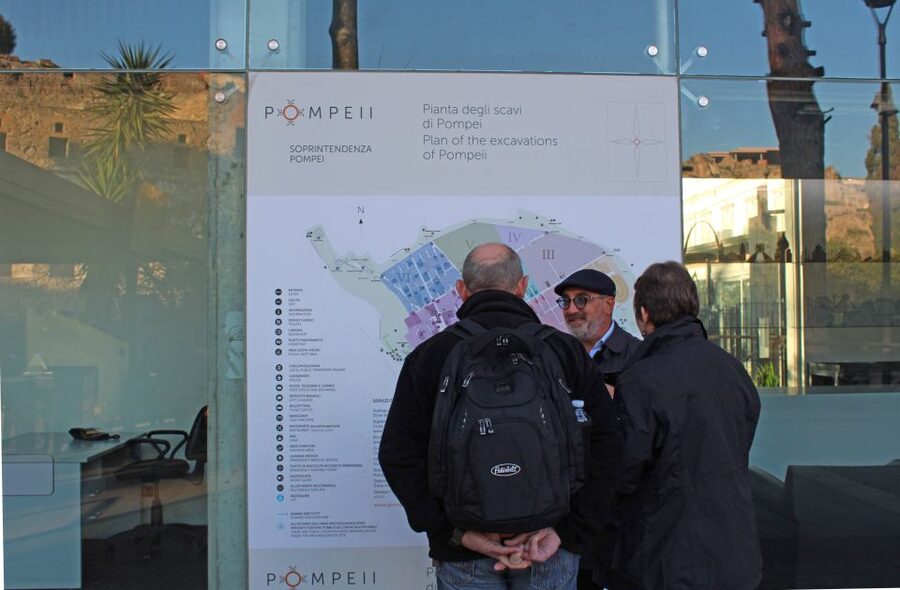
Your meeting point is the entrance area of Coffee Shop Vittoria near Porta Marina Inferiore. That detail matters because Pompeii can be a maze if you arrive early and unprepared. With a fixed rendezvous point, you can show up, check the group, and start your day with less stress.
From there, you head over to the archaeological site of Pompeii. The route is short, but you’re also setting your brain into visitor mode, which is helpful because the site is large and easy to misread when you first walk in.
One practical note: you’ll want to arrive with comfortable shoes already on. You’ll be walking through uneven stone and long stretches with limited shade, so “we’ll be fine in sandals” tends to turn into “why did I do this?” by the first hour.
Skip-the-line access is really about time and sanity
Skip-the-line access matters at Pompeii because ticket lines can eat your prime daylight. Getting immediate access means you spend your limited time inside, where Pompeii actually is.
This tour uses a separate entrance, so you can bypass the most frustrating bottleneck. The result is simple: your two hours starts with real momentum instead of waiting.
Also, being guided helps you avoid the most common beginner pattern. Without context, you might wander from one impressive ruin to another without understanding the city layout or what each building likely functioned as. With the guide, your stops feel connected, like chapters in the same story.
What you’ll see inside Pompeii during the 2 hours
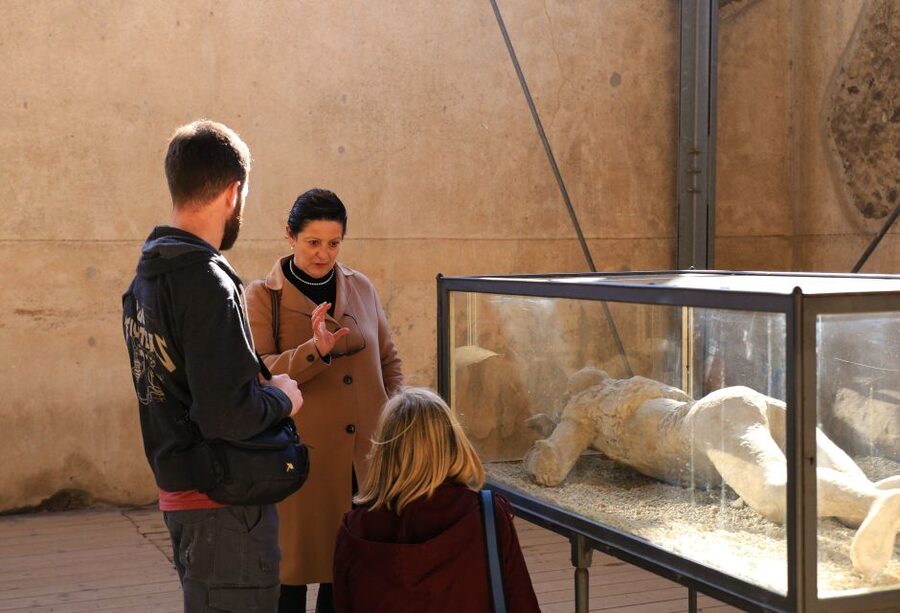
This is not a “see everything” tour. It’s a “see the right things first, understand what they meant, and leave with a map in your head” tour. For most people, that’s the best way to handle Pompeii, because the site is huge and easy to under-plan.
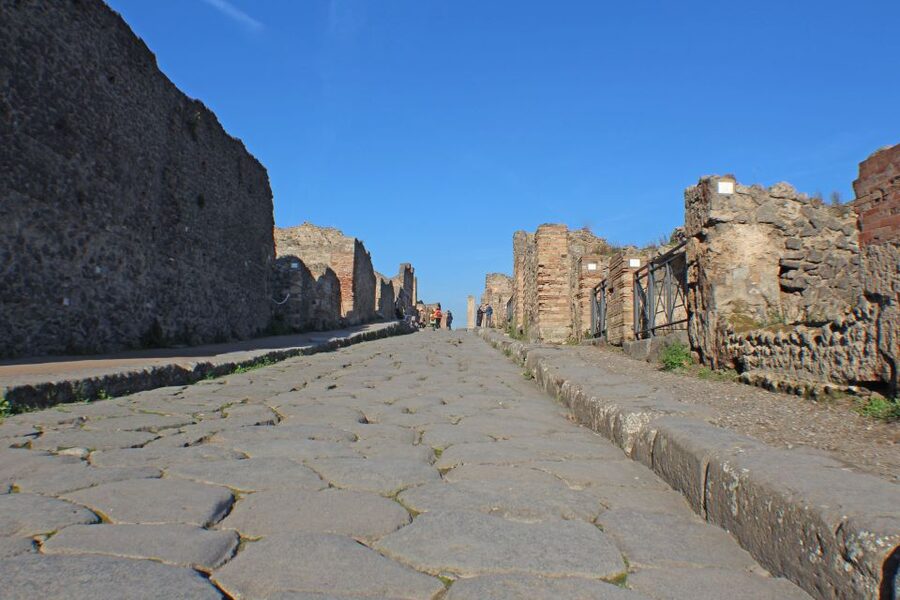
You’ll walk through remaining streets and ruins, including sections where you can walk on the original volcanic stone pavement. That sounds like a fun detail, but it also changes how you register scale. When you’re literally stepping on the same kind of stone that people once walked on, it’s easier to imagine the city as a living place.
The guide’s commentary centers on Roman daily life. You’ll hear what typical routines likely looked like and how different buildings fit those routines. The goal is that you can look at a wall, an opening, or a room layout and think beyond appearances.
Here are the themes your tour is designed to hit, and what they mean for you on-site:
A few more Pompeii Archaeological Site trips worth comparing
- Pompeii: Skip-the-Line Guided Tour with Expert Archaeologist
★ 4.8 · 196 reviews - Pompeii: Skip-the-Line Ticket and Virtual Museum
★ 4.5 · 66 reviews - Herculaneum: Skip-the-Line Guided Tour with Archaeologist
★ 4.8 · 3,439 reviews - Mount Vesuvius: Skip-the-Line Ticket and Smart Digital Guide
★ 4.2 · 2,780 reviews
Streets and city life you can actually picture
The streets are where Pompeii starts making sense. The guide connects street layout and building placement to daily movement, so you can follow the logic of the city rather than just scanning for “must-see” ruins.
If you’re the type who likes to understand how people moved through a place, this portion is valuable. It also helps you ask better questions later when you explore independently.
Gymnasium stories, gladiator training, and athletic space
One of the classic anchors for a Pompeii tour is the gymnasium. In the way this tour is described, you won’t just see a gymnasium area and move on. You’ll connect it to the idea of training and competitive culture, including what gladiators might have experienced through that environment.
It’s not about spectacle. It’s about how space shapes behavior.
Triclinium feasts, marble dining, and everyday pleasures
Food and social life are always a big part of understanding ancient cities. The tour includes stories tied to a triclinium, the dining space where people likely ate and socialized.
You’ll get the sense of how households used rooms for comfort and community, not just function. Even if you never eat in the triclinium yourself, the explanations help the space feel real.
Ovens and bread, because daily life is built on food
A key detail of Pompeii is how often daily needs show up in the ruins. This tour includes the theme of ovens and fresh baked bread, with the idea of what smells and routines might have been like when the city was alive.
That kind of commentary helps you interpret small architectural features. A lot of Pompeii is about practical design, and bread is one of the best lenses for that.
Market walks and the Forum, where politics met public life
You’ll also cover areas tied to the market and the Forum. Those are two parts of the city where everyday commerce and public decision-making would collide.
The guide descriptions focus on how people walked in the market and gathered around politicians. If you love civic life, social status, and the public rhythm of ancient cities, this is where the tour tends to click.
How guides like Lallo and Italo turn ruins into human scenes
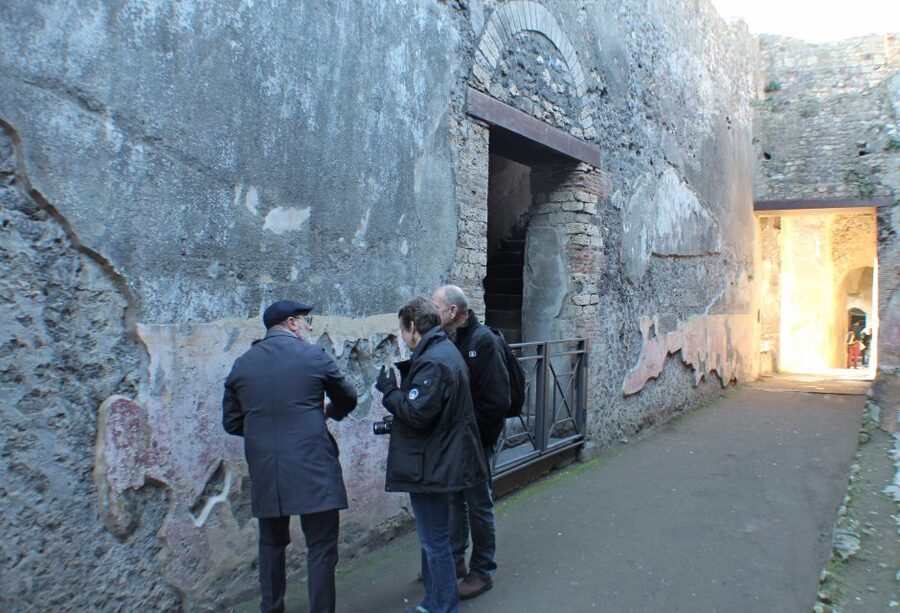
This tour is strongly guided, and the guide quality is a major reason the rating is so high. Several accounts mention archaeologist-guides by name, including Lallo, Italo, and Lello, and the common threads are energy, humor, and a clear ability to explain what you’re seeing in plain language.
In at least one reported experience, the tour included headsets. If that’s your setup, it’s a real comfort, because you can hear the guide without constantly crowding close. For Pompeii, where the ground is uneven and people naturally bunch up, headsets are a smart way to keep your group moving and your attention on the ruins.
Another praised approach is how guides teach you to read Pompeii. Instead of only pointing at highlights, the guide explains what to interpret when you look at the site later. That means your self-guided time after the tour can feel much more purposeful.
Guides also tend to steer around large crowds. That doesn’t just protect your comfort. It improves your ability to see details and hear the story without constant interruptions. The best guides also keep a respectful tone around sensitive history, which one account highlighted when discussing how the guide approached a slave-related room with care and reverence.
Pace, photos, and when the tour ends
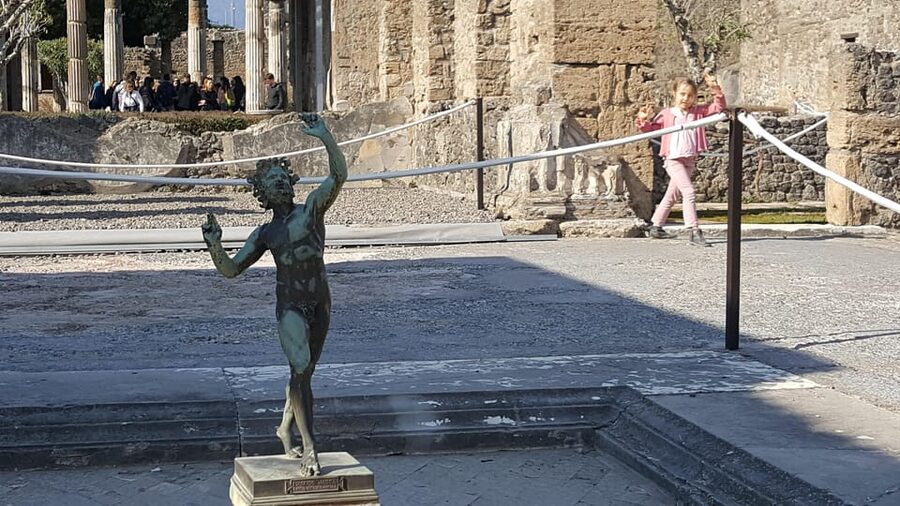
This is a 2 hour experience, and the pacing is usually described as good and not rushed. You’ll have time for photos and questions because the guide needs the group to follow along and stay together.
One detail I found especially practical is that the tour can end near the train station area. That makes it easier to roll right into the next part of your day, whether you’re heading back toward Naples or continuing your itinerary. If your schedule is tight, ending near transit is a quiet win.
If you get lots of questions out, the tour can feel richer, but it may also make the two hours feel short. People who already have strong Pompeii interest often wish they had booked more time, not because the tour is bad, but because it’s a strong springboard.
What to pack for Pompeii ruins (and what gets you turned away)
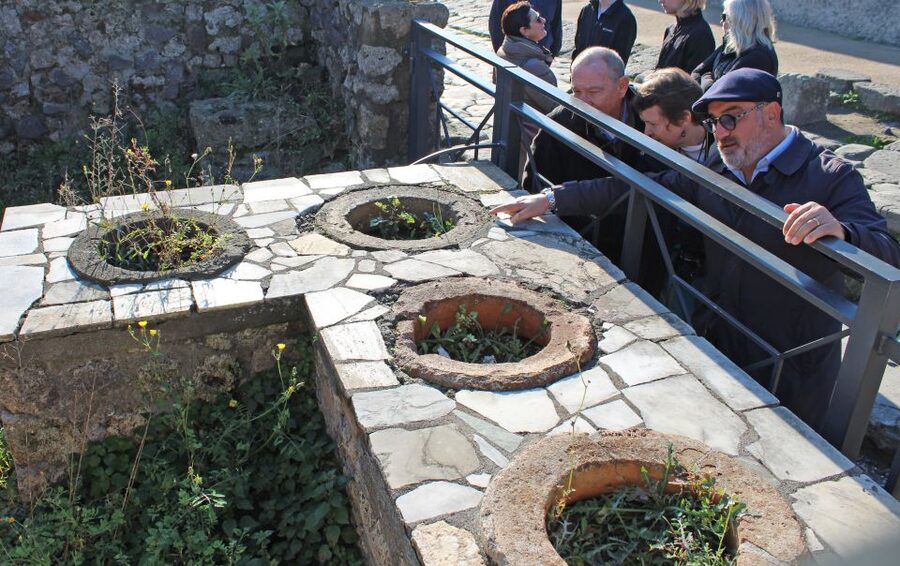
You’ll do better if you travel prepared for a walk-heavy, sun-heavy site. Bring comfortable shoes first, then add practical sun protection like a sun hat and sunscreen.
The tour description also flags a few restrictions that are easy to overlook. Baby strollers are not allowed, and luggage or large bags are not allowed either. Umbrellas are also not allowed.
A small but important detail: you should bring an ID, and for children you may need passport or ID for the paperwork tied to the tickets. The tour notes that you should provide all names and last names exactly as shown on the IDs.
If you travel light, you’ll have an easier time at entry and while moving through the ruins.
Price and logistics: is $105 for 2 hours good value?
At $105 per person for 2 hours, this tour isn’t the cheapest way to visit Pompeii. But value is not only about ticket cost. You’re paying for three things you don’t get when you walk in alone: skip-the-line entry, a professional guide, and archaeologist-led context.
If you show up and have to wait, Pompeii can swallow your time quickly. Skip-the-line access turns the day into visiting instead of queuing. That alone can be worth it if you’re on a tight schedule or visiting during peak hours.
The second value driver is interpretation. Pompeii is not simple to read. Without help, you might notice impressive rooms but miss how the city functioned day to day. Guides like Lallo, Italo, and Lello are repeatedly described as making daily Roman life understandable through stories, humor, and practical explanations.
The third value driver is group format. Small-group tours tend to mean your guide can answer questions and keep you together without constantly herding people. That makes the tour feel more personal and less like you’re sharing one earshot with fifty strangers.
One trade-off: lunch and drinks are not included. If your tour timing lands you at midday, plan your food break. Bring water only if it’s permitted for your exact situation, since rules can vary by site entry flow and guide instructions.
Who this Pompeii tour is best for
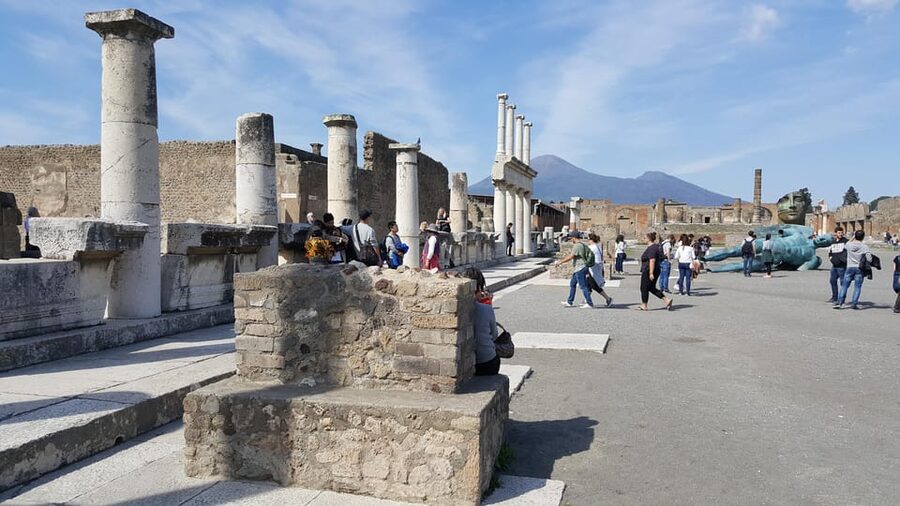
This tour is a great fit if you want a strong introduction to Pompeii without getting lost. It’s also a smart pick if you like learning from the guide, then using what you learn to explore on your own afterward.
It works well for families. Several described experiences mention kids enjoying the tour, with guides connecting quickly and keeping attention. If you’ve ever taken children into ruins and watched them fade after ten minutes, this is the opposite of that problem.
It’s also ideal for history lovers who want more than surface-level highlights. The best part is the focus on Roman daily routines, from food and public spaces to training and social life.
If you are the type who hates tours and prefers to wander alone for hours, this might feel too structured. The experience is designed for orientation and interpretation, not for solitary meandering.
Should you book Raphael Tours & Events for Pompeii?
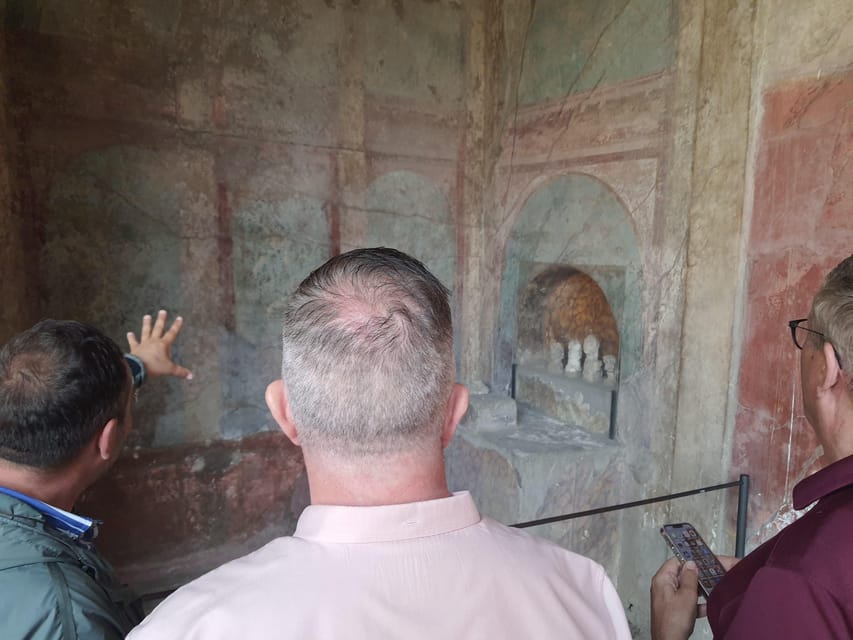
I think this is a solid booking if you want Pompeii to make sense fast. The skip-the-line entry plus archaeologist storytelling is a strong combo for first-timers, and it’s also a great second visit choice if you already know the big names and want deeper context.
Book it when:
- you have limited time and want the biggest payoff per hour
- you’d like to understand market life, the Forum, and everyday routines, not just walk ruins
- you want a small group experience led by guides such as Lallo, Italo, or Lello, who are repeatedly praised for humor and engagement
Skip it or consider a different format when:
- you want to spend half a day or more wandering slowly at your own rhythm
- you’re planning to bring items that violate the no-stroller, no-large-bags, no-umbrella rules
If you’re deciding right now, my advice is simple: if Pompeii is on your list, do not walk in cold. This tour helps you get your bearings quickly, and it teaches you how to look at what’s in front of you.
FAQ
Where do I meet the guide for the Pompeii tour?
Meet your guide at the entrance of Coffee Shop Vittoria near Porta Marina Inferiore entrance.
How long is the Pompeii skip-the-line tour with an archaeologist?
The tour duration is 2 hours.
Does this tour include skip-the-line admission?
Yes. You get skip-the-line access through a separate entrance.
What is included in the price?
The price includes a professional guide and admission tickets to the site.
Is lunch included?
No. Lunch and drinks are not included.
What should I bring, and what is not allowed?
Bring comfortable shoes, a sun hat, and sunscreen, plus an ID for children. Strollers, luggage or large bags, and umbrellas are not allowed.
Recently reviewed around Pompeii Archaeological Site
- Pompeii: Skip-the-Line Ticket and Virtual Museum★ 4.5 · 66 reviews
- Pompeii 3-Hour Walking Tour★ 5.0 · 8 reviews
- Mount Vesuvius Wine Tasting and Lunch from Pompeii★ 4.3 · 43 reviews
- From Sorrento: Pompeii and Vesuvius Tour by Express Train★ 4.0 · 12 reviews
- From Naples: Pompeii & Sorrento Shore Excursion with Lunch★ 5.0 · 6 reviews
- Pompeii: Tour for Children★ 4.7 · 106 reviews
- Pompeii 2-Hour Private Tour★ 4.9 · 121 reviews
- Pompei: Pompeii and Vesuvius Combo with Transfer and Tickets★ 3.9 · 130 reviews
Pompeii Tours, compared.
Entry Ticket and Guided Tour with an Archaeologist
Read our review →


Pompeii Small Group Tour with an Archaeologist
Read our review →
Naples or Sorrento: Full-Day Pompeii and Mount Vesuvius Tour
Read our review →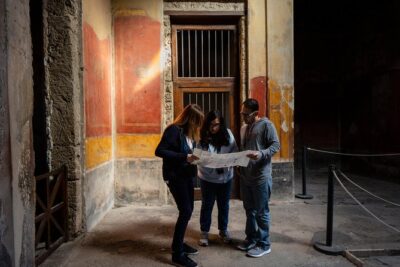
Pompeii & Mt.Vesuvius Day Tour from Naples with Pizza Lunch
Read our review →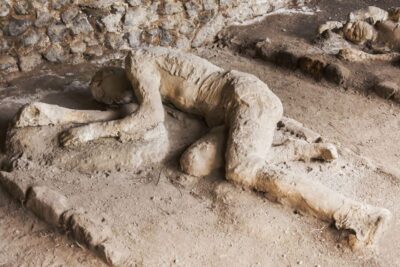
Browse the lists this tour appears in