Reviewed · POMPEII TOURS
Pompeii: Skip-the-Line Guided Archaeological Discovery Tour
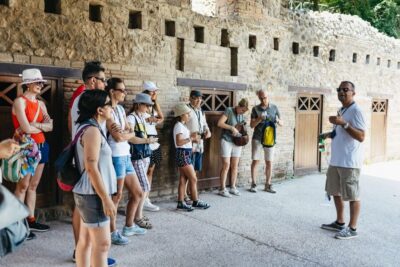
Pompeii is one of those rare places where the city still feels like a city, not a museum. What makes this tour especially interesting is the focus on seeing key areas with an expert archaeologist leading the way, plus skip-the-line priority entry so you spend more time walking and less time waiting. I also like that it stays small-group with headsets for clear listening, even as you move fast through busy ruins.
You do need to consider the pace. This is a 2-hour route with several short stops and photo moments, and it is not a sit-down, slow-and-savor kind of visit. If you have back issues, mobility limits, or you tire easily on uneven ground, it may feel like too much.
Key points to know before you go
- Priority entry through express security helps you get in faster, though security is still required
- Expert archaeologist guide turns ruins into a real day-to-day story
- Small groups with headsets (for groups max 5) make it easier to hear during the walk
- Major sites in one compact route including the Forum area, baths, amphitheater views, and elite homes
- Quick photo stops mean you see a lot, but you do not linger at every corner
Pompeii, explained by a real archaeologist
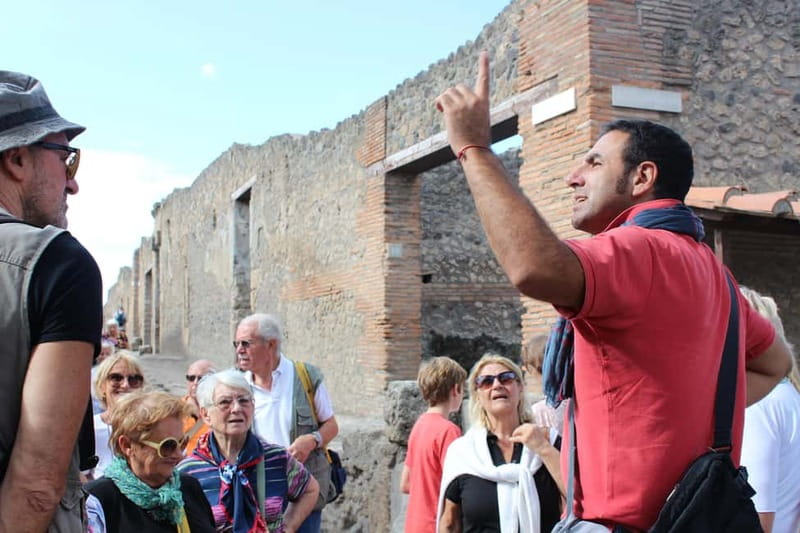
The big win here is the guide. Not just someone reciting dates, but an archaeologist who can connect what you see to how Pompeii actually worked at the height of Roman life. You walk past streets, building fronts, and public spaces, and the stories give the place meaning fast.
I like how this tour is set up for understanding, not just sightseeing. You get explanations that help you picture daily routines: where people gathered, how food got served, how public buildings functioned, and how elite residents lived inside decorated houses. It is the difference between seeing walls and recognizing a whole system.
And because it is a monolingual experience, either English or Spanish, the guide can keep the pace tight and the attention clear. That matters in Pompeii. When you stop for every question, the group falls behind. Here, the structure is built to keep the momentum.
More Pompeii tours and tickets in Pompeii Archaeological Site:
- Pompeii: Entry Ticket with Optional Audio Guide
★ 4.2 · 12,360 reviews - Pompeii: Archaeological Park Tour with Ticket on request
★ 4.5 · 2,283 reviews - Pompeii Ruins Private Tour with Optional Skip-the-Line Entry
★ 4.9 · 732 reviews
The 2-hour route: what you get (and why it feels focused)
This tour is designed to hit a lot of Pompeii without wasting your time. You start at Piazza Esedra, then head into the Archaeological Site and move through a route that includes major highlights, elite residences, public spaces, and museum-style encounters like casts.
A practical way to think about it: you are getting the best “orientation plus highlights” combo. You leave with a clearer map of Pompeii and a stronger sense of what each area tells you. If you want a slower, deep-reading experience where you sit with one villa for an hour, this is probably not that. But if you are visiting Pompeii for the first time, this kind of structure is a huge help.
Also note the pace is mostly walking, with several short photo stops. The advantage is you get variety. The drawback is you do not get long, unhurried time at every point. If you love photography and want to frame every view from multiple angles, build in extra time on your own after the tour.
Starting at Piazza Esedra, meeting by the Vox Kiosk
Logistics matter in Pompeii because entry lines can eat your day. This tour helps with skip-the-line access through an express security check. Still, do not assume you walk straight in. The site requires security, and that can add a bit of delay.
Meet your guide at the Towns of Italy Vox Kiosk at Piazza Esedra 80045 Pompeii, next to the Coffeeshop Vittoria. Show up early. The tour note is clear: latecomers cannot join, and there are no refunds. In plain terms, arrive about 15 minutes before your start time and you will feel calm instead of rushed.
Once you are inside, the group moves together. That is why the headsets are useful. You stay connected to the guide’s narration without having to keep leaning in or shouting across the crowd.
Getting in the right clothes and bringing the right items
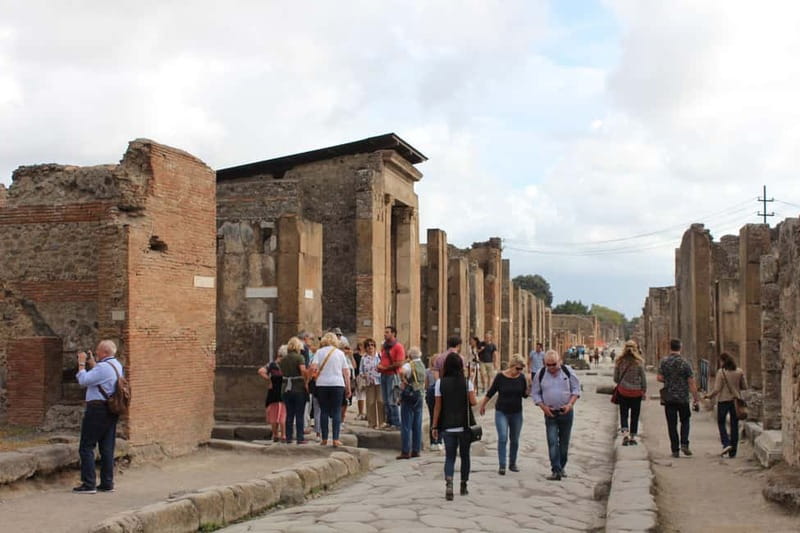
Pompeii ruins are outdoors, and the tour operates in all weather conditions, so plan for sun and rain. Comfortable walking shoes are strongly suggested, and flip-flops are a bad idea on uneven stone.
There is also a dress code for entering the Pompeii Archaeological Park. Disrespectful clothing is not allowed, and shirtless is not allowed. If your outfit does not meet the rules, your entry can be refused. Pack accordingly, even on a hot day. A light cover-up or a T-shirt that meets the standard is the easy fix.
Bring your passport or ID card, because it is required. Pets are not allowed. Bags have limits too, with maximum size listed as 30x30x15, and big bags must be deposited in the cloakroom.
Finally, the rules about equipment are strict: no professional optical or audio gear, and no drones. If you only use a normal camera or phone, you should be fine, but keep an eye on the “no professional” wording.
A few more Pompeii Archaeological Site trips worth comparing
- Pompeii: Skip-the-Line Tickets and Tour with Archaeologist
★ 4.9 · 467 reviews - Pompeii: Skip-the-Line Guided Tour with Expert Archaeologist
★ 4.8 · 196 reviews - Pompeii: Skip-the-Line Tour for Kids and Families
★ 4.9 · 72 reviews - Pompeii: Skip-the-Line Ticket and Virtual Museum
★ 4.5 · 66 reviews
Garden of the Fugitives: a quick look with big story energy
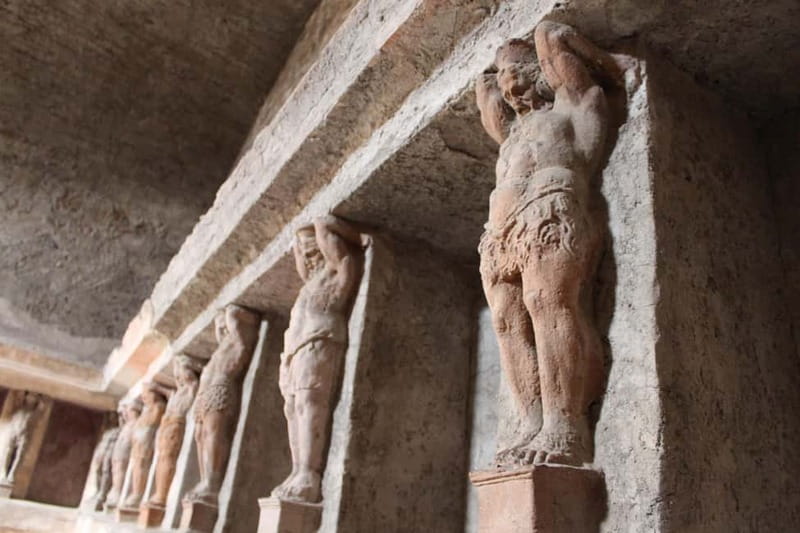
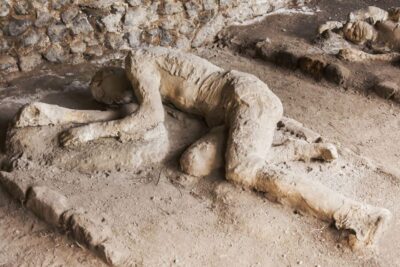
One of the early stops is the Garden of the Fugitives. You get a short guided visit plus time for photos. This is one of those areas where context matters. Standing there without guidance, it is easy to see “figures and remains.” With a guide, it becomes about what happened, how people moved, and why this moment is remembered so clearly.
The tour keeps it brief here, so treat it as a warm-up. You are building mental links, setting up what you will understand better as you move on.
Forum Baths: where daily Roman life met politics
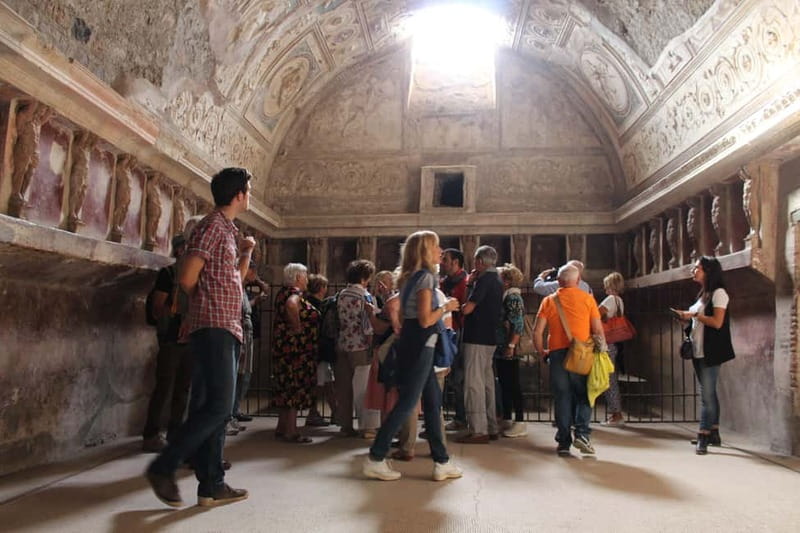
Next up is the Forum Baths. This is a photo stop with guided narration layered on top of what you are seeing. The big idea is that Pompeii was not just pretty houses and dramatic tragedies. It was also practical, social, and public.
Baths in Roman cities were about more than hygiene. They were a social engine and part of the public rhythm. When the guide ties the setting to Roman habits, you start to understand why these spaces had real importance for both normal people and visitors.
If you like “how people lived” details, this is a strong moment. If you only care about the most famous, dramatic postcard views, you might want to spend a bit extra time here on your own afterward, because baths can look plain until someone explains what to notice.
Amphitheater of Pompeii: spectacle, seating, and views
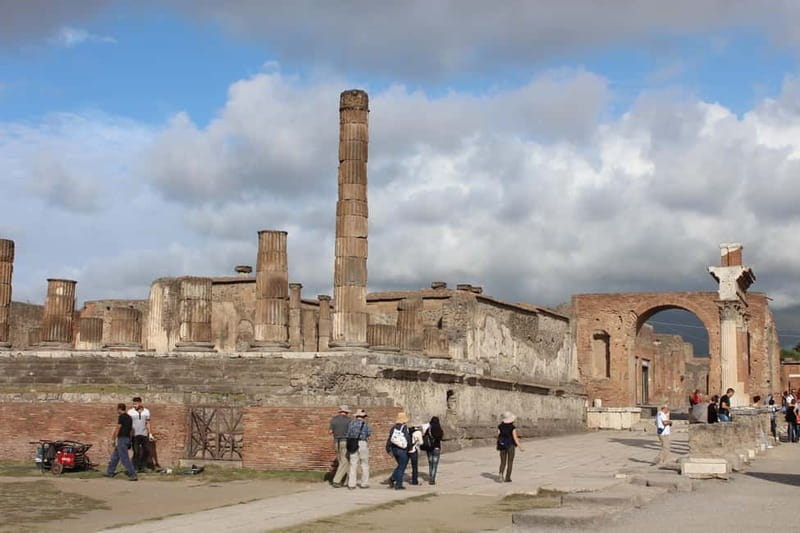
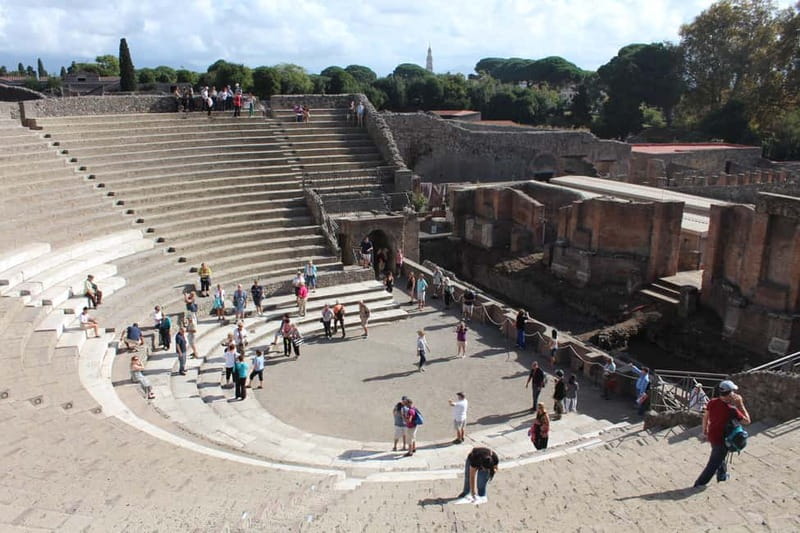
The tour also includes the Amphitheater of Pompeii. You get another short photo stop plus guided talk. This is where you see how Roman entertainment worked and how crowds likely gathered.
Even in a quick visit, the amphitheater helps you understand social life. People did not just work and eat. They gathered for performances and public events. Pompeii freezes that feeling in stone, and the guide helps connect the architecture to the human behavior.
Practical tip: amphitheater areas can be exposed. If the day is hot, use the hat and sunscreen the tour recommends. Also, take your water on your own schedule, because the itinerary is built around ruins time, not long breaks.
Lupanare and erotic art: uncomfortable topics, explained
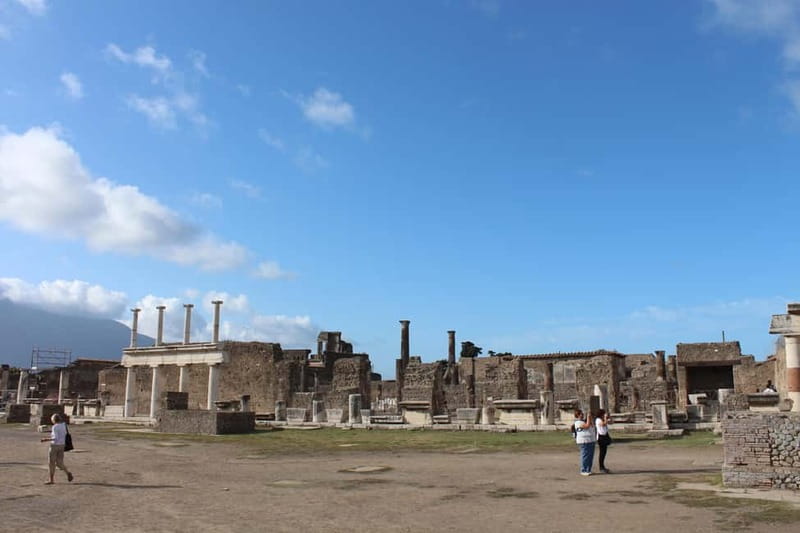
Then comes the Lupanare. This is a photo stop with guided insight. The highlight section mentions an erotic art collection, and this stop is where that theme becomes visible.
It can feel surprising if you come expecting purely grand temples and wealthy villas. But Pompeii was a real city, with real people, including sex work and the visual culture around it. The guide’s job here is to keep it factual and contextual, not sensational.
This is also one of the stops that can shape your whole visit. You either understand Pompeii as a complete snapshot of life, including the parts we do not always like to talk about, or you treat it like a sanitized set of ruins. With this tour, you are nudged toward the real picture.
If the topic might bother you personally, you should know this is part of the tour’s highlight set, not an accidental add-on.
House of the Vettii: elite homes with preserved decoration
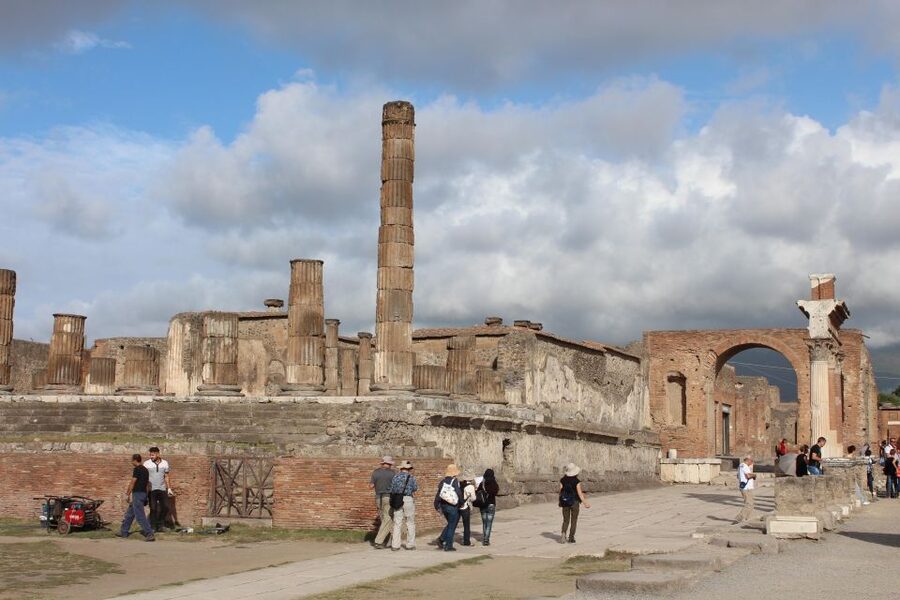
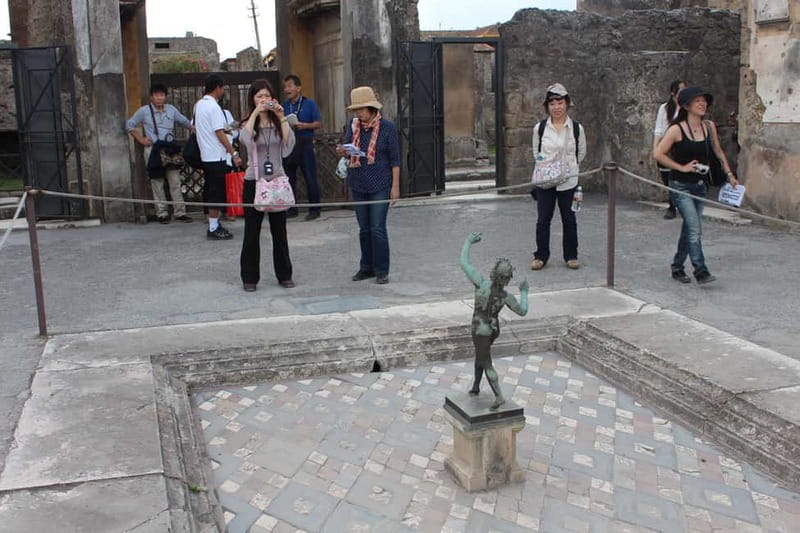
The House of the Vettii is a longer stop: photo time, plus a guided visit. This is where the tour shifts from public spaces to private life.
The key value here is the contrast. Outside, Pompeii shows you streets and civic life. Inside, you see the wealth and taste of elite residents, including preserved frescoes and interior design choices. The guide helps you interpret what you are looking at, so you do not miss the “why this matters” layer.
I like that this stop gives you a sense of social class. You can literally see how different Pompeians experienced the city. The wealth is visible, but the human meaning comes through when the guide explains how the house functioned.
Vetutius Placidus House and the Thermopolium: Roman street food
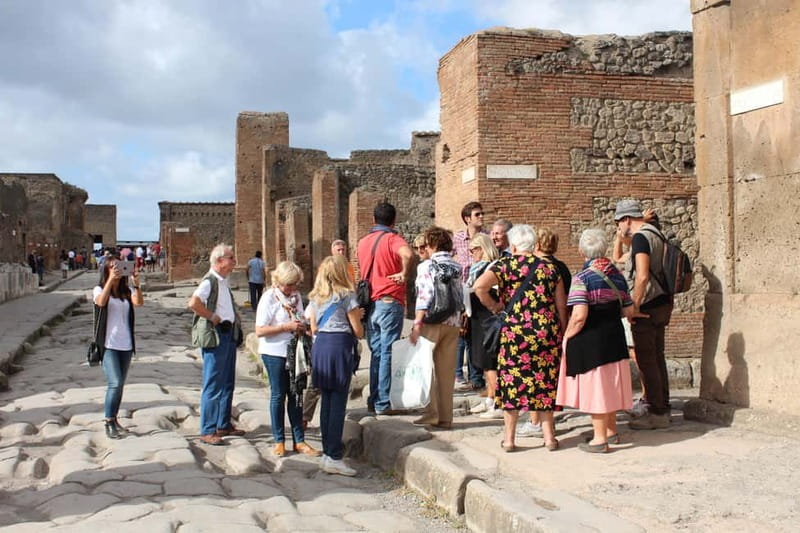
The last major stop is Vetutius Placidus House and Thermopolium. This combines an elite house visit with what the highlights call Roman “fast-food” spots.
The Thermopolium angle is practical and memorable. It helps you picture what people ate and how they got food quickly in a city where not everyone cooked at home, or not always. The guide’s storytelling makes it easier to imagine the daily flow of customers, vendors, and passersby.
This stop also helps you connect the whole tour. Once you have seen houses, baths, and public spaces, it is easier to understand how food fit into the Roman routine. Pompeii starts to feel like a living city again, even in its stillness.
What the tour includes: headsets, archaeologist guide, and priority entry
Here is what is covered, and why it matters for value.
- Skip-the-line Pompeii ticket with express security checking
- Professional archaeologist guide
- Headphones for groups max 5 pax, which keeps the narration clear
- Monolingual experience, only English or Spanish, for better quality
This is a good value setup if you want to understand Pompeii without spending extra time piecing together what each site is. The priority entry also helps, because time is the real cost when you are standing in lines.
At $42.19 per person for a 2-hour guided experience, you are paying for expert interpretation plus time savings. If you are comfortable doing Pompeii alone and you already know what you want to see, the value is lower. If you want the “first visit clarity” effect, it is stronger.
Who this tour suits best (and who should think twice)
This experience is a great fit for:
- First-time visitors who want a structured overview
- History fans who like interpretation tied to evidence
- People who prefer a guided walk rather than a self-guided hunt
- Photography lovers who want multiple highlighted stops, even if some are quick
It is not a good fit for:
- Wheelchair users
- People with mobility impairments
- People with back problems
- People with heart problems
The walking is continuous and outdoors. Even with priority entry, you are still moving over uneven terrain. If you have any limitations, choose wisely.
Photo strategy and timing: how to get your shots without slowing the group
Because several stops are short, you want to work fast. Bring your camera prep in order before you reach the stop, not while you are standing in the narrow timing window.
A good approach:
- Listen to the guide’s key point first
- Then take photos while you still have the explanation fresh
- Move on right after, so you are not left behind
Headsets help you keep hearing details even when you are turning slightly for photos. That makes this kind of route easier than many “walk and hope” tours.
Weather, pace, and comfort tips that make a difference
This tour runs in all weather. That is good because it reduces plan changes. It also means you should dress like you mean it.
- Wear good walking shoes, no flip-flops
- Bring a hat and sunscreen
- Expect sun and uneven surfaces
- If it is rainy, consider a light rain layer and keep your footing careful
Also, this is not a long museum-style pause tour. You do a lot in two hours. If you want to linger in one building or take a second pass at a favorite spot, plan extra time after the tour.
Should you book this Pompeii archaeologist tour?
Book it if:
- You want skip-the-line priority and a guide who can explain what you see
- You are visiting Pompeii for the first time and want a structured route that covers major highlights
- You like small-group attention and clear audio through headsets
Skip it or consider another option if:
- You need a slow pace, lots of seating, or very limited walking
- You get uncomfortable with the tour’s inclusion of the Lupanare and erotic art context
- You prefer fully self-guided time with no group movement
For many visitors, this is the sweet spot. Two hours is short enough to keep the day manageable, but long enough to learn the difference between random ruins and a real Roman city.
FAQ
What is the duration of the Pompeii skip-the-line guided tour?
The tour duration is 2 hours, and you can check availability to see starting times.
Where do we meet the guide?
Meet your guide at the Towns of Italy Vox Kiosk in Piazza Esedra, Pompeii, next to the Coffeeshop Vittoria.
Is it really skip-the-line?
Yes, it includes skip-the-line access through an express security check. There is still a compulsory security check that can cause some delay.
What languages are offered?
The tour is monolingual, offered in English or Spanish.
What is included in the price?
Included are the skip-the-line Pompeii ruin ticket, a professional archaeologist guide, and earphones for groups of max 5 people.
What should I bring and what do I need for entry?
Bring a passport or ID card. Comfortable walking shoes are strongly suggested, and you should also consider hat and sunscreen. Pets are not allowed.
Who should avoid this tour?
It is not suitable for wheelchair users, people with mobility impairments, people with back problems, or people with heart problems.
Recently reviewed around Pompeii Archaeological Site
- 2-Hour Private Walking Tour of Pompeii★ 4.7 · 22 reviews
- Pompeii: Skip-the-Line Tour for Kids and Families★ 4.9 · 72 reviews
- Pompeii: Skip-the-Line Ticket and Virtual Museum★ 4.5 · 66 reviews
- Pompeii 3-Hour Walking Tour★ 5.0 · 8 reviews
- Mount Vesuvius Wine Tasting and Lunch from Pompeii★ 4.3 · 43 reviews
- From Sorrento: Pompeii and Vesuvius Tour by Express Train★ 4.0 · 12 reviews
- From Naples: Pompeii & Sorrento Shore Excursion with Lunch★ 5.0 · 6 reviews
- Pompeii: Tour for Children★ 4.7 · 106 reviews
Pompeii Tours, compared.
Entry Ticket and Guided Tour with an Archaeologist
Read our review →

Pompeii Small Group Tour with an Archaeologist
Read our review →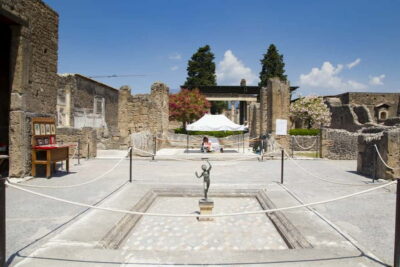
Naples or Sorrento: Full-Day Pompeii and Mount Vesuvius Tour
Read our review →
Pompeii & Mt.Vesuvius Day Tour from Naples with Pizza Lunch
Read our review →