
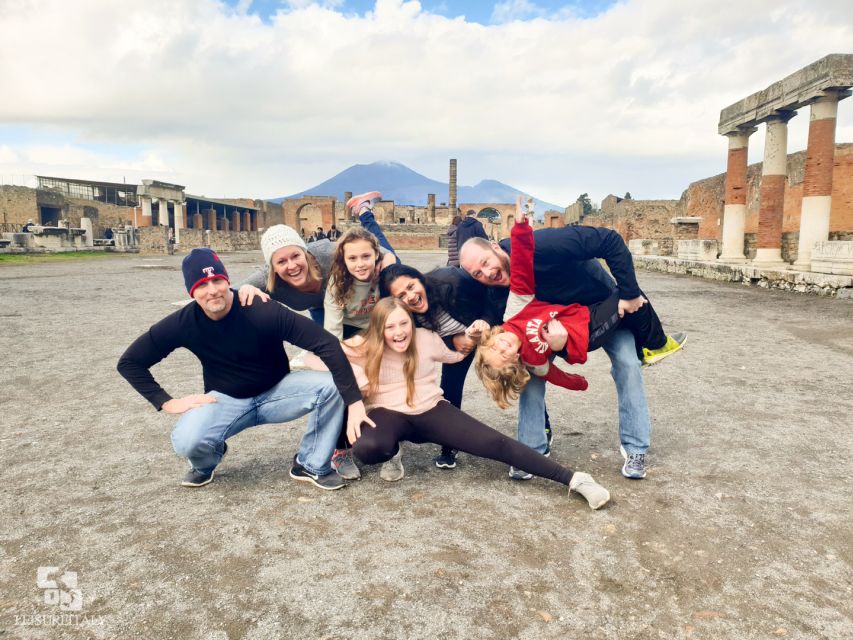
Reviewed · POMPEII TOURS
2-Hour Private Walking Tour of Pompeii
Pompeii is one of those rare places where the past feels close, not dusty. This 2-hour private walking tour helps you read the city like it was a normal place, right before 79 AD froze it in place.
I love walking the original basalt road, with those little torchlight-reflecting spots and the stone used to keep your feet out of puddles. I also love how the guide keeps steering the walk from big landmarks to everyday details, so the ruins feel lived-in.
One drawback: it is a walking tour over uneven ruins, and it is not suitable for wheelchair users or people with mobility impairments, so you need comfortable shoes and steady legs.
Key highlights
- Skip-the-line Pompeii Express tickets to access areas within the city walls fast
- Private guide, small group (up to 10) so you can move at a pace that fits you
- Forum focus with standout stops like the Temple of Apollo, Capitolium, Temple of the Emperor, and the Basilica
- Everyday Pompeii stops, including bakeries and tavern-and-shop areas, not just monuments
- Human casts that show victims in the pose they died
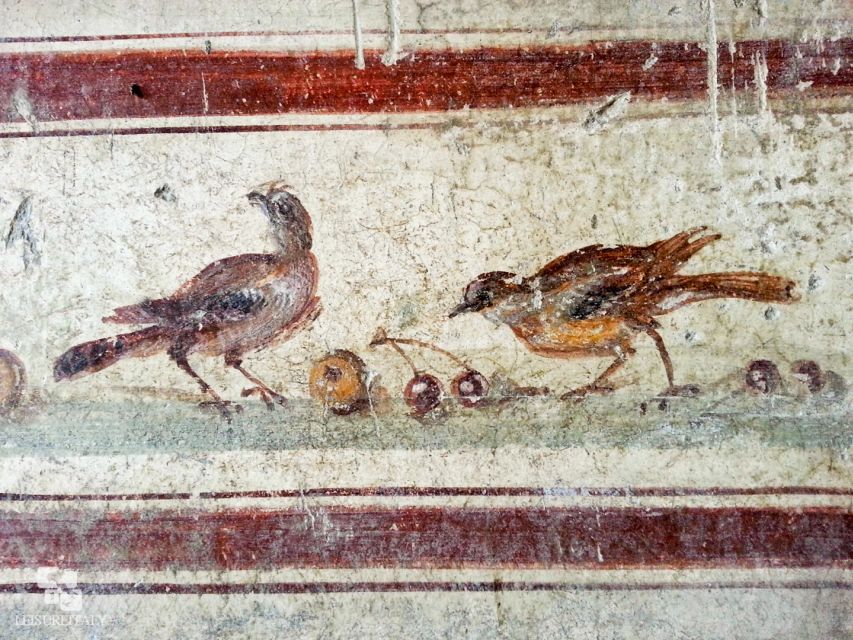
- Roman theater choices among three different venues, plus the frescoes in the former Red Light District
Pompeii, Explained Through a 2-Hour Walking Route
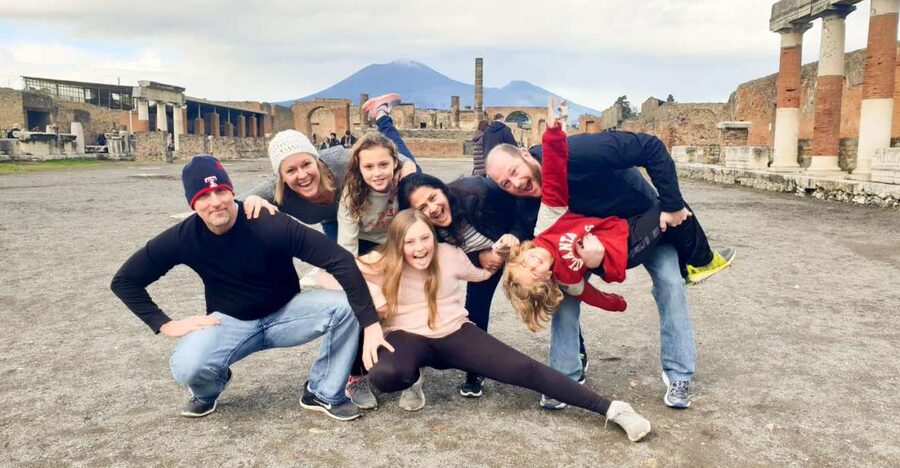
Pompeii can feel like a giant open-air puzzle. What I like about a focused, guided 2-hour walk is that you get a coherent story, not random wandering. You also get skip-the-line entry, which matters because Pompeii’s ticket lines can eat up the time you want to spend looking closely.
This tour is set up as a “city walk” rather than a checklist. You’ll pass through areas tied to religion, trade, administration, and politics, then shift into everyday routines like meals and entertainment. The idea is simple: you should leave with a mental map of how the town actually worked.
The guide’s job is to keep the stops meaningful. And they do it by connecting big sites to daily life, like how Roman streets were built for torchlight and rain, or what people ate, where they shopped, and how they spent free time.
More Pompeii tours and tickets in Pompeii Archaeological Site:
- Pompeii: Entry Ticket with Optional Audio Guide
★ 4.2 · 12,360 reviews - Pompeii: Archaeological Park Tour with Ticket on request
★ 4.5 · 2,283 reviews - Pompeii Ruins Private Tour with Optional Skip-the-Line Entry
★ 4.9 · 732 reviews
Where You Meet and How the Private Guide Actually Feels
You meet your guide at Café Hortus Pompeii, in front of the entrance at Via Villa dei Misteri 2, inside Pompeii Archaeological Park. That’s helpful because Pompeii has multiple entry points and it is easy to lose time figuring out logistics.
Even though it is described as private, the tour is limited to a small group of up to 10 participants. Translation: you get a live guide who can still respond to questions and keep things moving, without the chaos of a huge bus tour. It also makes the experience feel more like a shared walk among a few people, guided by someone who knows exactly where to send you next.
Languages are Spanish, English, French, and Italian, which is great if you want your guide’s explanations without straining through translations. And since the route is flexible based on your interests and physical ability, you are not locked into seeing every single thing at the same speed.
Skip-the-Line Pompeii Entry, and Why It’s Worth Paying For
This experience includes Pompeii Express skip-the-line tickets that allow you to visit areas within the city walls. That sounds like a small perk, but in practice it can protect the heart of your visit: time in the ruins.
At $175.22 per person for about 2 hours, you are paying for three things at once:
- the guide’s time and pacing,
- the reduced waiting,
- and a route that aims to cover a full slice of Pompeii.
Two hours is not long in a place this big. So the value comes from spending your limited time seeing the right mix of sites, instead of waiting in line or trying to build a route on your own.
If you enjoy Pompeii for specific themes, like food, public life, or entertainment, the price can feel more reasonable because the guide helps you target what you care about.
Walking the Original Basalt Road Like a Roman Pedestrian
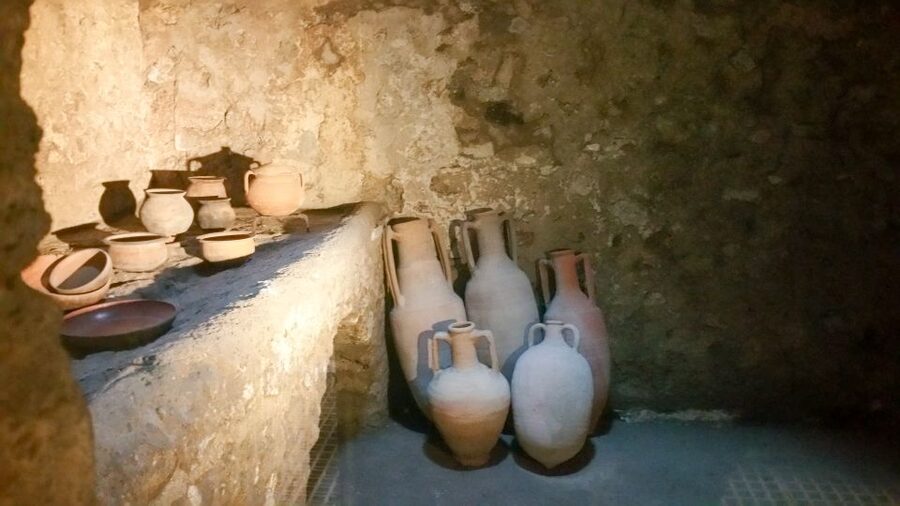
One of the tour’s best “wow, I can see the design” moments is the walk along the original road made of volcanic basalt rock. This is not a modern path laid over the past. You are walking on a surface built for Roman daily traffic.
Pay attention to the details you pass:
- you’ll spot hundreds of little white travertine spots, used to reflect torch light,
- and you’ll see big basalt blocks rising from the road, which pedestrians used to avoid getting wet during rain.
That’s a very practical kind of history. It tells you how people moved through town at night, and what they did when the weather turned. A lot of Pompeii highlights can feel like “look, ruins.” This street moment feels like “look, engineering.”
Because this tour is short, you’ll want your eyes open during these street sections. They set the tone for the rest of the walk, turning the city from an image into a working place.
More walking tours in Pompeii Archaeological Site:
- Pompeii 3-Hour Walking Tour
★ 5.0 · 8 reviews - Naples: Street Food Walking Tour with Local Guide
★ 4.8 · 4,256 reviews - Pompeii: Guided Walking Tour with Entrance Ticket
★ 4.3 · 1,423 reviews - Naples Spanish Quarters Walking Tour Street Art, Folklore & Sweet
★ 5.0 · 797 reviews
The Forum and Civic Center Stops: Religion, Power, and Business
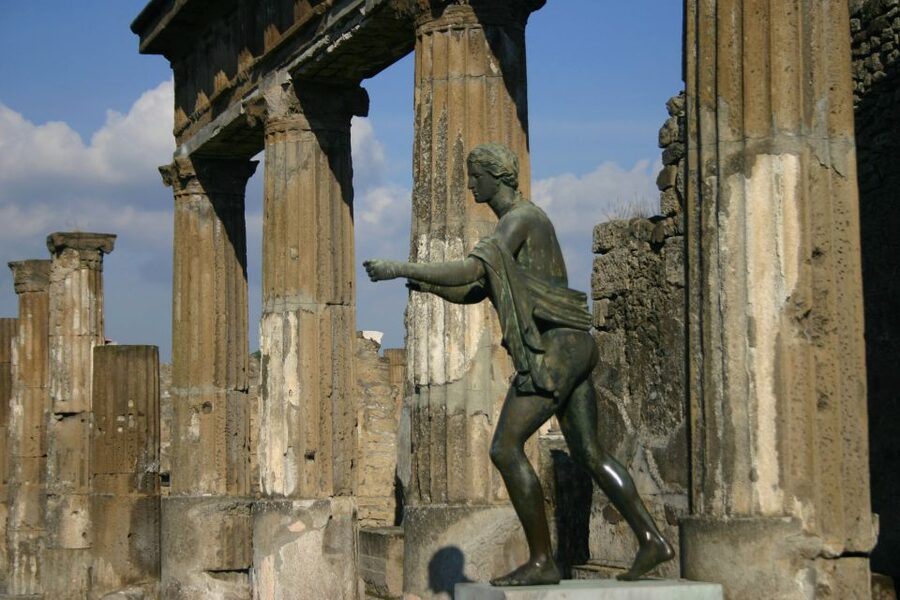
Pompeii’s Forum was the city center for religion, trade, administration, and politics. So even if you only have two hours, this is a smart place to anchor your time.
Your guide aims to show major Forum-linked structures, including the Temple of Apollo, the Capitolium, the Temple of the Emperor, and the Basilica. Each one is a different lens on how Romans organized public life.
- The Temple of Apollo points to religion as a daily force, not something tucked away for special occasions.
- The Capitolium reflects the civic religious identity of the state.
- The Temple of the Emperor shows how political power and worship were tied together.
- The Basilica gives you a clue about official space, where public business likely played out.
The tour also includes the Macellum market area. That’s crucial because it shifts Pompeii from ceremony to commerce. Markets are where regular people spent time and made choices, and seeing the commercial setting helps you understand the town beyond the temples.
Human Casts and the Rooms of Daily Reality
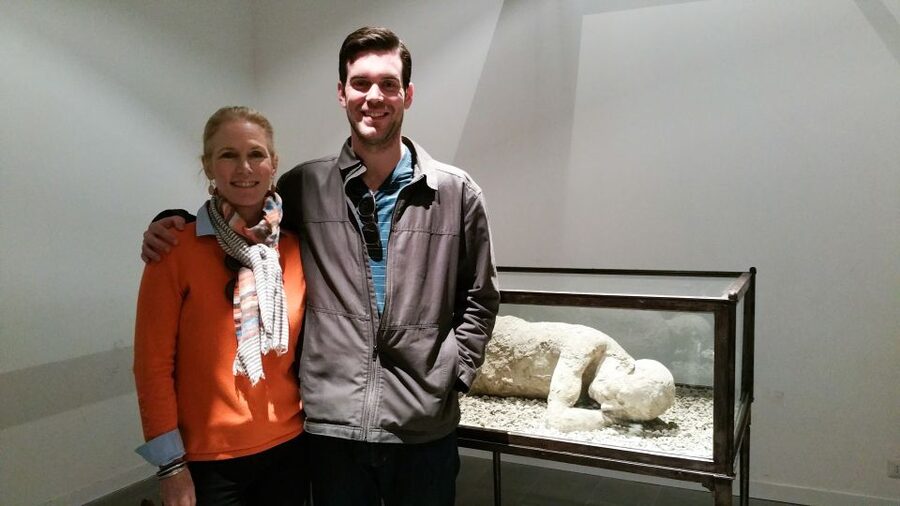
One of the most emotionally heavy stops is the display of human casts of Pompeii residents, caught by the eruption and preserved in the pose they died in. These are not just “interesting objects.” They make the timeline and the danger real.
On a tour like this, that matters because the rest of your visit is about routines: walking streets, visiting public spaces, eating, going to theaters. When you see the casts after those moments, you feel the contrast sharply. It is hard to look at the ruins the same way again.
Also, the way the tour is designed helps you process it. You are not hitting the most intense stop first with no context. Instead, you get everyday Pompeii first, then the tragedy lands with weight.
If you prefer lighter pacing, tell your guide. The itinerary is flexible for your interests and physical ability, so your guide can manage the order and the pace within the two-hour window.
Roman Fast Food: Bakeries, Bread Finds, and Quick Meals
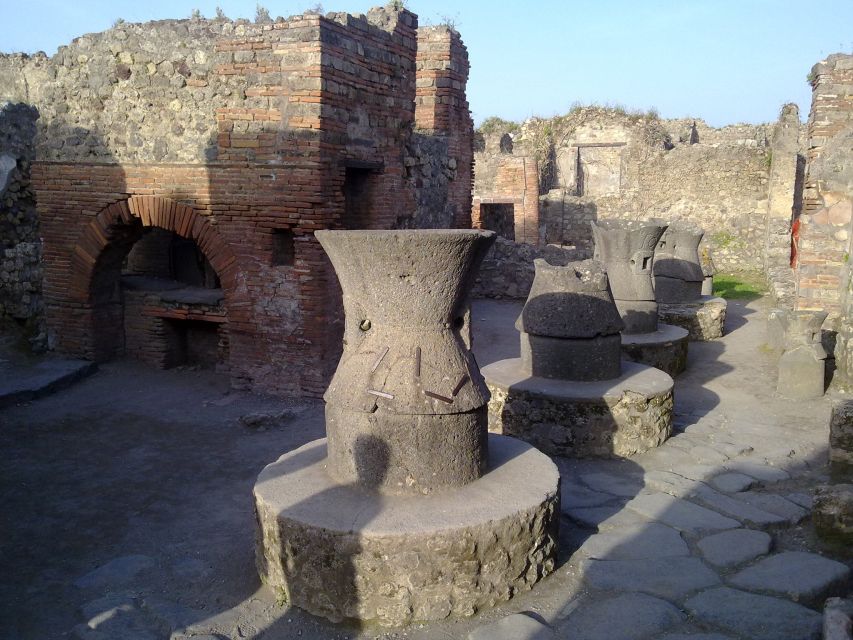
Pompeii had baked goods ready for everyday life, and the tour includes a stop at one of the bakeries. This is where the tour turns from “architecture” to “what people ate.”
During excavations, carbonized loaves of bread were found. That single detail brings the bakery scene into focus. It is not just a concept of ancient food. It is physical evidence of meals that were in progress when the eruption hit.
Seeing a bakery on foot is also a practical experience. You are close enough to imagine how quickly people could buy and move on. In a way, these bakeries are the Roman equivalent of fast food, not because the modern vibe matches, but because the function did: quick, daily, and essential.
If you like food history, this stop is one of the most satisfying uses of your limited time. It gives you a tangible connection between “daily life” and “what survives.”
Entertainment and the Theaters: Three Options, One Theme
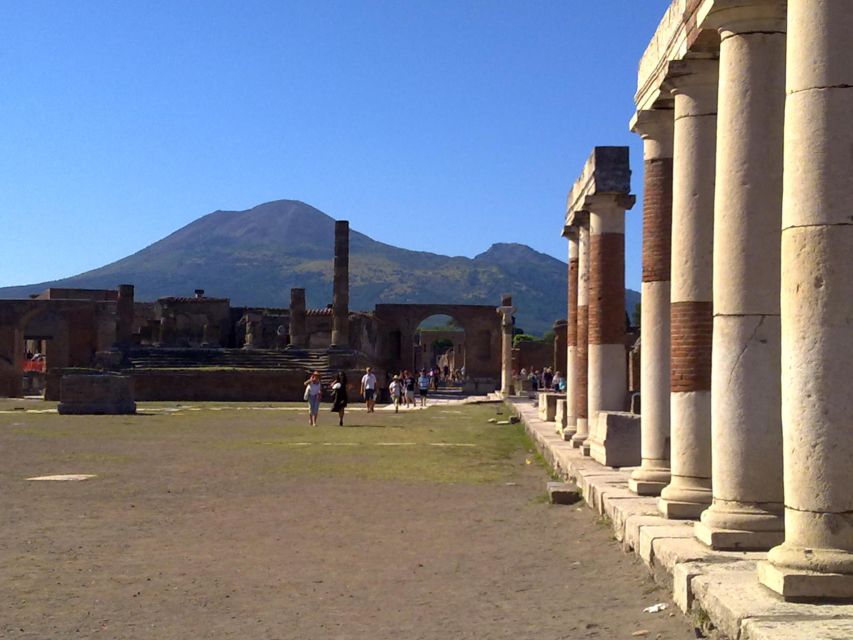
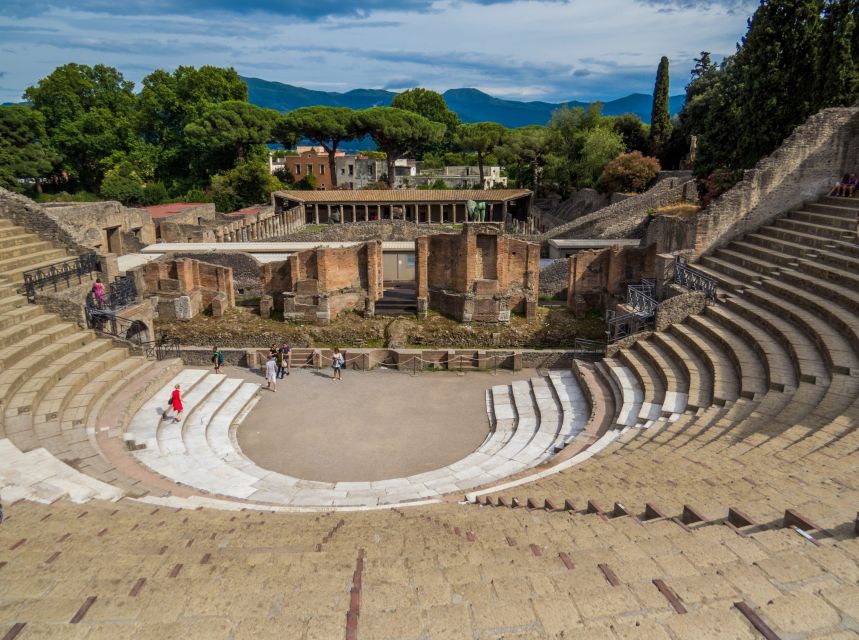
Pompeii wasn’t only temples and markets. It had stages and crowds, and this tour includes a visit to one of the city’s three theaters.
You’ll choose between:
- the outdoor arena for public performances,
- the indoor theater for mime and poetry,
- and the outdoor theater for tragedies and comedies.
Because the tour is guided and flexible, the exact pick can depend on your interests and how the pacing works that day. What you should do is decide what kind of story you want Pompeii to tell you: public spectacle, more intimate performances, or dramatic theater.
Even if you are not a theater person, these spaces show how people gathered for emotion and entertainment. They also balance the walk. After temples, markets, and practical street details, the theaters give you a mental reset.
The Former Red Light District and Erotic Frescoes

This tour also heads to the former Red Light District, where you can see Roman frescoes of erotic images. This is an honest piece of life, and Pompeii does not hide from the truth of what people talked about and displayed publicly.
You do not need a lecture to understand why it’s there. The value is in context. When you see these frescoes while also seeing markets, public buildings, and theaters, you get a fuller picture of social behavior.
If you would rather steer away from explicit imagery, you can say so to your guide. The route is tailored to your interests and physical ability, so your preferences should be part of the plan.
What Else You’ll See: Baths, Villas, Taverns, and Shops
The tour’s highlights mention more than the Forum and a few big named monuments. You can also expect to pass through areas tied to daily routines and neighborhood life, including:
- public baths,
- villas,
- taverns,
- and shops.
This is important because Pompeii can turn into a museum of famous facades. But a town is more than its posters. Baths and taverns tell you how people relaxed and socialized. Villas clue you into residential life. Shops show you the economy and the flow of goods.
Because your guide is aiming to include at least one example from each type of building, you should leave with a rounded impression, not a lopsided visit that only covers one side of Pompeii.
Price and Value: Does $175.22 Make Sense?
Let’s talk value in plain terms.
You are paying $175.22 per person for a 2-hour private walking tour with:
- a live guide,
- skip-the-line Pompeii Express tickets,
- a small group up to 10,
- and a route that tries to hit a broad slice of the city.
If you were doing Pompeii on your own, you would still spend time walking from site to site, and you might spend time figuring out what you’re looking at. That’s the gap this tour fills. The guide helps you move efficiently, interpret what matters, and stay oriented in a large and complex site.
Where it may not feel like a bargain is if you want a slow, linger-all-day Pompeii experience. Two hours is tight. You will likely enjoy the tour most if you accept that you’re doing a focused overview, not everything.
For me, the best way to think about it is this: if you value time, clarity, and a guided path through the big themes, the price is easier to swallow.
Who This Pompeii Walk Is Best For
This tour fits well if you want:
- a guided introduction that covers the Forum, religion, daily commerce, and entertainment,
- skip-the-line entry so your time goes to seeing, not waiting,
- and a flexible route shaped around your interests.
It is listed as not suitable for wheelchair users and not suitable for people with mobility impairments. Even so, one account highlights that the guide can be flexible when someone needs to deal with longer stretches. That tells me you should still ask questions directly before you book, especially if you rely on any mobility support.
Comfort matters. Wear comfortable shoes, because this is a walking tour on historic surfaces. If your legs are steady and you can handle uneven ground, you’ll get a lot out of the basalt street details and the quick transitions between sites.
If you like human-scale history, this is also a strong match. You see buildings, sure. But you also see the bakery finds, and the plaster casts that capture a moment of fear and finality.
Should You Book This Private 2-Hour Pompeii Tour?
Book it if you want a structured Pompeii experience that feels practical and human, not random. I’d especially recommend it if you care about understanding the city’s daily rhythms, because the walk connects big civic sites with bakeries, markets, theaters, and social spaces.
I would not book it if you need a fully accessible route. The tour is clearly marked as not suitable for wheelchair users and mobility impairments. Also, because it is only two hours, you should be comfortable with choosing highlights rather than trying to see everything.
If your priority is getting your bearings fast and learning what you’re looking at while you walk on original streets, this is a smart way to spend your time in Pompeii.
FAQ
Where does the tour start?
You meet your guide at Café Hortus Pompeii, in front of the entrance at Via Villa dei Misteri 2, Pompeii Archaeological Park.
How long is the Pompeii walking tour?
The tour lasts 2 hours. Starting times depend on availability.
Is this tour skip-the-line?
Yes. It includes Pompeii Express skip-the-line tickets that let you visit areas within the city walls.
What is included in the tour?
The tour includes a private guide and the skip-the-line Pompeii Express tickets.
How many people are in the group?
It is limited to 10 participants.
What languages are available for the guide?
The live tour guide is available in Spanish, English, French, and Italian.
Is the tour wheelchair accessible?
No. It is not suitable for wheelchair users or people with mobility impairments.
Do I need to provide names for tickets?
Yes. It is compulsory to provide the full names of all participants because they are required for the tickets.
Is Pompeii free on the first Sunday of the month?
Entrance is free on the first Sunday of each month, but tickets cannot be reserved ahead of time, so entry is not guaranteed.
Recently reviewed around Pompeii Archaeological Site
- Pompeii: Skip-the-Line Guided Archaeological Discovery Tour★ 4.2 · 13 reviews
- Pompeii: Skip-the-Line Tour for Kids and Families★ 4.9 · 72 reviews
- Pompeii: Skip-the-Line Ticket and Virtual Museum★ 4.5 · 66 reviews
- Pompeii 3-Hour Walking Tour★ 5.0 · 8 reviews
- Mount Vesuvius Wine Tasting and Lunch from Pompeii★ 4.3 · 43 reviews
- From Sorrento: Pompeii and Vesuvius Tour by Express Train★ 4.0 · 12 reviews
- From Naples: Pompeii & Sorrento Shore Excursion with Lunch★ 5.0 · 6 reviews
- Pompeii: Tour for Children★ 4.7 · 106 reviews
Pompeii Tours, compared.
Entry Ticket and Guided Tour with an Archaeologist
Read our review →

Pompeii Small Group Tour with an Archaeologist
Read our review →
Naples or Sorrento: Full-Day Pompeii and Mount Vesuvius Tour
Read our review →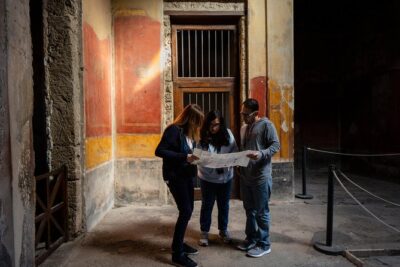
Pompeii & Mt.Vesuvius Day Tour from Naples with Pizza Lunch
Read our review →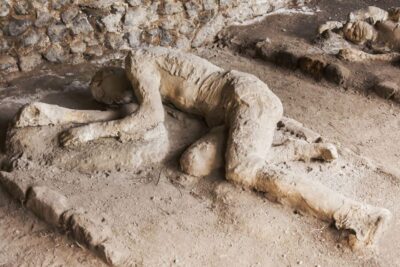
Browse the lists this tour appears in