
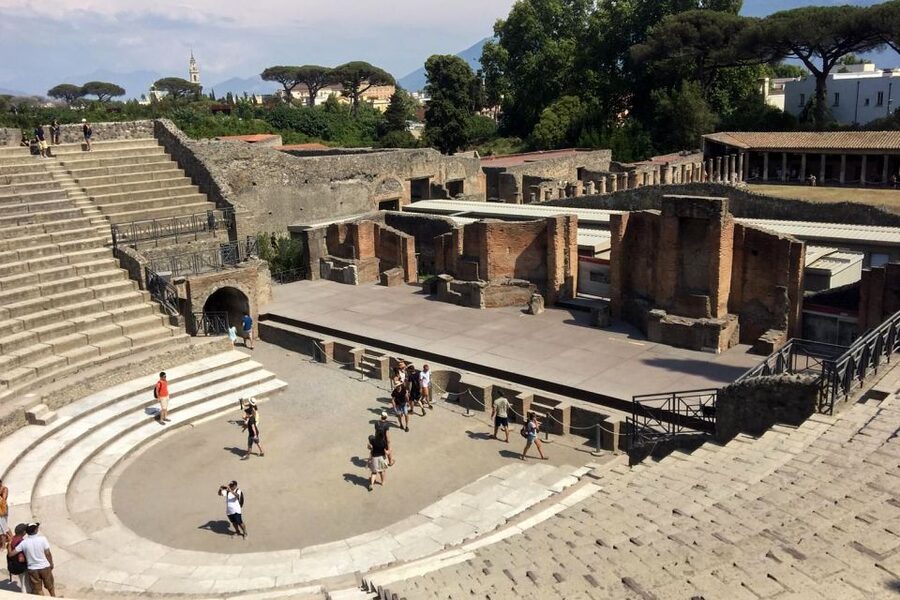
Reviewed · POMPEII TOURS
Pompeii: Guided Walking Tour with Entrance Ticket
Pompeii is interesting because the city is frozen mid-day in 79 A.D., and you walk through that moment street by street, door by door, with Vesuvius looming in the background. This guided walking tour is built for making the most of a short visit, not just passing through. I like that entrance is included and you get skip-the-ticket-line access, so you start seeing real ruins sooner. One thing to consider: Pompeii is large, and in just 2 hours your guide covers key zones, not every corner.
You’ll also appreciate the human touch. In the group, guides such as Elisa and Salvatore show Pompeii as a lived-in town, with commentary that connects architecture to daily routines. I like the use of headsets, which helps a lot when you are walking, stopping, and moving away from the guide. A possible drawback is that you can run into a late start or a confusing first minute at the meeting point, so plan to arrive a bit early.
The payoff is big for first-timers. You’ll see the kind of details that make Pompeii feel less like an outdoor museum and more like a neighborhood that survived by accident. Still, it is not for everyone: the tour is not suitable for mobility impairments or wheelchair users, and it can get hot, uneven, and tiring on real excavation ground.
Key things that make this tour worth your time
- Skip-the-ticket-line entry so you lose less of your limited Pompeii time to queues
- Entrance ticket included (Pompeii Archaeological Site) so you do not scramble for paperwork on arrival
- Headsets provided to keep the guide’s explanations clear while you walk
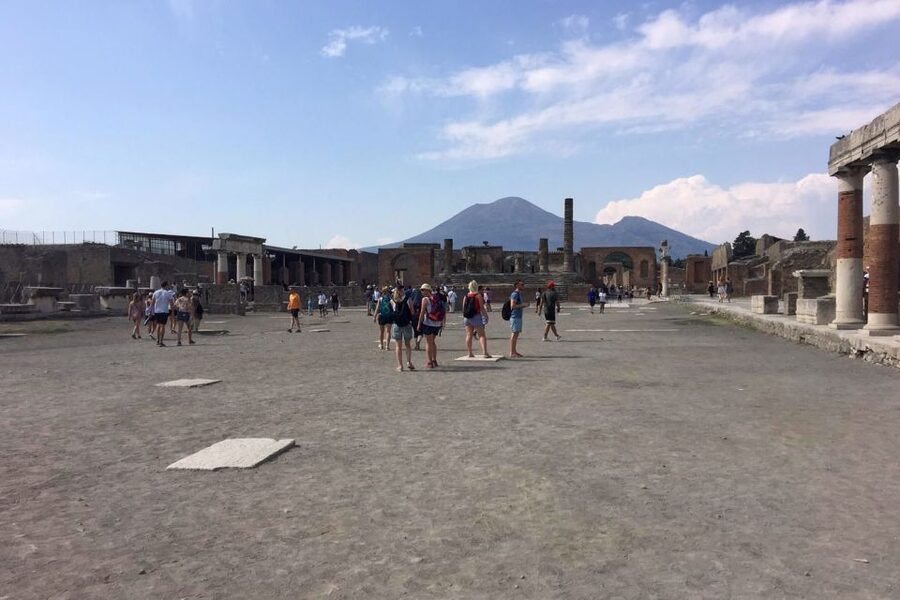
- Forum, Thermal Baths, and Lupanare as the core highlights, not random stops
- Multi-language live guide (English, French, Spanish, Italian) with local storytelling
- Designed for a short visit (2 hours) with a focused route through well-preserved areas
Pompeii in two hours: how this tour actually helps you see more
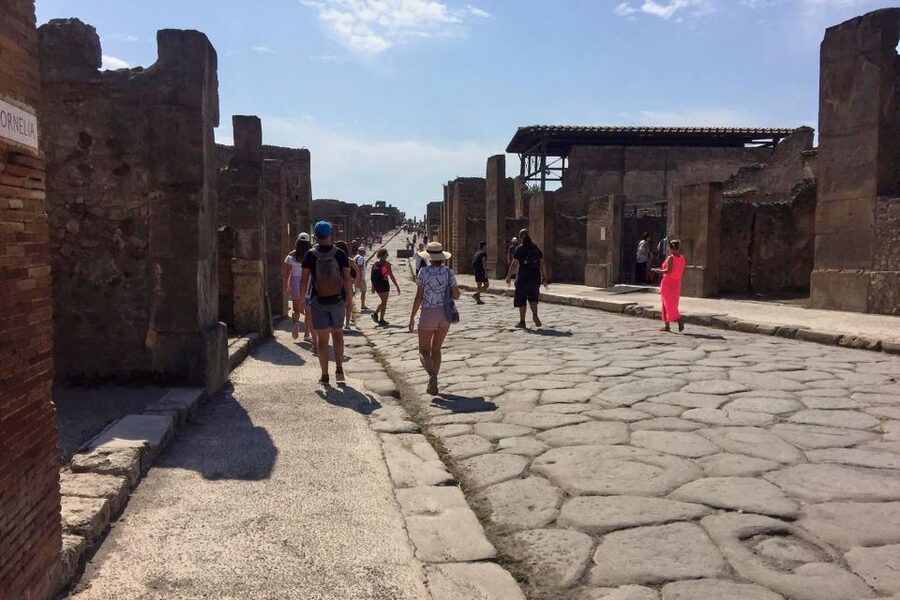
Pompeii is famous for being dramatic, but the real magic is practical. You are not just seeing ruins, you are seeing clues to how people moved, ate, worked, shopped, and gathered. With a guided route, you start recognizing patterns fast, like where a public square sits, where bathing happens, and where commerce appears right beside ordinary streets.
This is a 2-hour walking tour, so it is not meant to replace a full day at Pompeii. It is made to do something more useful: compress the essentials into one plan. For many people, that means you walk away feeling you understand Pompeii as a town, not just as stone blocks under a roofless sky.
The price also makes sense once you break it down. You pay $50 per person, and the Pompeii entrance ticket is included (listed at €20). That leaves you paying for the guide, the skip-the-line benefit, and the small gear that keeps the experience smooth, like headsets.
More Pompeii tours and tickets in Pompeii:
- Pompeii: Entry Ticket and Guided Tour with an Archaeologist
★ 4.8 · 19,459 reviews - Pompeii: Entry Ticket with Optional Audio Guide
★ 4.2 · 12,360 reviews - Pompeii: Small Group Tour with an Archaeologist
★ 4.8 · 12,264 reviews
Meeting point game plan at Hotel Vittoria, Via Mare (10:50 a.m.)
Timing matters here because your entry window and your group location matter. The meeting point is 10:50 a.m. in Pompeii, at the garden of Hotel Vittoria, right outside the coral shop called CELLINI on Via Mare, 80045 Pompei. The guide will be there with a sign showing the customers’ name.
Here is the practical trick I recommend: arrive early enough that you can find the right spot without sprinting. One recurring theme is that the first minutes can be confusing in Pompeii’s entrance area, especially when groups split and people arrive from different directions. If you land 5 to 10 minutes early, you take that stress off the table.
Also, bring the right footwear. This is walking on uneven surfaces, with stops that are not staged like a city tour bus. Comfortable shoes are not optional.
Skip the ticket line: what you gain besides time
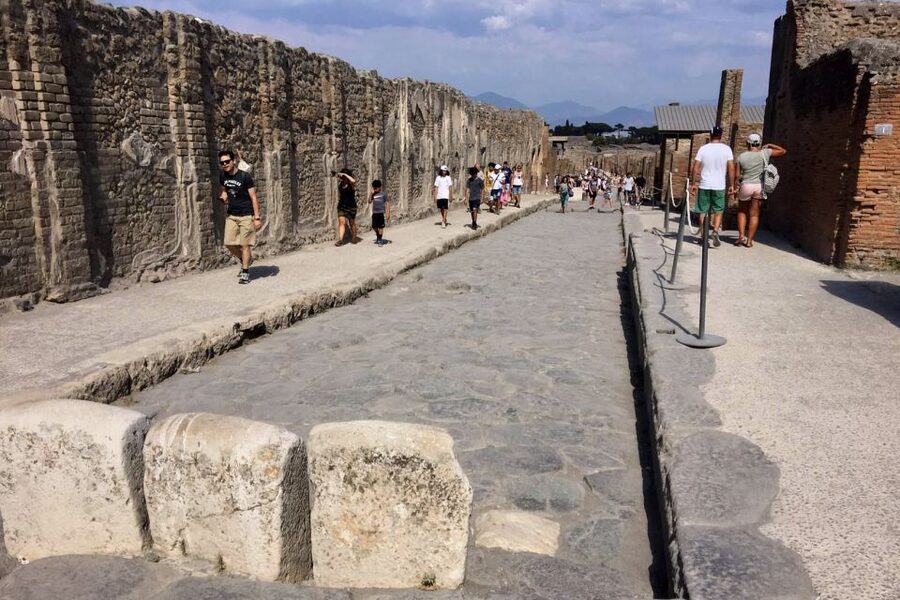
Skip-the-ticket-line access is the headline, but the real value is what it buys you in momentum. Pompeii can be busy at entrances, and when you lose time waiting, you lose your energy for walking once you are inside.
With this tour, you get guaranteed skip-the-long-lines entry, and you are not stuck deciding what to do after you finally reach the front. That matters because Pompeii is huge. If you start scattered, you end up chasing landmarks instead of understanding them.
You also get a smoother start because the guide is ready to plug you into the route. That matters for the big-picture goal of the tour: seeing how major spaces connect, like the Forum leading you into the town’s social and civic rhythm.
Pompeii highlights, in the order your brain will remember
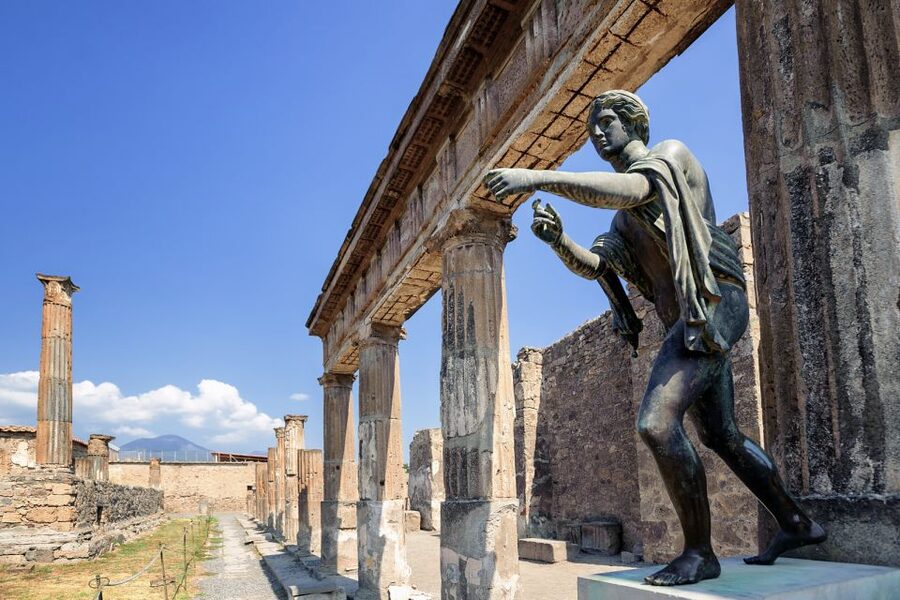
This tour is built around a set of big, recognizable places: the Forum, Thermal Baths, and the Lupanare, plus other nearby street scenes and storefront life. You will likely cover a substantial portion of the site in 2 hours, but in a way that feels coherent rather than chaotic.
Here is what these stops mean for you, beyond just being famous names.
More walking tours in Pompeii:
- Discover Pompeii: French Walking Tour of the Buried City
★ 4.8 · 253 reviews - Pompeii 3 Hours Walking Tour Led by an Archaeologist
★ 5.0 · 126 reviews - Pompeii: Highlights Guided Walking Tour
★ 4.6 · 105 reviews - Pompeii: 3D Walking Tour with Entry Ticket
★ 4.3 · 102 reviews
The Forum: where civic life shows up in stone
The Forum is the centerpiece of public Pompeii. In places like this, the guide’s job is to help you translate what you see into what people did. Expect explanations that connect the architecture to civic routines, like gathering, announcements, and public activity.
Even if you have no Roman background, this is one of the easiest places to start understanding the town. The Forum gives you orientation. Once you grasp where the public heart sits, the rest of Pompeii starts clicking into place.
Practical note: the Forum area can be busy and sunny. Keep your water plan simple and keep moving when the guide moves, because stopping too long in one spot can throw off the pace for everyone.
Thermal Baths: daily life, not just big rooms
The Thermal Baths are one of those Pompeii highlights that feel personal fast. People think of baths as luxury, but Roman bathing was routine, social, and part of public life. In a guided walk, you get context for what you are looking at, like how spaces functioned and why bath complexes mattered.
This is one of the best stops for people who love everyday details. You can stand in the same place and imagine the sequence of bathing spaces. And when you pair that with the broader story of Pompeii’s final day, the site starts to feel less like an “ancient attraction” and more like a real community.
Heat can be real here too. Pompeii streets and open spaces can feel intense in warm weather, so dress for sun and movement.
The Lupanare: a shocking stop with historical context
The Lupanare is included as part of Pompeii’s reality check. It is famous, but what you need from your guide is context, not shock value. This is where explanations that connect the site to the structure of town life help you understand why certain activities existed and how they were placed in the urban layout.
It is also a sensitive topic. A good guide handles it with historical care and keeps you focused on what the site can actually tell us.
If you are the type who gets uncomfortable with adult themes, consider what you can handle. The tour is short, so even this stop usually does not take over the entire experience. You will still cover other parts of Pompeii.
Streets with shop signs and the feel of ordinary commerce
One of the best surprises in Pompeii is how quickly it stops feeling like only monuments. On this walk, you also see everyday settings: streets with the feel of neighborhood life, and storefront areas with signs advertising produce, including wine.
This matters because Pompeii is not only about grand architecture. You learn more about the town through the small clues that show up again and again, like how trade sits near public movement and how daily needs show up in fixed places.
You will likely get a few moments to stop, look closely, and ask questions, as the group moves between major anchors.
Hearing the guide: headsets make the tour easier on your feet and focus
The headsets are included, and they are not a gimmick. When you are walking and the guide shifts position, audio can get lost in open-air noise. With headsets, you can keep your attention on the story and the physical space, instead of turning your head every few minutes trying to catch words.
This also helps multi-language groups function better. Even when guides rotate between languages depending on who is in the group, you can still follow what is happening. You are more likely to remember details, because you do not miss key sentences while moving.
A small practical note from the real world: headsets fit varies by person. If you dislike uncomfortable gear, you might find them less pleasant for long wear. Still, most of the time the clarity is worth it.
Guide styles you might notice: Elisa, Salvatore, and the art of pacing
Your guide is the difference between Pompeii as stone and Pompeii as story. From the experience data, guides like Elisa and Salvatore are repeatedly singled out for being fun and engaging, with explanations that feel human.
You might hear humor mixed into the facts. Guides such as Micheal, Miquel, Imma, Mattia, and Rita also show up in the background here, each with a style that tends to keep the pace lively and the route understandable.
One thing to watch is pacing. A tour can start late if people are hard to locate at the meeting point, and one late start can steal some of your walking time. That does not automatically mean the tour is bad, but it can change how much you fit in comfortably. Aim to be there on time.
What to bring so Pompeii feels manageable
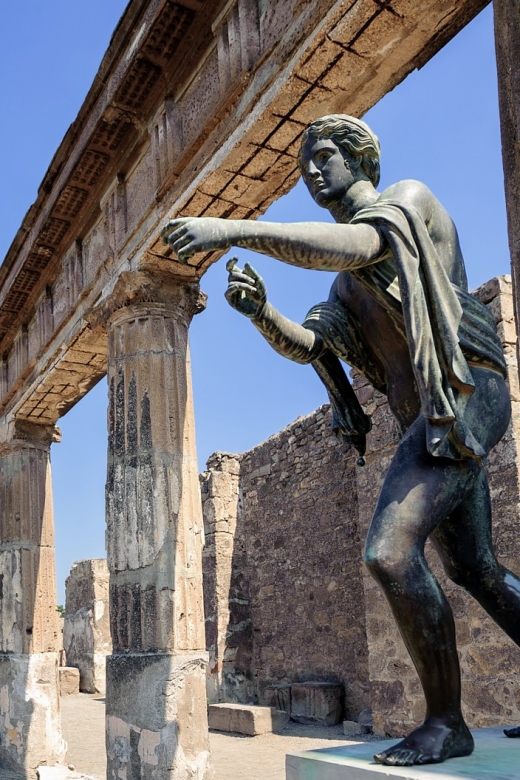
This tour runs in all weather conditions, so plan for sun and plan for rain. The basics below matter most:
- Comfortable shoes for walking on uneven ground
- Weather-appropriate clothing (heat and sun can be intense)
- For children: bring a passport or ID card, because children booking child fare must show valid ID at the Ticket Office
And yes, this tour is not suitable for wheelchair users and people with mobility impairments. Uneven surfaces and the nature of the excavation site make it a poor match.
Practical logistics: group size, pace, and photo time

In a 2-hour walking tour, you are balancing three things: entry time, walking time, and stop time. The group size can feel large at the start, especially around Pompeii’s entrance area. If your group is big, the route can move with a steady flow, and you may not get long pauses at every corner.
The good part is that the tour is designed to keep you moving through major zones, so you do not end up with long gaps where you wonder what you are supposed to be looking at. Many people find the experience is just long enough to cover a strong chunk of Pompeii while still feeling like you could return later for more.
Photo tip: take photos while the group stops, not while you are still walking in a tight cluster. That keeps you from getting separated and helps you keep the guide’s story in mind while your camera is put away.
So, is it good value at $50 with ticket included?
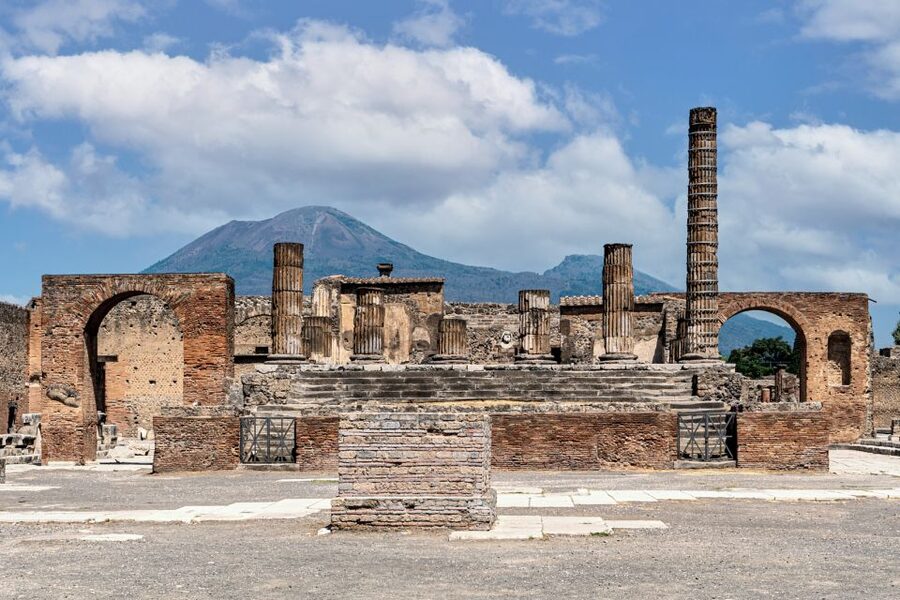
For a first-time Pompeii visit, I think the value is solid. The math is clear:
- You get a Pompeii entrance ticket included (listed at €20)
- You get skip-the-ticket-line entry, which protects your time
- You get a professional guide plus headsets
The price feels fair when you compare it to the cost of doing the site alone with no guidance. Pompeii can be overwhelming quickly because so much exists. With a guide, you are not paying to walk, you are paying to interpret what you see.
Where you want to be realistic is in your expectations. This tour is not for people who want every street corner. It is for people who want the best anchors within a short window and want to understand what those anchors meant to the people who lived there.
Who this Pompeii tour suits best
This tour fits best if you want:
- A guided highlights route through the Forum area, baths, and the Lupanare
- A short visit that still feels meaningful and organized
- Clear audio via headsets
- A live guide who offers explanations in multiple languages (English, French, Spanish, Italian)
I think it is a strong choice for first-timers. If Pompeii is your one big stop in the area, guidance helps you avoid feeling lost.
It is not a great fit if you need wheelchair access or have mobility limitations, and it may not feel ideal if you want long, slow exploration with lots of unscripted wandering.
When you should skip this tour and plan your own day
You might consider a different plan if:
- You want to spend most of your day exploring without a structured route
- You dislike headsets or want total control over your pace at every stop
- You are visiting in a period when you expect delays and you cannot handle a late start risk
In those cases, you may prefer entering independently and spending longer in fewer zones.
Should you book this Pompeii guided tour?
If you have about 2 hours and you want the highlights with context, I would book it. The combination of skip-the-ticket-line entry, entrance included, and headsets makes it a time-smart option. And if you land with a guide like Elisa or Salvatore, the storytelling style seems to be a big part of why people feel satisfied afterward.
One quick decision helper: if you are the type who likes knowing what you are looking at, a guide is worth it here. Pompeii rewards attention. This tour is a practical way to pay attention without spending your precious time stuck in lines or guessing your route.
FAQ
How long is the Pompeii guided walking tour?
The tour duration is 2 hours.
Where is the meeting point and what time should I arrive?
Meet at 10:50 a.m. in Pompeii at the garden of Hotel Vittoria, right outside the coral shop called CELLINI, on Via Mare, 80045 Pompei. The guide will be there with a sign with the customers’ name.
Is the entrance ticket included?
Yes. The entrance ticket to the Pompeii Archaeological Site is included.
Does the tour include skip-the-ticket-line entry?
Yes. You get guaranteed skip-the-ticket-line access.
Are headsets included?
Yes. Headsets are included to help you hear the guide clearly.
What languages are available for the guide?
The live guide can be English, French, Spanish, or Italian.
Is the tour suitable for wheelchair users or people with mobility impairments?
No. The tour is not suitable for people with mobility impairments and wheelchair users.
Recently reviewed around Pompeii
- Pompeii Audioguide – TravelMate app for your smartphone★ 3.9 · 10 reviews
- Pompeii: AR Glasses Augmented Reality Tour★ 5.0 · 3 reviews
- Pompeii: Entrance Ticket – Skip the Line★ 3.8 · 64 reviews
- Pompeii: Entry Ticket & Guided Tour with an Expert Historian★ 5.0 · 4 reviews
- Pompeii Small Group Tour – Tickets Included★ 4.7 · 72 reviews
- Pompeii: Skip-the-Line Ticket and Virtual Museum★ 4.5 · 66 reviews
- From Naples: Pompeii & Mount Vesuvius Full-Day Private Tour★ 4.5 · 4 reviews
- Pompeii with Wine Tasting Private Tour★ 4.7 · 6 reviews
Pompeii Tours, compared.

Entry Ticket and Guided Tour with an Archaeologist
Read our review →


Pompeii Small Group Tour with an Archaeologist
Read our review →
Naples or Sorrento: Full-Day Pompeii and Mount Vesuvius Tour
Read our review →
Pompeii & Mt.Vesuvius Day Tour from Naples with Pizza Lunch
Read our review →
Browse the lists this tour appears in