
Reviewed · POMPEII TOURS
Pompeii: 3D Walking Tour with Entry Ticket
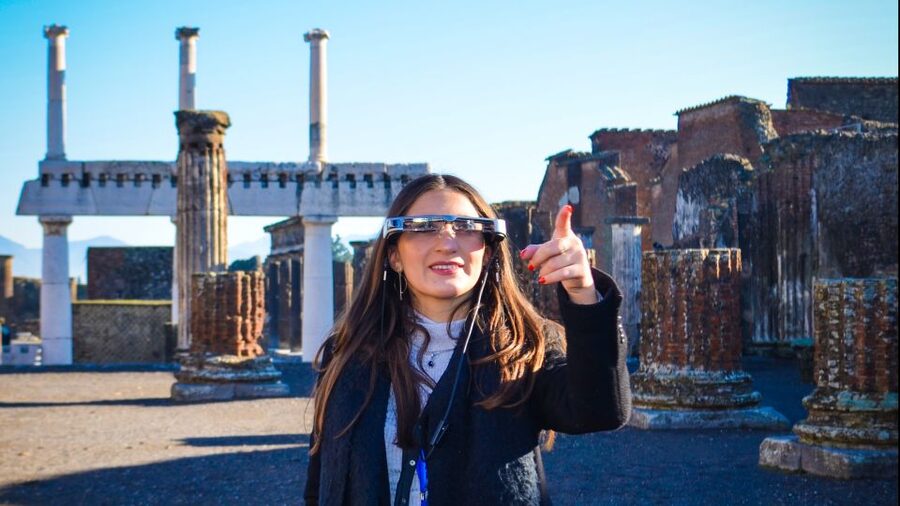
Pompeii is famous for what happened in 79 A.D., but this tour gets interesting because it shows you what came before the eruption, right over the ruins. I like the AR glasses for the before-and-after effect, and I like that the reconstructions are built with input from archaeologists. One consideration: the experience is hardware-based, so it is not for everyone, and kids under 8 can go in but cannot use the 3D tech.
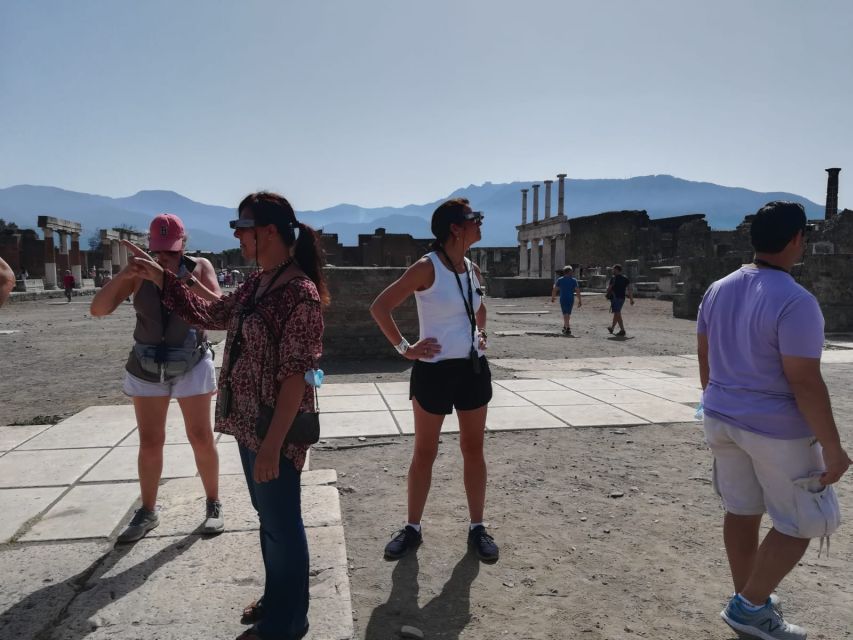
You get a guided walk in a small group (up to 20), plus an AR “assistant” who helps you get set up and keeps you on track for the full 2 hours. That hands-on help matters, because once the holograms line up with the streets and walls, the site stops feeling like random stone and starts feeling like a lived-in town.
The main tradeoff is practical. Pompeii can be hot and crowded, and you will be wearing equipment while walking. Still, if you show up with comfortable shoes, water, and realistic expectations for a busy archaeological park, this is a smart way to understand Pompeii fast.
Key Points I’d Prioritize
- AR glasses overlay reconstructions on real ruins, so you see the city twice: then and now.
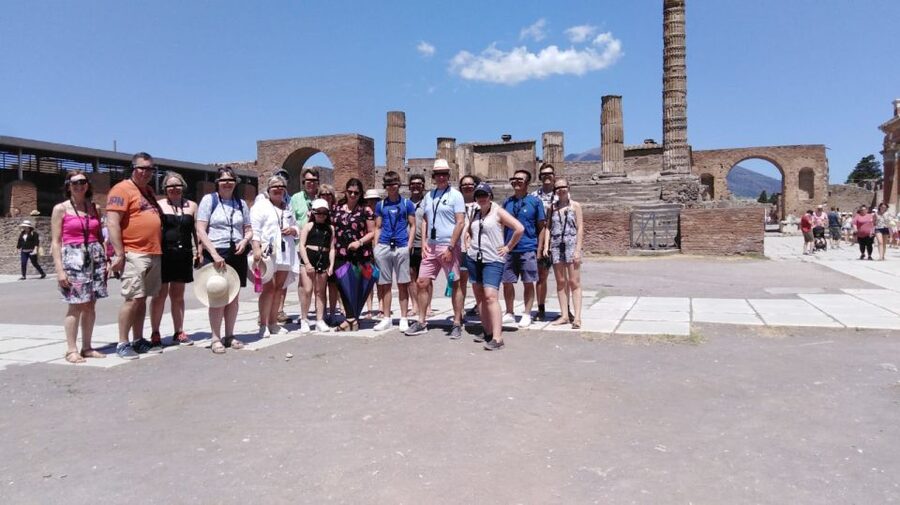
- Small group pace, up to 20 people, with a tour assistant staying with you.
- Entry ticket included, so you are not juggling separate bookings.
- 6-language audio support, with the guide available in Italian and English.
- Family-friendly option, with limits: kids under 8 cannot use the 3D technology.
- You can stay after, once you return the glasses, and explore independently.
Why the 3D AR Overlay Changes Pompeii From Stone to Story
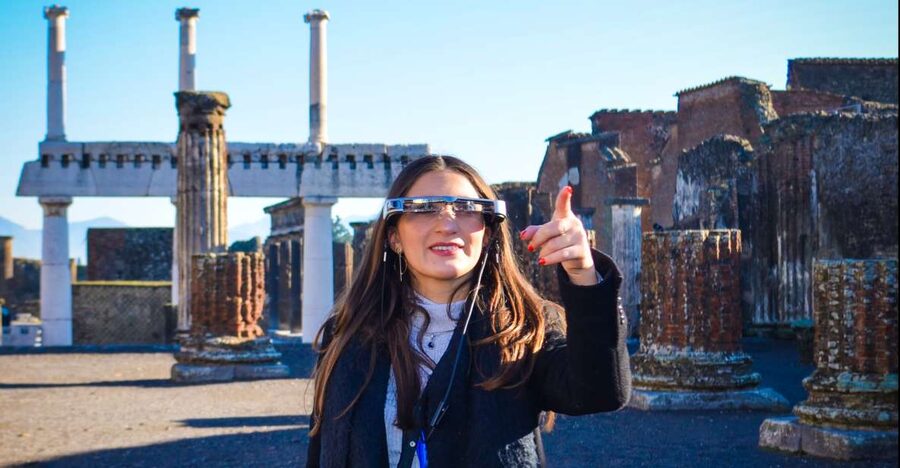
Pompeii is easy to appreciate in photos, and harder to fully grasp when you are standing in the open with nothing but broken walls. What makes this tour click is the way the AR glasses layer the reconstructed buildings onto what is still standing.
Instead of asking yourself, What am I looking at?, you watch the outlines of a significant temple, house, square, theater, or other major structure appear right where the ruins are. Then you look again at the present-day remnants. That mental flip is the whole point: you learn the layout and purpose of key places while you can still stand in the real location.
I also like that the reconstructions cover more than one theme. You get civic spaces, everyday houses, and public buildings in the same walk. That helps you build a basic mental map of Roman life in Pompeii, not just a list of sights.
More Pompeii tours and tickets in Pompei Campania:
- Pompeii: Entry Ticket and Guided Tour with an Archaeologist
★ 4.8 · 19,459 reviews - Pompeii: Small Group Tour with an Archaeologist
★ 4.8 · 12,264 reviews - Pompeii: Skip-the-Line Entrance Ticket with Audio Guide
★ 4.0 · 2,509 reviews
Meeting at Porta Marina Inferiore, Then Getting Your Glasses Sorted
You meet your tour assistant at Porta Marina Inferiore, Piazza Esedra, outside the Vittoria Coffee Shop. Do yourself a favor and arrive early, because late arrivals only get a short grace window, up to 5 minutes, and after that the tour starts.
Before you begin, you will be guided through the itinerary and shown how to use the AR glasses. This is not a “figure it out yourself” setup. The assistant stays with you during the tour, including help with the equipment if needed.
A few practical notes that matter on site:
- Bring comfortable shoes. You are walking a park that includes uneven surfaces.
- Bring sunglasses, a sun hat, and water, especially in warmer months.
- No luggage or large bags are allowed.
- If you wear eyeglasses, you can still wear the AR glasses over them.
- The tour runs rain or shine. Dress for weather, not just the forecast.
Also note the tickets are nominal, meaning the full name and surname you provide are used for ticket issuance. If you booked with a nickname or wrong spelling, double-check your details before you go.
The 2-Hour Walk: How the Tour Moves Through Major Pompeii Stops
This experience is designed as a focused walk, lasting about 2 hours. The route centers on the big, meaningful pieces of Pompeii: temples, houses, squares, theaters, and other important buildings. You are not trying to cover everything in the park, and that is a good thing.
Instead of sprinting from one distant point to the next, you move through a manageable circuit where the AR overlay can do its job repeatedly. Each stop is timed so you can look at:
1) what is visible now, and
2) what the location likely looked like before the eruption.
Here is how the tour feels in motion.
Getting Oriented and Learning What You’re Looking At
The early part is about orientation. You learn where you are in the site, and how the glasses present reconstructions. Once you know the basics, the rest becomes easier. You stop reading the ruins like a puzzle, and you start reading them like a street plan.
More walking tours in Pompei Campania:
- Discover Pompeii: French Walking Tour of the Buried City
★ 4.8 · 253 reviews - Pompeii: Highlights Guided Walking Tour
★ 4.6 · 105 reviews - Discover Pompeii: English Walking Tour of the Buried City
★ 4.2 · 24 reviews - Pompeii in 2h and 30mnt: walk with local guide
★ 3.0 · 6 reviews
Temples and Public Buildings: Reading Meaning, Not Just Architecture
When the AR system shows significant temples and public structures, you get context for why these places mattered. Even if you have visited Pompeii before, the overlay helps you understand the “shape” of the space: where the worship area sat, how the building related to nearby streets, and what kind of civic energy you would have felt there.
Squares and Theaters: Where Community Life Would Have Happened
When the tour reaches squares and theaters, it starts to feel more social. Pompeii was not only about homes and shopping, it was about gatherings. With AR, you can better imagine where people stood and how the open spaces connected to surrounding buildings.
This is one of the strongest parts of the experience for people who normally struggle with archaeological sites. You are not stuck translating from scratch. The tech points your attention to what mattered.
Houses: Seeing Daily Life, Room by Room (In Effect)
The houses segment is where the tour becomes emotional. You begin to see domestic spaces as functional, not just decorative ruins. The AR overlay helps you understand relative scale and placement: where everyday life would have happened, and how the layout guided movement through rooms and courtyards.
If you like human-scale history, this is a highlight.
Buildings and Streets: The Big Picture Comes Together
The final sections tie it together with more key buildings and connective spaces. By the time you finish, you have a clearer mental model of how the city worked. You should be able to look at the ruins after the tour and recognize more than just “old stones.”
Important limitation to know up front: this walking route does not include suburban villas, including Villa dei Misteri. If you came specifically for that one, you will need separate plans.
Why the Reconstructed 79 A.D. Story Sticks Better Than Facts Alone
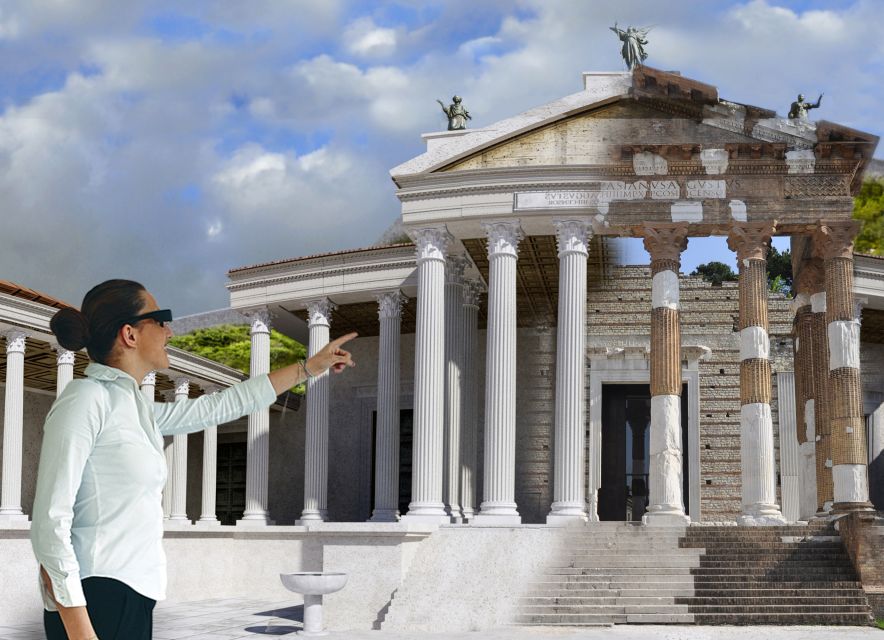
The tour is built around 79 A.D., the eruption that ended Pompeii’s normal rhythm. The AR reconstructions show you the most significant locations as they likely appeared before that moment.
What I like about that approach is that it turns history into something you can picture. Facts still matter, but your brain grabs onto the “visual logic” first. Once you have an image of what the city looked like, details about public life, homes, and community spaces stick more easily.
The tour assistant also helps connect the dots during the walk, so the experience does not feel like you are watching a screen. You are actively looking around the physical site and learning what the overlays represent.
And you do not have to be a Rome expert to get it. The format is designed for a wide range of visitors, including families.
Guides Who Keep the Pace Human, Examples of What You Can Expect
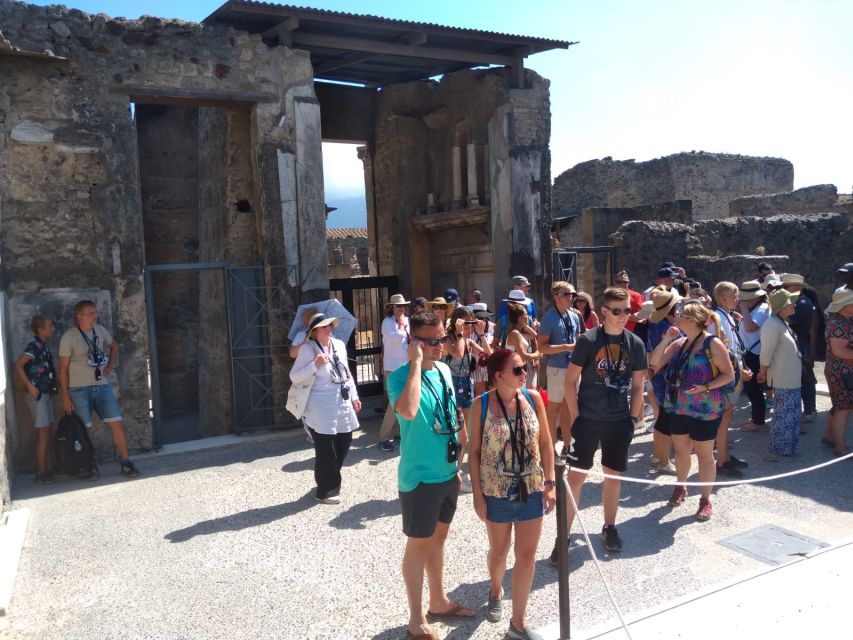
The tour assistant role is more than administrative. They handle equipment and also guide your attention so you do not miss the key AR moments.
In the real world, that can make or break a tour, especially for kids or anyone who wants slower pacing. I’ve seen strong examples of this style from guides including Sabrina, Sam, Sara, Luigi, and Daniela. The common thread in these names is patience plus clear explanations, the kind that helps you keep up even when the site is crowded and the weather is doing its thing.
You can also choose audio support in multiple languages. The tour includes audio available in Italian, French, Spanish, German, English, and Portuguese. The guide/instructor is listed for Italian and English, so language coverage is solid even if you do not speak Italian.
If you’re traveling with mixed language needs, this is a practical setup. You will get audio support, and the assistant can still help in the main guide languages.
Price and Value: What $61 Includes, and Why That Matters
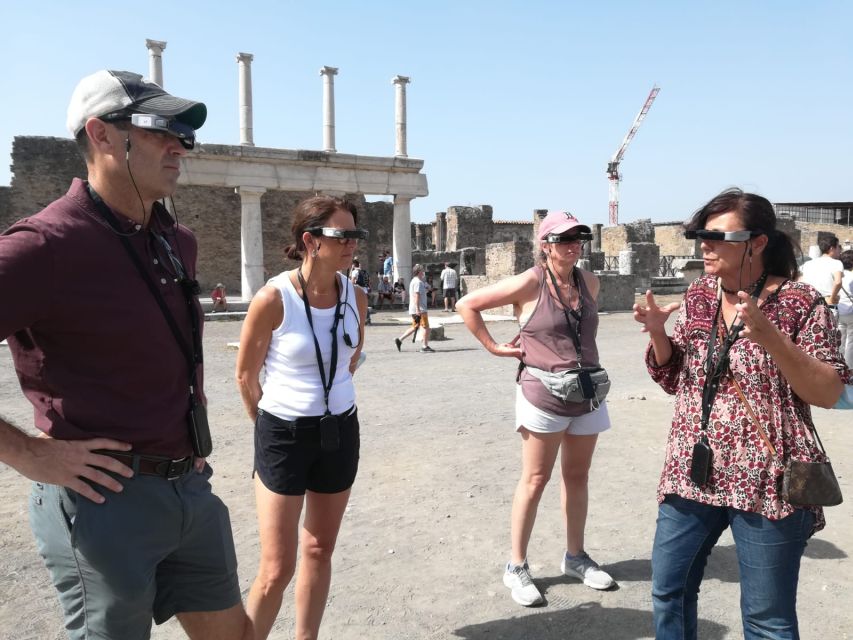
At $61 per person, you are paying for more than a walk. This price includes:
- Entry ticket
- Augmented reality assistant
- AR glasses
- Audio in 6 languages
- Walking tour (the guided component)
Transportation is not included, so factor in getting yourself to the meeting point. But compared with piecemeal plans where you pay separately for entry plus a guide plus a special add-on, bundling tends to be where you find the value.
You are also paying for time. The tour is 2 hours, which is a realistic window for many visitors who do not want to spend an entire day just trying to understand ruins.
And because the group is capped at 20, you have a better chance of questions getting answered and equipment being handled without long delays.
After the Glasses Come Off: How to Extend Your Pompeii Visit
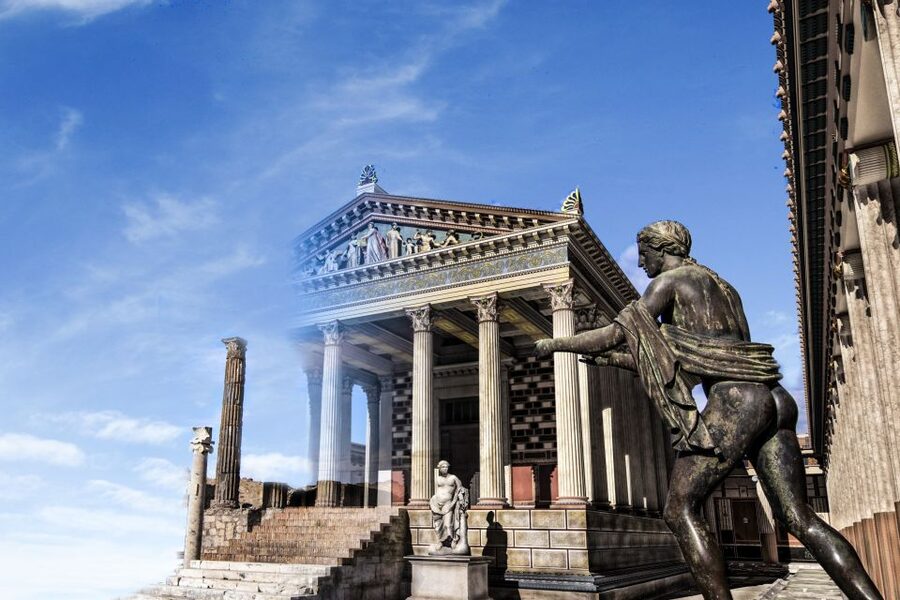
Once the tour ends and you return the AR glasses, you can stay in the archaeological park and explore on your own. That is a smart design choice. The guided portion gives you a mental framework, and independent time lets you chase the details that personally catch your eye.
Use that freedom well:
- Revisit the areas where you saw reconstructions, and compare them again with your new understanding.
- If you want something outside the route, plan around the fact that suburban villas like Villa dei Misteri are not part of this specific walking tour.
If you already have a list of “must see” spots, you can use the guided tour as your warm-up, then go deeper after.
Good Fit vs. Not the Right Fit
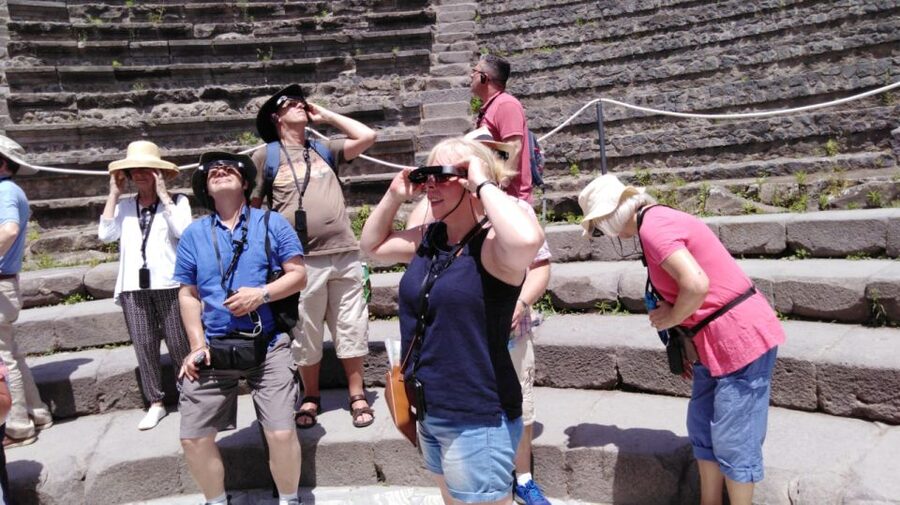
This tour is a strong match if you want:
- A fast, structured way to understand Pompeii
- A more visual approach to archaeology, especially for families
- A guided walk that keeps you from feeling lost
- Audio support across major European languages
It may be less suitable if:
- You are not comfortable wearing and managing AR equipment while walking
- You are traveling with very young children. Children under 8 can access the park with a standard ticket, but they cannot use the 3D technology.
- You expect a route that includes every big villa site. This one specifically excludes suburban villas such as Villa dei Misteri.
- You are planning to bring large bags or luggage. That is not allowed.
One more practical point: the tour runs in varied weather, rain or shine. If that stresses you out, dress for it and keep your day plan flexible.
Should You Book This Pompeii 3D Walking Tour?
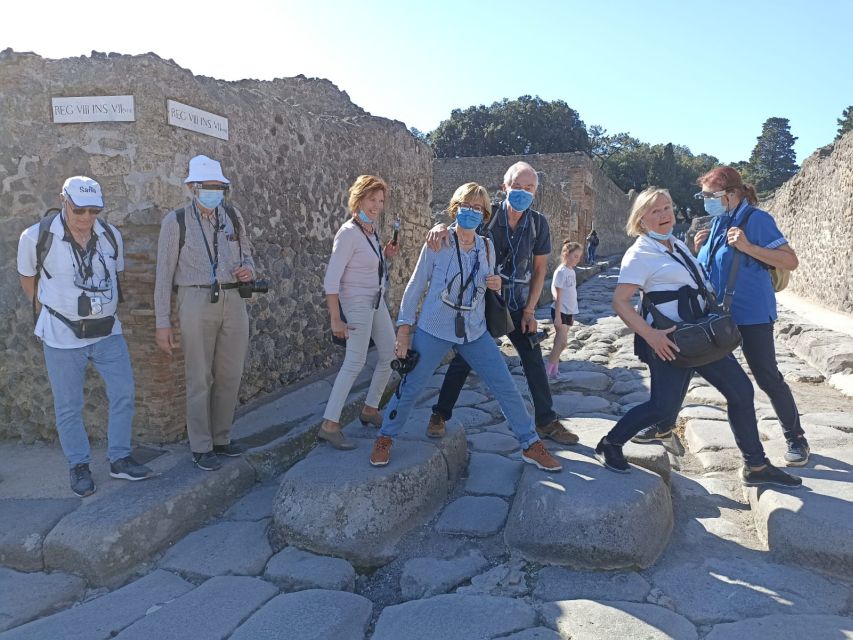
Book it if you want Pompeii to make sense quickly and you like learning with your eyes. The AR overlay is the main value, and it helps you understand key places as more than ruins.
Skip it or consider an alternative if you mainly want a purely self-guided, wandering visit, or if your travel group includes kids under 8 who would want to use the 3D tech. And if you are laser-focused on Villa dei Misteri and other suburban villa stops, you will need separate options.
If your goal is to leave Pompeii with a clearer picture of Roman life before 79 A.D., this is one of the best ways to get there in 2 hours.
FAQ
Where do I meet the tour assistant?
You meet at Porta Marina Inferiore, Piazza Esedra, outside the Vittoria Coffee Shop.
How long is the Pompeii 3D walking tour?
The tour duration is 2 hours.
What’s included in the price?
The package includes the entry ticket, an augmented reality assistant, augmented reality glasses, audio available in 6 languages, and a walking tour.
What is not included?
Transportation is not included.
Can children use the 3D technology?
Children under 8 can access the park with a standard ticket, but they cannot use the 3D technology. This activity is not suitable for children under 8.
What languages are available?
Audio is available in Italian, French, Spanish, German, English, and Portuguese. The instructor is listed for Italian and English.
Is the tour canceled if it rains?
No. This activity runs rain or shine.
Are luggage or large bags allowed?
No. Luggage or large bags are not allowed.
Can I stay in Pompeii after the tour?
Yes. After the tour is over and the AR glasses are returned, you can stay in the archaeological park and explore independently.
Do I need ID for youth or EU citizen fares?
Yes, for EU citizen (age 18 to 24) or youth fare, you must show a valid identity document or passport at the ticket office, or you may need to pay the full fare.
What should I bring?
Bring comfortable shoes, sunglasses, a sun hat, comfortable weather-appropriate clothes, and water.
Recently reviewed around Pompei Campania
- Pompeii Audioguide – TravelMate app for your smartphone★ 3.9 · 10 reviews
- Pompeii: Entrance Ticket – Skip the Line★ 3.8 · 64 reviews
- Pompeii: AR Glasses Augmented Reality Tour★ 5.0 · 3 reviews
- Pompeii: Entry Ticket & Guided Tour with an Expert Historian★ 5.0 · 4 reviews
- Pompeii Small Group Tour – Tickets Included★ 4.7 · 72 reviews
- Pompeii and Oplontis: Small Group Tour with an Archaeologist★ 4.5 · 3 reviews
- Pompeii and House of Vettii Guided Tour★ 3.7 · 3 reviews
- Pompeii 2H Private Guided Tour with Optional Tickets★ 5.0 · 3 reviews
Pompeii Tours, compared.
Entry Ticket and Guided Tour with an Archaeologist
Read our review →


Pompeii Small Group Tour with an Archaeologist
Read our review →
Naples or Sorrento: Full-Day Pompeii and Mount Vesuvius Tour
Read our review →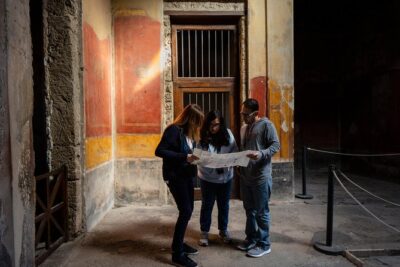
Pompeii & Mt.Vesuvius Day Tour from Naples with Pizza Lunch
Read our review →
Browse the lists this tour appears in