Reviewed · POMPEII TOURS
Pompeii Skip the Line Ticket + Guide Book with itineraries
Pompeii is one of those places where the scale surprises you, even if you think you know what you’re getting. What makes this experience interesting is the mix of skip-the-ticket-line entry and a guidebook with 2, 4, or 6-hour itineraries, so you can be flexible while still feeling guided.
I like how the updated map helps you orient on a massive archaeological park, and I like that the timed routes give you an easy structure when you’re choosing your own pace. You don’t need to worry about keeping up with a group, but you still have a plan for seeing the major sights.
One drawback to keep in mind is that the skip-the-line part is mainly about ticket entry, so you may still run into security bag scanning on arrival. Build in a little extra time at the start, especially at busy hours.
Key things to know
- Skip-the-ticket-line entry to help you get to the ruins faster than buying at the entrance.
- A guidebook you keep, with itineraries of 2, 4, or 6 hours and an updated map.
- Big-picture Pompeii highlights included in your self-guided route, from frescoed houses to spas, temples, shops, Thermopolis, theaters, brothels, victim casts, and the amphitheater.
- Independent visit, low stress: you choose when to pause, when to move on, and how long to linger.
- Amenities are not guaranteed to be obvious on your first pass, so you’ll want to plan water and breaks (toilets and cafes can be an issue).
- Late afternoon can feel calmer, with many areas reportedly quieter after about 4:30 pm.
Entering Pompeii at Piazza Anfiteatro, and what to expect on arrival
This ticket is designed for a self-guided day, but the meeting point part matters, because Pompeii is a big site and you want the right entrance right away. Your reservation is tied to the entrance at Piazza Anfiteatro.
Plan to meet staff first at Via Roma 123, Pompei. Once you arrive, you show your voucher to the staff at that information point for access to the Pompeii Archaeological Park. After that, you’ll proceed toward the turnstiles and entry area with your reservation.
Here’s the practical takeaway: even with skip-the-line entry, you should still expect some time spent on arrival logistics. One common hiccup is that security checks can create a queue even when the ticket part is faster. If you’re aiming to make the most of a limited 1-day visit, try not to arrive right at the busiest opening rush.
If you want the simplest strategy, arrive with comfortable walking shoes, water in hand, and a short checklist in your head: see the amphitheater area, pick a few stops for daily-life Pompeii, then add the most emotional stops near the end.
More Pompeii tours and tickets in Pompei Campania:
- Pompeii: Entry Ticket and Guided Tour with an Archaeologist
★ 4.8 · 19,459 reviews - Pompeii: Small Group Tour with an Archaeologist
★ 4.8 · 12,264 reviews - Pompeii: Skip-the-Line Entrance Ticket with Audio Guide
★ 4.0 · 2,509 reviews
Pompeii self-guided, with a keepsake guidebook that actually helps
The big value here is that you get more than a ticket. You get a printed guidebook and an updated map that are meant to be used during your visit, not saved for later.
Your guidebook includes itineraries for two, four, or six hours, which is a smart way to solve the classic problem at Pompeii: people arrive, they look at the map, and then they start walking randomly. With a timed plan, you can decide how much you want to cover without overthinking every turn.
You’ll also get context while you walk. The guidebook approach is designed to help you understand what you’re seeing, including the history of the city and its ruins. That matters because Pompeii is not just stone buildings. It’s everyday life frozen in time, and the guidebook helps you read it that way.
One more detail I appreciate: the guidebook is translated into 13 languages, and the experience languages listed include English, Italian, Spanish, and French. If you’re traveling as a couple or with a friend, note that one book is provided for every two reservations, so it’s worth planning whether you’ll share the same pace or want to split up and swap later.
Choosing the right pacing: 2, 4, or 6 hours in Pompeii
The visit is valid for one day, and you can enter from 9:00 am until 5:00 pm. Within that window, you control the pace. That’s great, but it also means you should pick your duration thoughtfully.
If you choose a 2-hour itinerary, think “sampling.” You’ll want to focus on the most recognizable areas and a few core categories, like places tied to entertainment and a quick look at domestic life with frescoes. This works well if you’ve already seen Pompeii before or if you’re pairing Pompeii with another stop the same day.
A 4-hour itinerary is usually the sweet spot for most first-timers who want more than snapshots. You can comfortably rotate through a bigger mix: daily-life spaces (shops and public food counters like a Thermopolis), plus at least one or two “big mood” stops like theaters and the cast area.
A 6-hour itinerary is for people who like to linger. You’ll have time to walk the site without sprinting, and you can slow down where you want the most. It’s also the best choice if you want multiple pauses for photos, sketchy shade breaks, and a calmer emotional arc as the day goes on.
No matter which timing you choose, use the guidebook itineraries as your backbone. Then let your interests steer your final route. That’s where you get the best of both worlds: structure without feeling trapped.
Frescoed houses and the feel of millennial streets
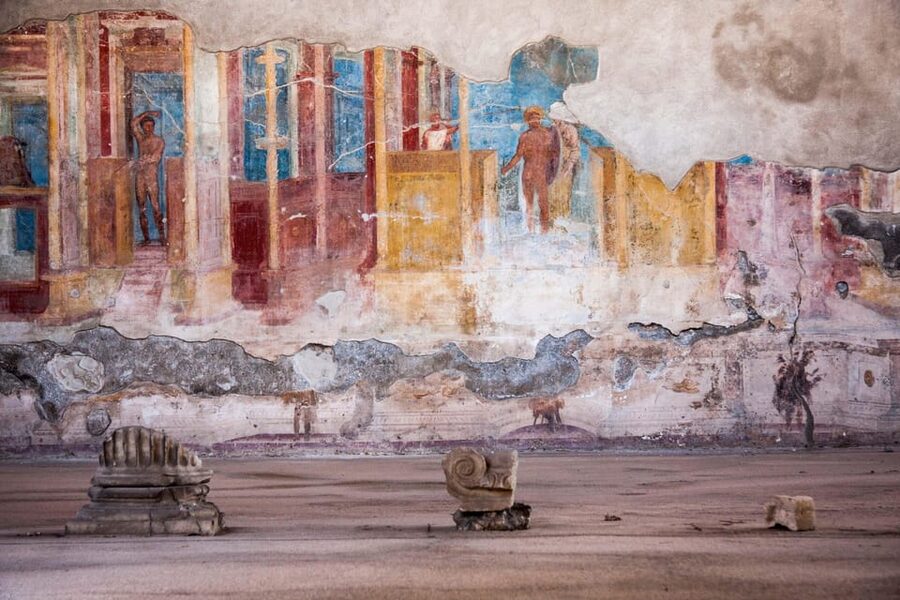
Pompeii’s strongest charm is how human it feels once you start seeing it floor by floor. This experience is set up so you can explore at your own pace through the millenary streets and into the rooms that still show frescoes and decoration.
In a guided group, it’s easy to race past walls and say “cool, next.” With a self-guided structure, you can do the more interesting thing: stop when the design grabs you, then walk on only when you’re ready.
Look for the domestic details that make Pompeii feel lived in. Frescoes can be surprising in scale, and you’ll get more out of them if you spend a little time actually looking, not just passing by. If your day is hot, this is also where comfortable timing helps, because shade varies block to block.
Potential drawback: since you’re on your own, you might miss the “best first impressions” if you start walking in the wrong direction. That’s where the updated map helps, and where choosing a timed route helps you keep your footing.
A few more Pompei Campania trips worth comparing
- Pompeii: Skip-the-line-Ticket and Guided Tour
★ 4.6 · 1,152 reviews - Pompeii: Guided Tour with Skip-the-Line Entry
★ 4.9 · 812 reviews - Pompeii: Skip-the-Line Entry Ticket with Digital Guide App
★ 4.1 · 770 reviews - Pompeii: Tour with Archaeologist Guide & Skip-the-Line Entry
★ 4.5 · 478 reviews
Spas, temples, and everyday spaces like Thermopolis
Pompeii is often described through the big spectacles. But what stays with you most is the stuff that tells you how people passed their days. This self-guided plan includes stops tied to spas, temples, and commercial life like shops.
One especially interesting category is the Thermopolis, described here as the Roman version of a quick stop for hot food, sort of like street-fast food of the time. If you’ve ever wished you could travel through time without a museum vibe, these kinds of everyday spaces are the answer. They make Pompeii more than ruins, they make it routine.
Spas and temples add contrast. The spas help you see leisure and bathing culture, while temples give you the religious and civic texture that organized daily life. You’ll get more out of those stops if you read the guidebook context while you’re standing there, because the same room can feel completely different once you understand what it was for.
Practical note: this is where “pace” matters. If you try to cover everything in one rush, you’ll feel exhausted before you reach the most meaningful stops. If you take the guidebook seriously, you’ll still see a lot, but you’ll do it with breathing room.
The theaters and brothels: entertainment and the side people don’t expect
Pompeii has an edge. The site includes theaters and brothels, and it’s built into your self-guided highlights. These are not just “wow architecture” stops. They tell you what people gathered for, talked about, and spent time on.
The theaters are a strong anchor because they’re dramatic even if you’re not an architecture expert. If you prefer atmosphere over technical detail, this is a great place to pause and picture performance space as people once did.
Brothels are the opposite kind of stop, more uncomfortable, more direct. They add honesty to the story. If you tend to want a lighter day, you might still want to factor this category in earlier or later depending on your mood. The guidebook itineraries give you a chance to place it where it fits your energy.
Here’s a balanced way to plan: if you’re sensitive to intense topics, give yourself control. Don’t let it happen by accident. Use the timed route so you can decide what order you want your day to take.
The casts of the victims: emotional stop, best handled on your terms
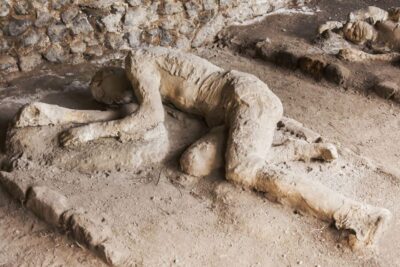
Among the most talked-about parts of Pompeii are the casts of the victims of the eruption. This experience includes that stop, and it’s the kind of moment where your pacing changes everything.
In a group tour, people often rush through it. With a self-guided ticket, you can slow down or step back when you need to. You can also choose a time of day that works for you, because light and crowding can affect how intense the stop feels.
If you’re going later in the day, it may also feel easier to take in the cast area without constant interruptions. One practical cue from the day-of experience: the site can feel calmer after 4:30 pm, which can help you handle an emotional stop with more space around you.
If you want to make this visit gentler on your brain, do it as part of your planned route, not as a last-minute scramble. The guidebook and map support that.
The amphitheater: one of the best-preserved spots to end on
Pompeii isn’t only streets and rooms. It also has major public structures, and this experience highlights one of the best-preserved Roman amphitheaters.
Even if you don’t know Roman history, an amphitheater gives you an immediate sense of scale. It’s also a good way to reset your day after emotional or dense stops. Think of it like the part of Pompeii where your brain can shift back into “architecture and atmosphere.”
If you’re choosing a 4-hour or 6-hour route, the amphitheater makes sense as an anchor either early or later, depending on your walking style. If you like ending your day with something that feels strong and clear, plan to hit it near the end of your route, when you can appreciate it without rushing.
Late day tip: after the crowd peak passes, you’ll often get better sightlines and a calmer rhythm for photos and pauses. If you can manage it, you’ll likely enjoy the final stretch more.
Price and value at about $41: what you pay for, and what you still do yourself
At about $41 per person for a 1-day visit, you’re paying for three concrete things: entry, a keepsake guidebook, and skip-the-ticket-line access. You’re also paying for the convenience of having timed itineraries ready to go.
That’s meaningful value at Pompeii, because the hardest part of a self-guided ruin day is not ticket access. It’s decision fatigue. The guidebook fixes that by giving you a route option for 2, 4, or 6 hours, plus context as you walk.
What you’re not paying for: a live guide. The experience does not include a guide, and it does not include transfers or food and drinks. That’s not a negative, as long as you know what you’re booking. You’re essentially buying a structured ticket to explore on your own.
Does skip-the-line always save you a lot of time? It can help, but you might still queue for security and bag scanning. That means your time savings are best thought of as “less waiting for the ticket part,” not as “zero waiting at all.”
If you want good value, pair this with smart arrival timing and a plan for water breaks. Pompeii punishes slow starts with long walks, and this ticket helps you avoid the easy mistakes, not every hard one.
Practical tips for a smoother day: water, shoes, and using the map well
Pompeii is massive. Even with a guidebook, you’ll walk. So your comfort choices matter more than you’d expect.
Bring:
- Passport or ID card
- Comfortable shoes
- Sun hat
- Water
- Comfortable clothes
That list is simple, but it’s the difference between enjoying your stops and constantly thinking about your feet. Shade is uneven, and heat can sneak up on you.
Use the updated map actively. Don’t just carry it like a souvenir. Every time you enter a cluster of buildings, glance at where you are, then match it to your guidebook itinerary. It keeps you from backtracking, and it reduces the “I think I missed something” feeling.
One caution I’d repeat: people often want the map to clearly mark toilets and cafes, and if it doesn’t feel obvious to you in the moment, plan extra time for breaks anyway. Bring water early, and don’t treat restroom breaks like afterthoughts.
Finally, think about crowds. If your schedule allows it, spending more time after 4:30 pm can make the whole visit feel more manageable, and it can improve your ability to pause and absorb what you see.
Should you book this Pompeii skip-the-line ticket with guidebook?
I’d book it if you want independence with structure. If you’re the kind of traveler who likes setting your own pace, but still wants a clear way to use your time, the guidebook with 2, 4, or 6-hour itineraries is the key reason to choose this.
Choose it confidently if you value the skip-the-ticket-line part and you’re okay handling your own timing, food, and logistics. It’s also a good pick for couples or friends because the guidebook is provided for every two reservations, which fits sharing.
Skip it only if you know you want a full live guide experience and you’re uncomfortable navigating a huge site on your own. Also keep expectations realistic about time savings: you may still face security scanning on arrival, so don’t plan a tight schedule for the first hour.
If you like your travel days calm and practical, this is a smart way to see Pompeii without feeling rushed or lost.
Recently reviewed around Pompei Campania
- Pompeii and Vesuvius Cellars: Tour with Pick-Up in Positano★ 4.7 · 3 reviews
- From Sorrento: Pompeii with an Archaeological Guide & Ticket★ 4.6 · 19 reviews
- From Positano: Pompeii Ruins Small Group Guided Tour★ 4.8 · 82 reviews
- Pompeii Positano Amalfi Day Trip from Rome by Car, No Bus!★ 5.0 · 5 reviews
- Pompeii & Virtual Museum Private 2-in-1 Kid’s Tour★ 4.9 · 9 reviews
- From Naples: Pompeii Wheelchair-accessible with a Guide★ 5.0 · 8 reviews
- Pompeii VIP 3h Tour: Skip-the-line with your Archaeologist★ 4.9 · 13 reviews
- Pompeii & Vesuvius★ 4.3 · 12 reviews
Pompeii Tours, compared.
Entry Ticket and Guided Tour with an Archaeologist
Read our review →


Pompeii Small Group Tour with an Archaeologist
Read our review →
Naples or Sorrento: Full-Day Pompeii and Mount Vesuvius Tour
Read our review →
Pompeii & Mt.Vesuvius Day Tour from Naples with Pizza Lunch
Read our review →