
Reviewed · POMPEII TOURS
Pompeii: Tour with Archaeologist Guide & Skip-the-Line Entry
Pompeii is the rare Roman city where the street plan, buildings, and daily life can still be read like a map, because Vesuvius buried it in 79 AD under ash and debris. With skip-the-line entry, this tour helps you get to the good parts fast, instead of burning time in queues.
I especially love that you are guided by an archaeologist expert, not just a general storyteller. Names like Angelo and Teresa show up in the best reports for being funny, patient, and willing to explain what you are actually looking at, not just recite dates.
One possible drawback: this is a walking-heavy 2-hour route and it is not suitable for wheelchair users or people with mobility impairments. Also, if you hate group audio gear, know the earpieces can be loud in the densest sections, though they help you hear clearly.
Key things to know before you go
- Skip-the-line priority access so you lose less time at the gates
- Authorized archaeology guide focusing on how buildings worked and what they meant
- Radioguide setup kicks in when the group gets bigger than 8 people
- Built around core Pompeii stops from Porta Marina to the Civil Forum
- Practical pacing with short guided segments and a brief free-time window
Pompeii’s time-capsule effect, and what this tour changes for you
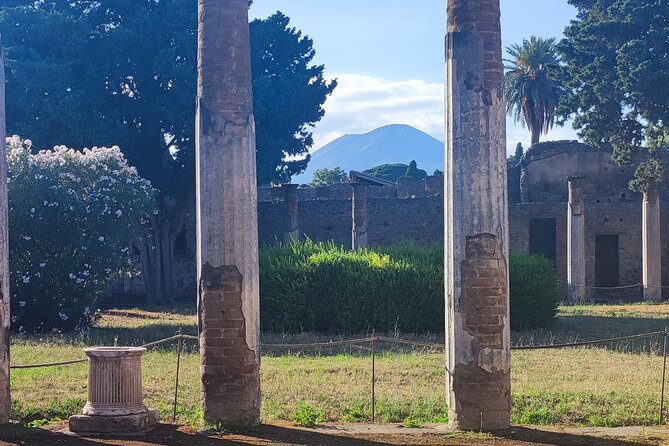
Pompeii grabs you because it is not a ruin that survived by luck. It is a whole town preserved close to the moment the eruption hit, which is why it is such an important UNESCO site. You can stand in the city streets and connect everyday choices like where people ate, bathed, slept, and shopped to the buildings still in place.
This tour turns that “wow” feeling into understanding. Instead of wandering, you get a guided route through areas that reflect how Pompeii functioned, from an entrance gate to entertainment, housing, food counters, bath complexes, and the Forum. And because priority access is included, your hour one is spent on stone and plaster casts, not waiting.
In a short 2 hours, you still won’t see every square corner of Pompeii, but you will see enough to build a mental model you can use later when you explore on your own. That is the real value here: it helps you look beyond walls and ruins, and notice small details you would otherwise miss.
More Pompeii tours and tickets in Pompei Campania:
- Pompeii: Entry Ticket and Guided Tour with an Archaeologist
★ 4.8 · 19,459 reviews - Pompeii: Small Group Tour with an Archaeologist
★ 4.8 · 12,264 reviews - Pompeii: Skip-the-Line Entrance Ticket with Audio Guide
★ 4.0 · 2,509 reviews
Getting in smoothly: Welcome Box check-in and skip-the-line entry
The biggest practical win is simple: you get a Pompeii Express entrance ticket and priority access, which means you should spend less time stuck in line. That matters at Pompeii, where crowds can eat your best daylight.
You meet at the Welcome box and you return there at the end. Reviews repeatedly call out how accurate the meeting point is, with one caveat: check-in can be a little tricky to spot if you arrive stressed or late. Plan a little buffer so you can calmly locate your guide and avoid that “where are we supposed to stand” moment.
Once you are inside, the tour is organized as a series of short stops. That format keeps momentum, especially in Pompeii’s tight lanes where groups can bunch up. One extra detail I like from reports: the earpieces are used because the site gets crowded, and guides can sometimes route you toward less busy spots.
How the guide, language options, and radioguide work in practice
This tour is led by an authorized expert guide in archaeology, and it runs with live commentary in multiple languages: Italian, Spanish, French, English, and German. That is helpful if you want something closer to a guided lecture than a generic audio app.
The sound system setup depends on group size. When the group passes 8 participants, you will be using a radioguide style earpiece. If the group is small, and stays within 4 participants sharing the same language, you may hear an audio guide while the tour guide continues in English. Either way, the goal is the same: you can hear what matters while you keep walking.
A real-world note: some people find the earpieces pretty loud. If that happens to you, just be ready to adjust your comfort level as soon as you get them. The audio system is described as working well, which is key in Pompeii, where you are often standing near other groups and the wind carries sound away.
Porta Marina to Teatro Piccolo: the city’s entrance and entertainment

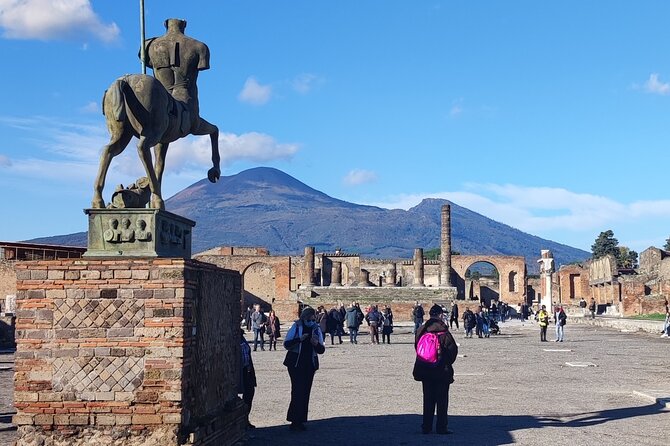
Your route starts at Porta Marina, the kind of place that makes you feel how Pompeii managed movement. This is where you begin to read the city as something designed for people traveling in and out, not just something you view from one angle.
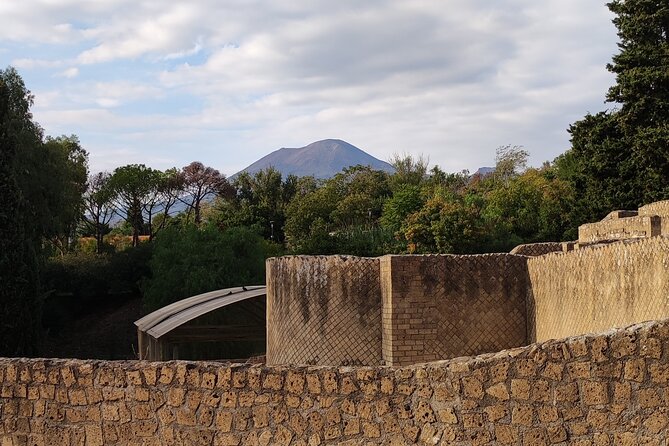
From there you head toward Teatro Piccolo, Pompeii’s small theater space. The value of this stop is that it shifts your thinking from “houses and streets” to “public life.” The guide’s job here is to help you connect what you see to how performances and gatherings shaped daily rhythms.
In practice, you will get a short guided window at each stop, usually around 10 to 15 minutes, and that is exactly what keeps the experience manageable in only 2 hours. You are not stuck in one spot trying to process everything at once. You move, you listen, you look, and the pieces start fitting together.
A few more Pompei Campania trips worth comparing
- Pompeii: Skip-the-line-Ticket and Guided Tour
★ 4.6 · 1,152 reviews - Pompeii: Guided Tour with Skip-the-Line Entry
★ 4.9 · 812 reviews - Pompeii: Skip-the-Line Entry Ticket with Digital Guide App
★ 4.1 · 770 reviews - Pompeii: Skip-the-Line Entry & Audioguide
★ 3.8 · 225 reviews
House of Menander: domestic life, artwork, and what daily routines looked like
The House of Menander is where the tour becomes more than a history walk. You get to see how a home in Pompeii was planned, and how art and design served status and comfort. This stop is especially strong if you like architecture and interiors, because Pompeii’s homes often reveal patterns you can learn to “read.”
What I like about having a specialist here is that the guide helps you notice practical details rather than treating it like a museum room. You learn to look for how space worked, where people gathered, and why decoration wasn’t just for show. Even in a short visit, the guide can point out things that make the house feel lived in.
Also, this is a good time to slow down. When you see doorways, courtyards, and painted surfaces, your brain starts imagining footsteps and routines. That is the moment when Pompeii stops feeling like ruins and starts feeling like a city with schedules, social life, and habits.
Thermopolium and Terme Stabiane: food counters and bath culture

Next comes Thermopolium, essentially a fast-food counter in Roman terms. This stop is valuable because it shows you that everyday eating was built into the urban fabric, not saved for private homes. You can connect the building type to commerce, convenience, and the flow of pedestrians.
Then you move to Terme Stabiane, one of the bath areas. Bathing in Pompeii is a whole lifestyle system, tied to hygiene, socializing, and relaxation. If you’ve ever wondered why Romans spent so much time in public facilities, this is where you start answering that question with something you can see.
In these stops, you are usually within that sweet spot where the guide explains how the site functioned, then you have a brief moment to take it in. The short guided format helps, because bath complexes and eating counters can get confusing if you wander alone with no context.
If you are the type who gets lost in details, bring back a few key ideas from the guide: where people would move, what activities happened where, and why the design would shape behavior.
Lupanare and the Forum: commerce, crowds, and civic power
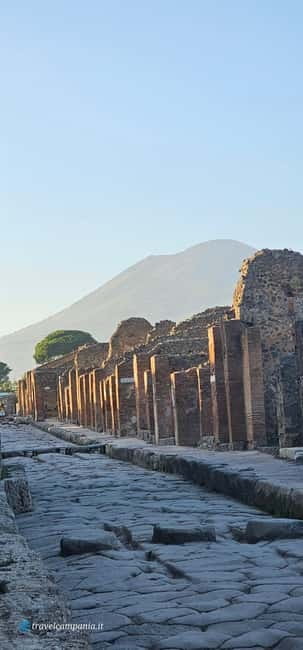
The Lupanare is one of the most discussed buildings at Pompeii, and on this tour you see it as part of a broader city picture. The guide helps you interpret what the building type suggests about business and street-level life in Pompeii, rather than leaving it as a shock-value stop.
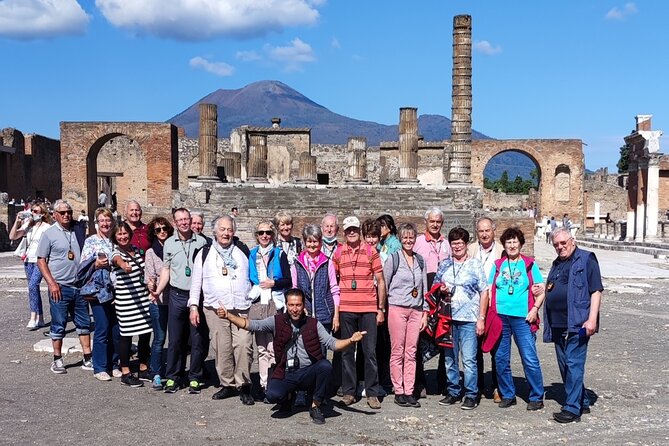
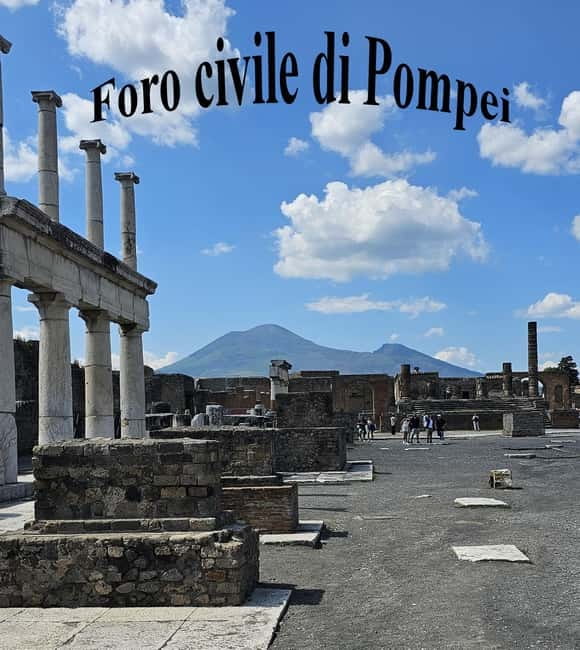
After that, you reach the Foro Civile di Pompei, the Civil Forum. This is where you feel the city’s civic and economic pulse. You get guided time here, plus a brief free-time window to walk around and absorb what your guide just helped you decode.
I like the balance of structured time and free time. Guided explanations help you spot what matters, and then the short independent window lets you connect it to your own interests, whether that means focusing on one building, taking photos, or simply reading the street plan.
One practical tip from real visits: the guided pacing is not rushed. People mention that the guide makes sure you hit the highlights, and you are given advice for what to continue exploring afterward if you have more time that day.
Price and value: what $57 buys you in real experience time
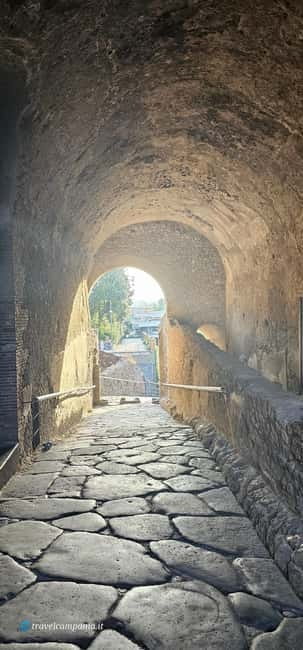
At $57 per person for a 2-hour tour, the price is basically paying for two things you cannot easily replicate alone: a trained archaeology guide and priority entry. The tour includes the Pompeii Express entrance ticket and the authorized guide.
That “express” part is not a luxury. It is time you protect. With priority access, you get more of your paid visit spent inside the excavations, where the experience actually happens.
The guide element is the other half of the value. Pompeii can look like a giant outdoor puzzle if you are not sure what you are looking at. An expert can connect street-level structures to real life, explain plaster casts and artifacts, and translate the city layout into something you can understand quickly.
If you love learning, this is one of those cases where the cost feels fair because it saves you from months of reading condensed into a single hour in the right places. And if you prefer independent travel, you still benefit, because you will leave with a framework you can use while you roam afterward.
Who this tour fits best, and who should consider another plan
This tour fits best if you want a high-impact first look at Pompeii. It is especially good for people who:
- want expert context without spending half a day planning a self-guided route
- prefer short stops that keep the pace and help you avoid confusion
- enjoy architecture, everyday life, and how public spaces worked
It is not suitable for wheelchair users or people with mobility impairments. It is also not recommended for people over 95. Since Pompeii involves walking on uneven surfaces, I would also advise you to choose this tour if you can comfortably handle a steady route for 2 hours.
Language support is solid. You can choose Italian, Spanish, French, English, or German. If you end up in the audio plus English setup for small groups, you should still get the main guide commentary while the audio system carries additional content.
Practical tips for a smoother Pompeii visit
Bring a passport or ID card, and note that copies are accepted. You should also plan for limits on what you can carry. Bikes are not allowed, and alcohol and drugs are not allowed. Bags are also not allowed, so travel light.
Two little things I love from on-the-ground tips: there are free lockers at the gates where you can store a backpack safely, and there are water fountains in the site, though they are not always clearly marked. If you tend to get dehydrated, it is worth planning for water early so you are not hunting later.
Finally, if you take the earpieces seriously, keep your volume comfortable. People mention the system can be loud, but it is also necessary in crowded areas. In other words, it is a tradeoff: you get clarity, but you might need to adjust.
Should you book this Pompeii archaeologist tour?
Yes, I’d book it if this is your first time at Pompeii or if you only have a short window. The biggest payoff is that the route hits core sites, you skip long ticket lines, and you get an archaeology expert who helps you interpret what you see in plain language.
If you are very mobile independent and you love wandering with apps and maps, you might skip a guided route. But for most people, especially those who want the site to make sense quickly, this one is a smart way to turn 2 hours into real understanding.
FAQ
How long is the Pompeii tour with skip-the-line entry?
The tour lasts about 2 hours. Starting times depend on availability.
Does this tour include skip-the-line tickets?
Yes. Priority access is included so you skip the long ticket lines.
What is included in the price?
You get a Pompeii Express entrance ticket and an authorized archaeology expert guide.
Where do I meet the guide, and where does the tour end?
You meet at the Welcome box. The tour ends back at the meeting point.
What languages are available for the live guide?
The live guide is offered in Italian, Spanish, French, English, and German.
What do I need to bring?
Bring your passport or ID card. Copies are accepted, including for children.
Is the tour suitable for wheelchair users or limited mobility?
No. It is not suitable for wheelchair users or people with mobility impairments.
FAQ
Is free cancellation available?
Yes. You can cancel up to 24 hours in advance for a full refund.
Should you book this tour?
Book it if you want priority entry plus expert guidance in just 2 hours. Skip it only if you know Pompeii well already and you are comfortable navigating without an archaeology context.
Recently reviewed around Pompei Campania
- Pompeii Audioguide – TravelMate app for your smartphone★ 3.9 · 10 reviews
- Pompeii: Entrance Ticket – Skip the Line★ 3.8 · 64 reviews
- Pompeii: AR Glasses Augmented Reality Tour★ 5.0 · 3 reviews
- Pompeii: Entry Ticket & Guided Tour with an Expert Historian★ 5.0 · 4 reviews
- Pompeii Small Group Tour – Tickets Included★ 4.7 · 72 reviews
- Pompeii and Oplontis: Small Group Tour with an Archaeologist★ 4.5 · 3 reviews
- Pompeii and House of Vettii Guided Tour★ 3.7 · 3 reviews
- Pompeii 2H Private Guided Tour with Optional Tickets★ 5.0 · 3 reviews
Pompeii Tours, compared.
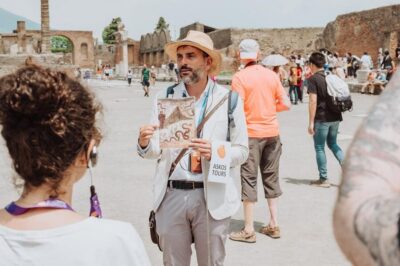
Entry Ticket and Guided Tour with an Archaeologist
Read our review →


Pompeii Small Group Tour with an Archaeologist
Read our review →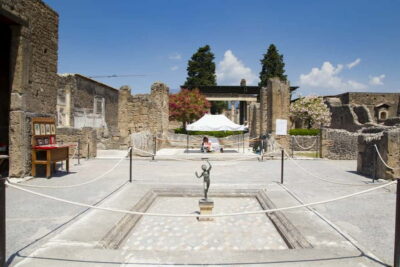
Naples or Sorrento: Full-Day Pompeii and Mount Vesuvius Tour
Read our review →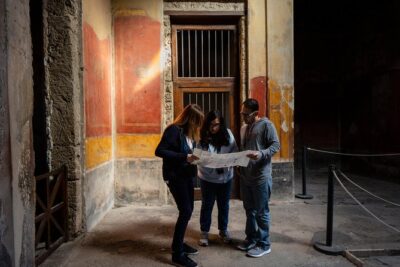
Pompeii & Mt.Vesuvius Day Tour from Naples with Pizza Lunch
Read our review →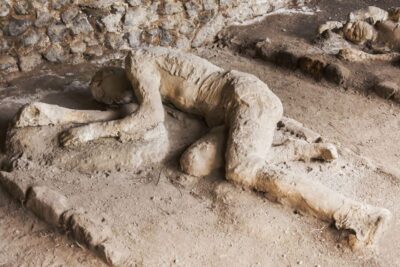
Browse the lists this tour appears in