
Reviewed · POMPEII TOURS
Pompeii: Guided Tour and Skip-the-Line Ticket
Pompeii is one of those rare places where you can walk through the past without guessing. Streets, homes, and everyday scenes are still there, frozen after Vesuvius in 79 AD. What makes this experience extra practical is the priority access so you can start fast at Porta Marina.
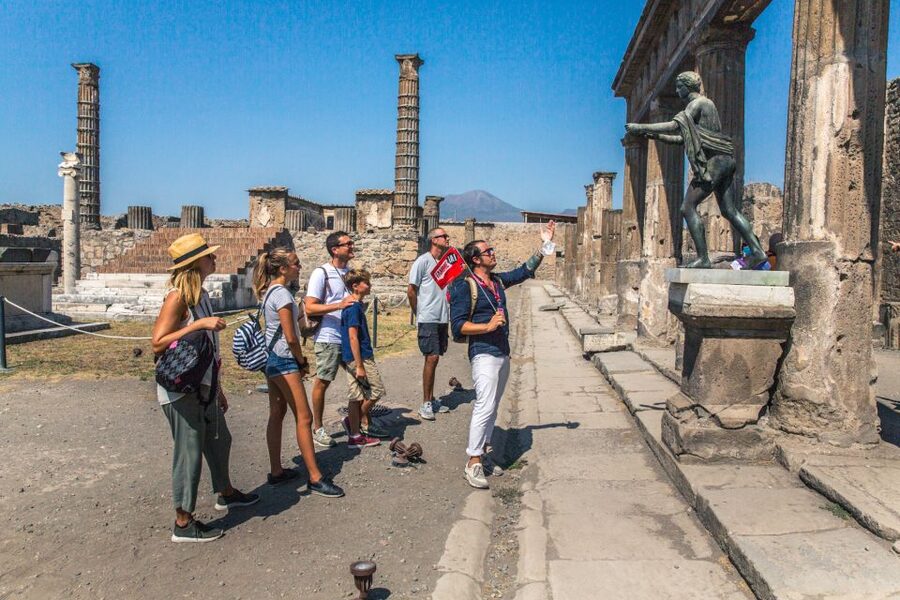
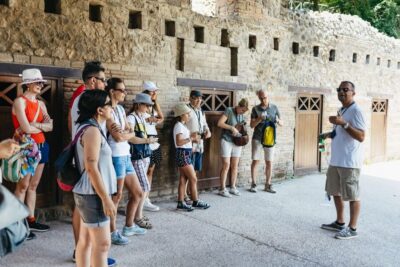
I also like how the tour is guided in a way that helps you actually understand what you are seeing, not just where to stand. With a licensed local guide, plus audio headsets for larger groups, the storytelling stays clear even when the site gets crowded.
One thing to plan for: this is a walking tour and the site is exposed and hot in parts. It is not suitable for wheelchair users, and comfortable shoes are not optional.
What makes this Pompeii tour work
- Priority entrance to beat the slow ticket lines and get onto the ruins sooner
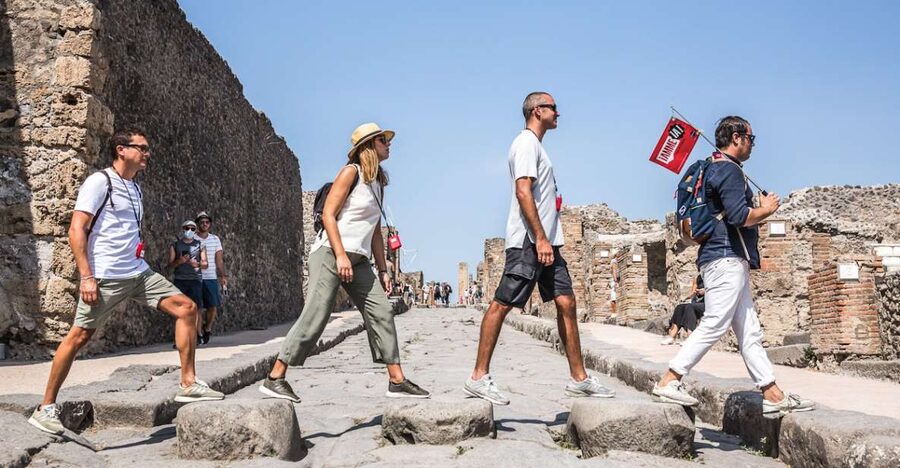
- Licensed local guides who explain what daily life looked like, from legal spaces to street food
- Audio headsets for 8+ so you can hear the guide without craning your neck
- A tight 2 to 2.5 hour route that hits major areas without trying to “do everything”
- Human-scale stops like the plaster casts, which bring Pompeii’s tragedy close and real
Priority access to Porta Marina: the big advantage
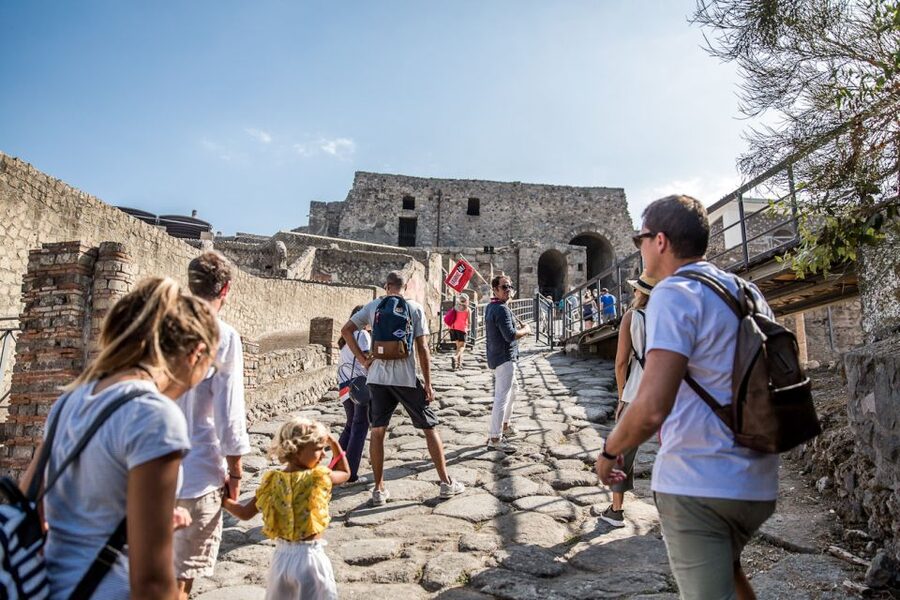
Pompeii is huge, and the entry experience can decide whether your day feels smooth or stressful. This tour is designed around getting you in with priority access, then starting right at the entrance near Porta Marina. That matters because you are not just saving minutes. You are saving energy, focus, and patience, and those are the things that run out first at Pompeii.
The timing is also a sweet spot. At 2 to 2.5 hours, you get a guided route that actually makes sense, instead of a long slog where you rush and miss the point. You are seeing major “anchor” areas, but you are also learning the why behind them.
For the first Sunday of each month, priority entrance may not be available and it is determined by the crowd situation at the Pompeii ticket office. If your schedule puts you on that day, I would treat “priority” as a bonus, not a guarantee.
More Pompeii tours and tickets in Pompei Campania:
- Pompeii: Entry Ticket and Guided Tour with an Archaeologist
★ 4.8 · 19,459 reviews - Pompeii: Small Group Tour with an Archaeologist
★ 4.8 · 12,264 reviews - Pompeii: Skip-the-Line Entrance Ticket with Audio Guide
★ 4.0 · 2,509 reviews
Finding your guide: where the tour starts
Your meeting point can vary depending on what you booked. Some options start at Pompei Parking Zeus, while others meet at Porta Marina at the site entrance. The simplest strategy is to double-check your exact meeting location before you leave, then give yourself a little buffer time to get there calmly.
Even with a guide, Pompeii can confuse your bearings. Paths split, signage can be easy to miss, and it is easy to wander for five minutes and lose ten. The tour format helps because you start together and you follow a planned flow.
One small, real-world detail that stands out from guide feedback: people appreciated meeting points with clear direction, even name-specific signs. That kind of organization is a big deal in a place where it is easy to feel lost.
How the guide turns streets and buildings into real life
Here is the core value of this tour: you do not just look at ruins, you learn what they were for and how people used them.
At the start, you are set up to understand Pompeii as a living city. The route quickly frames the big story: the eruption that ended everything, and the long afterlife of the site as a window into daily Roman life.
Then comes the storytelling backbone. You walk through spaces that match what you would expect in a functioning town:
- public decision-making and worship areas
- legal and business spaces
- entertainment and social venues
- places to eat fast
- private homes that show status
This is why a guided visit can feel like the difference between looking at photos and standing in the scene.
Audio headsets for groups of 8+ also help keep the guide’s pace readable. You can stay near your group, take photos without yelling, and still catch the key explanations.
Porta Marina to the Civil Forum: Pompeii’s everyday power center
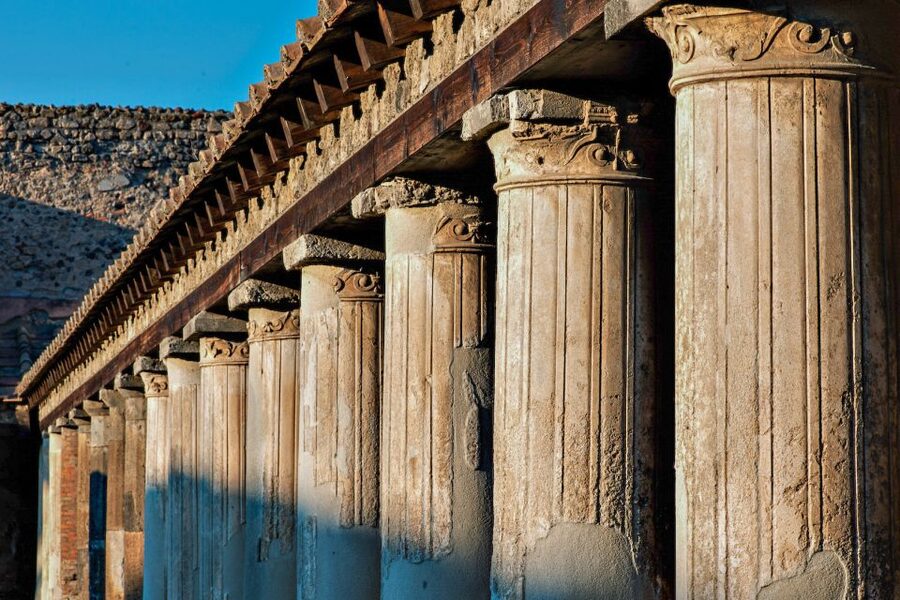
The tour begins at Porta Marina, one of the city’s original gates. It is a smart way to start because gates are practical landmarks. They explain movement, entry, and the idea that Pompeii was a connected place, not just a museum of stones.
Next you head toward the Civil Forum, Pompeii’s political, religious, and commercial center. This is where the ruins start to feel like a set built for real routines. Temples and public buildings surround you, and you get context for how Romans organized authority, belief, and business in one dense zone.
You then see the Basilica, a space used for legal affairs and business dealings. That one stop is worth paying attention to because it explains why some buildings feel “central” in a city. It was not only about beauty, it was about function, rules, agreements, and daily transactions.
A useful way to experience this area is to let your guide point out the details that make these places feel structured. When you understand that a stone space was for contracts, court meetings, or commerce, the forum stops looking random.
You also get a constant visual reminder of the looming cause of Pompeii’s end: Mount Vesuvius, sitting above everything as the quiet force behind the disaster in 79 AD.
A few more Pompei Campania trips worth comparing
- Pompeii: Skip-the-line-Ticket and Guided Tour
★ 4.6 · 1,152 reviews - Pompeii: Guided Tour with Skip-the-Line Entry
★ 4.9 · 812 reviews - Pompeii: Skip-the-Line Entry Ticket with Digital Guide App
★ 4.1 · 770 reviews - Pompeii: Tour with Archaeologist Guide & Skip-the-Line Entry
★ 4.5 · 478 reviews
Via dell’Abbondanza and the Theater District: culture and public life
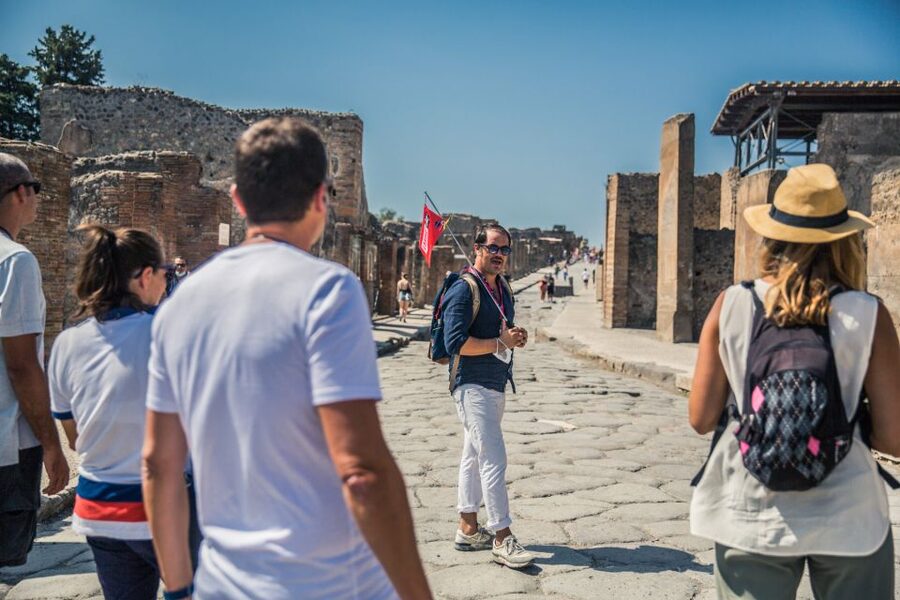
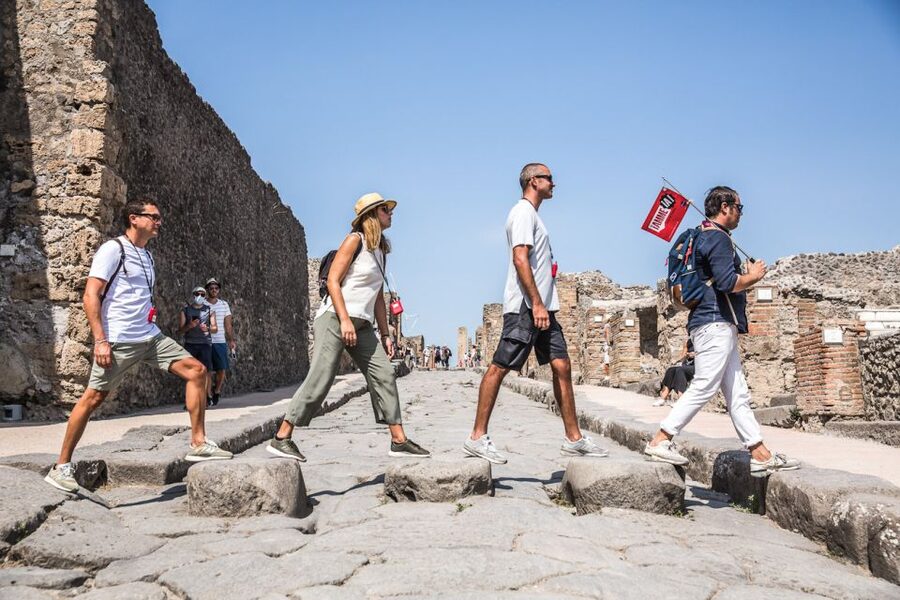
One of the most “you are really there” segments is the stroll down Via dell’Abbondanza, the main street. You see shops and homes along the route, plus deep chariot grooves etched into stone. That detail is a fantastic lesson in how everyday traffic physically shaped the city.
Then the tour moves into the Theater District, a hub for art, entertainment, and social life. The big anchor here is the Large Theater, an open-air venue where people gathered for performances like comedies, dramas, and musical events.
What I like about this part is that it gives Pompeii personality. Forums show order. Streets show motion. A theater shows leisure and community. You start to understand what a Roman day might feel like: work and civic duties in one area, culture and gatherings in another.
Forum Baths, thermopolium, and pistrinum: Roman comfort and quick meals
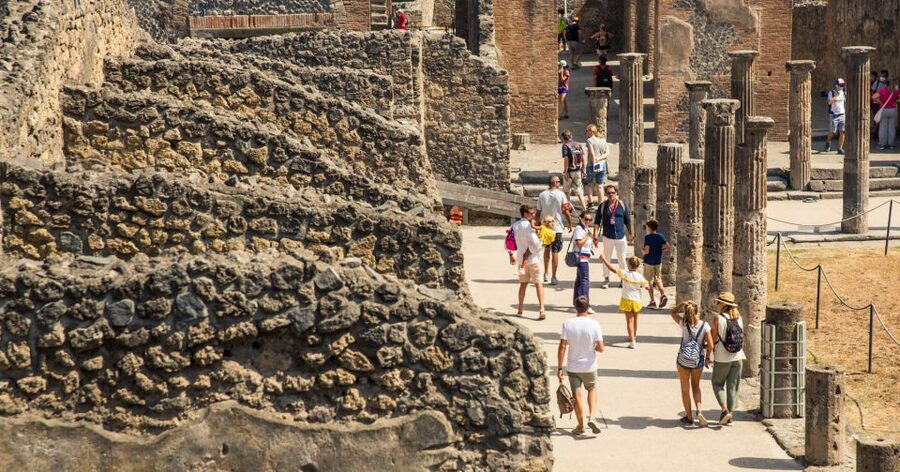
Roman daily life was not only about politics and public buildings. It also included relaxation and fast food.
The tour includes a beautifully preserved bath complex, with time to see how people used these spaces for daily rituals. Think wellness and routine, not luxury tourism. This is one reason bath areas feel so human. You can almost picture the flow of people moving through different rooms.
Next you visit places tied to eating on the go:
- a thermopolium, an ancient street food shop
- a pistrinum, a bakery with millstones, ovens, and counters used to serve hot meals
These stops are valuable because they shift the story from “grand buildings” to what people did between chores and events. Food here is practical history. It tells you what was available, how meals were served, and how daily routines moved through a city.
If you like details you can visualize, pay close attention to the counters and machinery. They explain logistics, not just aesthetics. And if you are traveling with kids, this is often the segment that makes Pompeii feel fun rather than grim.
House of the Faun and the Alexander Mosaic: wealth you can see
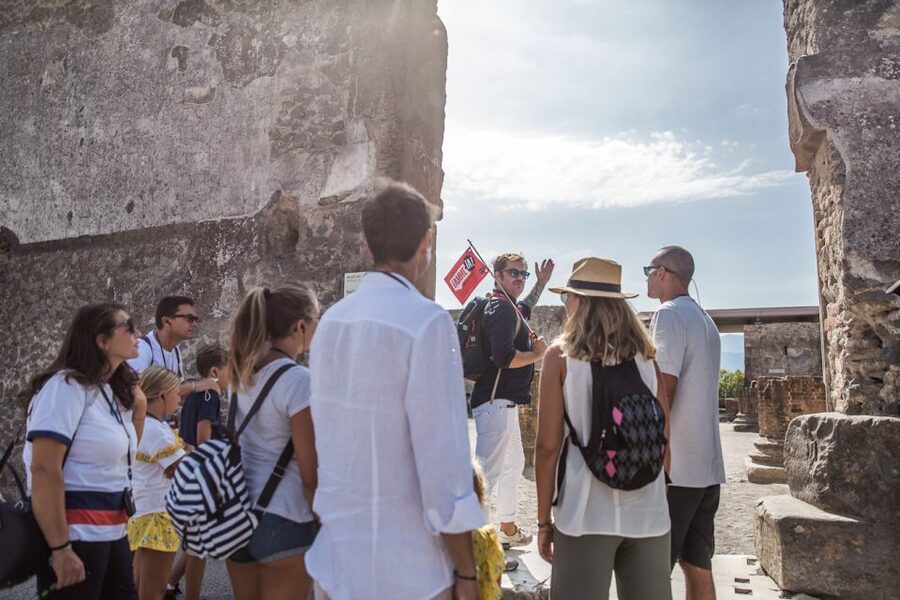
At the House of the Faun, you step into a grand Roman villa famous for mosaics. The highlight is the Alexander Mosaic, a masterpiece of ancient art and storytelling.
This stop is where Pompeii’s social layers show up clearly. Public spaces explain shared civic life. A wealthy villa explains private life, status, and how art was used to project culture and power.
What I like about including this house is that it gives contrast. You are not only seeing what everyone shared. You are also seeing what elite households chose to display.
If you have limited time, prioritize this area. Even people who think they are not “mosaic people” usually end up surprised at how much narrative the design carries.
Lupanare and Macellum: the choices people made
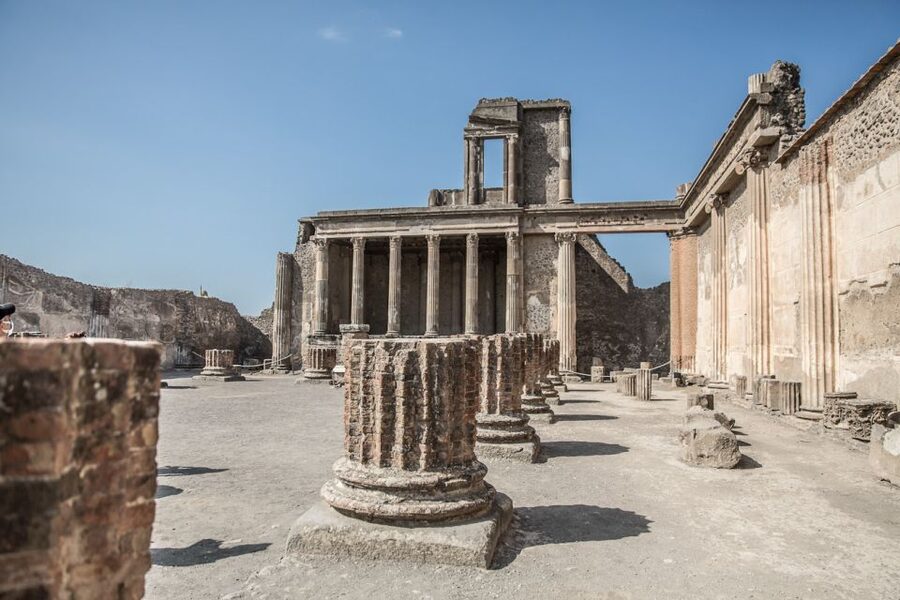
Two of the most striking stops in the route are the Lupanare (the ancient brothel) and the Macellum (the food market).
The Lupanare is described as a compact set of stone rooms adorned with vivid frescoes. It is one of those places where the past feels uncomfortably close, not because it is shocking for the sake of shock, but because it shows how Roman society worked, including the parts that most guides do not linger on.
One practical note: there may be times when your guide adjusts what you see based on time and lines. If you are hoping to spend longer there, ask your guide what the plan is at that moment. Some guides may choose to use time wisely rather than wait.
Then you end at the Macellum, Pompeii’s lively food market. Markets are a great final feeling because they bring back sound and smell in your imagination. Trade, bargaining, and quick choices were the rhythm of daily commerce.
The plaster casts: the tragedy becomes personal
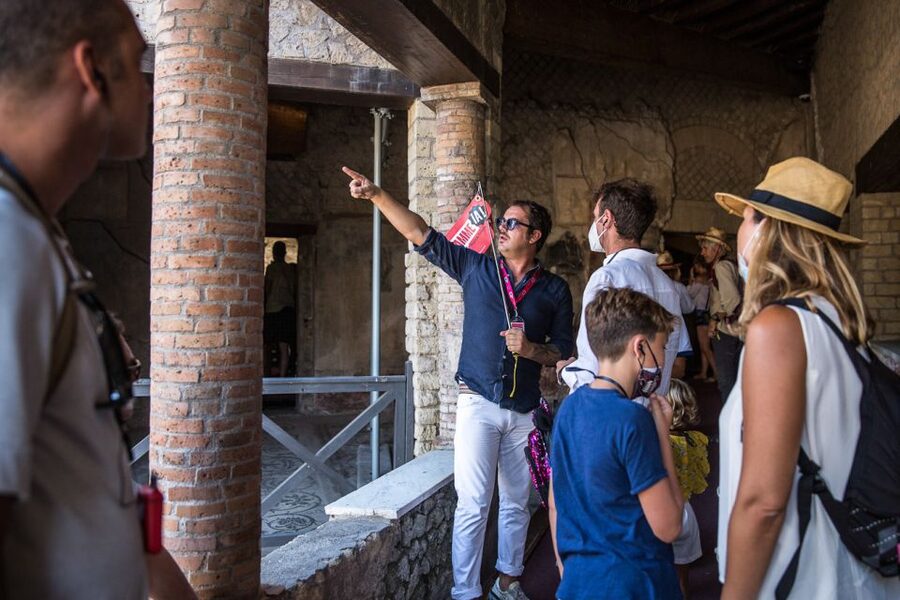
The tour’s emotional centerpiece is the plaster casts of Pompeii’s victims, showing men, women, and children in the positions they were found. These are not “just artifacts.” They are people frozen at the end, which makes Pompeii’s story hit differently.
I find this part helps you make sense of why Pompeii matters beyond tourism. Yes, you see architecture. But you also get the human interruption, which turns the site from history textbook into something you can’t scroll past.
If you are sensitive to heavy topics, go slower here and let your guide set the pace. You do not need to rush to “get through it.”
Timing, heat, and comfort: what to bring and how to pace yourself
This is a walking route across an exposed archaeological site. Bring comfortable shoes and sunscreen. That sounds obvious, but it is the difference between enjoying the tour and spending the afternoon focused on discomfort.
One tip worth taking seriously: in hot, bright areas, some people prefer shade if they can. An umbrella or a hat can make a big difference when the sun hits open spaces.
Also remember the tour is built for a 2 to 2.5 hour flow, not a full day discovery. You will cover major stops, but Pompeii is too big to see every corner in one short visit. So treat this tour as the guided backbone, then plan extra time after if you want to roam.
Small groups and guide quality: why it matters at Pompeii
Audio headsets for groups of 8+ help, but the guide is still the main “technology” here. The best Pompeii guides do two things: they explain what you are looking at, and they keep you moving at a pace that makes you feel oriented.
The tour can be private or small groups, and the language options include English, Spanish, French, and German. That matters because your understanding depends on clarity, and Pompeii rewards attention to detail.
Guide names mentioned in feedback include Melania and Annarita, along with Mariella, Natalia, Lucia, and Anna Rita. People praised their ability to explain without dumping facts, and to point out things you might miss on your own.
There is also a practical lesson here: if you value questions, small groups often give you more breathing room to ask. Even if you are with a larger group, your guide can still answer direct questions during the walk.
Price and value: what $43 buys you
At $43 per person for a 2 to 2.5 hour guided visit, the value comes from three items that are hard to replicate on your own:
1) Priority access that helps you avoid the slow parts of arrival
2) A licensed local guide who connects ruins to daily life
3) Audio headsets for larger groups so you can actually hear the commentary
Food and beverages are not included, so budget for a snack stop or lunch plan outside the tour window. Transportation to and from Pompeii is also marked as not included. If you are building a bigger day trip from the Amalfi Coast region, you might see plans that include hydrofoil tickets and round-trip transfers, but you should confirm what your overall day package covers.
Where this tour becomes a smart purchase is when you want context. Pompeii is famous, but it can also feel like random walls if you do not have help making connections. This tour does that for you.
If you already know Pompeii deeply and you love wandering solo, you might skip a guided format. But if it is your first real visit, this is one of the best ways to make the time count.
Who should book this Pompeii skip-the-line tour
This tour is a great fit if you want:
- a structured route that hits major highlights in about two and a half hours
- priority access to reduce wasted time at entry
- a local guide who can explain everyday life, not only big monuments
- a format that works well with families, since the pace and key stops can hold attention
It is less ideal if you:
- need wheelchair access (the tour is not suitable)
- want a long, slow, free-roam self-guided day
- are traveling with unaccompanied minors (unaccompanied minors are not allowed)
Should you book it?
Yes, if you want Pompeii without the stress and without the guesswork. The priority access plus a local guide makes the experience feel organized from the start, and the route covers the kinds of stops that answer the big question: what was daily Roman life like?
Before you book, do two quick checks:
- Confirm your exact meeting point option, whether it is Pompei Parking Zeus or Porta Marina
- Plan for heat and walking with comfortable shoes and sunscreen
If you want Pompeii’s story to land, this guided format is the efficient, human way to do it.
Recently reviewed around Pompei Campania
- Pompeii Audioguide – TravelMate app for your smartphone★ 3.9 · 10 reviews
- Pompeii: Entrance Ticket – Skip the Line★ 3.8 · 64 reviews
- Pompeii: AR Glasses Augmented Reality Tour★ 5.0 · 3 reviews
- Pompeii: Entry Ticket & Guided Tour with an Expert Historian★ 5.0 · 4 reviews
- Pompeii Small Group Tour – Tickets Included★ 4.7 · 72 reviews
- Pompeii and Oplontis: Small Group Tour with an Archaeologist★ 4.5 · 3 reviews
- Pompeii and House of Vettii Guided Tour★ 3.7 · 3 reviews
- Pompeii 2H Private Guided Tour with Optional Tickets★ 5.0 · 3 reviews
Pompeii Tours, compared.
Entry Ticket and Guided Tour with an Archaeologist
Read our review →

Pompeii Small Group Tour with an Archaeologist
Read our review →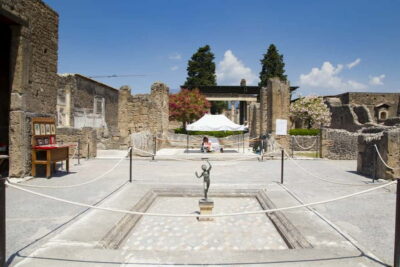
Naples or Sorrento: Full-Day Pompeii and Mount Vesuvius Tour
Read our review →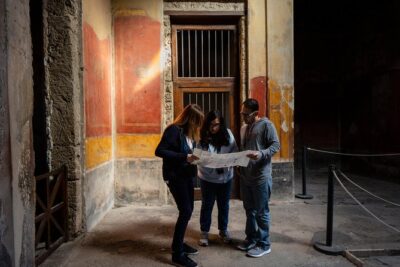
Pompeii & Mt.Vesuvius Day Tour from Naples with Pizza Lunch
Read our review →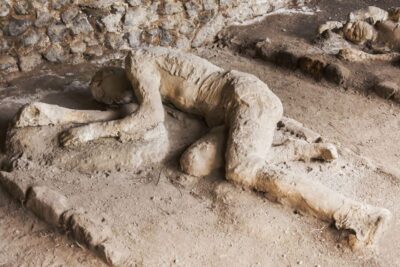
Browse the lists this tour appears in