
Reviewed · POMPEII TOURS
Pompeii Small Group with an Archaeologist and Skip The Line
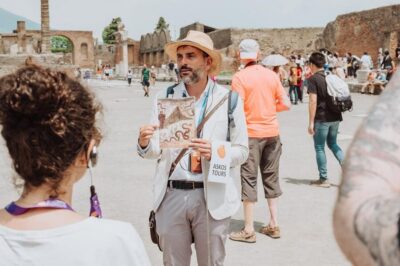
Pompeii moves fast, and this small-group tour is built for momentum. You get skip-the-line entry plus an archaeologist guide who helps you see what you are actually looking at, not just pretty walls and floor mosaics. I especially like the focused 2-hour format that fits a tight day, and the way the route hits both public spaces and daily-life corners.
One thing to consider: the tour can switch from group to private if the group size does not meet the minimum. In one case it also led to an unexpected extra charge for a private option, so if you are traveling with a flexible plan, you may want to confirm how your specific departure will be handled.
Key things that make this Pompeii tour a smart pick
- Skip-the-line, mobile ticket so you lose less time at the entrance
- Archaeologist and guide leading the walk, with real on-site perspective
- Small group up to 10 for questions and a slower, less stressful pace
- Major ruins in about 2 hours including the forum, baths, theaters, and key houses
- Route includes contrast spots like the Lupanar and the grand Teatro Grande, not just the postcard views
Why a 2-Hour Archaeologist Tour Fits Pompeii Perfectly
Pompeii is huge, and trying to cover it alone can feel like sprinting with no map. This tour keeps you moving, but not randomly. You follow a set path designed to show the city’s big ideas: how people performed, shopped, worshipped, ate, argued in court, trained as gladiators, and lived behind walls still painted in place.
The timing matters. In about two hours you can see a lot of Pompeii’s core without spending the whole day getting lost. If you have limited time, or you are combining Pompeii with Naples, this “main hits” structure is a practical lifesaver.
I also like that the guide work is built around interpretation. You do not just get dates. You get explanations of how the spaces functioned, what people likely did there, and what you can still infer from the layout.
More Pompeii tours and tickets in Pompeii:
- Pompeii: Entry Ticket and Guided Tour with an Archaeologist
★ 4.8 · 19,459 reviews - Pompeii: Entry Ticket with Optional Audio Guide
★ 4.2 · 12,360 reviews - Pompeii: Small Group Tour with an Archaeologist
★ 4.8 · 12,264 reviews
Skip-The-Line Tickets and the Real Value of Not Waiting
The biggest practical win is the fast-track skip-the-line setup. You show up with your ticket already organized, and you enter with less friction than you would on a standard ticket line. That means more of your time stays inside the archaeological park, where Pompeii actually delivers.
At $217.69 per person for a 2-hour small-group tour, the price is not “cheap,” but it can be good value if two things are true for you. First, you are short on time. Second, you want your visit to make sense fast, because Pompeii is confusing if you are only guessing what each room or street corner used to be.
If you love wandering without a plan, this might feel structured. But if you want your trip to feel efficient and guided from the start, the skip-the-line is doing real work for you.
Meeting at Ristorante Suisse, Then Walking the Pompeii Main Route
You meet at Ristorante Suisse, Piazza Esedra 10/13, 80045 Pompei NA. The tour ends back at the same meeting point, which is helpful if you are planning onward travel. The start is near public transportation, so you are not trapped with only one option for getting there.
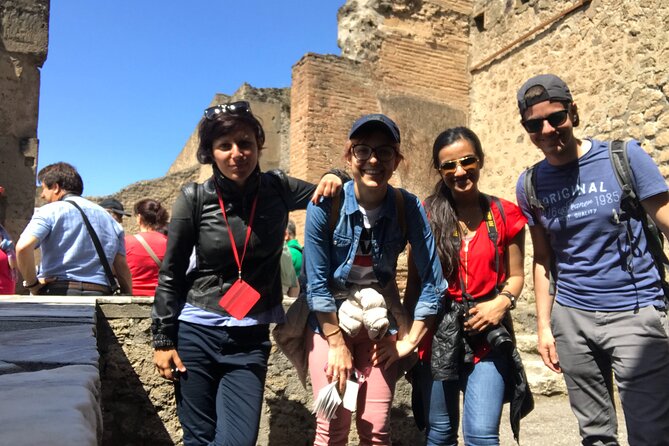
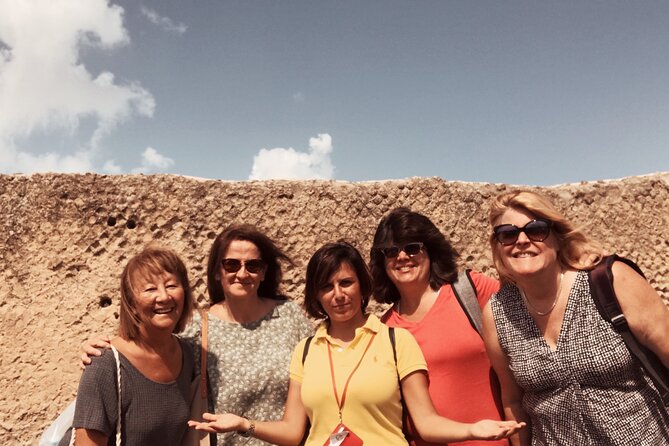
Small-group size, up to 10, changes the tone. You can ask questions without yelling, and the guide can slow down if someone wants to stop and look longer at a detail. That is especially useful at Pompeii, where small things, like a painted wall section or a carved feature near an entrance, can be easy to miss when you are packed into a crowd.
Also, plan for heat. One guide experience included a reminder that it can be extremely hot, so bring water, sunscreen, and a hat or umbrella if your schedule lines up with summer conditions.
Teatro Grande and the Small Theater, Where Pompeii Performed
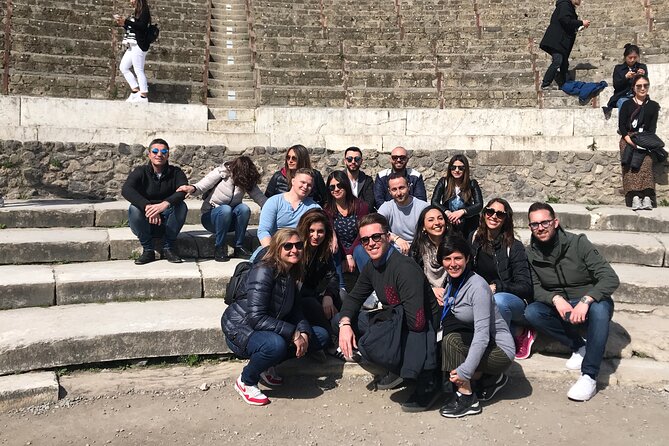
Your tour includes two performance-related stops: the small theater area and the Teatro Grande. This is where you learn that Pompeii was not only a place of markets and homes. It also had venues for Greek-Roman comedies and tragedies, where performances were social events, not private entertainment.
At the Teatro Grande stop, the focus is on what the theater was for and how the space worked. Even if you are not a “theater person,” it helps to picture the crowd and the staging. You start noticing sightlines, the layout, and the way people would have moved through the area.
Then you cross back to the small theater designated place for music and singing performances. That contrast is useful, because it shows different types of public entertainment rather than one generic idea of theater.
A few more Pompeii trips worth comparing
- From Naples: Pompeii Skip-the-Line Entry Ticket and Tour
★ 4.4 · 2,753 reviews - Pompeii: Skip-the-Line Entrance Ticket with Audio Guide
★ 4.0 · 2,509 reviews - Pompeii: Skip-the-Line Entry Ticket with Audio Guide or Tour
★ 4.1 · 1,364 reviews - From Naples: Pompeii Guided Tour with Skip-the-Line Tickets
★ 4.8 · 1,171 reviews
Granai del Foro, Basilica, and the Forum You Can Actually Understand
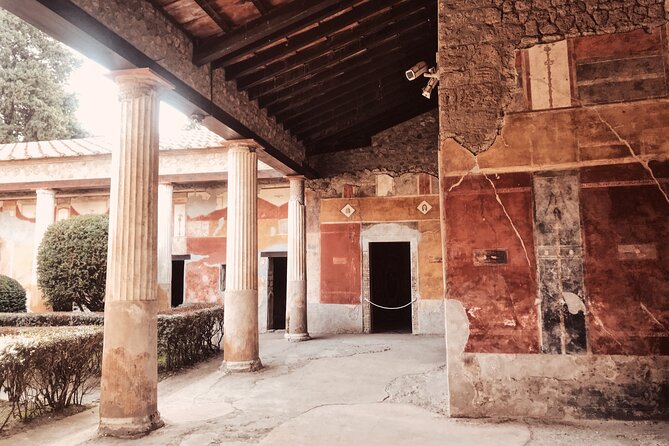
The forum area is where Pompeii can feel like a blur if you are unprepared. This tour slows it down by building a sequence that connects function to space.
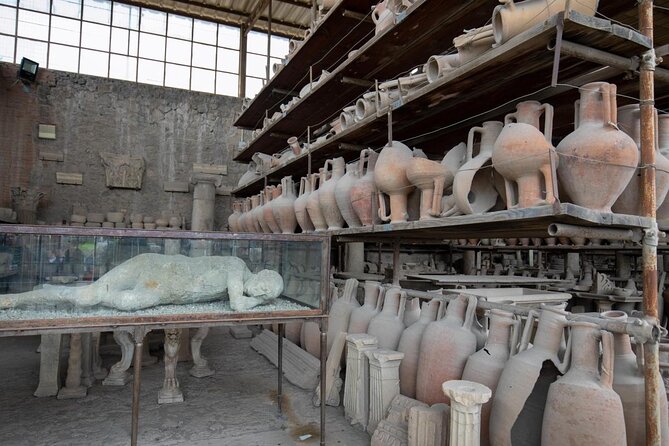
You visit the Granai del Foro, where you can see casts of victims who died during the eruption of 79 AD. This is an emotional stop, but the guide framing is what turns it from a photo op into something you can interpret. You learn how this part of the city related to everyday activity, and how quickly a routine place could become a tragedy.
Next comes Foro di Pompei, the main square. Then you move to the Basilica of Pompeii, the ancient seat of court where justice was administered. That court connection is key. The forum is not only a public meeting place. It was also where civic life happened, and the basilica’s role helps you understand why this area mattered.
If you like structure, you will probably love this section. It feels like the guide is giving you a mental map of civic power in the city.
Stabian Baths Frescoes, Color Still Hanging On
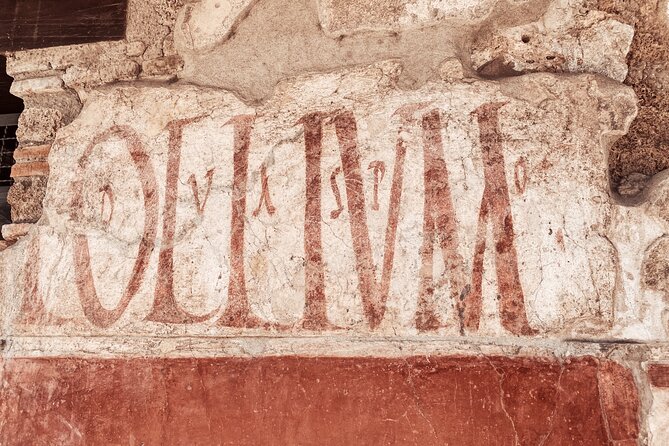
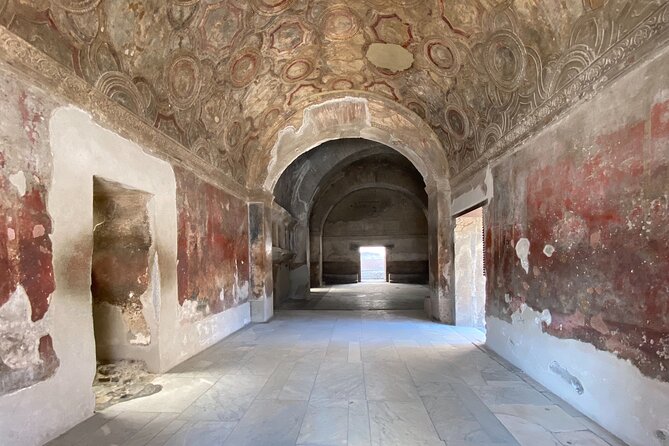
The Stabian Baths (Terme Stabiane) stop is short on the clock, but it is memorable for the right reasons. You get to admire frescoes and understand that bathing was not only about cleanliness. It was part of social routine and public life.
The practical catch is time. This is one of the places where you may want more minutes, because the painted details reward slow looking. Still, even in a quick visit, having an archaeologist guide changes what you notice.
If you are a fan of art, this stop can anchor your memory of Pompeii. If you are not, it still gives you that essential “people lived here” feeling, since baths were everyday settings.
Temples, a Backdrop of Vesuvius, and Religious Pompeii
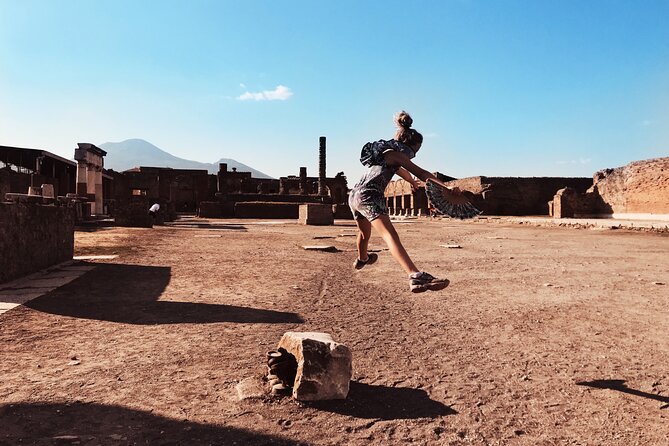
You also visit the Temple of Jupiter, with Vesuvius as the backdrop. That visual is hard to beat. It gives you instant context for where the city sat, and why Pompeii’s relationship to the volcano was not hypothetical.
Then you end up at the Temple of Venus, the city’s divinity venerated there. These temple visits are brief, so do not expect a long museum style explanation. Instead, treat them as quick orientation stops that help you understand how belief was built into public spaces.
This is another reason I like the guide format. When the route includes worship sites, you do not leave Pompeii thinking it was just ruins and roadways. You leave understanding that people structured daily life around religious places too.
Quadriporticus and Gladiator Barracks, Plus the Lupanar Contrast
One of the most interesting sections is the area around the theaters and the Quadriporticus of the theatres, including the Gladiator Barracks. You learn where gladiators trained and where their living quarters sat. That changes how you picture the theater zones. They are not just for entertainment. They connect to the people who made the spectacle possible.
Then you visit the Lupanar, the old red light district. This stop is not for prurient curiosity. It is a reality check for how segmented city life could be, and how the design of a place reflected social roles.
The guide framing is what keeps it from feeling like awkward sightseeing. You learn what to look for and how to interpret it respectfully, as part of the city’s functioning rather than a random shock stop.
Casa del Fauno, the Richest Streets, and How to Look Better
The final “wow” stop for many people is the Casa del Fauno. It is described as one of the richest and most luxurious residences in Pompeii, and you can feel why. Large spaces, layout, and decorative details are designed to signal status.
In a guided format, you learn what parts of the home likely did what. You start seeing the purpose behind rooms and thresholds, not just admiring the fact that it still exists. One guide experience highlighted the ability to talk through different tiers of homes, including richer and poorer spaces, which is a big part of why Pompeii can finally make sense.
Casa del Fauno also works as your ending anchor. By the time you reach it, you have already seen the forum, the baths, entertainment venues, and temples. So the house stops feel like the logical final chapter: how daily life looked when you had money.
Who Should Book This Pompeii Tour, and Who Might Want More Time
This tour is a great fit if you want a key sites route in a short window. It is especially good for first-timers who feel overwhelmed by Pompeii’s size and for people who like to ask questions while walking.
It also works well for families who can manage the pace. One experience mentioned a guide staying patient and engaging with a young child, while still keeping the group together. Small-group size helps with that.
You might want something longer if you want to slow down for baths details, spend extra time in houses, or take lots of independent photos. Two hours can feel like just getting warmed up, especially if you love architecture.
Price and Logistics: Is This Worth $217.69?
At $217.69 per person for about two hours, you are paying for two things: entry speed and specialist guidance. If you were to do Pompeii alone, you could save money, but you would spend more time sorting out what you are seeing, and you might miss interpretive context that makes the ruins click.
The skip-the-line part matters for value, because entrance lines can steal your best daylight inside the site. The archaeologist guidance part matters because Pompeii is full of “almost readable” details, like rooms whose function you can guess, but not confirm, without help.
Also, pay attention to group size. The tour is capped at 10, but if the group does not meet the minimum, it may change to a private option. That is where you can see either a smooth experience or an unexpected extra charge, so check your exact departure setup before you go.
The Biggest Strengths You’ll Feel in the Field
I would sum it up like this: you get a route with a purpose, and you get a guide who makes the city behave like a place, not just a site.
The most praised element is the archaeologist guide approach. Eliana Sandretti is repeatedly described as highly communicative and deeply invested in Pompeii, and one account notes she has worked at Pompeii since she was 18. When the guide’s background aligns with the subject, the explanations tend to feel grounded in how excavation and interpretation actually work.
You also get real flexibility. When schedules or guide logistics shift, the tour setup has been able to keep things moving, including rescheduling within the day and using assistant guides like Dario or Francisco when needed. Another positive pattern: guides often wait if plans run late due to traffic, so the experience does not collapse at the first hiccup.
Should You Book This Pompeii Skip-The-Line Archaeologist Tour?
Book it if you want a structured, small-group route that hits the big parts of Pompeii in about two hours, without losing time at the entrance. It is a strong choice for first-timers, for travelers with tight schedules, and for anyone who wants Pompeii to feel understandable, not just impressive.
Consider another approach if you dislike structured walking or if you are very sensitive to last-minute changes related to minimum group size. In that case, you will still see Pompeii, but you might want to make sure the plan for your exact date is crystal clear before you commit.
If you can, wear sun protection and bring water. Pompeii rewards patience, and a little prep keeps the experience enjoyable from start to finish.
FAQ
How long is the Pompeii small group tour with an archaeologist?
It runs for about 2 hours.
Is the tour in English?
Yes, it is offered in English.
What is the maximum group size?
The tour is limited to a maximum of 10 travelers.
Does this tour include skip-the-line tickets?
Yes. You get fast-track entry and use the included admission tickets.
Where do I meet for the tour?
The meeting point is Ristorante Suisse, Piazza Esedra 10/13, 80045 Pompei NA, Italy.
What stops are included during the tour?
The tour includes Pompeii Archaeological Park plus key areas such as the Teatro Grande, the Granai del Foro, the Stabian Baths, Foro di Pompei, the Basilica, the Temple of Jupiter, the area of the theaters and gladiator barracks, the Lupanar, and the Casa del Fauno.
What is included in the price?
The tour includes an authorized tourist guide and assistance, tickets entrance, an archaeologist and tour guide, and fees and taxes for the entrance ticket.
What is not included?
Food and drinks, tips, and transport are not included.
Is the ticket mobile?
Yes. The tour uses a mobile ticket.
Do I need good weather for the tour?
Yes. The experience requires good weather, and if it is canceled due to poor weather, you will be offered a different date or a full refund.
Recently reviewed around Pompeii
- Pompeii Audioguide – TravelMate app for your smartphone★ 3.9 · 10 reviews
- Pompeii: Entry Ticket & Guided Tour with an Expert Historian★ 5.0 · 4 reviews
- Pompeii: AR Glasses Augmented Reality Tour★ 5.0 · 3 reviews
- Pompeii: Entrance Ticket – Skip the Line★ 3.8 · 64 reviews
- Pompeii Small Group Tour – Tickets Included★ 4.7 · 72 reviews
- Pompeii: Skip-the-Line Ticket and Virtual Museum★ 4.5 · 66 reviews
- From Naples: Pompeii & Mount Vesuvius Full-Day Private Tour★ 4.5 · 4 reviews
- Pompeii with Wine Tasting Private Tour★ 4.7 · 6 reviews
Pompeii Tours, compared.
Entry Ticket and Guided Tour with an Archaeologist
Read our review →


Pompeii Small Group Tour with an Archaeologist
Read our review →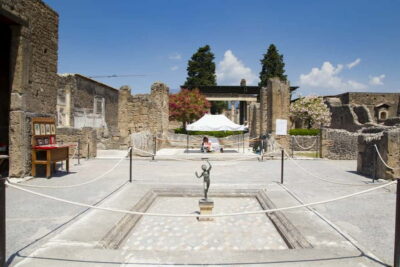
Naples or Sorrento: Full-Day Pompeii and Mount Vesuvius Tour
Read our review →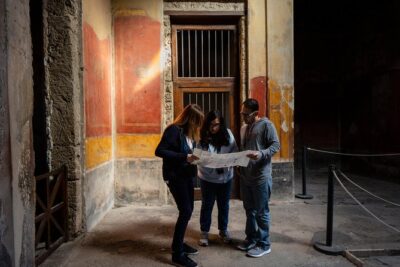
Pompeii & Mt.Vesuvius Day Tour from Naples with Pizza Lunch
Read our review →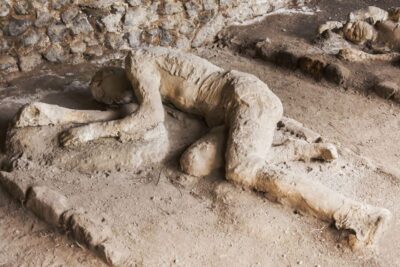
Browse the lists this tour appears in