Reviewed · POMPEII TOURS
From Sorrento: Pompeii with an Archaeological Guide & Ticket
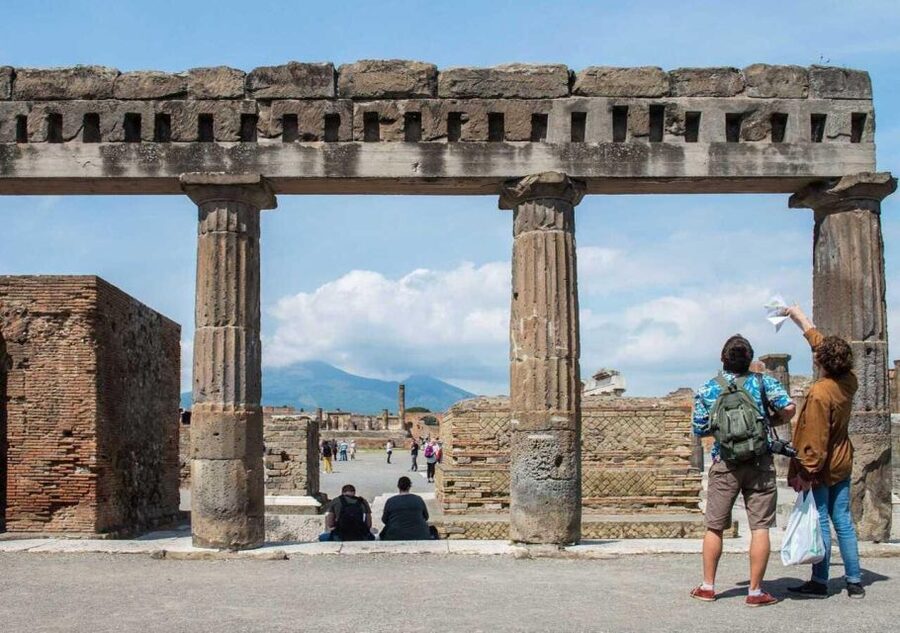
Pompeii is the kind of place that feels like it has its own gravity. One century. One eruption. And then a whole city, preserved in ash after Vesuvius erupted in 79 A.D. This tour is interesting because it gets you there from Sorrento with transport and an archaeologist guide, so you spend your time on the ruins instead of figuring out logistics.
I especially like the 2-hour guided time inside Pompeii. The guide works the site in a way that helps you connect buildings to daily life, not just look at walls. I also like the practical setup on the day, including the coach ride from Sorrento and included admission, plus headsets for groups larger than 10 so you can actually hear the story over the crowd.
One drawback to consider: it is not suitable for wheelchair users, and with just a half-morning at the site (about 2 hours guided), you will see major highlights but not every street and corner. Think of it as a smart sampler that still leaves you time to process what you saw.
Key highlights you’ll feel right away
- Archaeologist guide with a timed, guided Pompeii visit that keeps the day moving
- Coach transfer from Sorrento with a simple start at Bar Kontatto
- Headsets for larger groups so the explanations stay clear
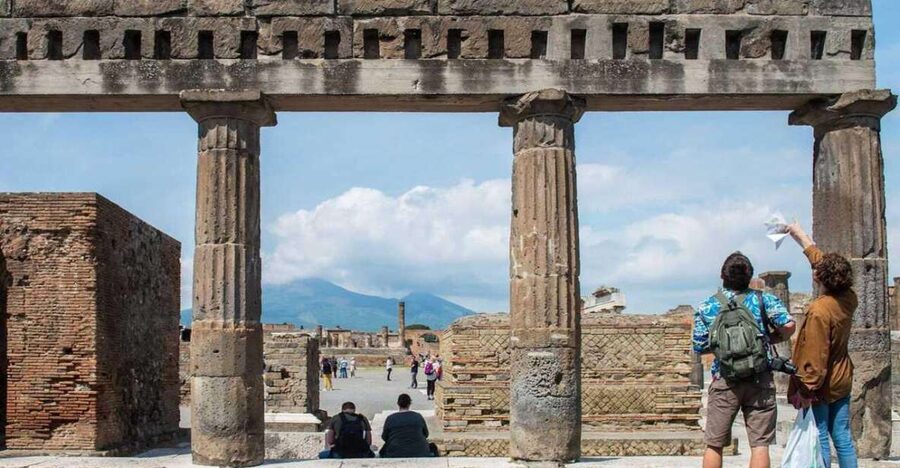
- High-value Pompeii highlights like Forum areas, theatres, temples, baths, and standout villas
- A quick, well-paced day that returns you to Sorrento after lunch hours start
Why this Pompeii day trip feels worth the time
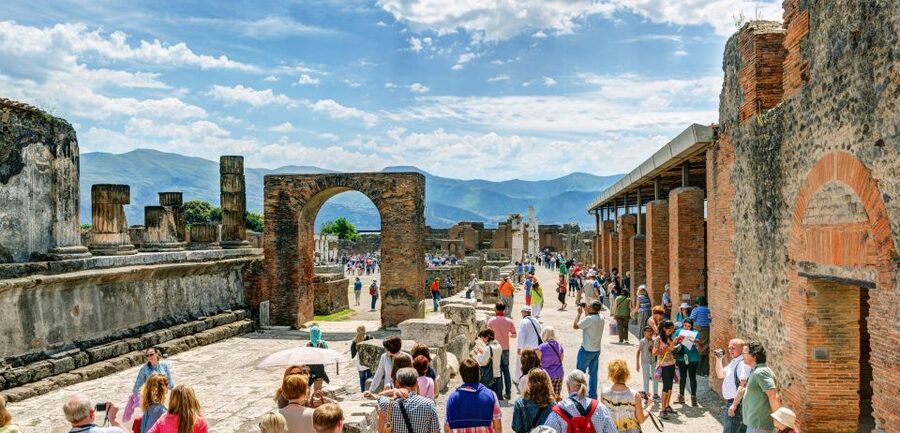
A lot of Pompeii tours either run too short to make sense, or they run too long and wear you out. This one hits a sweet spot. You get coach transport from Sorrento, you arrive with enough time to focus, then you return to your base the same day. That matters if you want a Pompeii “wow” without turning your entire vacation into a museum shift.
The best part is that the guided portion is built for understanding. Pompeii can be overwhelming when you are walking it alone. With a proper guide, you start to notice patterns. You see how civic spaces worked, where people ate and shopped, what public baths looked like, and how religious sites were placed right inside everyday routes.
Also, the group structure helps. People in the past have called out the bus guide as helpful and informative, and the site guide as professional while handling crowds. On top of that, the admission ticket plus guided approach can reduce the annoying parts of line-waiting, which is a real quality-of-life upgrade at Pompeii.
More Pompeii tours and tickets in Pompei Campania:
- Pompeii: Entry Ticket and Guided Tour with an Archaeologist
★ 4.8 · 19,459 reviews - Pompeii: Small Group Tour with an Archaeologist
★ 4.8 · 12,264 reviews - Pompeii: Skip-the-Line Entrance Ticket with Audio Guide
★ 4.0 · 2,509 reviews
Meeting at Bar Kontatto and getting to Pompeii smoothly
You start at 08:00 at Bar Kontatto, Corso Italia n.257 in Sorrento. The good news is that it is described as only a few minutes walk from the train and bus station, so you are not trapped in a “meet far from transit” situation.
The next practical tip is timing. You are asked to arrive about 10 minutes before the prefixed pick-up time. That is not a suggestion, it is how the day runs. If you show up late, you risk missing the group because the coach is doing a tight schedule.
From there, you ride the coach to Pompeii, around 50 minutes. This travel time is not wasted. The group transfer comes with guidance during the ride, so you start with context before you even step into the ancient streets.
The coach ride: context, not just seat time
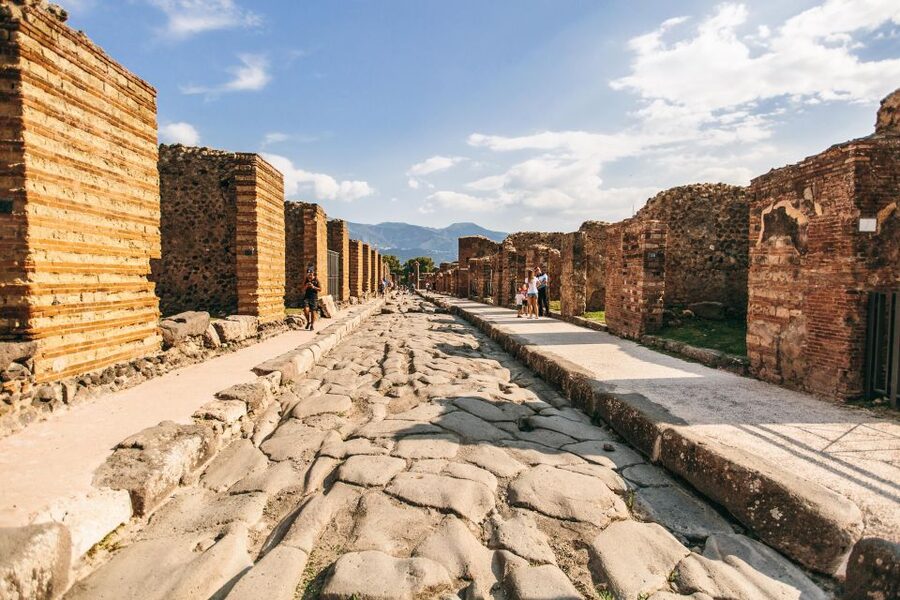
The ride from Sorrento to Pompeii is about getting your bearings fast. When the bus guide is explaining what you are about to see, your brain stops treating the ruins like random stone.
One highlight from past guests: the bus portion was considered helpful and informative, with extra tidbits on the way. Another guest specifically praised the energy and explanations from the on-tour guide named Gino, which is a good clue about the style here. If you want someone to turn the drive into prep work, this tour has that built in.
You will also have small “on the way” scenic viewpoints during the day. That is not the main event, but it helps you break up the time and keep the day from feeling like one long procession.
Entering Pompeii with an archaeologist guide
Once you reach Pompeii, you get a 2-hour guided tour with your archaeologist guide. This is the heart of the value. A good Pompeii visit is not just walking, it is learning what you are looking at and why it survived.
You also get something practical that matters at a big site: headsets for groups larger than 10. That detail alone can make the difference between hearing the guide clearly or constantly trying to angle your body toward their voice.
In plain terms, this guided setup helps you avoid the common Pompeii problem. You see something important, but without context you only clock it as “old building.” With the right explanations, it becomes: This is where people met. This is where commerce happened. This is how daily routines were organized. That is when Pompeii stops being just impressive and starts being understandable.
A few more Pompei Campania trips worth comparing
- Pompeii: Skip-the-line-Ticket and Guided Tour
★ 4.6 · 1,152 reviews - Pompeii: Skip-the-Line Entry Ticket with Digital Guide App
★ 4.1 · 770 reviews - Pompeii: Afternoon to Sunset Guided Tour with Ticket
★ 4.9 · 484 reviews - Pompeii: Skip-the-Line Ticket with Audio Guide and Map
★ 4.0 · 117 reviews
Lupanare stop: learning what people did in private and in public
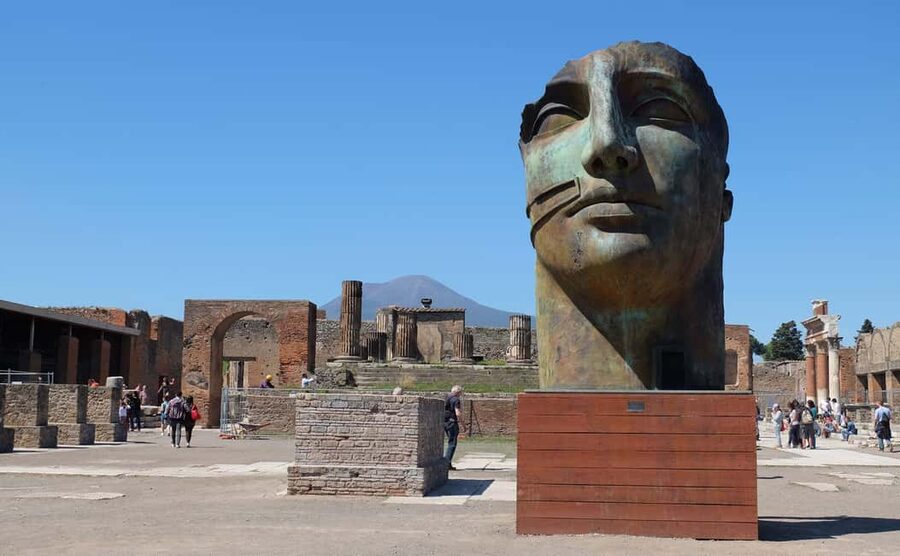
Your itinerary includes a stop at the Lupanare. This building is often described as an ancient brothel. Even if you already know the word, the guide’s job is to put it in the city’s layout and show how commercial and social life overlapped.
In a short visit like this, the Lupanare works as a strong “reality check.” Pompeii is not just temples and fancy villas. It also shows the ordinary human mess of relationships, commerce, and how different parts of the city served different kinds of people.
Drawback to keep in mind: if you have zero interest in this side of history, you might feel the tone of the stop is a bit more direct than the rest of the ruins. But for most visitors, it adds balance and makes the city feel real.
Terme Stabiane and Forum Baths: how public life worked
Next up are the Terme Stabiane and the Forum Baths. Baths in Roman cities were not just for washing. They were social spaces, meeting points, and part of everyday routine.
What I like about including these stops is that they teach you something beyond dates and names. You start to understand city planning. You can see how the Romans designed leisure and public interaction, and you get a feel for what a day in Pompeii might have sounded like.
In a guided format, baths can also be easier to “read.” A guide can point out how spaces functioned and what types of rooms likely existed. Without that, you might just see walls and stone platforms.
Large Theatre: scaling up the sense of community
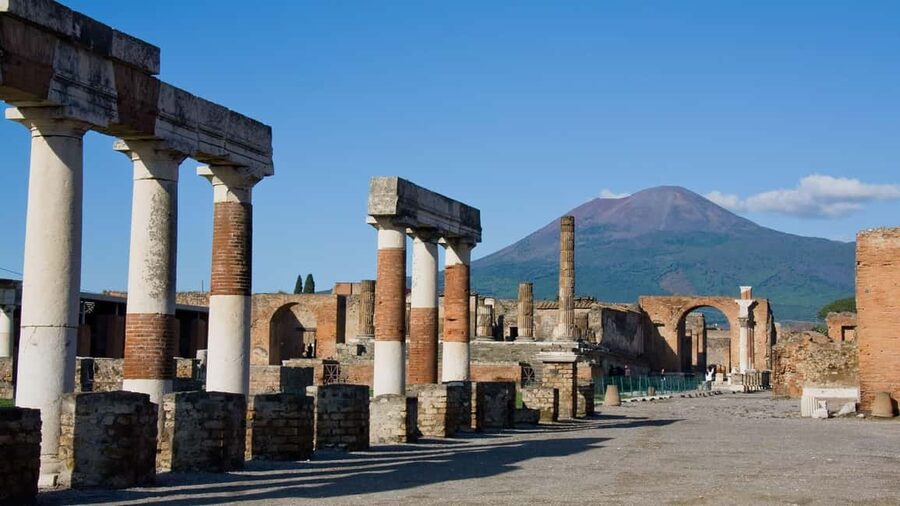
You then pass the Large Theatre. Roman theatres were about entertainment, but they also acted like a civic signal. People gathered, performed, judged, and watched together.
This stop is valuable because it gives you a change of pace from the indoor-feeling baths and more practical civic zones. It also helps you picture scale. Pompeii can feel intimate when you are close to the stones, but theatres remind you that this was a city built for crowds.
Practical consideration: theatres are often better from certain angles and levels. A guide can help you find the best viewing moments in limited time, which matters when your guided window is only about two hours inside.
Temple of Apollo and the role of religion in daily routes
The tour route includes the Temple of Apollo. Temples in Pompeii help you understand where belief sat in the city map. Religion was not hidden in a separate district, it was part of the routes people used.
I like that this tour does not keep you in only one type of site. When you mix civic baths, theatres, markets, and a temple in the same day, Pompeii stops feeling like a pile of ruins and starts feeling like a functioning community that had spiritual life built into it.
Keep an eye out for what the guide focuses on. At a site like this, your main takeaway will be placement and function rather than just wow factor.
Macellum and civic spaces: seeing commerce and community
The itinerary also includes the Macellum of Pompeii and the Foro Civile di Pompei. The Macellum is often associated with a market setting, and the civic forum area ties into public life where people met, did business, and handled community matters.
This is one of the strongest sections for value. Pompeii becomes more than tragedy tourism when you can see how people actually lived, ate, shopped, and gathered. Markets and forums are where daily life and public identity meet.
If you are the type who likes structure, this portion helps you build a mental map. You start to see how movement through the city connected work, leisure, and governance.
Villa of the Mysteries: a standout stop that sticks
The route includes the Villa of the Mysteries, which is famous for its interior decoration, especially the well-known fresco cycle often linked to mystery cult themes. Even with limited time, this stop tends to be the one that people remember because it is more “story-like” than the stone structures alone.
In a two-hour guided visit, the Villa can be a highlight because it adds a human layer. You are no longer just reading city blocks, you are seeing art and symbolism that suggests beliefs, rituals, and identity.
One thing to manage: if you are expecting lots of free time to wander at your own speed, this tour is not built for that. The strength of the day is the guide-led flow.
How the 4-hour timing actually works for your day
The total duration is listed as 4 hours, with return to Sorrento after about 4 hours total and described return around 2:30 p.m. You also have about 50 minutes on the coach each way.
This schedule is a good fit if you want one big Pompeii hit without sacrificing your afternoon. You can pair this with a late lunch back in Sorrento, or keep exploring on foot after you get home.
The trade-off is focus. You are not seeing the whole park. You are seeing a well-chosen set of major sites. That is exactly why the day works. You leave with clarity, not just exhaustion and random stones.
Price and value: what you are paying for
At $94 per person, the price is mostly buying three things: transport from Sorrento, entry included with your guide, and a guided archaeological experience inside Pompeii for about two hours.
If you tried to do this on your own, you would still need to figure out ticket timing, get to Pompeii, and then handle the ruins without a guide unless you hire something locally. This tour bundles the moving parts into one simple plan.
For value, I focus on what you actually get time to do. Two hours with an archaeologist guide is not trivial, and the headsets option for larger groups shows they are thinking about the sound problem that ruins-group tours face. Add in the coach transfer and the day staying tight, and it starts to feel like the efficient way to do Pompeii for most visitors.
Who this Pompeii tour is best for
This tour is a strong match if you:
- Want a guided Pompeii visit with clear explanations rather than wandering
- Prefer an early start and a return to Sorrento before your afternoon runs out
- Like structured routes through the highlights, including baths, forums, a theatre, and a famous villa
It is less of a match if you:
- Need wheelchair accessibility, since it is listed as not suitable for wheelchair users
- Want hours of self-paced wandering and deep stop-by-stop exploration
Based on feedback trends you can treat as “signal,” the most satisfying experiences often happen with smaller group dynamics. One guest noted that a small group around a dozen people feels ideal for this kind of tour, and that fits the vibe of a focused, guide-led route.
What to bring so your morning feels easy
The tour lists the basics, and you should listen. Bring:
- Comfortable shoes
- Sun hat, sunscreen, and water
- Camera
- Cash, plus your passport or ID card (a copy is accepted)
Also, show up ready to walk the ruins and stand in crowd conditions. Pompeii is not a place for fancy footwear or sandals, and the sun can be unforgiving depending on the season.
Should you book this Pompeii from Sorrento tour?
If you want a smart, time-efficient Pompeii day with an archaeologist guide, yes, I think this is a good booking choice. The best reasons are the included transfer from Sorrento, the guided Pompeii time, and the sound support with headsets for larger groups.
I would book it especially if you are the kind of traveler who wants Pompeii to make sense while you are there. This is not just a sightseeing drive, it is a guided route through the city’s most important public spaces and standout structures.
If you are seeking a fully self-paced Pompeii marathon or you need wheelchair access, then you should look for a different format that better fits those needs.
FAQ
What time does the Pompeii tour start in Sorrento?
The tour starts at 08:00. The meeting point is Bar Kontatto, Corso Italia n.257 in Sorrento, and you should arrive about 10 minutes early.
How long is the full tour, and how much time is spent at Pompeii?
The total duration is 4 hours. The guided visit inside the Pompeii archaeological site is about 2 hours.
Is the guide English-speaking?
Yes. The live tour guide is English, and you also get an audio guide included in English.
What’s included in the price?
Included are pick-up and drop-off at the meeting point, transfer via a 50-seat coach, an admission ticket to the ruins with an archaeologist guide and guided tour inside, and headsets for groups larger than 10 to hear the guide clearly.
Are lunch or extras included?
No. Lunch and extras are not included.
How do you travel from Sorrento to Pompeii?
You travel by 50-seat coach from the Sorrento meeting point to Pompeii. The coach ride is listed as about 50 minutes each way.
What should I bring with me?
Bring comfortable shoes, a sun hat, camera, sunscreen, water, and cash. You should also have a passport or ID card (a copy is accepted).
Is the tour wheelchair accessible?
No. The tour is listed as not suitable for wheelchair users.
Can I cancel for a full refund, and is pay later available?
Yes. You can cancel up to 24 hours in advance for a full refund. You can also reserve now & pay later, meaning you pay nothing today.
Recently reviewed around Pompei Campania
- Pompeii and Vesuvius Cellars: Tour with Pick-Up in Positano★ 4.7 · 3 reviews
- From Positano: Pompeii Ruins Small Group Guided Tour★ 4.8 · 82 reviews
- Pompeii Positano Amalfi Day Trip from Rome by Car, No Bus!★ 5.0 · 5 reviews
- Pompeii & Virtual Museum Private 2-in-1 Kid’s Tour★ 4.9 · 9 reviews
- From Naples: Pompeii Wheelchair-accessible with a Guide★ 5.0 · 8 reviews
- Pompeii VIP 3h Tour: Skip-the-line with your Archaeologist★ 4.9 · 13 reviews
- Pompeii & Vesuvius★ 4.3 · 12 reviews
- Pompeii Tour_Skip the line ticket + audioguide★ 4.7 · 17 reviews
Pompeii Tours, compared.
Entry Ticket and Guided Tour with an Archaeologist
Read our review →


Pompeii Small Group Tour with an Archaeologist
Read our review →
Naples or Sorrento: Full-Day Pompeii and Mount Vesuvius Tour
Read our review →
Pompeii & Mt.Vesuvius Day Tour from Naples with Pizza Lunch
Read our review →