

Reviewed · POMPEII TOURS
Pompeii: Skip-the-Line Ticket with Audio Guide and Map
Pompeii is one of those places where the city feels frozen in time, and this ticket is a practical way to experience it without losing your morning to queues. Entry runs from 9:00 am to 3 pm, so you can pick the start time that fits your day.
I love the skip-the-line advantage. It is the simplest way to turn ticket time into walking time.
I also like that you get an audio guide and map, so you can steer yourself through frescoed houses, temples, shops, and big set pieces like the amphitheater. One possible drawback is that the audio guide rental requires a valid ID document, so don’t forget to pack it.
Key Points I’d Use to Plan
- Skip-the-line entry lets you start during the 9:00 am to 3 pm window
- Audio guide in many languages including English, German, Chinese, Hebrew, Portuguese, Russian, Italian, French, and Spanish
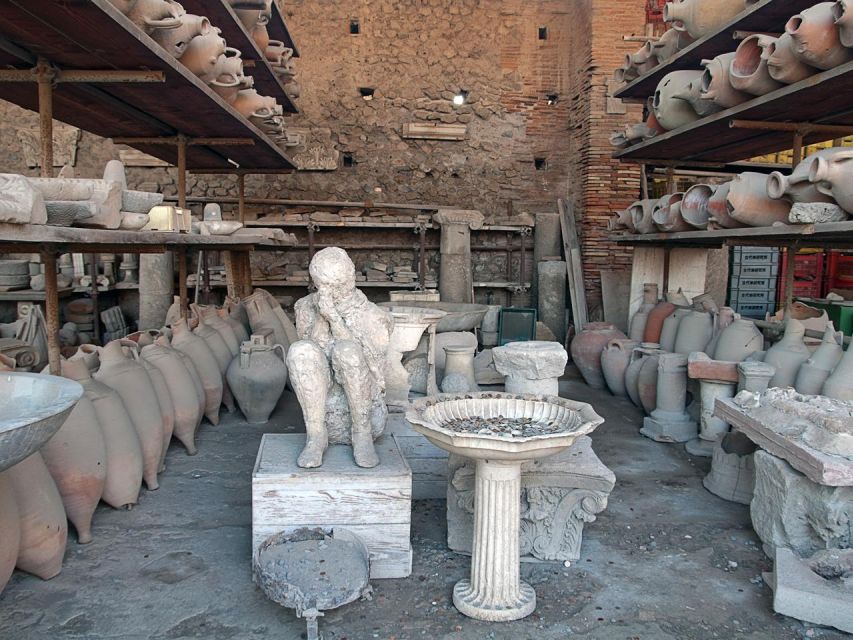
- Self-guided pacing means you can linger at the amphitheater and the victim casts without getting swept along
- Updated map support helps you navigate Pompeii’s layout on foot
- Plan for walking and bring comfortable shoes, since this is not a sit-and-watch kind of visit
Pompeii, But With Time on Your Side
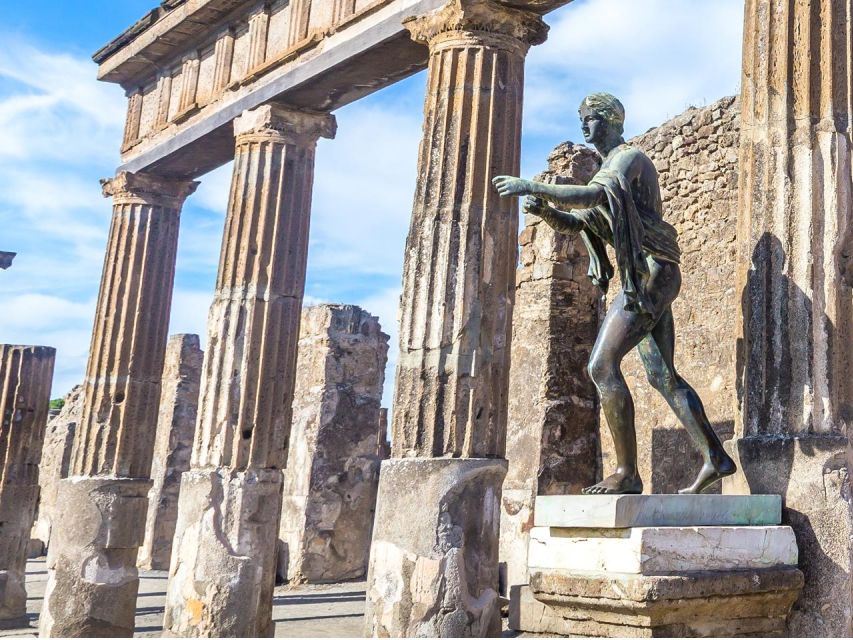
Pompeii can feel overwhelming because you are seeing an entire ancient city, not a single monument. This experience is smart because it gives you control. You enter whenever you want within the 9:00 am to 3 pm range, then you move through the ruins at your own pace.
The other big win is the skip-the-line ticket. Even when the ruins are fascinating, long ticket lines can drain the best part of the day. Here, you trade waiting around for actually being inside Pompeii, with your time anchored to your interests.
You still get context, too, not just sightseeing. The audio guide is built around the history of the city and the eruption of Mount Vesuvius, which matters because Pompeii is not just “old rocks.” It is a city frozen mid-life, and the guide helps you understand why each street scene, shop doorway, or public space looks the way it does.
More Pompeii tours and tickets in Pompei Campania:
- Pompeii: Entry Ticket and Guided Tour with an Archaeologist
★ 4.8 · 19,459 reviews - Pompeii: Small Group Tour with an Archaeologist
★ 4.8 · 12,264 reviews - Pompeii: Skip-the-Line Entrance Ticket with Audio Guide
★ 4.0 · 2,509 reviews
Meeting Up at Around Vesuvio, Next to Pasticceria De Vivo
This isn’t a “show up alone at the gate” situation. You meet the team outside the office next to Pasticceria De Vivo. The team is usually wearing blue and yellow jackets, so it is easy to spot.
Why this matters: when you have a self-guided format, the handoff is everything. If you arrive early and get your bearings, you lose less time later, especially in a large site like Pompeii.
The provider is Around Vesuvio, and the listed instructor languages are English, Italian, Spanish, and French. Even though most of your time is independent, having that in-person start makes the day smoother.
Entry Window: How to Choose Your Start Time
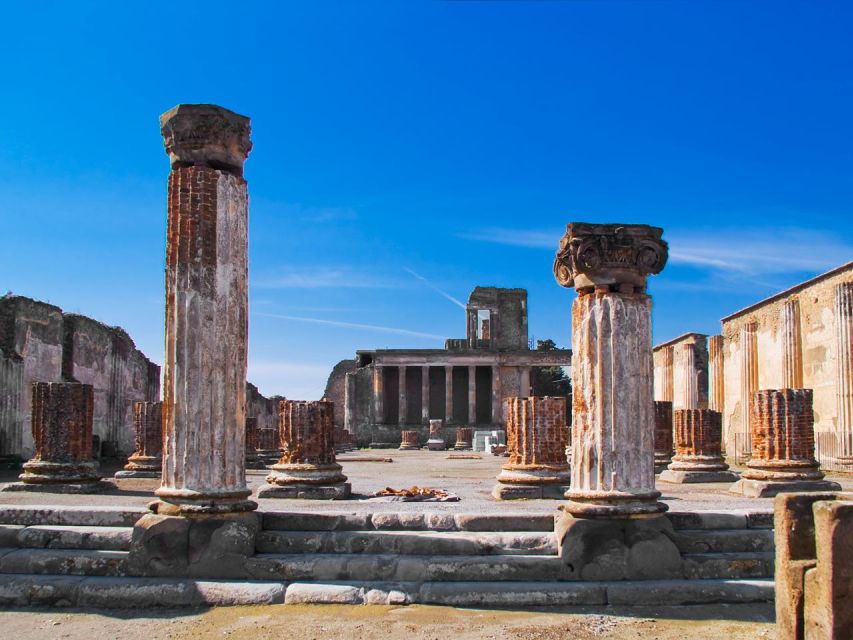
You can enter Pompeii any time between 9:00 am and 3 pm. That flexibility is useful, because Pompeii crowds shift a lot during the day. If you want easier pacing and more room to stop and read, going earlier is usually the best move.
I also like that the ticket is valid for one day. So you are not forced into a strict schedule where you have to rush from point to point.
The practical tip: pick a start time that matches how you like to travel. If you enjoy slow exploration, choose an early slot. If you are pairing Pompeii with another stop, choose a later start, but expect the site to feel busier.
Using the Updated Map Like a Smart Local
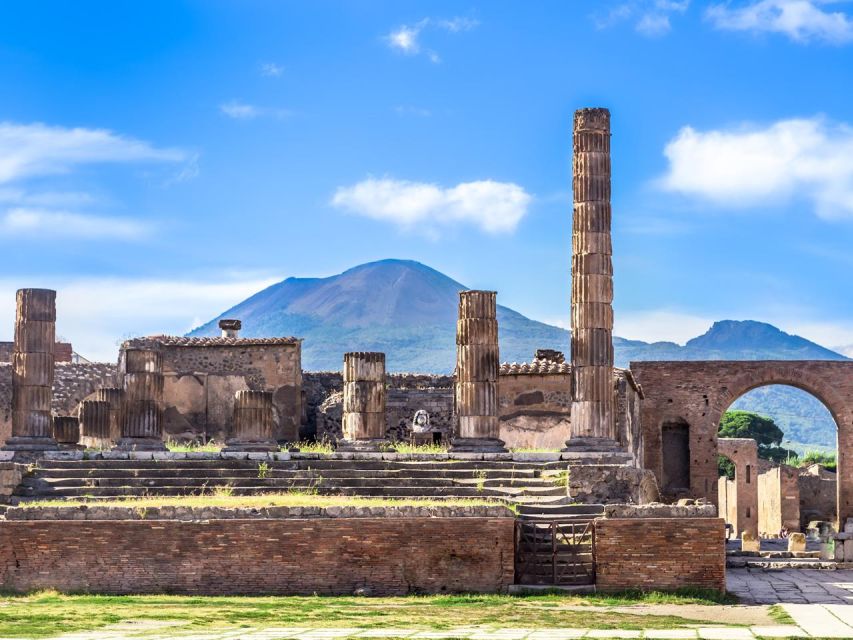
Pompeii is laid out like a real city, with neighborhoods and streets that connect the main sights. The included updated map is there to help you keep momentum without getting lost.
Here is how I’d use it:
- First, glance at the map before you start, so you know roughly where the amphitheater area is and where the victim casts are located.
- Then decide your “anchor stops.” For this experience, the big anchors are the amphitheater and the casts.
- Finally, fill in the gaps between anchors with whatever matches your mood, like frescoed houses, spas, temples, shops, and theaters.
This is the difference between seeing Pompeii and experiencing Pompeii. When you have a map, you can navigate with intention instead of zigzagging across the ruins and accidentally spending your limited time in the wrong direction.
More self-guided routes around Pompei Campania:
- Pompeii: Skip-the-Line Entry Ticket with Digital Guide App
★ 4.1 · 770 reviews - From Naples: Vesuvius & Pompeii with Transfer & Audio Guide
★ 4.0 · 58 reviews - Pompei: Audio guide of the archeological site
★ 3.4 · 13 reviews - Pompeii Audioguide – TravelMate app for your smartphone
★ 3.9 · 10 reviews
Your Self-Guided Route Through Pompeii’s Main Sights

This experience is designed for open exploration, so there is no single rigid checklist you must complete. That said, the highlights point you toward the places that help you understand Pompeii as a whole.
Frescoed Houses, Shops, Temples, and Everyday Streets
You are walking millenary streets, and the best way to appreciate them is to slow down just enough to notice details. The included audio guide helps you interpret what you see in the big categories: frescoed houses, temples, shops, and the daily-life zones that give Pompeii its personality.
Frescoed houses are where you learn how homes looked and how decoration worked in everyday life. Shops show street commerce in action, and temples connect the city to its religious layout.
One thing I appreciate here is that the tour’s highlights include multiple types of spaces, not just “pretty ruins.” A city is made of both public and private areas, and this gives you that balance.
Thermopolis: The Ancient Coffee Stop That Isn’t a Cafe
One standout item in the tour highlights is the thermopolis, described as a coffee-fast food of the time. I like this because it reframes what you are looking at. Instead of thinking only about grand buildings, you also notice the small-everyday stop where people likely grabbed something quickly while moving through town.
When you see a thermopolis, your mental model should shift from monuments to routine. It is the kind of place that helps you imagine Pompeii’s daily rhythm, which is exactly what makes the city so memorable.
Spas and Public Life Spaces
The highlights call out spas, and that is a big deal for how you understand Pompeii. Bathing spaces tell you about social life, daily habits, and how people used public infrastructure.
If you are the kind of traveler who likes to connect physical layout to behavior, you will enjoy this part. The audio guide ties these locations back to the city’s story, so the ruins feel less like random rooms and more like places where life happened.
The Amphitheater: Roman Drama in a Preserved Setting
The experience specifically highlights one of the best-preserved Roman amphitheaters. This is your “wow” structure stop.
I suggest you approach the amphitheater in two phases:
- First, stand where you can take in the overall shape and size.
- Then look for viewpoints where you can imagine how seating and sightlines worked.
Why it matters: an amphitheater is built for crowds and events. When you slow down here, you stop treating Pompeii like a museum and start treating it like a lived-in city.
The Victim Casts: The Hard Part, Done Right
The tour includes the casts of the victims of the eruption. This is the emotional center of Pompeii for many people, and it is also the most important part for understanding what the eruption meant.
If you feel the impact, that is normal. I recommend you let yourself pause. Don’t try to sprint past it to “get it over with.” The audio guide’s focus on the eruption of Mount Vesuvius is what helps this stop land as context, not just a shock moment.
Theaters and Brothels: Another Layer of Daily Reality
The highlights also include theaters and brothels. Together, these locations help round out Pompeii beyond the expected temples and homes.
The theaters connect entertainment and gathering, while brothels represent how people used city services and space for practical needs. This is one reason Pompeii sticks with you. It is not only grand architecture. It also shows human habits, reflected in the urban layout.
Audio Guide Reality: Great for Context, Expect Basic Quality

The audio guide is included, and it is available in a long list of languages, including English, Italian, French, German, Hebrew, Russian, Chinese, Portuguese, and Spanish.
That language coverage is genuinely useful because Pompeii is a complex place. If you can listen in your preferred language, you get the story without doing your own research in the moment.
One practical note, based on a reported experience: internet connectivity in Pompeii can be unpredictable. If you are planning to rely on downloading audio onto your phone, don’t count on it working smoothly. For this experience, stick with the provided audio device plan.
Also, one listener described the audio as just okay. That does not mean it is bad, but it is a good reminder: if you want an audio experience that feels like a top-tier production, you might find it more functional than fancy.
What You Should Bring (and What Gets Left Out)
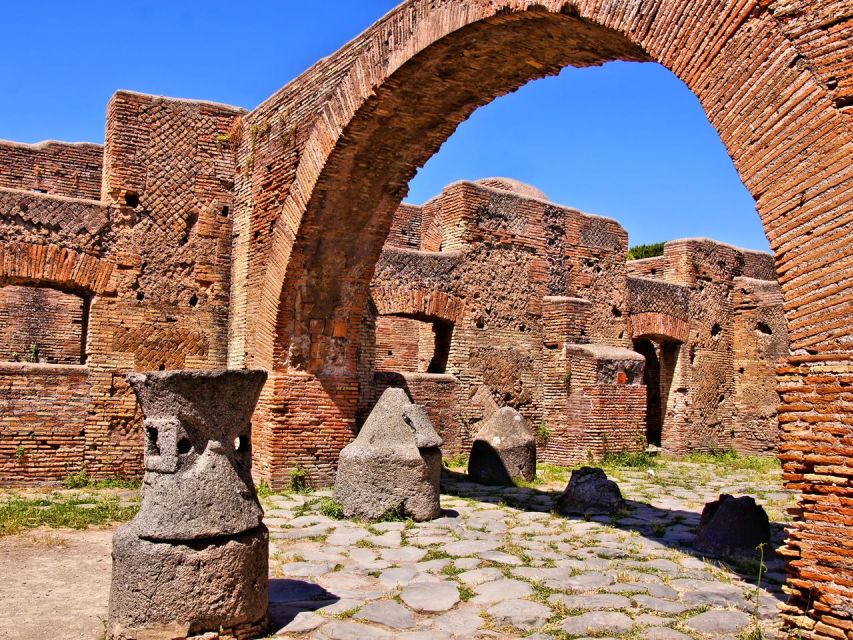
This is a walking day. Bring comfortable shoes and comfortable clothes.
Also, plan your bag situation. Oversize luggage is not allowed, and luggage or large bags are not allowed either. That is a common issue at major heritage sites, and it becomes one more reason to travel light.
And do not forget the most specific instruction: you need a valid ID document to rent the audio guide. If you arrive without it, you can lose time and miss the audio component that makes this ticket valuable.
How Much Is $44 Really Paying For?

The price is listed as about $44 per person, for a day. The included items are a Pompeii skip-the-line ticket and the audio guide.
The skip-the-line portion matters because Pompeii is popular. You are paying not just for entry, but for time. If you hate waiting, that alone can justify the cost. And since your exploration is self-guided, the extra ticket value is basically converted into your freedom to choose your own pace.
The audio guide is the second part of the value equation. Without audio, Pompeii can feel like a set of beautiful ruins. With audio, you have a structured story connecting houses, public life spaces, and the eruption context tied to Mount Vesuvius.
So for me, the value is strongest if you want to:
- walk at your own pace
- understand what you are seeing while you see it
- avoid lines and start sooner
If you are the kind of traveler who only needs a quick photo stop and already has a full guidebook plan downloaded offline, the audio might feel less essential. But for most people, the combination of skip-the-line plus audio is a tidy, high-impact package.
Who This Pompeii Experience Fits Best
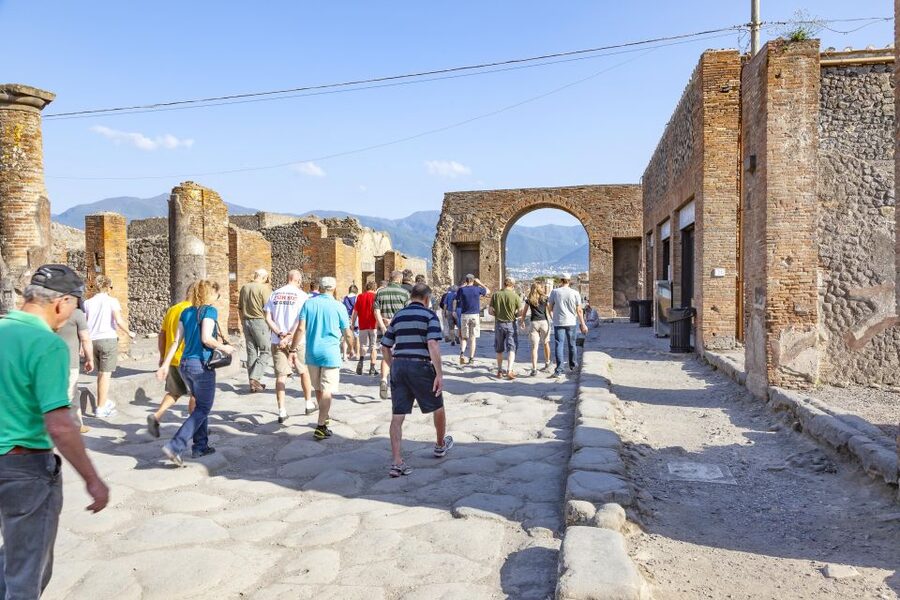
This is best for travelers who want independent exploration with support.
You will likely enjoy it if you:
- like self-guided days where you can linger
- want a clear historical explanation without relying on your phone
- enjoy major anchors like amphitheaters and the victim casts, plus the quieter daily-life areas
It is not suitable for people with mobility impairments, people with heart problems, and people with altitude sickness. Pompeii involves lots of walking and uneven ground, and the ticket format is designed for active visitors.
If you are traveling with kids, keep in mind this is still a walking-heavy ruins day. It may work if your kids are comfortable with long exploration, but it is not “playground Pompeii.”
Practical Tips That Improve Your Day
These are small moves that add up in Pompeii:
- Start earlier if you can, so you have more room to pause at frescoed areas and exhibits.
- Use the map to set anchor points first, then branch outward.
- Put the most emotional stops like the victim casts into your day when you can handle them calmly.
- Keep an eye on your ID. The audio guide rental is tied to it.
- Travel light. If you end up with a large bag situation, it can slow you down.
And one more tip: Pompeii rewards patience. If you rush, you miss the relationships between spaces. The point here is to let the city speak, one street at a time.
Should You Book This Skip-the-Line Pompeii Audio Tour?
Book it if you want the smartest mix of saved time and easy context. Skip-the-line entry plus an included audio guide is exactly the kind of setup that turns Pompeii from a checklist into a story you can follow at your own pace.
You might skip it if you already have a detailed plan that covers exactly what you want to see and you are comfortable spending time in lines, or if you cannot manage the walking demands of a large ancient site.
If your goal is to explore independently, understand what you are seeing, and get maximum value out of a single day, this is a solid choice.
Recently reviewed around Pompei Campania
- Pompeii Audioguide – TravelMate app for your smartphone★ 3.9 · 10 reviews
- Pompeii: Entrance Ticket – Skip the Line★ 3.8 · 64 reviews
- Pompeii: AR Glasses Augmented Reality Tour★ 5.0 · 3 reviews
- Pompeii: Entry Ticket & Guided Tour with an Expert Historian★ 5.0 · 4 reviews
- Pompeii Small Group Tour – Tickets Included★ 4.7 · 72 reviews
- Pompeii and Oplontis: Small Group Tour with an Archaeologist★ 4.5 · 3 reviews
- Pompeii and House of Vettii Guided Tour★ 3.7 · 3 reviews
- Pompeii 2H Private Guided Tour with Optional Tickets★ 5.0 · 3 reviews
Pompeii Tours, compared.

Entry Ticket and Guided Tour with an Archaeologist
Read our review →


Pompeii Small Group Tour with an Archaeologist
Read our review →
Naples or Sorrento: Full-Day Pompeii and Mount Vesuvius Tour
Read our review →
Pompeii & Mt.Vesuvius Day Tour from Naples with Pizza Lunch
Read our review →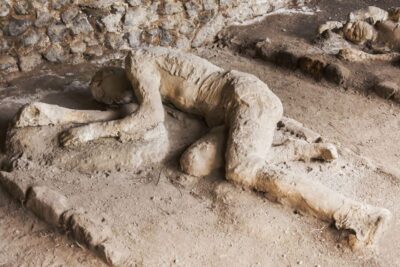
Browse the lists this tour appears in