Reviewed · POMPEII TOURS
Pompeii Ruins: Virtual Tour 360° with Authorized Storyteller
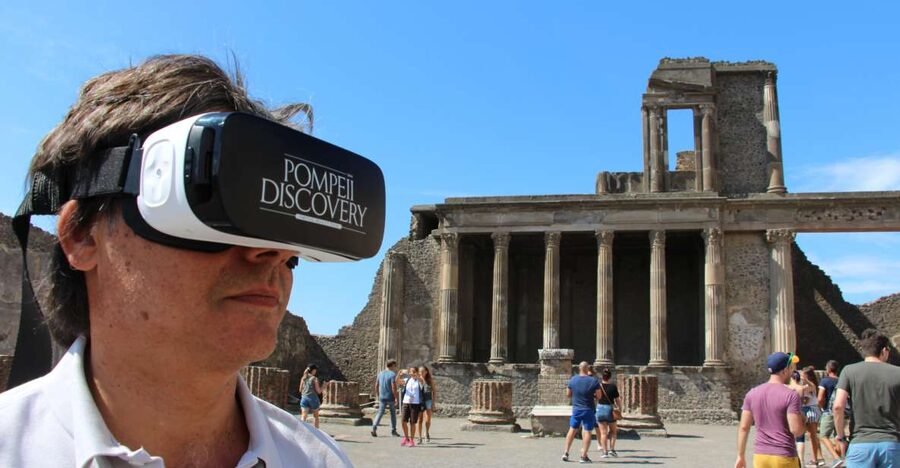
What makes this experience especially interesting is the mix of a live, local authorized guide and a 360° VR headset that helps you picture Pompeii in motion, focused on how people lived there before Vesuvius in 79 A.D. I love that the guide keeps everything grounded and story-driven, not just a screen show. I also love that the VR is built into the walking plan, so you move through the ruins and learn what you are seeing in real time. One possible drawback: the experience is not suitable for people with epilepsy, and you should plan for a fair amount of standing and walking, with comfortable shoes.
I like that this is not a generic VR add-on. It is an educational format that has been recognized for informative value, including a mention by the European Parliament, plus a case study connected to the University of Amsterdam. In one of the published experience notes, the guide Maria Novella was specifically called out for professional, clear storytelling, and that matters here because VR works best when the narration is strong.
You will also want to be clear on tickets. The tour can help you skip the ticket line, but the Pompeii entrance ticket itself is not included, so you will still need to handle admission separately before you go.
Key things to know before you go
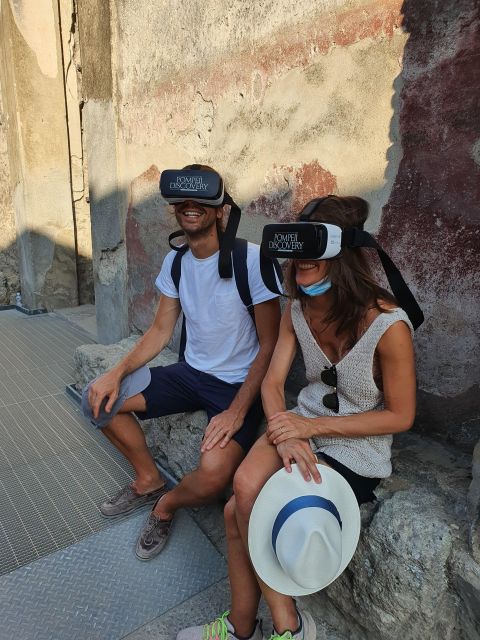
- 360° VR headset for each participant to see nine major Pompeii stops in 3D
- Local, authorized Storyteller in English or Italian tying the visuals to real context
- Nine-famous-places route including the Forum, Basilica, Baths, Houses, Theatre, Quadriporticus, and Lupanar
- Hands-on feeling of daily life with shops activity and a theatrical performance woven in
- Not suitable for children under 8 years or anyone with epilepsy
- Private group experience that keeps the pacing flexible and personal
How VR Changes What You See in Pompeii
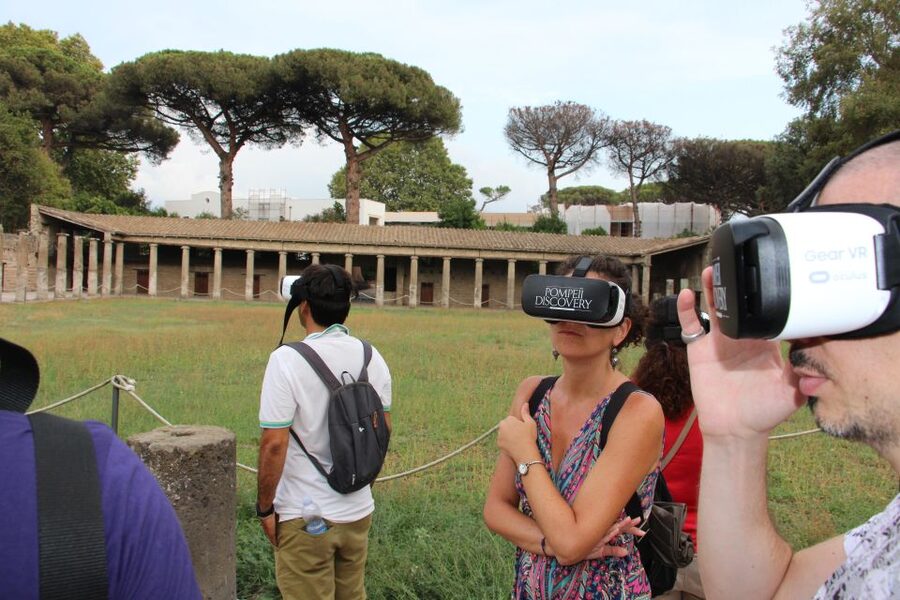
Pompeii is a rare place where you can stand in the middle of the past. But it is also easy to feel like you are staring at stone without enough context, especially when you are trying to cover a lot quickly.
This virtual tour format solves that problem by pairing a live guide with a VR headset. The key idea is simple: you walk through the ruins, then you use 3D visuals to help you understand what these areas looked like when they were functioning parts of the city. That is where the experience feels different from a standard guided walk. Instead of only explaining, the guide can point you toward something and the VR helps you imagine scale, layout, and daily activity.
And because it is 360°, you are not limited to a flat video. You can look around during the guided storytelling moments, which helps with orientation. You start to recognize the city’s logic: public spaces first, then work and training areas, then home life, and finally the darker nightlife side of Pompeii.
More Pompeii tours and tickets in Pompei Campania:
- Pompeii: Entry Ticket and Guided Tour with an Archaeologist
★ 4.8 · 19,459 reviews - Pompeii: Small Group Tour with an Archaeologist
★ 4.8 · 12,264 reviews - Pompeii: Skip-the-Line Entrance Ticket with Audio Guide
★ 4.0 · 2,509 reviews
Your Storyteller, Your Pacing, and the Language Choice
You get a live tour guide (they call the guide a Storyteller) in either English or Italian. That language choice matters more than you might think. Pompeii has lots of moving parts, and a good guide can keep the story clear even when the ruins are fragmented.
This is also set up as a private group experience. Price is listed per group up to 2, which usually means the guide can slow down when you have questions, or shift the pacing if you need a quick break. For a site as spread out as Pompeii, that is a practical advantage, not a luxury detail.
In the experience notes, Maria Novella stands out as a guide whose explanations were described as professional and effective at turning the VR scenes into a coherent narrative. Even if you are not paired with her, the lesson is the same: VR works best when the storytelling is tight and the guide knows how to connect what you see on the ground to what you are seeing in the headset.
The Plan in Plain Words: Nine Stops, One City Story
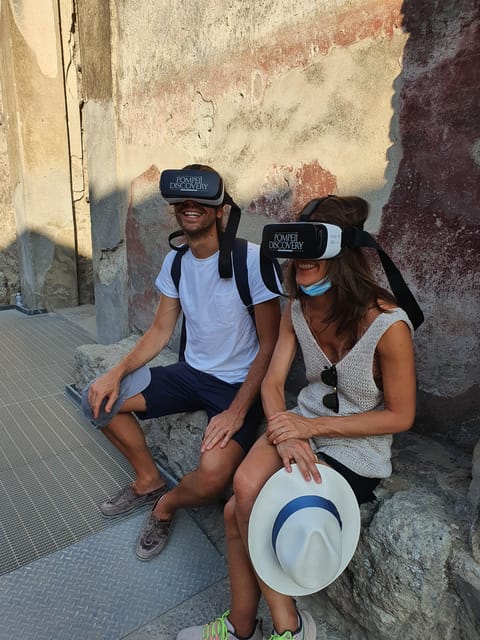
This tour is guided, and the VR portion is tied to specific Pompeii locations. The nine “famous places” named for the VR experience are:
- The Forum
- The Basilica
- The Baths
- The House of the Faun or the House of Menander
- The Bakery
- The Large Theatre
- The Quadriporticus
- The Lupanar
As you move through these, the VR is used to show how city life worked before the eruption. You also get moments that feel like reenactment, including activities tied to shops and a theatrical performance. The Quadriporticus section includes gladiator training, and the Lupanar section focuses on nightlife inside and around the brothel.
Here is why this matters for your visit: Pompeii can feel like a museum of fragments unless someone organizes it for you. This format organizes it as a day in the city, with different zones for politics, worship and courts, bathing routines, domestic life, food and work, entertainment, training, and nightlife.
Below I’ll break down what you should expect at each major stop, plus what to watch for and what to consider.
Forum and Basilica: Where Public Life Pulled Everything Together
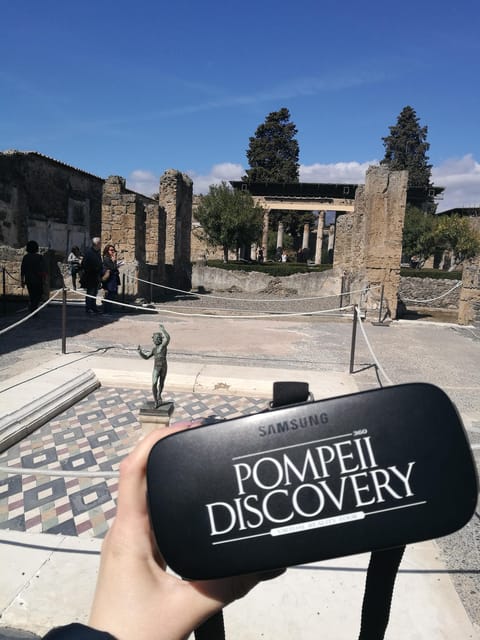
The Forum is the heart of Pompeii’s public world. When you are standing in the ruins, it is easy to miss how central it was. This tour uses VR to help you picture the Forum as a place where people gathered, interacted, and handled the city’s daily public business.
Next comes the Basilica, an imposing structure in the same civic zone. Even in ruin form, it reads as important. With VR in the mix, you should get a clearer sense of how the Basilica functioned as a major public building and where people would have gone for business and communal activity.
Practical tip: during the Forum and Basilica moments, keep your eyes on the guide’s cues. The VR will make more sense when you already have a mental map of which stones and spaces the guide is directing you toward.
One possible drawback here is also a reality of VR tours: if you are very sensitive to VR headsets, or you are prone to motion discomfort, you might want to take a breath between scenes. The overall walking pace is still a real-ruins experience, so you should treat it like a regular Pompeii visit with extra steps.
A different sort of day around the Bay of Naples:
- Naples: Pompeii and Mt. Vesuvius with Lunch and Wine Tasting
★ 4.5 · 2,454 reviews - Pompeii: Skip-the-line-Ticket and Guided Tour
★ 4.6 · 1,152 reviews - Pompeii: Small-Group Tour of Pompeii and Herculaneum
★ 4.8 · 867 reviews - Pompeii: Guided Tour with Skip-the-Line Entry
★ 4.9 · 812 reviews
Baths and the Houses: Understanding Daily Routines in 3D
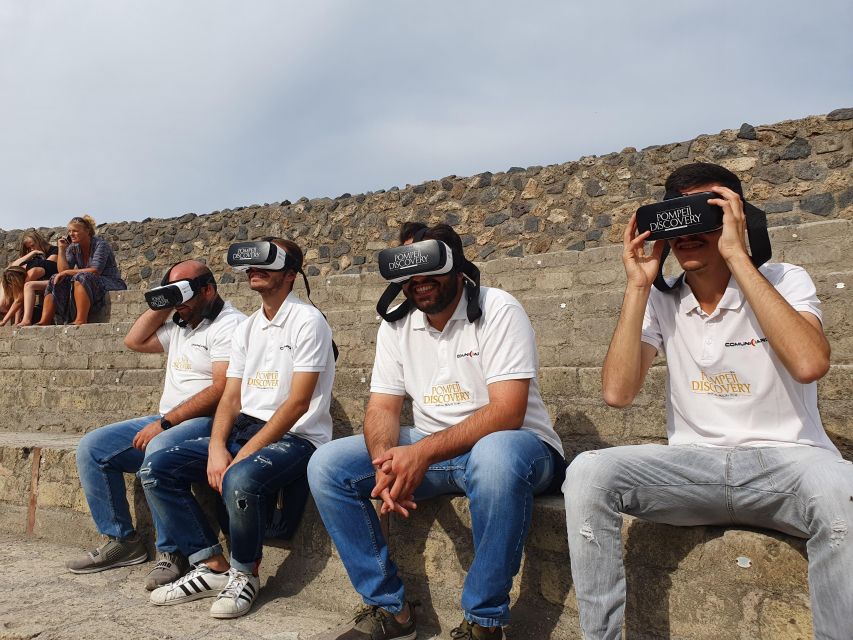
Pompeii’s homes and public bathing areas are some of the most human parts of the site. This is where VR can add real clarity.
The tour includes the Baths, and you also get to see one of two named houses in VR terms, either the House of the Faun or the House of Menander. These choices help cover different “types” of elite domestic spaces, so you can see how household life was laid out, not just what the buildings look like from the outside.
Why this is valuable: in ruins, homes can look like scattered rooms. VR helps you understand circulation, scale, and how people moved through spaces. It is not just decoration. It is how a city functioned for real families, with routines, privacy levels, and social expectations built into daily geography.
What to watch for while you are there:
- Pay attention to how the guide frames the bathing experience as part of routine and social life.
- When the VR scene turns to the house, listen for how the guide explains why specific rooms mattered.
In the best guides’ hands, this section turns Pompeii from “place names” into “ways of living.”
Bakery and Theatre: Work and Entertainment, Side by Side
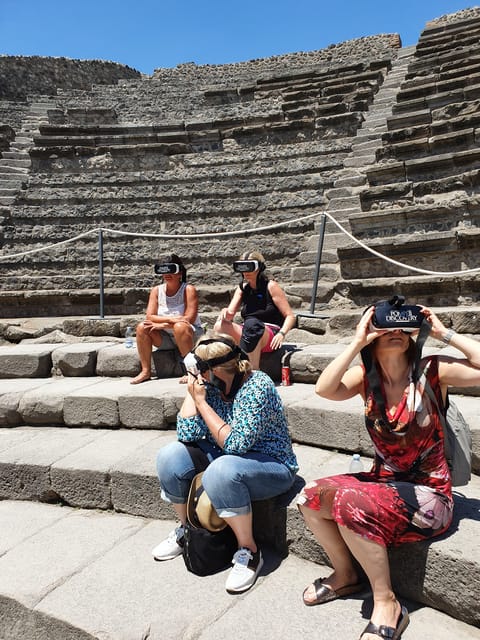
You also cover the Bakery and the Large Theatre, two stops that highlight different pressures in city life.
The Bakery connects Pompeii to food production. The tour includes VR moments tied to the idea of shop activity, so this is where you should expect more of that day-to-day feel. A bakery is one of the clearest examples of how city life depended on systems and labor, not just architecture.
Then the Large Theatre brings in entertainment and public spectacle. Even if you know the basics of Roman theatres, Pompeii’s theatre structures can feel slightly confusing until someone helps you connect the building to what people came to experience.
Practical note: if you are someone who gets tired standing still, this portion can be a good reset because it shifts the story from household life to public gathering. Keep your energy for the next major stop, because the VR plan turns more active again at the training area.
Quadriporticus and Gladiator Training: When Action Enters the Story
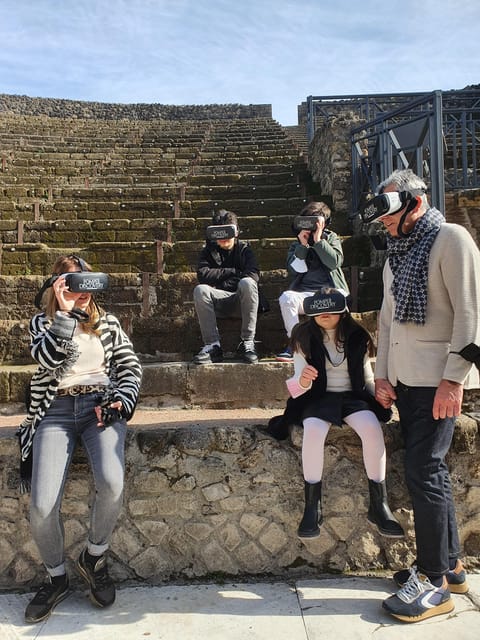
The Quadriporticus is a key location for understanding how certain public events and training spaces worked. In this experience, VR includes gladiators’ training here.
This is one of the most compelling parts of the tour because it uses movement and performance as your “lens.” When people are shown training in the VR view, you can better understand the space as a functional arena of preparation, not just a static building.
The value for you: it is easier to remember a site when it has an action attached to it. The Quadriporticus moment helps you mentally attach purpose to the layout.
If you are traveling with teens or anyone who likes sports and performance, this is often where their eyes fully light up. Just remember, it is still a VR layer on top of a real walking tour, so wear shoes you can stand in comfortably for the full duration.
Lupanar Nightlife: A Candid Look at Pompeii After Dark
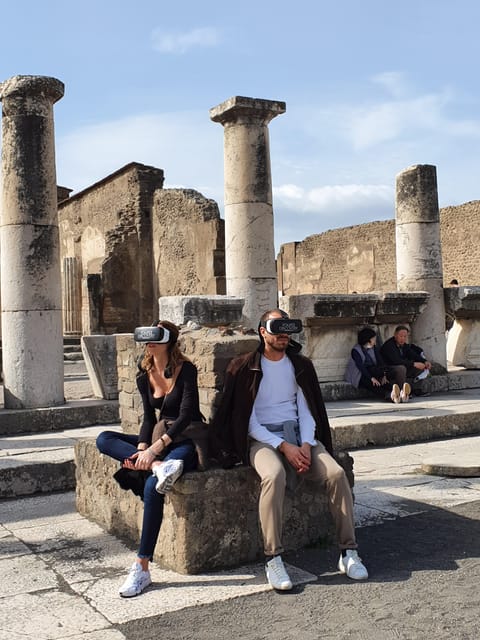
The tour includes the Lupanar, a brothel site, with VR moments focused on nightlife around and inside it. This section does not shy away from the realities of city life.
This is where context is crucial. The Lupanar is not just a “curiosity” stop. It is part of the broader social economy of Pompeii, connected to work, entertainment, and how people spent their time.
If you prefer sanitized tour content, be aware this experience includes this area by design. You should be ready for an adult topic, and the guide framing will shape how comfortable you feel. Also, because VR is involved, you will experience it as a more scene-like moment than a typical exterior-only ruins stop.
Tickets, Duration, and That Price Tag: Does It Add Up?
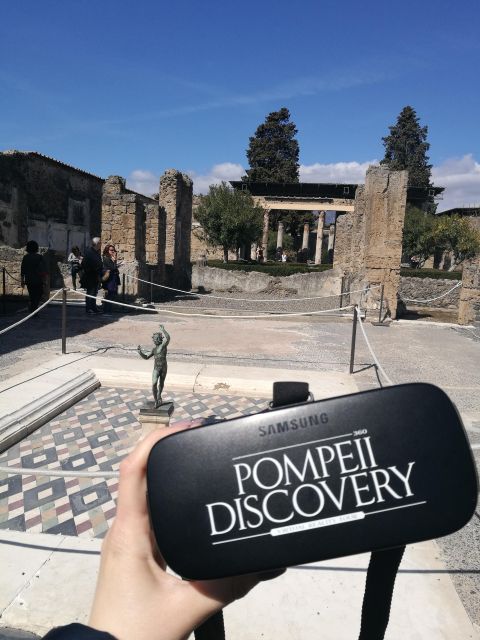
The listed price is $226.57 per group up to 2, valid for 1 day with starting times depending on availability. You also skip the ticket line, but the entrance ticket to the ruins is not included.
Here is how I think about value for this kind of experience.
You are paying for three things:
- A live, local guide in your language
- VR headsets provided for each participant
- A structured path through multiple major Pompeii sites with VR scenes tied to specific locations
If you try to do Pompeii alone, you can certainly walk the Forum and other spots. But you might not get the same organized narrative that connects all the named stops into one day-in-Pompeii storyline. Without VR, you also lose the 3D “how it worked” layer that helps you see scale and activity.
So the “extra cost” makes sense if:
- You want a guided story, not just ruins sightseeing
- You like context and visuals, not only explanations
- You are visiting with someone who benefits from a strong, structured plan
It may feel pricey if:
- You already have a top-tier guide and do not need VR
- You want a long self-paced wander with time to linger outdoors in quiet
- You are only interested in one or two sites and not the full set of nine
Also remember the per-group pricing for up to 2 means the math is easier if you travel as a pair. If you are traveling solo, you might still be able to book, but the pricing structure suggests it is designed for small groups.
What to Bring and How to Stay Comfortable
You do not need special tech gear. The tour provides the VR headsets for each participant. You do need to show up ready for the physical side of Pompeii.
Bring:
- Comfortable shoes
- Passport or ID card for children
Other practical advice based on how these tours typically work and what your body will feel:
- Plan for short pauses so your neck and feet can recover after VR scenes.
- If you wear glasses, test how the VR headset feels, because headsets can press differently across people’s faces.
- If you are prone to VR discomfort, consider taking breaks and telling the guide right away so they can pace you.
And one more thing: the experience is not suitable for children under 8 years. If you are traveling as a family, this is a big factor in whether it fits your group.
Who This Pompeii VR Tour Fits Best
This is a great match if you:
- Want a guided Pompeii visit but still want an extra layer of visuals
- Like the idea of seeing nine major sites connected into one storyline
- Enjoy learning through story, performance, and structured stops
- Are traveling with a small group and want a private feel
It might be less ideal if you:
- Have epilepsy, since the experience is not suitable
- Prefer only classical ruins viewing without any VR overlay
- Are looking for a very long, open-ended wander. This is structured by design, with specific VR scenes.
Should You Book This Pompeii Ruins Virtual Tour?
If you want Pompeii to feel like a lived-in city instead of a pile of stone, this tour is a strong option. The live Storyteller plus VR at the Forum, Basilica, Baths, one of the houses, the Bakery, the Large Theatre, the Quadriporticus, and the Lupanar is a clear educational package, not a gimmick. And the fact that it has been recognized for informative value, plus the standout mention of a guide named Maria Novella for professional storytelling, is a good sign that the human guidance is doing real work.
Book it if you are traveling with someone who learns well through visuals and narrative. Skip it if you cannot do VR safely, if you do not want a structured plan, or if you are already planning a very detailed custom tour that matches your interests.
FAQ
What is included in the Pompeii Ruins Virtual Tour?
The tour includes a local, authorized guide in your language, virtual reality headsets for each participant, and the guided tour experience through the ruins. The entrance ticket to the ruins is not included.
Do I need to buy tickets for Pompeii?
Yes. The Pompeii ruins entrance ticket is not included. The activity notes that you can skip the ticket line, but you should still expect to handle admission.
How long is the tour?
The experience is valid for 1 day. Starting times depend on availability.
What languages are available?
The tour is offered in English and Italian.
Is this tour suitable for children?
It is not suitable for children under 8 years.
Is it wheelchair accessible?
Yes, the activity is wheelchair accessible.
Is this experience safe for people with epilepsy?
No. It is not suitable for people with epilepsy.
Recently reviewed around Pompei Campania
- Pompeii and Vesuvius Cellars: Tour with Pick-Up in Positano★ 4.7 · 3 reviews
- From Sorrento: Pompeii with an Archaeological Guide & Ticket★ 4.6 · 19 reviews
- From Positano: Pompeii Ruins Small Group Guided Tour★ 4.8 · 82 reviews
- Pompeii Positano Amalfi Day Trip from Rome by Car, No Bus!★ 5.0 · 5 reviews
- Pompeii & Virtual Museum Private 2-in-1 Kid’s Tour★ 4.9 · 9 reviews
- From Naples: Pompeii Wheelchair-accessible with a Guide★ 5.0 · 8 reviews
- Pompeii VIP 3h Tour: Skip-the-line with your Archaeologist★ 4.9 · 13 reviews
- Pompeii & Vesuvius★ 4.3 · 12 reviews
Pompeii Tours, compared.

Entry Ticket and Guided Tour with an Archaeologist
Read our review →


Pompeii Small Group Tour with an Archaeologist
Read our review →
Naples or Sorrento: Full-Day Pompeii and Mount Vesuvius Tour
Read our review →
Pompeii & Mt.Vesuvius Day Tour from Naples with Pizza Lunch
Read our review →