
Reviewed · POMPEII TOURS
Pompeii: Private Tour with an Archaeologist
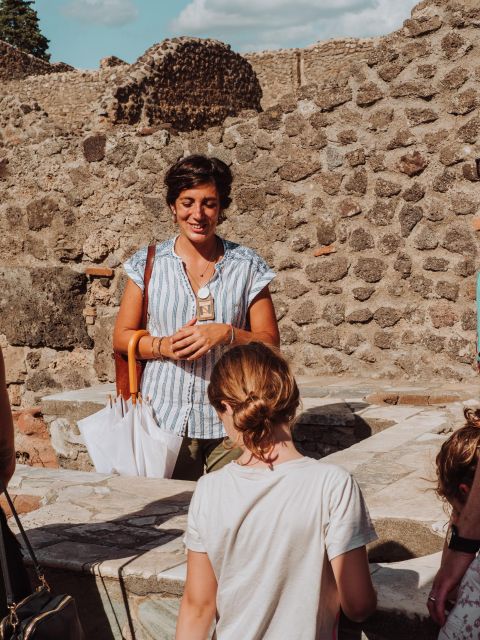
Pompeii is the kind of place that can feel overwhelming on your own, but with an archaeologist guide you get a clear story line as you walk. I love that this route focuses on the western core of the city, and I also love that you cover major public and private spaces instead of just skimming the obvious ruins. The main drawback to plan around is that this is an intense walking tour on uneven ground, so you’ll want truly comfortable shoes and a steady pace.
One real plus is how the best guides bring ordinary life into focus, like how Romans used bath spaces, shopped in street-front shops, and used entertainment venues for community energy. In this tour, you start at Porta Marina Superiore, then work through big civic spaces like the Forum, basilica, and civic forum area, before moving into homes such as the House of Menander and the House of the Vettii. A second consideration is that the tour promises a certified archaeologist-guide, but since one participant reported a mismatch, I’d confirm the credential when you book.
If you’re trying to see a lot in 3 hours without feeling lost, this private format is a smart fit. You get a guided walk through iconic stops like the Lupanare and the theaters, plus the emotional stop connected with the plaster casts of victims. Just don’t treat Pompeii like a quick photo stop, because the value comes from understanding what you’re looking at.
Key highlights worth your attention
- Private archaeologist-guided route focused on Pompeii’s western highlights
- Porta Marina Superiore start location that quickly gets you oriented
- Forum, basilica, and civic spaces tied to how the city actually ran
- Houses, baths, and the Lupanare showing both public routines and private life
- Theaters and amphitheater so you understand entertainment culture, not just architecture
- Skip-the-line admission fees plus earphones if needed for larger groups
Pompeii’s West Walk, With a Real Archaeology Story
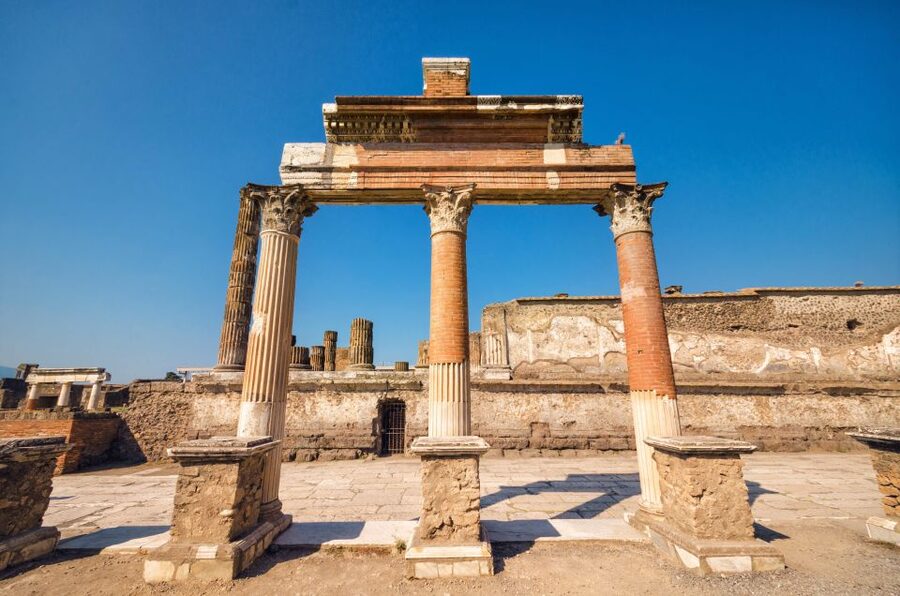
This tour is built for people who want Pompeii to make sense. The ruins are dramatic, yes, but the real magic is when you learn why a street layout matters, why certain buildings were where they were, and how everyday routines looked before Vesuvius changed everything.
You’ll spend 3 hours moving through the western part of the city in a structured sequence. That matters because Pompeii is huge, and wandering without context can turn into a blur of walls and columns. With a guide, you get the “why” behind what you’re seeing, from civic power to household life. And because it’s private, you can ask questions as they come up, which is when Pompeii stops being a textbook and becomes a place with human scale.
Price is $508.15 per group up to 1. For many people, that’s not cheap. But you’re paying for a private archaeologist-led experience, skip-the-line admission, and the chance to cover the most important stops in a short, organized walk. If you can share the cost with at least one travel partner, the value typically improves fast. If you’re solo, it still can be worth it if you care about details and you want to avoid missing key sites.
More Pompeii tours and tickets in Naples:
- From Naples: Pompeii Ruins & Mount Vesuvius Day Tour
★ 4.3 · 11,459 reviews - Naples or Sorrento: Full-Day Pompeii and Mount Vesuvius Tour
★ 4.6 · 4,235 reviews - Pompeii & Mt.Vesuvius Day Tour from Naples with Pizza Lunch
★ 4.0 · 2,901 reviews
Meet at Porta Marina Superiore, Then Get Your Bearings Fast
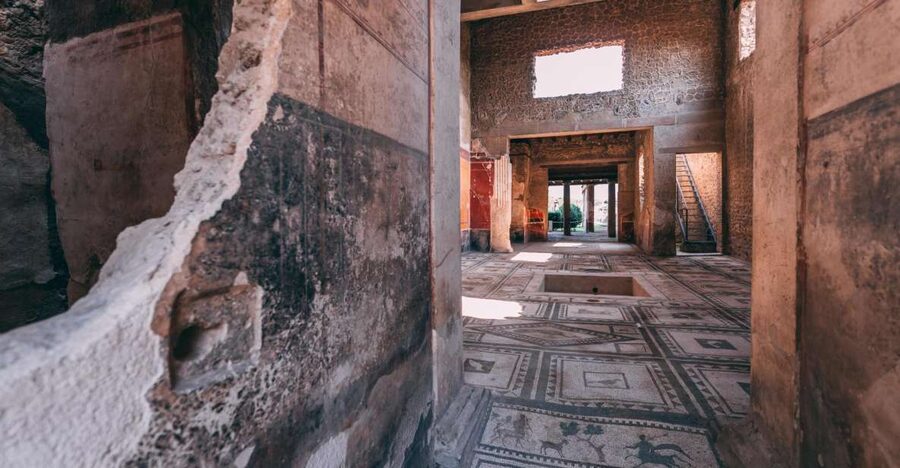
You meet your guide at the main gate called Porta Marina Superiore, in front of the bar-restaurant Hortus. The description notes a helpful visual cue, lemons and oranges hanging outside, which makes the meeting spot easier to find.
Starting here is smart. It puts you right at an entry point into the city’s life, not at a random parking lot with a long walk to catch up. From the start, your guide can frame what you’re about to see, then connect each building to the next one in a way that feels like walking through neighborhoods.
Your tour ends back at the meeting point area, Porta Marina Superiore. That’s convenient because you don’t have to figure out transport or stitch together a second plan right after you finish. You also know the walk is circular in terms of logistics, even if Pompeii itself is anything but small.
One practical note: the tour is described as happening in any weather condition. Pompeii is outdoors most of the time, so you should dress for sun, wind, or rain. The guidance mentions bringing a small umbrella or raincoat, but it also lists umbrellas as not allowed, so a raincoat is the safer choice.
Marina Gate to Temple of Apollo: The City Opens Up
At Porta Marina, you’re at a threshold that helps explain Pompeii’s flow. Gates and entry points aren’t just pretty stone. They shape how people moved, where visitors would arrive, and how daily business connected to the city’s layout.
From there, the route heads toward the Temple of Apollo. Temples in Pompeii help you read what mattered to the community and how religion and civic identity blended into street life. What I like about including a major temple early is that it gives you a reference point. After you’ve seen what sacred space looks like, you start noticing how public buildings relate to each other and to the streets between them.
This part of the tour is also where you feel the benefit of a knowledgeable specialist. You’ll likely get small, clarifying details about stonework and street position, and you’ll get the human stories that keep the place from turning into a list of monuments. If you’re traveling with kids, this is also often where you can spot their attention, because temples look less abstract to younger visitors than, say, specialized building systems.
Forum, Basilica, and the Civic Heart Where Pompeii Worked
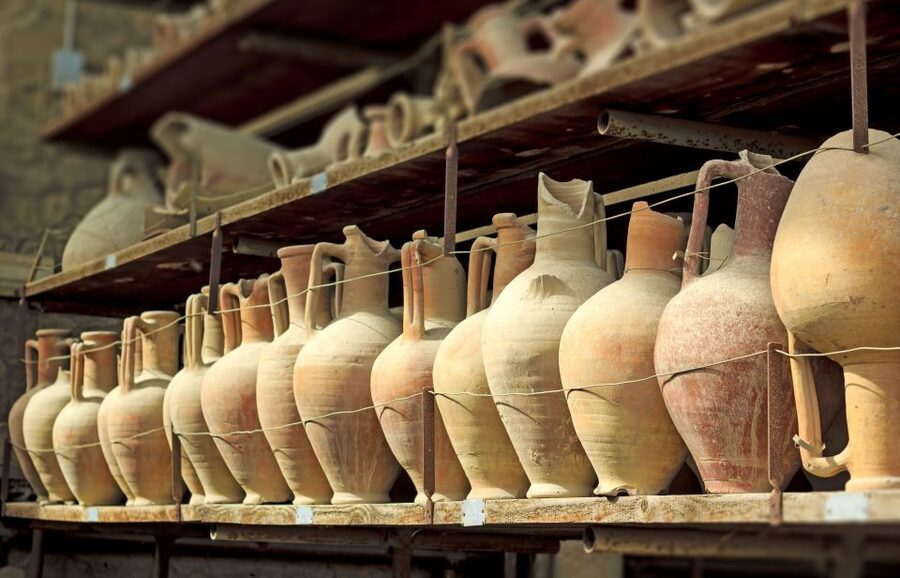
Next comes the heart of civic life: the Foro Civile di Pompei (civic forum area) and the Basilica. These are big stops, but the point isn’t only size. It’s how they structured power and routine.
A forum is where decisions were made and social life happened. The basilica is where legal and commercial life could take place, so you understand the forum as more than a backdrop. You’re learning the engine room of Pompeii.
This is where you start getting the most value from a private guide. In a big group, it’s easy to tune out because everyone has their own photo plan. With a private format, the guide can pace you, then point out how these spaces connect to nearby neighborhoods and how people would have moved through them in daily rhythm.
You’ll likely spend time orienting yourself in relation to the forum structures and their purpose. That matters because Pompeii’s streets and buildings are tightly connected. When you understand the center, everything you see later clicks faster, including the homes and the more private spaces.
More private tours in Naples:
- Exclusive Naples Private Food Tour: 6 or 10 Tastings
★ 5.0 · 596 reviews - Private Day Tour: Sorrento, Positano, Amalfi, Ravello from Naples
★ 4.5 · 546 reviews - Private Day tour of Positano, Amalfi and Ravello from Naples
★ 5.0 · 522 reviews - Private Amalfi Coast Tour – Enjoy it with our local english speaking driver
★ 5.0 · 475 reviews
House of Menander, House of the Faun, and the Vettii Family Story
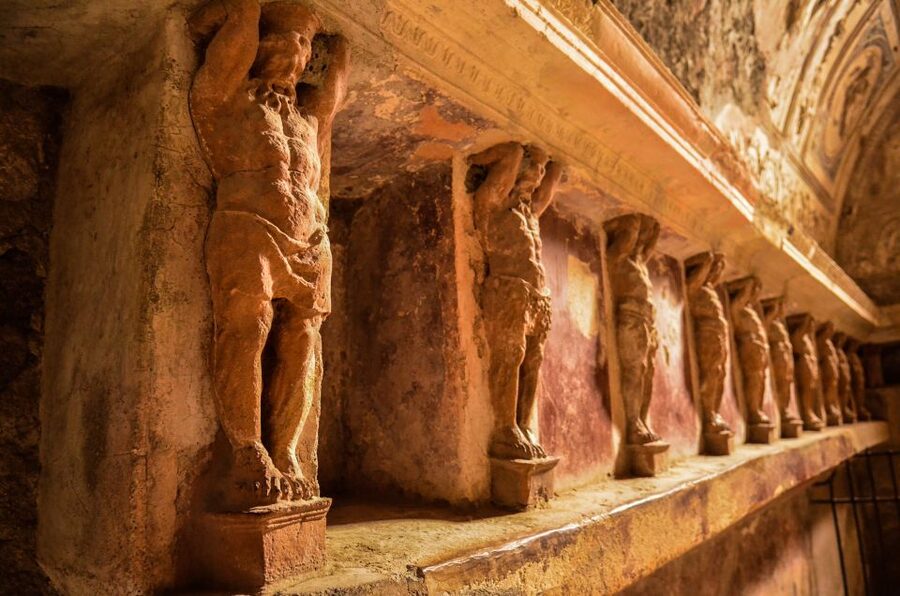
After the civic core, the tour shifts into domestic Pompeii, which is usually the part people remember most. You visit the House of Menander, then later the House of the Faun, and also the House of the Vettii.
Why homes are such a big deal here: Pompeii is one of the rare places where you can see everyday living spaces preserved at street level. That turns the ruins into a kind of social map. You’re not only looking at walls, you’re learning how households organized space and how wealth, status, and privacy played out in real rooms.
Including multiple houses is valuable because they aren’t all identical. You’re able to compare the feel of each property, and your guide can explain what makes each one notable. For example, the House of Menander can help illustrate the style of wealthy domestic life, while the House of the Vettii is often a go-to stop for understanding how rooms, decorative choices, and layout communicate identity.
If you care about people, not just buildings, this is your moment. This is also where those “small human stories” style guides do their best work. In the accounts of guides associated with this tour, strong ones are praised for pointing out details and explaining what those details say about daily life. Names that came up include Nicoletta, Patrizia, Jasmine, Silvia, and Laura, all of whom are praised for making the city feel human and readable.
A possible drawback here is pace. Homes can involve slower, more careful looking because the details matter. If you rush, you can miss why people get excited. Since this is a 3 hour tour, you’ll want to be ready to walk efficiently but also stop when your guide asks you to look closely.
Baths, the Forum Baths Area, and Pompeii’s Social Rhythm
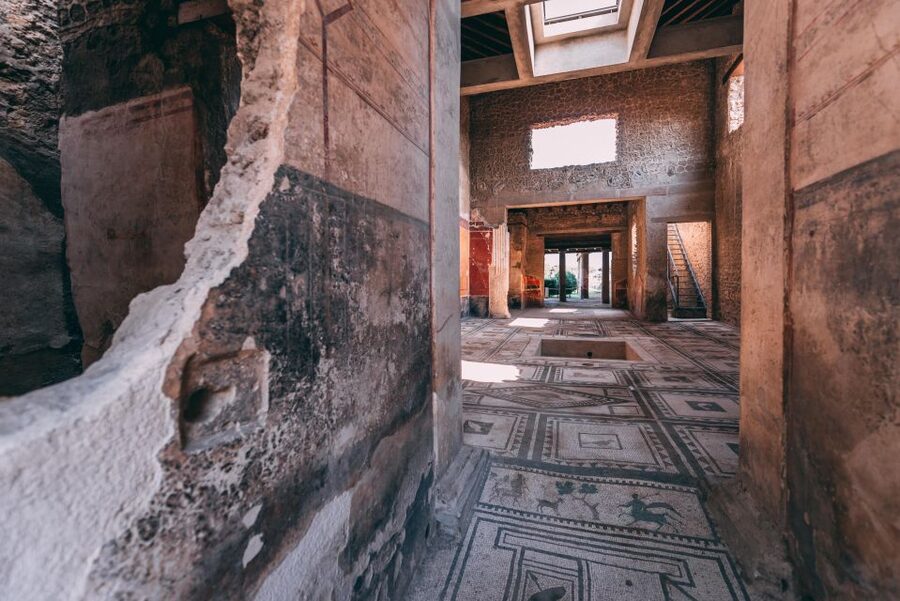
You’ll visit the Forum Baths. Baths weren’t a luxury treat in the way modern travelers think of spas. They were social infrastructure. People gathered, caught up, cleaned up, and spent time.
This stop helps you connect the civic world you saw in the forum to the social routines that played out in public facilities. And it supports a key theme of the tour: Romans did not separate public life and personal life the way we do. They blended them.
Bath spaces also help explain what “public” meant in Pompeii. It wasn’t anonymous. It was community-based, and your guide can help you understand how layout and function created that everyday rhythm.
Lupanare: Learning Without Getting Weird
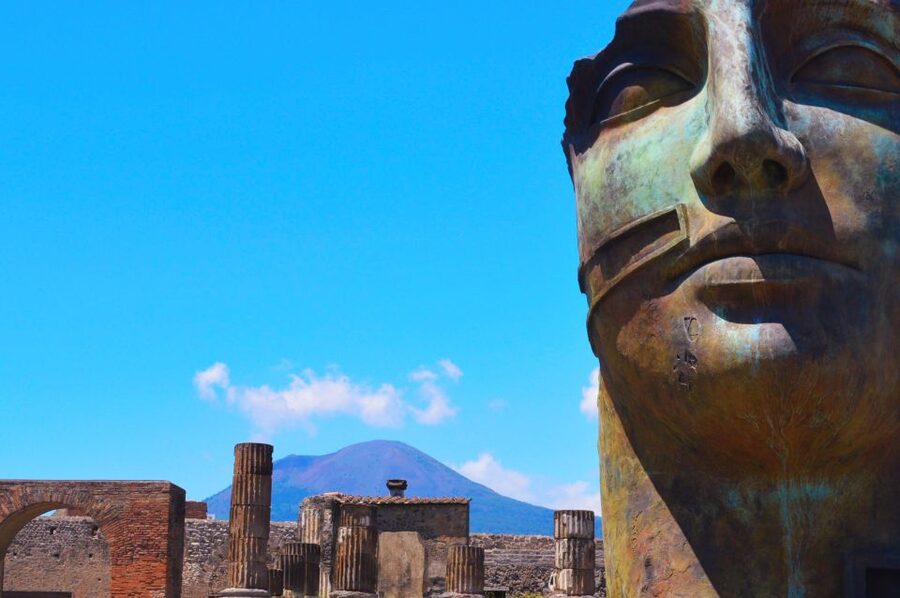
The itinerary includes the Lupanare, which is often described as a brothel in Pompeii. This is a sensitive subject, and the value of a private guide is that you can handle it with context, not shock.
What you can expect is an explanation of what the space likely was and how the layout supported its function. Rather than turning it into sensational gossip, a good archaeologist-guide will frame it as part of how a city worked, including economics, social behavior, and the reality of life in a dense urban setting.
This is also one reason I like that the tour covers multiple categories of sites: forum, basilica, houses, baths, and then places like the Lupanare. You get a broader view of everyday life, including the parts that are uncomfortable, without ignoring them.
Theaters and Amphitheater: Entertainment as Community
Later you’ll visit the Large Theatre and then the Amphitheater of Pompeii. These stops change the emotional tone of the tour. Suddenly you’re thinking about sound, crowds, performance, and public spectacle.
The theaters help you understand how entertainment built shared experience. The amphitheater adds a different kind of event culture, with more dramatic crowds and spectacle. Even if you aren’t a theater nerd, this part of Pompeii becomes easier to picture when you know how these spaces worked.
Guides on this tour are often praised for answering questions and keeping the experience lively. Names that stood out in that way include Annalisa, Diego, Michele, and Antonella. If you like to ask why something is shaped the way it is, this is a great moment to do it, because performance spaces naturally lead to practical questions.
Plaster Casts of Victims: The Emotional Turn
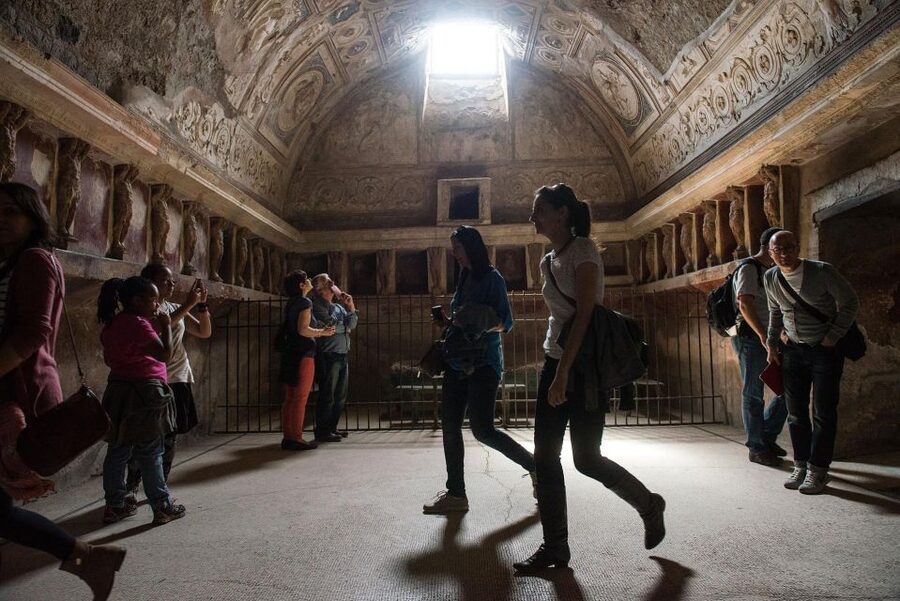
The tour highlights include plaster casts of the victims. This is one of the most moving parts of Pompeii, and it also risks feeling overly heavy if you’re not ready for it.
I recommend going into this stop with a mindset of respect. You’re seeing how the disaster was recorded through preservation and later reconstruction. Your guide should be able to frame what these casts represent and why they matter historically.
This stop also shows the importance of a guide who can balance facts and empathy. In the feedback about guides, several people specifically praised the way their guides reminded them of the humanity of the people who lived and died there. That’s not trivia. It’s the difference between a site that feels like stone art and a site that feels like history with names and lives behind it.
Skip-the-Line Tickets and Earphones: Small Things That Keep You Moving
This tour includes skip-the-line admission fees. That’s a big deal in Pompeii because queues can eat up the best part of your day. When you’re only doing a short 3 hour experience, saving time on entry helps you spend more minutes in the ruins where the tour actually happens.
You’re also provided with disposable earphones for bigger groups. Since it is a private group, you might not always need them, but it’s still a useful feature. Pompeii is loud and open, so clear audio matters, especially when you want details about what you’re seeing at each stop.
The practical takeaway: you’ll get a smoother flow through the site. That makes it easier to keep pace and not lose your place in the guide’s story.
Languages, Private Pacing, and How Guides Work With Crowds
The tour lists a wide set of languages: Japanese, English, Spanish, Italian, German, French, Portuguese, Chinese, and Russian. If language is a concern, this is a strong point, because Pompeii is full of terms and architectural details. You’ll understand more when you’re listening in your own language.
The private format also helps with pacing. Multiple guide accounts associated with this experience highlight flexibility, adapting to interests, and working around shifting crowds. That matters because Pompeii is popular. Even with a private guide, you still share paths and viewpoints with other visitors.
I also like that the tour is explicitly structured around key stops. That gives you a sense of progress, so the walk feels like a planned route, not random wandering.
One note for price value: because it is private and archaeologist-led, you’re not paying just for movement across the site. You’re paying for interpretation. If you want interpretation, the price can feel fair. If you mainly want photos and quick browsing, you might feel the cost less justified.
Who This Tour Fits Best in Real Life
This is a great match if you want:
- An archaeologist-led walkthrough of the most important parts of Pompeii’s western zone
- A clear route that covers forums, basilica, houses, baths, theaters, and the amphitheater in a limited time
- Space for questions, especially if you care about how Romans lived
It can also work well for families with older kids. One account specifically notes that 12 year olds enjoyed it and stayed engaged. The key is that the guide can make the material human and answer questions clearly.
If you’re someone who likes a slow, quiet visit for maximum wandering time, the 3 hour limit may feel tight. This is a focused tour. It prioritizes the highlights plus context, not a long open-ended stroll.
And if you’re relying on wheelchair access, the data is contradictory: the tour lists wheelchair accessible, but it also says not suitable for wheelchair users. I’d treat that as a yellow flag and confirm with the provider before you commit.
Price and Value: What You’re Really Paying For
Let’s make the math human. The tour costs $508.15 per group up to 1 for 3 hours. That can feel steep until you break down what’s included.
You get:
- A guided tour by a certified archaeologist-guide
- Skip-the-line admission fees
- A private route through a dense cluster of major sites
- Earphones if needed
You do not get:
- Transportation
- Food and drinks
- Other personal expenses
For solo travelers, the value depends on how much you want expert interpretation. Pompeii can be “wow” even without context, but the guide is what turns wow into understanding. For couples or small groups, the value often improves because you share the cost while still keeping it private.
Also consider the opportunity cost. If you arrive and lose time in lines or end up focusing on only a few highlights, a private guided plan can actually save money and stress over a longer unguided visit.
Should You Book This Pompeii Private Tour With an Archaeologist?
I’d book it if you want Pompeii to feel organized and readable, not just impressive. The route hits the Forum and civic core, then transitions into key houses, bath spaces, the Lupanare, and ends with major entertainment venues like the Large Theatre and Amphitheater of Pompeii. That mix is exactly what helps you see a whole city, not just monuments.
I would hesitate only if:
- You need very slow walking time, because this is described as intense walking
- You have accessibility needs, because the information conflicts
- You care deeply that your guide is definitely an archaeologist, since one participant reported a mismatch in that expectation, so confirm before you go
If you’re excited by details, ask lots of questions, and want to leave Pompeii with a story you can repeat, this private tour is a strong pick. It’s the best kind of Pompeii experience, the kind where you stop seeing ruins and start recognizing daily life.
Recently reviewed around Naples
- Pompeii & Herculaneum Group Tour with tickets★ 4.9 · 13 reviews
- From Naples: Pompeii & Mount Vesuvius Full-Day Private Tour★ 4.5 · 4 reviews
- Pompeii with Wine Tasting Private Tour★ 4.7 · 6 reviews
- Pompeii, Amalfi, Ravello Day Tour with Private Transfer★ 5.0 · 3 reviews
- Ruins of Pompeii & the Amalfi Coast: Full-Day Private Tour★ 5.0 · 7 reviews
- Pompeii and Herculaneum: Private Tour from Naples★ 4.6 · 12 reviews
- From Naples: Pompeii Private Tour with Transfer and Guide★ 4.7 · 23 reviews
- Pompei: Private tour of Pompei and Vesuvius from Sorrento★ 5.0 · 8 reviews
Pompeii Tours, compared.
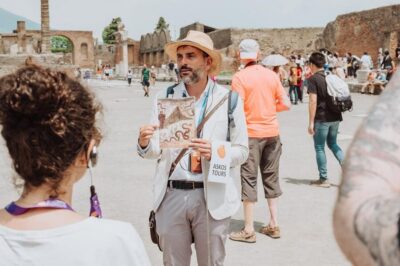
Entry Ticket and Guided Tour with an Archaeologist
Read our review →

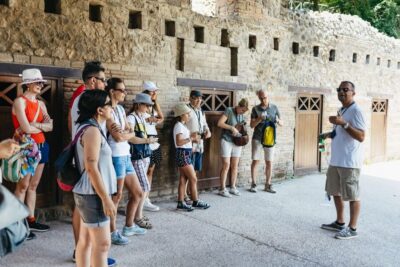
Pompeii Small Group Tour with an Archaeologist
Read our review →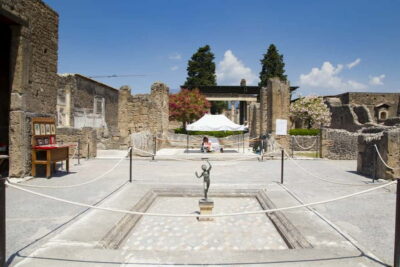
Naples or Sorrento: Full-Day Pompeii and Mount Vesuvius Tour
Read our review →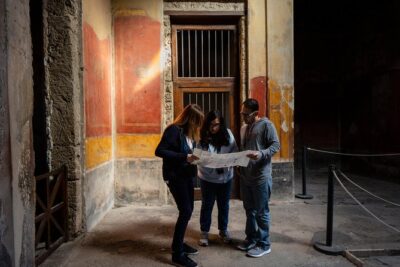
Pompeii & Mt.Vesuvius Day Tour from Naples with Pizza Lunch
Read our review →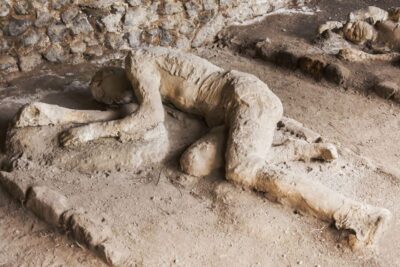
Browse the lists this tour appears in