
Reviewed · PAESTUM TOURS
Paestum: Temples and Museum Tour with Archaeologist Guide
Paestum Temples and Museum with an archaeologist guide is interesting because you get to connect what you see outdoors with what the museum holds indoors, so the site stops feeling like random ruins. I love the best-preserved Doric temples feeling, especially when you stand close enough to notice proportions and details. I also like that the expert guide builds a clear story for you, with guides such as Angelo, Luciana, and Angela praised for their calm pace and strong Q and A. One drawback to consider is the 2-hour time limit, so it is a focused highlights tour, not a slow day of roaming.
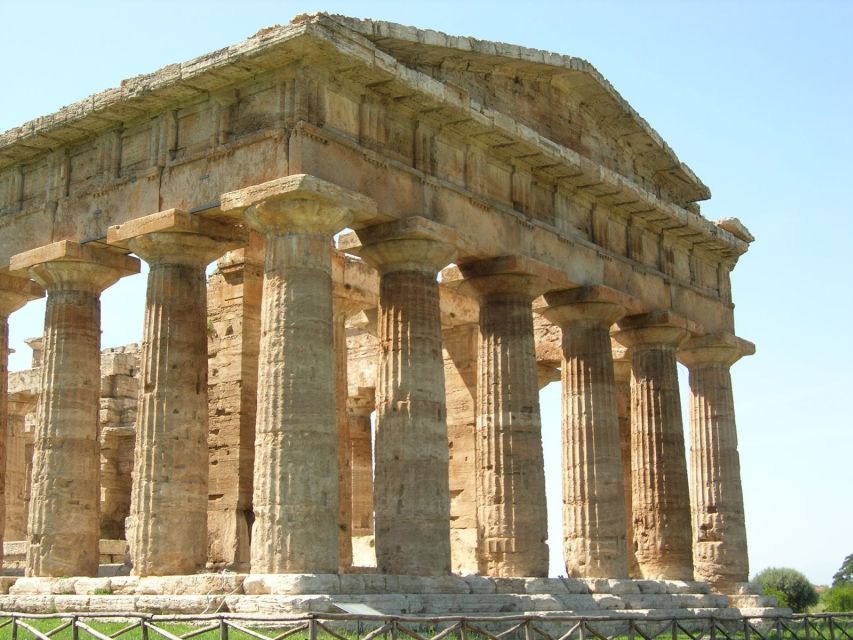
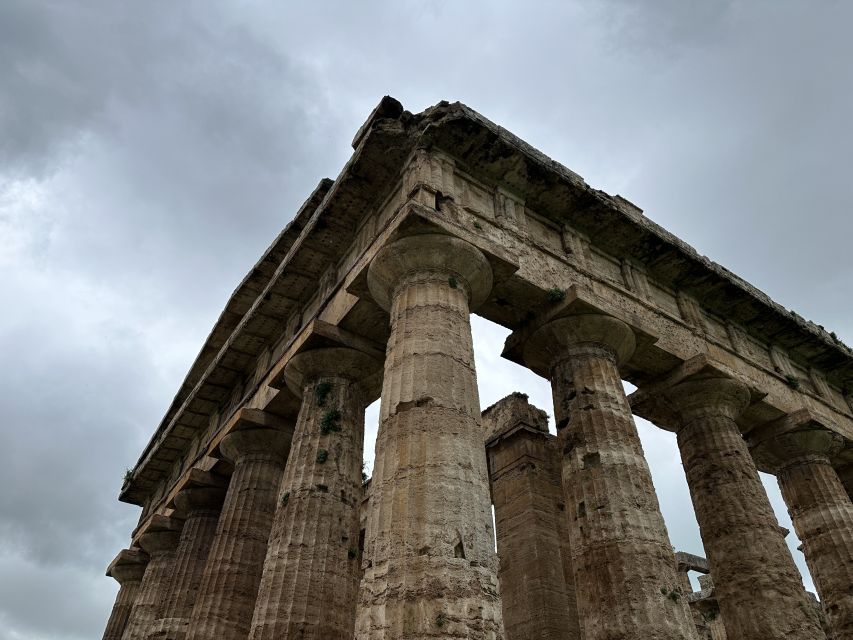
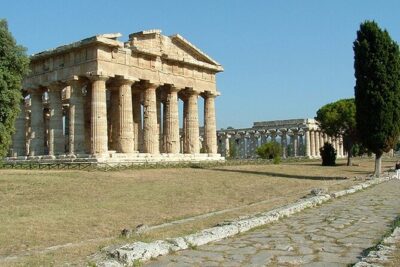
In the Archaeological Park, you’ll be looking at three headline structures: the Temple of Neptune, the Temple of Ceres, and the Basilica. Then you switch gears and head to the National Archaeological Museum of Paestum, where Greek art and temple-related finds help you understand the religious world behind the stone.
Key Things You Will Actually Enjoy in Paestum
- A private, archaeologist-led format that keeps the pace practical and the questions answered.
- Three major Doric buildings to orient you quickly: Temple of Neptune, Temple of Ceres, Basilica.
- Museum context right after the temples, so details you notice outside get explained while they are fresh.
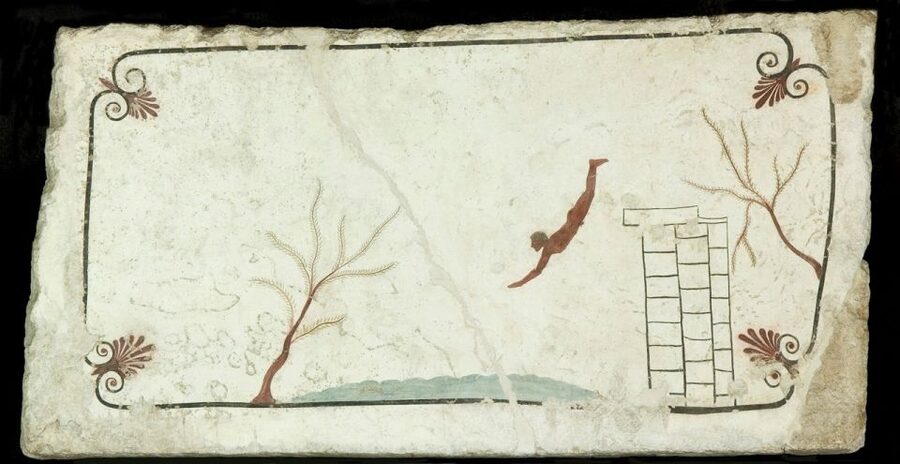
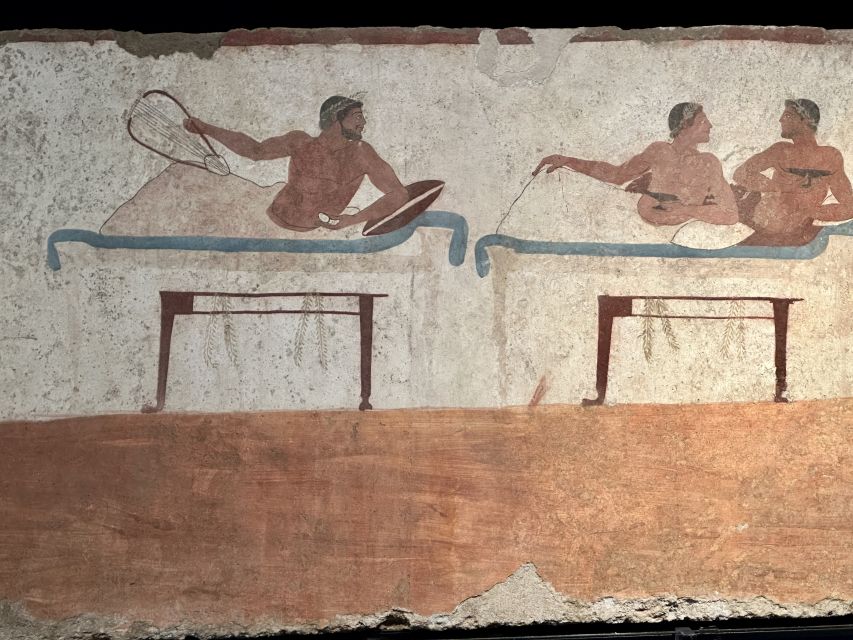
- Museum highlights like painted tombs of Campania, including the Tomb of the Diver.
- Skip-the-line entry, which matters when you have only two hours to work with.
Paestum Temples and Museum: A Small Time Slot With Big Payoff
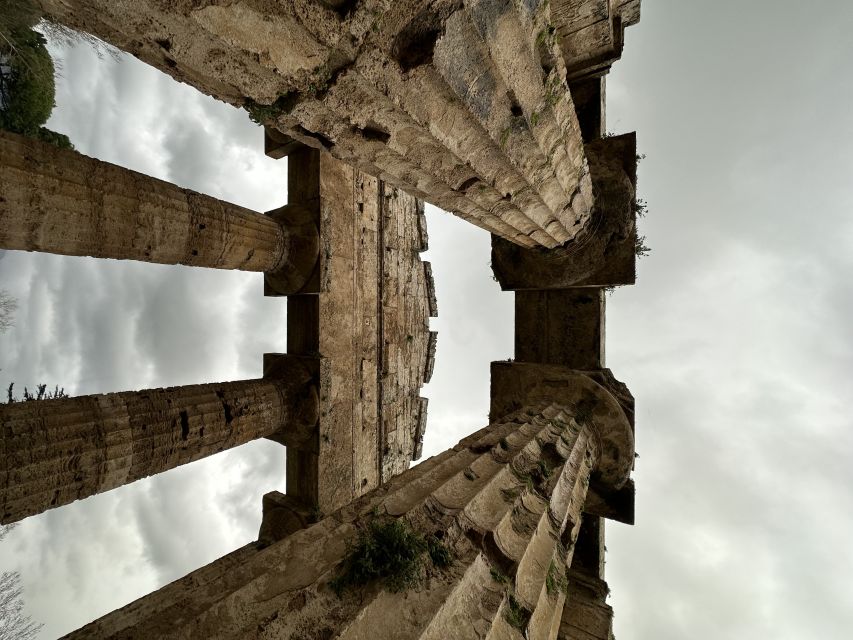
If you are short on time in Campania, Paestum is one of the smartest archaeology choices. Pompeii gets the famous ink, but Paestum has a different feeling. Here, the stone is still standing, and that changes how you experience the past. You can look up and see how Greek architecture dominates the space, not just how it once did.
This tour is built for people who want the essentials, explained well. You get an archaeologist guide, skip-the-line tickets, and a tight itinerary that links the Archaeological Park to the museum. At two hours, it is not trying to do everything. It is trying to do the right things, and that is where the value comes from.
The format also suits you if you like a plan, but still want room to ask questions. One of the strongest themes from the experience is that the guides, including Angelo, Luciana, and Angela, keep a friendly rhythm and address what you are actually curious about, rather than rushing through facts.
More Paestum temple tours:
- Paestum: Small-Group Tour with an Archaeologist and Tickets
★ 4.9 · 451 reviews - Paestum: 2-Hour Greek Temples & Archaeological Museum
★ 4.8 · 19 reviews - Paestum Greek Ruins
★ 4.5 · 15 reviews
Getting Oriented at the Museum Entrance in Via Magna Graecia
You start right at the entrance to the Archaeological Museum of Paestum. This matters more than it sounds. Instead of beginning with a long walk or sorting tickets while you are already eager, you begin with direction. Your guide can set your bearings fast, and you can ask any early questions before you head into the park.
The meeting point is Via Magna Graecia, 917. Your visit runs as a loop, and you end back at the meeting point. That means you avoid the stress of figuring out timing or catching transport for a separate return.
Because it is a private group, up to one person per group, you are not stuck in a crowded rhythm. You can typically get the kind of attention that helps you interpret what you see. If you have always looked at ancient sites and wished someone could translate the big picture into something you can actually notice, this is the setup.
Archaeological Park of Paestum: Where the Temples Do the Talking
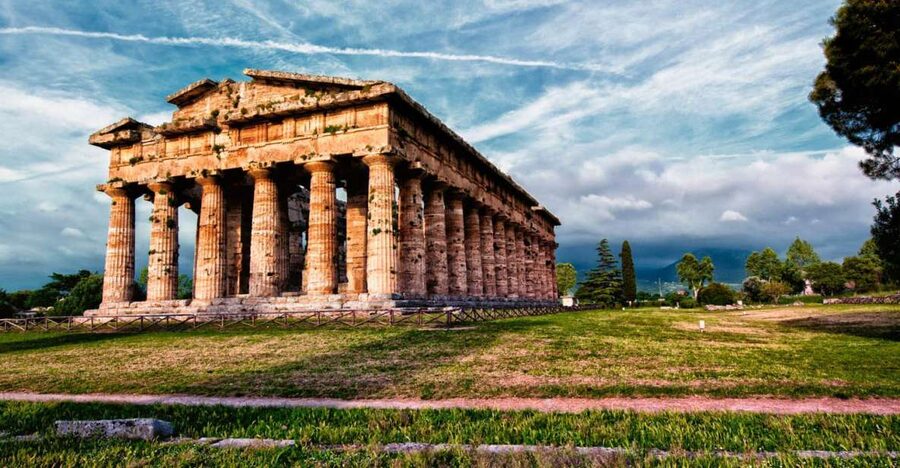
After the orientation, you head to the Archaeological Park of Paestum. The tour includes a photo stop plus a guided visit. That photo stop is useful because it lets you establish visual reference points before the explanation starts. Once you understand what you are looking at, you will often want to circle back for a better angle.
The park is built around Greek architecture. You are not just seeing leftover columns. You are seeing the evidence of how a religious site was designed to impress. Three structures anchor the experience, and your guide will help you connect their look to their purpose.
What I think you will notice most
Even without being an architecture person, Paestum rewards attention. The Doric style here is so well preserved that it becomes easy to see the structure as structure. You are also outside in open air, so you can read the site like a building, not like a diagram.
More museums and galleries in Paestum:
- Naples: National Archaeological Museum Ticket & Audio App
★ 4.4 · 617 reviews - Naples: National Archaeological Museum of Naples Guided Tour
★ 4.8 · 498 reviews
A practical consideration
Because the tour is only two hours, you will not have time to wander endlessly through every corner of the park. If you love slow, do-it-all museum pacing, you might find yourself wishing for more time. For most people, though, that short format is a feature, not a bug.
Temple of Neptune, Temple of Ceres, Basilica: The Three Stops That Matter
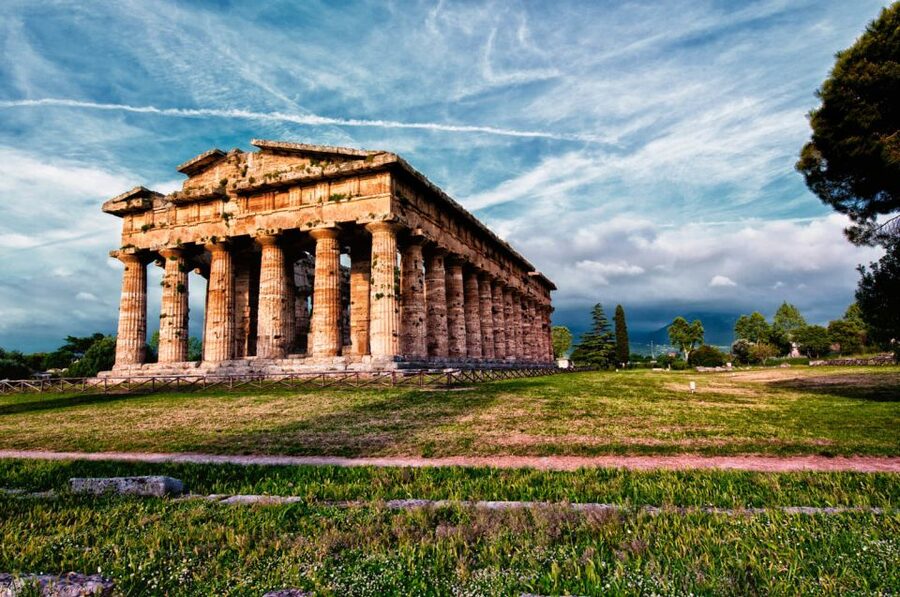
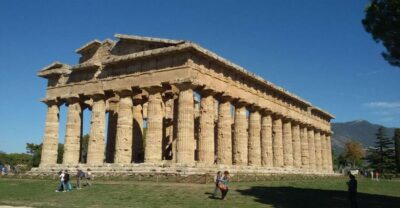
Paestum’s reputation rests heavily on its three Doric buildings. Your guide takes you through them in a way that helps you treat each structure as part of one religious story.
Here is what you should keep an eye out for as you move through the park:
Temple of Neptune
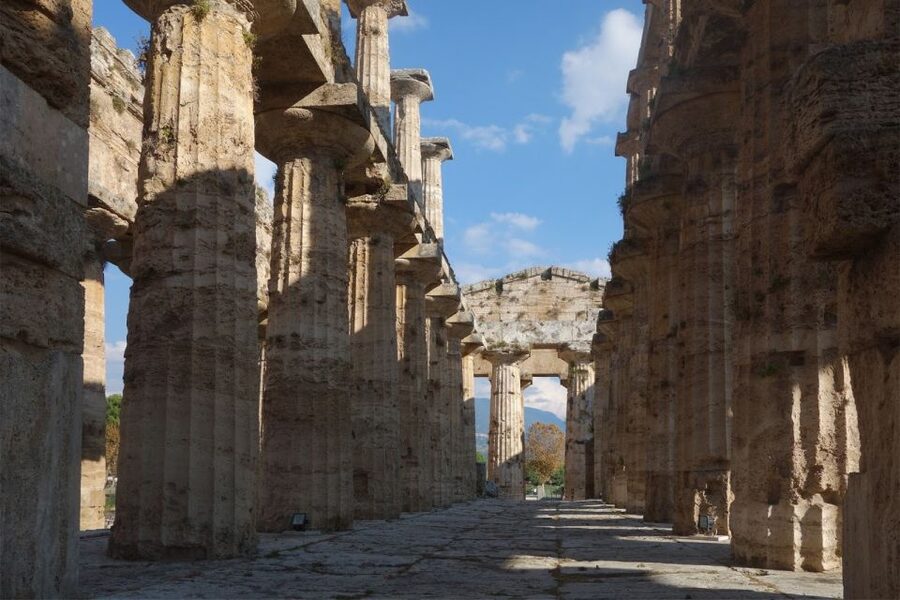
This is one of the best-known temples in Paestum. As you stand near it, focus on the overall Doric feel and proportions. Your guide will connect what you see to the idea of religious architecture meant to be viewed with intention, not merely walked past.
Temple of Ceres
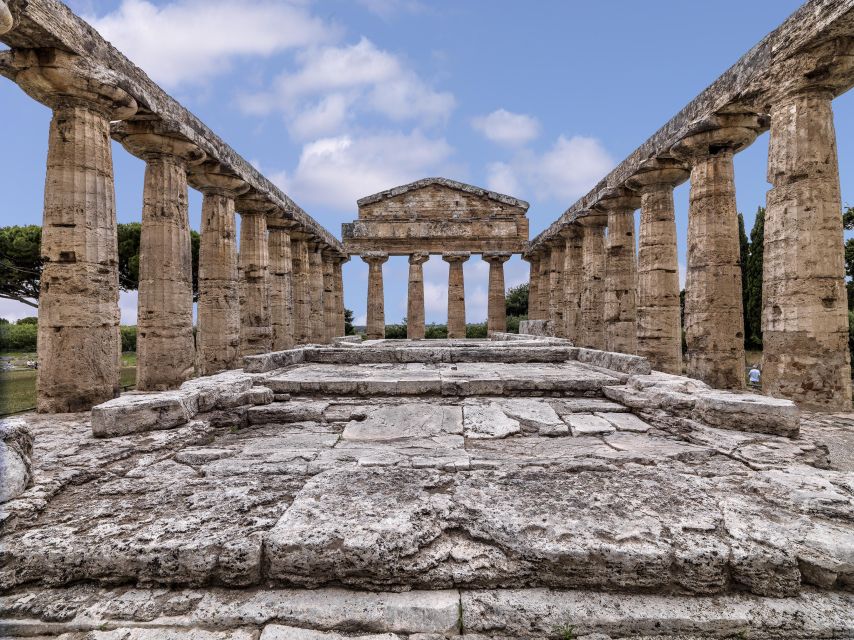
The Temple of Ceres is another Doric highlight. Try to compare how the building reads from different angles. With a guide, you can often pick up on differences in how the space is shaped and how the temple holds its presence in the landscape.
The Basilica
The Basilica rounds out the trio. Even if you came for the Doric temples, this stop is a good reminder that ancient sites are not one-type monuments. It helps you understand the broader role the area played beyond one single religious moment.
The big win here is that your guide is giving you interpretive structure. Instead of you trying to remember three names and hoping you did not miss anything, you get a narrative that ties the shapes together.
National Archaeological Museum of Paestum: Turning Stone Into Meaning
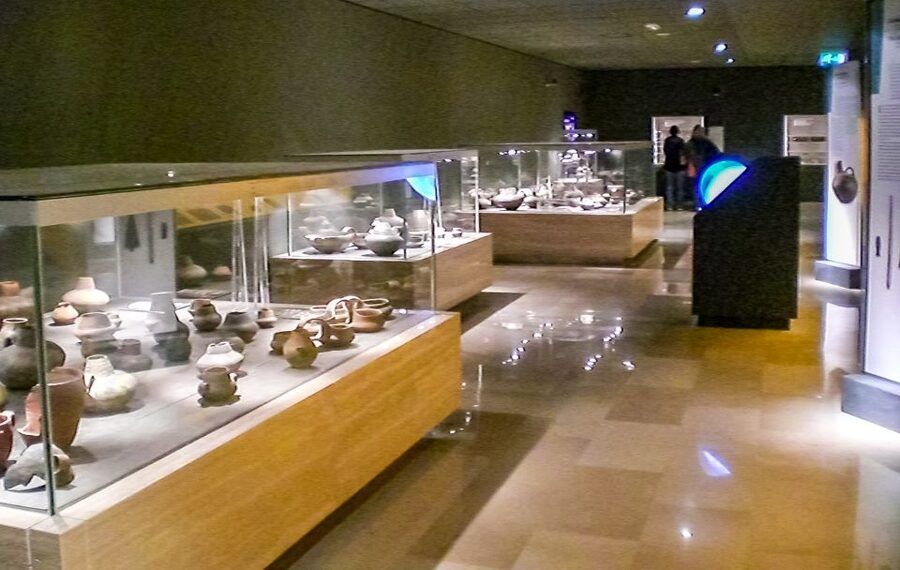
Then you shift into the National Archaeological Museum of Paestum. If the park gives you the architecture in place, the museum helps you understand what that architecture was part of. You’ll see important examples of Greek art and objects connected to temple life.
The museum tour is guided, so you are not left to guess what is relevant. And because it happens right after the park, it is easier to make connections. You can remember what you noticed outside and then see related finds indoors.
Temple decorations and Greek art
Inside, the museum holds relics that served as decorations for the temples. That is a key point for you. It means you can start to imagine the temples not just as pale stone, but as places that once had visual elements tied to religious meaning and identity.
Painted tombs of Campania
The museum is also famous for painted tombs of Campania. This is where your experience grows beyond architecture. Tomb art adds a different dimension, showing how beliefs and identity were expressed through images.
A standout is the Tomb of the Diver. It is kept in perfect condition, and it is famous for how well the painting survives. Even if you usually do not stop for tomb displays, this is one of those museum objects that tends to command attention because the preservation makes the artwork feel immediate.
How an Archaeologist Guide Changes What You See
A big part of the value here is not just access. It is interpretation. With an archaeologist guide, you are not simply being told facts. You are being helped to notice the right things.
This is where the named guides you may encounter matter. Angelo’s tours were praised for a strong intro, a nice pace, and answers to questions. Luciana’s experience was praised for being fabulous and for the way she combined site enjoyment with information. Angela’s tour was praised for being wonderful and for history passion that added to the trip.
What that means for you is simple: you should expect a guide who guides your attention. You will likely talk through what the Doric temples represent, why the museum objects matter, and how to connect the external architecture to the internal evidence.
And because the group is private, you can steer the pace slightly. If you are more interested in the museum artifacts, you can ask. If the temples are your main priority, you can focus there. The short two-hour plan still keeps structure, but you are not locked into a one-size-fits-all script.
Skip-the-Line Tickets and the Two-Hour Pace: Real Value Math
The tour includes skip-the-line entrance tickets. For a two-hour experience, that is not a small perk. Every minute counts when you are combining an archaeological park visit with a museum visit.
Price is listed as $260.56 per group up to 1. That can sound high if you compare it to a budget ticket alone. But you are not paying for just entry. You are paying for:
- A live expert guide
- Skip-the-line tickets
- A private group format
- A guided flow between the park and the museum
If you are the only person in your group, a private guide can actually be the most cost-effective way to get context. You are paying to eliminate the guesswork. For many people, that is what makes the money feel justified, especially at a time-constrained stop like Paestum.
The itinerary is efficient: guided visit at the Archaeological Park, then guided tour at the museum, and back to the meeting point. The downside is also obvious: you will not have hours to spread out. But that is true of most high-quality highlight experiences.
What Is Not Included, and How to Plan Around It
Transportation is not included. Food and drinks are not included.
So for you, the practical planning is:
- Arrive ready to walk comfortably during the park portion and inside the museum.
- If you need water or a snack, bring it, since the plan does not include food stops.
- Build your schedule with the two-hour duration in mind. You want time before and after for getting there and settling in.
If you are staying nearby, Paestum is a very manageable stop. If you are coming from farther away, plan transport so you are not rushing at the start.
Who This Tour Fits Best
This tour is a great match if you:
- Want Paestum’s top temples without spending a full day
- Like archaeology explanations tied directly to what you see
- Prefer a private guide who can answer your questions
- Are especially interested in Greek architecture and museum artifacts like painted tombs
It is also a solid choice if you have already seen other big sites in the region and you want something with a different feel. Paestum’s standing temples and museum holdings make it easier to grasp the overall picture quickly.
If you are the kind of visitor who needs long, silent time to roam and photograph, you might prefer a longer independent visit. This is more structured than that. But for many people, structure is exactly what turns a good stop into a memorable one.
Final Thought: Should You Book This Paestum Tour?
Book it if you want a smart, efficient way to see the Temple of Neptune, the Temple of Ceres, and the Basilica, then make sense of it in the National Archaeological Museum with highlights like the Tomb of the Diver. The private format and guided pacing are the heart of the value, and skip-the-line entry helps you get the most out of your two hours.
Skip it only if you know you want a slow, unstructured half-day or full-day wander with no guide focus. This tour is built for clear takeaways, not drifting.
If you want to walk away understanding what you saw, you will be glad you booked.
FAQ
How long is the Paestum temples and museum tour?
The duration is 2 hours.
Where does the tour start?
You meet at the entrance to the Archaeological Museum of Paestum.
Where does the tour end?
The activity ends back at the meeting point.
What will I see at the Archaeological Park of Paestum?
You visit the Archaeological Park of Paestum with a guided tour, plus a photo stop.
What will I see in the National Archaeological Museum of Paestum?
You get a guided museum tour focused on important Greek art and museum treasures, including the Tomb of the Diver.
Are skip-the-line tickets included?
Yes, skip-the-line entrance tickets are included.
Is transportation included?
No, transportation is not included.
Is food or drink included?
No, food and drinks are not included.
What languages are available for the live guide?
The tour is available in English, Italian, Spanish, and French.
Is this tour private?
Yes, it is a private group tour.
Recently reviewed around Paestum
- Paestum Archaeological Tour: 3-Hour Private Exploration★ 5.0 · 3 reviews
- Paestum Tour: Best Preserved Temples in the World (UNESCO)★ 4.5 · 11 reviews
- Paestum: 2-Hour Greek Temples & Archaeological Museum★ 4.8 · 19 reviews
- Paestum Greek Ruins★ 4.5 · 15 reviews
- Paestum: Small-Group Tour with an Archaeologist and Tickets★ 4.9 · 451 reviews
Paestum Tours, compared.
Small-Group Tour with an Archaeologist and Tickets
Read our review →
Paestum Tour: Best Preserved Temples in the World (UNESCO)
Read our review →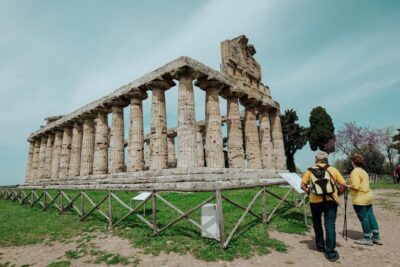
Paestum Archaeological Tour: 3-Hour Private Exploration
Read our review →Browse the lists this tour appears in