
Reviewed · POMPEII TOURS
Explore Pompeii with an Archaeologist
Pompeii can feel like a blur when you walk in cold. This tour is interesting because you get the ruins with an archaeologist guiding what to look for, so the place clicks instead of just impressing you from a distance. I like the skip-the-line entry and the small group size, which means you can actually ask questions. One consideration: Pompeii is still a big, outdoor site, so you will do a fair amount of walking and you might run into crowd noise.
What makes this experience especially good is the stop-by-stop structure, from the entrance at Porta Marina Superiore through key public spaces and homes. I also like that guides are praised for being patient and responsive, with names like Mario Celentano, Alexandra, and Rosanna showing up repeatedly in the kind of feedback you want to see. The drawback I’d plan around is simple: if you want super in-depth detail on only one neighborhood, two hours is still two hours.
Key things that make this Pompeii tour worth your time
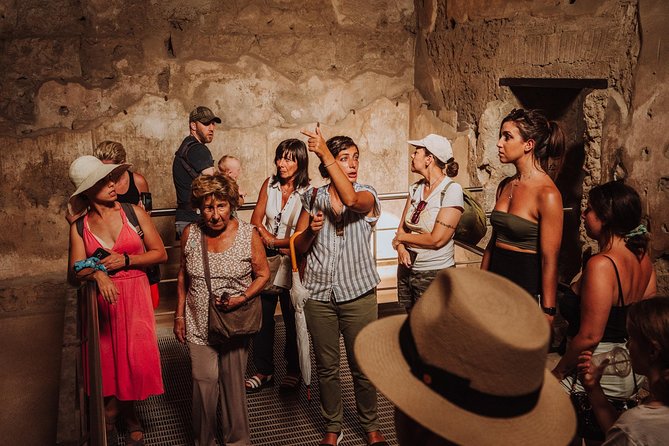
- Archaeologist-led explanations that turn rooms and streets into real context, not just a list of ruins
- Skip-the-line admission so you spend time walking and learning, not waiting
- Max 20 people per guide, a genuinely smaller setting for Pompeii
- Headsets for groups of 16 or more, helpful for hearing the guide in open-air crowds
- A tight highlights loop that covers forum life, baths, a theatre, and major houses in one go
- English-speaking guide and clear pacing that many people describe as well managed
Pompeii in 2 hours, with an archaeologist doing the translating
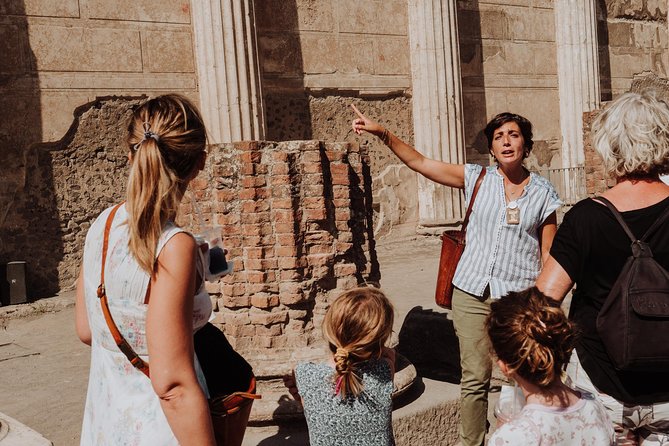
If you only have a short window in Pompeii, the biggest risk is wandering. You end up taking photos, passing by rooms, and hoping the story somehow comes through. Here, you walk a planned route and your archaeologist guide provides the meaning behind what you see, from public buildings to everyday spaces.
This tour is also a good fit for people who do not want to guess. The names of the stops alone can be vague, like Basilica or Lupanar, until someone connects them to how Pompeii functioned. The practical value is that you get a guided framework, so you can return later on your own with better focus.
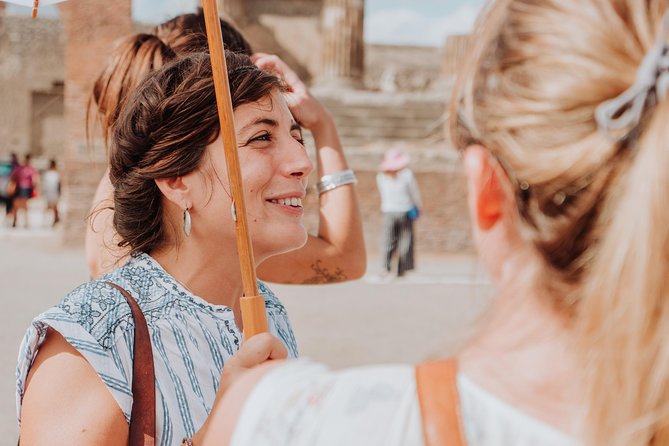
Also, the guide experience seems to matter a lot. Many of the strongest comments mention patience, strong English, and room for questions, with guides like Mario Celentano, Alexandra, and Teresa often highlighted for making explanations clear and fun.
More Pompeii tours and tickets in Pompeii:
- Pompeii: Entry Ticket and Guided Tour with an Archaeologist
★ 4.8 · 19,459 reviews - Pompeii: Entry Ticket with Optional Audio Guide
★ 4.2 · 12,360 reviews - Pompeii: Small Group Tour with an Archaeologist
★ 4.8 · 12,264 reviews
Price and value: why $35.67 can still feel like a deal
At $35.67 per person for about two hours, you are paying for three things that add up fast in Pompeii: admission, a guide, and time saved. The entry fee is included, and the tour is designed to reduce the annoying wait times that can eat your energy.
The real value is not only that you get into the site. It’s that you compress a highlights route into a short visit without turning it into a race. When a guide keeps the pace manageable, you are more likely to actually absorb the place, not just survive it.
One more money-and-time saver: headsets are provided for groups of 16 or more. That helps keep the tour usable even when the surroundings get loud, which matters because Pompeii can get packed.
Where you meet and how the walk is managed
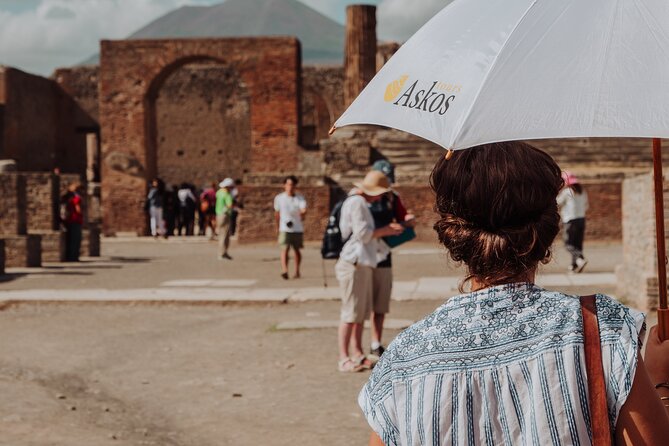
You start in the Pompeii area at Via Villa dei Misteri, 2, 80045 Pompei NA, Italy, and you finish at Piazza Esedra, 80045 Pompei NA, Italy. Once you arrive at the archaeological site, you meet the guide at the main entrance at Porta Marina Superiore. Your guide will be holding a sign with Askos Tours on it, which makes it easier to find each other without wasting time.
The tour runs about two hours, and it is built around frequent short stops. Expect walking on uneven surfaces. One review calls it a workout for a reason, and that is fair. If you have mobility concerns, plan for steady walking and make sure you have the right shoes.
Timing is also part of the experience. Several comments note that guides adjust pacing and check if you are keeping up. That can turn a stressful crowd situation into something you can handle.
Skip-the-line tickets and headsets, what to expect on the ground
Skip-the-line entry is the big headline, but it helps most when your day is already full. In Pompeii, waiting can feel endless, especially if the rest of your schedule is tight. With this tour, you show up with the ticket handled through a mobile option, and the group gets moving.
Headsets matter if you are easily distracted by noise. For groups of 16 or more, you get audio support, so you can follow the archaeologist’s explanations without constantly craning your neck. One caution from feedback: in very crowded moments, the audio can be harder to hear. So, if you know you rely on audio, try to stay near the front of the group when possible.
A different sort of day around the Bay of Naples:
- From Naples: Pompeii Ruins & Mount Vesuvius Day Tour
★ 4.3 · 11,459 reviews - Pompeii Small Group Tour with an Archaeologist
★ 5.0 · 6,593 reviews - Naples or Sorrento: Full-Day Pompeii and Mount Vesuvius Tour
★ 4.6 · 4,235 reviews - Pompeii & Mt.Vesuvius Day Tour from Naples with Pizza Lunch
★ 4.0 · 2,901 reviews
Porta Marina Superiore: starting smart at the entrance
The tour begins at Porta Marina Superiore, the main entrance where the archaeologist lines up the group and sets expectations. I like this start because it helps you orient immediately. You get the city layout logic early, which makes later stops feel connected instead of random.
This is also where your guide’s style shows up. Some guides come across as storytelling first, others as structured explanations, but either way the point is the same: you want a mental map before you hit the forum zone.
Forum center of gravity: Foro de Pompeya and the Basilica
The route brings you to the Foro de Pompeya, the main square. This is Pompeii’s social and civic core in a way you can feel even when you know little. The forum area is ideal for an archaeologist’s narration because it is where you can tie daily life to public architecture.
Next up is the Basilica, which the tour frames as a court-house area. That matters because it changes how you interpret the space. You start thinking about how people moved through Pompeii for business and legal matters, not just how pretty the stones look.
A practical benefit here: these stops are also where you can ask questions. Since the group stays small, you can prompt your guide for clarifications like what this building functioned as, or how the city used the public areas during normal life.
Lupanar and the granaries: reading social life and the economy
Then comes a stop many people find memorable, the Lupanar. You get it framed through an archaeological lens, which is important. Without guidance, it can turn into awkward guessing. With a guide, you can handle it as part of the city’s social reality rather than a sensational side note.
After that, you visit the Granaries of the Forum. This is where the tour becomes useful beyond sightseeing. Granaries are an anchor for understanding how a city worked, because food supply is not an abstract idea in an ancient place. The guide explanations help you connect the forum buildings to the real logistics of keeping daily life running.
If you care about how history connects to systems, not just famous dates, these stops are a strong chunk of the route.
House of Menander and House of the Faun: private life next to public power
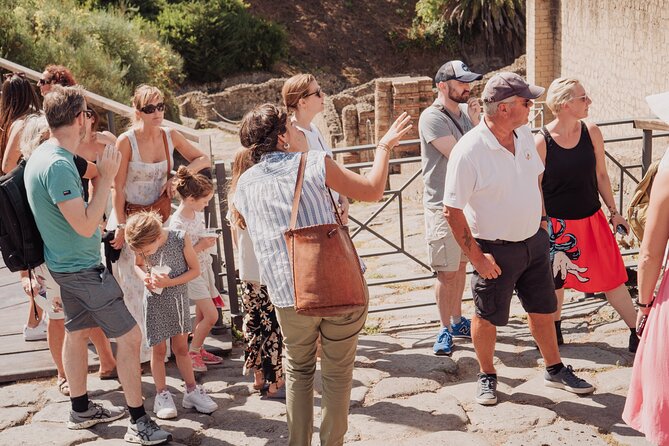
The tour then shifts from public spaces to homes, starting with the House of Menander. Houses in Pompeii are where class, taste, and family life show up in the layout. The value of having an archaeologist here is that you can compare what you saw in the forum to what changes once you enter a residential setting.
Next is the House of the Faun. Again, you are not just looking at ruins, you are learning how to read a home as a reflection of its owner and its routines. This pairing, public first then private, is one reason the tour works well for first-time visitors. You can build contrasts quickly.
Also, homes can be emotionally intense because they feel personal. A good guide helps you stay grounded and interpret rooms like evidence, not like speculation.
Via dell’Abbondanza: a free street break that matters
You also stop at Via dell’Abbondanza, and it is marked as a segment where admission is not required for that stop. Even if it sounds minor, I like this kind of included street time because it helps you picture movement.
Pompeii is not only buildings. It is also the paths between them. A guide’s explanation here can make the city feel navigable in your head, which is useful if you plan to explore more after the tour ends.
Baths and everyday recovery: Stabian Baths (Terme Stabiane)
Next you reach the Stabian Baths. Baths are always a highlight because they show how people spent time, handled hygiene, and built social routines into daily life. With an archaeologist on hand, you can avoid treating baths like a random set of rooms and instead understand why bathing spaces were a big deal in an ancient city.
This stop also breaks up the walking rhythm. Baths tend to give you a different kind of visual and interpretive experience from forums and houses.
Thermopolium VI and the theatre route: food, crowds, and community
The tour includes Thermopolium VI, a type of ancient street food stop. This is one of those areas that makes Pompeii feel surprisingly human. Instead of only thinking about elites and public buildings, you get a glance at the kind of quick meal and social stop that fit everyday schedules.
After that, you visit Teatro Grande, the Big Theatre. This is where Pompeii shifts into a communal entertainment setting. An archaeologist’s explanations help you connect the theatre to how people gathered, not just where they sat.
If you like Roman cities that feel alive, this pairing, street food and theatre, gives you two different ways people shared space.
Casa dei Vettii: closing with a home that leaves an impression
You finish at Casa dei Vettii, one of the well-known houses in Pompeii. This final home stop is a strong wrap because you end on a residential perspective after spending time in civic spaces and performance areas.
When a tour ends on a house, you also get a natural mental transition. After the guided portion, you can continue at your own pace near the finishing area, with a better sense of what kinds of details you should pay attention to.
And finishing near Piazza Esedra is convenient for getting back to your plans.
What to bring, and how to make the day easier
Pompeii rewards good preparation. In warmer months, I’d treat this tour like an outdoor walk that happens on uneven ground, under crowds, for two hours.
Bring:
- A reusable water bottle. Water is available from fountains, and that can help you avoid waste and keep going.
- Something for sun protection. One review specifically recommends a fan, and other feedback suggests an umbrella or hat.
- Comfortable shoes with grip.
Also consider how you handle questions. The best guides in this tour are described as patient and flexible with pacing. To get more value, you can come with one or two questions in mind, like what the forum tells you about daily life, or what changes when you go from public buildings to homes.
Who this tour is best for, and who might prefer something else
This is ideal for:
- First-time Pompeii visitors who want the essentials done right
- Families, because the format is short stops and explanations that many parents describe as fun for kids
- People who want to learn without spending the whole day trying to self-interpret ruins
You might want a different setup if:
- You want a deeper, slower immersion into one single house or one single theme
- You struggle with walking on uneven surfaces
- You are extremely sensitive to crowd noise. Headsets help, but if you get easily overwhelmed, plan to keep toward the front half of the group
The bottom line: should you book this Pompeii with an archaeologist tour?
Yes, if you want a high-value, guided highlights loop that helps you understand Pompeii quickly. The pricing makes more sense when you factor in admission and skip-the-line entry, plus the small group size that supports real Q&A. It is also a great bet because you can end with a clearer mental map for independent exploring afterward.
If your priority is total freedom, or you want to spend half a day in one neighborhood, you may feel rushed. But for most people with limited time, this tour is a smart way to leave Pompeii feeling like you actually learned something, not just saw it.
FAQ
How long is the Pompeii with an Archaeologist tour?
It lasts about 2 hours.
Is admission to Pompeii included?
Yes, the Pompeii admission fee is included.
Does this tour include skip-the-line entry?
Yes, it includes skip-the-line admission.
What group size should I expect?
It has a maximum of 20 travelers per guide, with small-group guidance.
Are headsets included?
Headsets are provided for groups of 16 or more.
What language is the tour offered in?
The tour is offered in English.
Where do I meet the guide and where does the tour end?
You meet the guide at the main entrance of the archaeological site called Porta Marina Superiore, where the guide holds an Askos Tours sign. The tour ends at Piazza Esedra.
Is transportation or food included?
No. Transportation and food and drinks are not included.
Recently reviewed around Pompeii
- Pompeii Audioguide – TravelMate app for your smartphone★ 3.9 · 10 reviews
- Pompeii: AR Glasses Augmented Reality Tour★ 5.0 · 3 reviews
- Pompeii: Entrance Ticket – Skip the Line★ 3.8 · 64 reviews
- Pompeii: Entry Ticket & Guided Tour with an Expert Historian★ 5.0 · 4 reviews
- Pompeii Small Group Tour – Tickets Included★ 4.7 · 72 reviews
- Pompeii: Skip-the-Line Ticket and Virtual Museum★ 4.5 · 66 reviews
- From Naples: Pompeii & Mount Vesuvius Full-Day Private Tour★ 4.5 · 4 reviews
- Pompeii with Wine Tasting Private Tour★ 4.7 · 6 reviews
Pompeii Tours, compared.
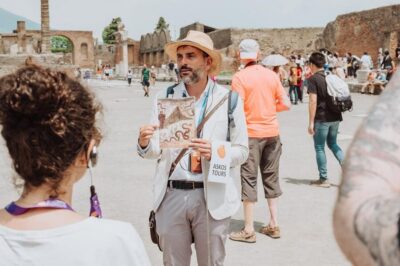
Entry Ticket and Guided Tour with an Archaeologist
Read our review →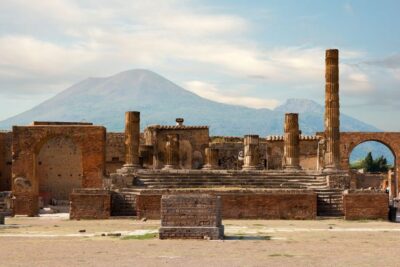

Pompeii Small Group Tour with an Archaeologist
Read our review →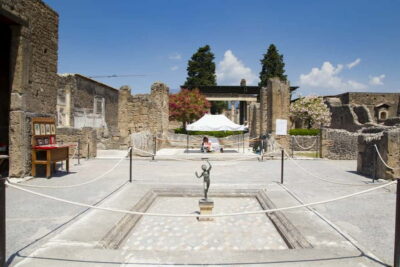
Naples or Sorrento: Full-Day Pompeii and Mount Vesuvius Tour
Read our review →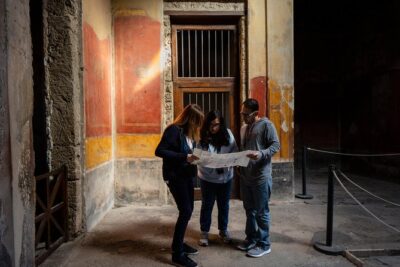
Pompeii & Mt.Vesuvius Day Tour from Naples with Pizza Lunch
Read our review →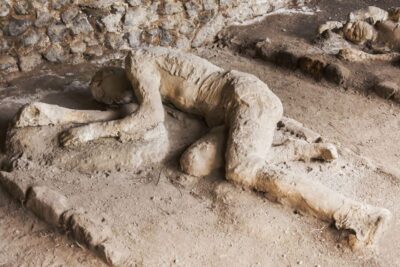
Browse the lists this tour appears in