
Reviewed · POMPEII TOURS
Pompeii: 2-Hour Guided Tour with an Archaeologist
Pompeii works best when someone gives you a map for your eyes. This 2-hour guided tour with an archaeologist is interesting because you focus on the western district right away, using Roman landmarks as your wayfinding. I like that you quickly reach the Forum and Basilica, so you understand how public life ran instead of just seeing pretty ruins. The one drawback is simple, Pompeii is huge, so two hours means you will not cover everything.
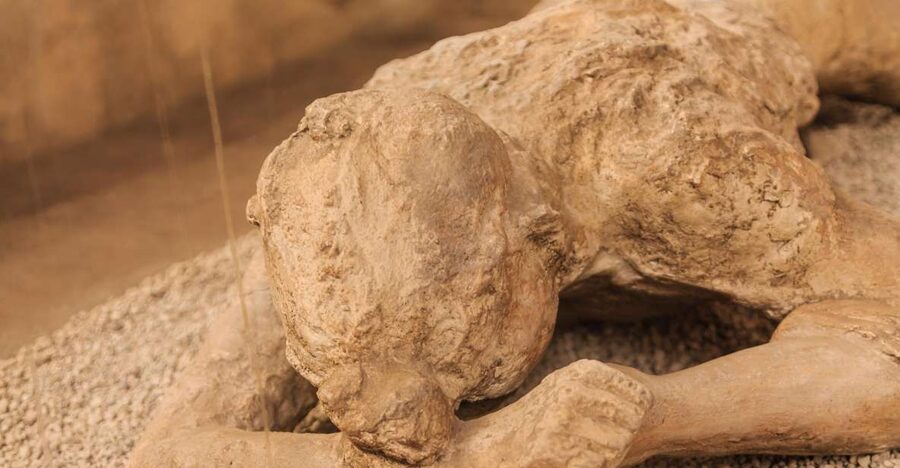
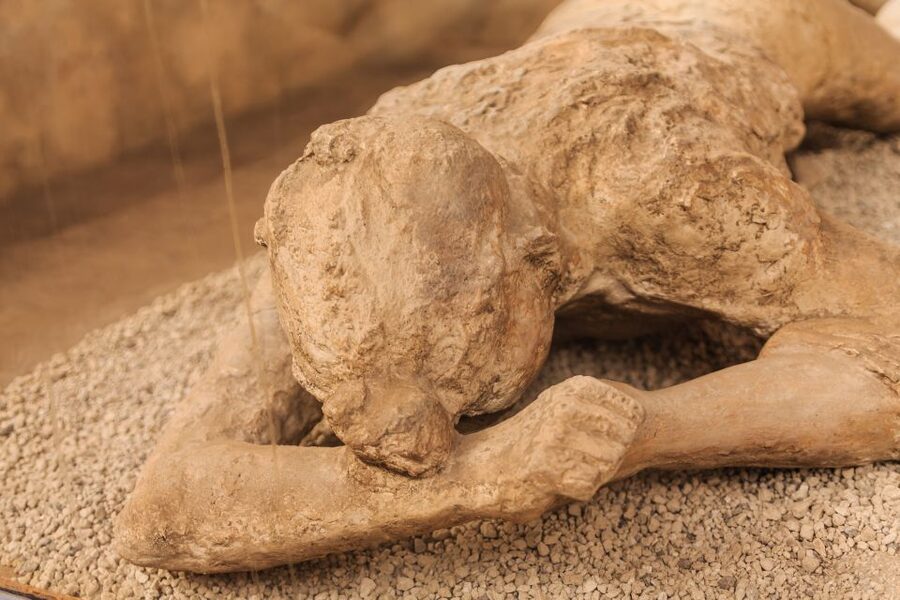
What I love most here is the human scale of the story. You do not just learn that Vesuvius buried the city under molten ash and lava in 79 AD, you get the kind of details that make the tragedy feel personal, including the plaster casts of humans and animals at the moment of death. And yes, you also visit the old Lupanare (brothel), which is important context for how Pompeii managed desire, status, and commerce.
For logistics, the tour meets near Porta Marina and runs on foot through major sites. You get disposable earphones for bigger groups, plus a guide who keeps the pace tight enough to fit major stops into 2 hours. Just plan for walking, sun, and the fact that finding the meeting point can be tricky if your GPS is stubborn.
Key highlights to know before you go
- Western Pompeii focus: you hit the most important public buildings and many household sights without wandering aimlessly
- Forum and Basilica first: you get the political and social backbone of the city early
- Plaster casts at the moment of death: a stark, unforgettable way to understand what happened in 79 AD
- Brothel and baths included: you see private habits and daily routines, not just temples and temples only
- Theatre and amphitheater finale: big outdoor venues help you feel how the city entertained itself
- Finish near Villa dei Misteri: you end in a well-known area instead of backtracking pointlessly
Porta Marina Superiore: finding your start point without wasting time
This tour begins at Porta Marina Superiore, with two start options depending on what you booked: Pompei, Porta Marina (Via Villa dei Misteri, 2 is listed as another option). I’m glad they give options, because Porta Marina is a logical gateway into the western side. You are not starting at some random corner, you’re starting near a route that leads you through the city’s key public spaces.
One practical note: the meeting area can be difficult to locate if you rely on a generic GPS pin. If you want a smooth start, have the exact meeting address saved and double-check your timing so you are not sprinting in sandals. Comfortable shoes matter here, because “2 hours” still means real walking over uneven stone.
If you want the best experience, aim to arrive early enough to settle in and listen for your guide’s name. Guides speak multiple languages (French, German, Spanish, Italian, English), and the group is private, which usually means less waiting and more time at the sites.
More Pompeii tours and tickets in Pompei Campania:
- Pompeii: Entry Ticket and Guided Tour with an Archaeologist
★ 4.8 · 19,459 reviews - Pompeii: Small Group Tour with an Archaeologist
★ 4.8 · 12,264 reviews - Pompeii: Skip-the-Line Entrance Ticket with Audio Guide
★ 4.0 · 2,509 reviews
Temple of Apollo and the Forum Civile route: how the city gets organized fast
Once you’re through the start area, the tour moves into major civic territory. You visit the Temple of Apollo and then head to the Foro Civile di Pompei, the core of public life. This is where the guide’s archaeologist lens really pays off, because Pompeii stops being a list of ruins and starts becoming a working city.
Here’s what I like about this route for your first visit: you get context while you walk. The guide explains how the city was buried under molten ash and lava in 79 AD, then uses that framework to make what you see feel connected. It’s not just “look at the building,” it’s “this is what people used it for, and this is why it matters.”
The tour also references why UNESCO placed Pompeii and Herculaneum on the World Heritage list, calling it a complete and vivid picture of society and daily life at one moment in the past. That matters because it changes how you look. Instead of imagining the city, you start reading it, as if it’s paused mid-day.
Basilica and Forum: where politics and everyday business meet
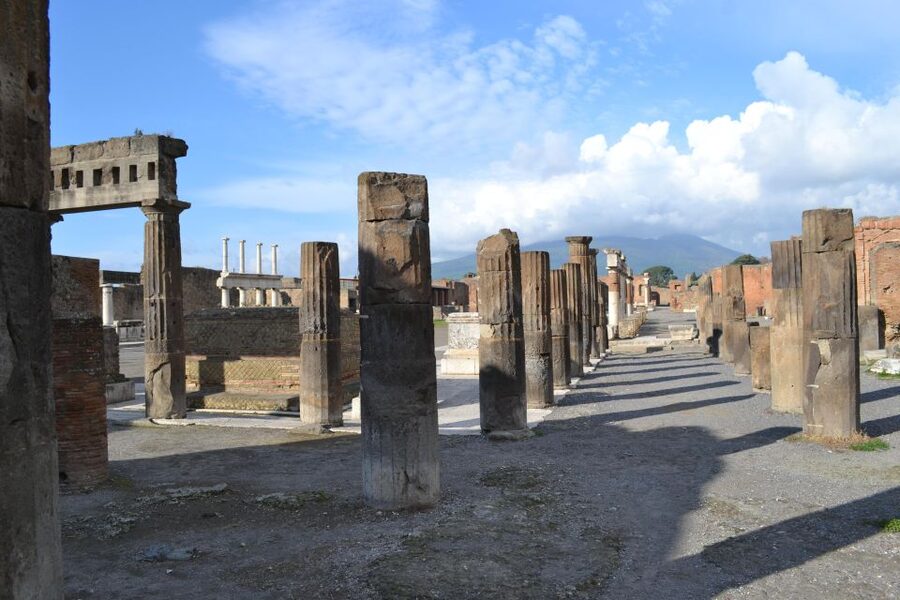
If you want one reason a guided tour is worth the money, it’s this part: the Forum and Basilica. The Basilica is described as the court house, which instantly frames what’s happening there. You can stand in the right spot and understand that these were not empty shells. These were spaces for decision-making, legal life, and official gatherings.
I love this section because it teaches you what “public” really means in an ancient city. You’re not only seeing monumental stone. You’re seeing the social engine behind daily routines, meetings, and commerce.
This is also where a good guide keeps the experience respectful without turning it into a lecture. Pompeii’s story includes mass death, but you still need to understand how ordinary people lived before the eruption. The guide helps connect those dots as you move through the civic spaces.
House of Menander and other home stops: what “private life” looks like in ruins
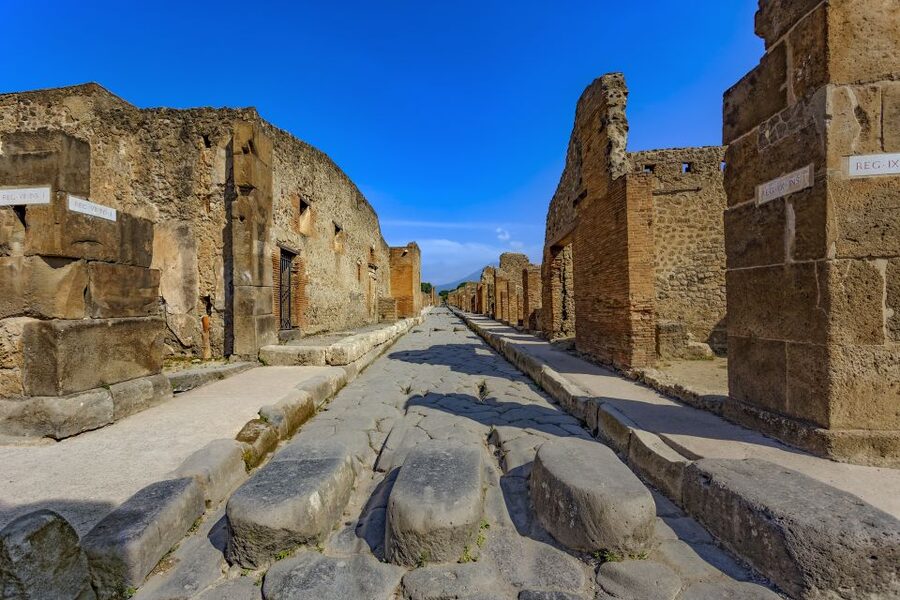
After the civic spine, you shift into the neighborhoods and households. The tour includes stops such as the House of Menander, and the highlights also point you to homes like the House of the Faun and the House of the Tragic Poet. You may also encounter the House of the Vettii along the way.
Even if you’ve seen photos of Pompeii before, visiting residential areas with a guide changes your focus. You start noticing how homes were shaped around daily living rather than around dramatic viewpoints. You also get a clearer sense of how different parts of town connect, because the route keeps bouncing between major public buildings and nearby domestic spaces.
One key point for your planning: two hours is tight, so you’ll see select rooms and key structures rather than a slow, room-by-room museum tour. Think of it as an orientation plus a deep set of highlights, not an exhaustive survey.
A few more Pompei Campania trips worth comparing
- Pompeii: Skip-the-line-Ticket and Guided Tour
★ 4.6 · 1,152 reviews - Pompeii: Guided Tour with Skip-the-Line Entry
★ 4.9 · 812 reviews - Pompeii: Skip-the-Line Entry Ticket with Digital Guide App
★ 4.1 · 770 reviews - Pompeii: Afternoon to Sunset Guided Tour with Ticket
★ 4.9 · 484 reviews
Forum Baths, Termopolium Capuano, and that bakery moment you will not forget
Pompeii is famous for big monuments, but you’ll remember the everyday stop. The tour includes the Forum Baths, plus highlights like Termopolium Capuano and a bakery where you can still see the remains of utensils and even the food.
That bakery detail is the kind of thing that makes your brain go, wait, people truly left this behind in an instant. You can stand in the same environment and realize how much of life was built around small routines. It’s not glamorous, but it feels real.
The Forum Baths also matter because baths were social spaces, not just sanitation. Even without getting overly technical, you can connect the dots: the same city that managed courts and politics also organized daily hygiene and conversation.
Bring water and take short pauses if you need them. With summer light on stone, “2 hours” can feel longer if you forget the basics.
Lupanar and the houses: a blunt look at desire, status, and city life

The Lupanare is part of this tour, so you should be ready for the reality that Pompeii included commercial sex work. I appreciate that it is included because it rounds out the picture. If you only see temples and forums, you miss how the city actually functioned, including how people sought pleasure and how businesses served demand.
The guide also helps keep context in place. This is not shock tourism, it’s city life. You’ll also see how wealth and status likely worked in household spaces, especially when paired with the home stops.
One practical consideration: if you want only “pretty ruins,” this segment might feel too direct. If you want the closest thing to a complete snapshot of daily life, it belongs.
Plaster casts and the story of 79 AD: the emotional core of the tour
This is the moment Pompeii stops being just architecture. The tour includes plaster casts of humans and animals at the moment of their death. Seeing them inside the overall journey is powerful because your earlier stops have already explained daily life. Then the story lands, in a concrete, specific way.
The guided approach matters here. A guide can explain what you are looking at and how it fits into the eruption story, including that the city was buried under molten ash and lava in 79 AD. You’re not left guessing. You get a framework and then the site delivers the emotion.
I also like that the tour balances tragedy with understanding. You come away feeling both the loss and the normal life that existed before it. That balance is exactly what makes Pompeii worth your time.
Theatre and amphitheater finale: entertainment, crowds, and civic pride
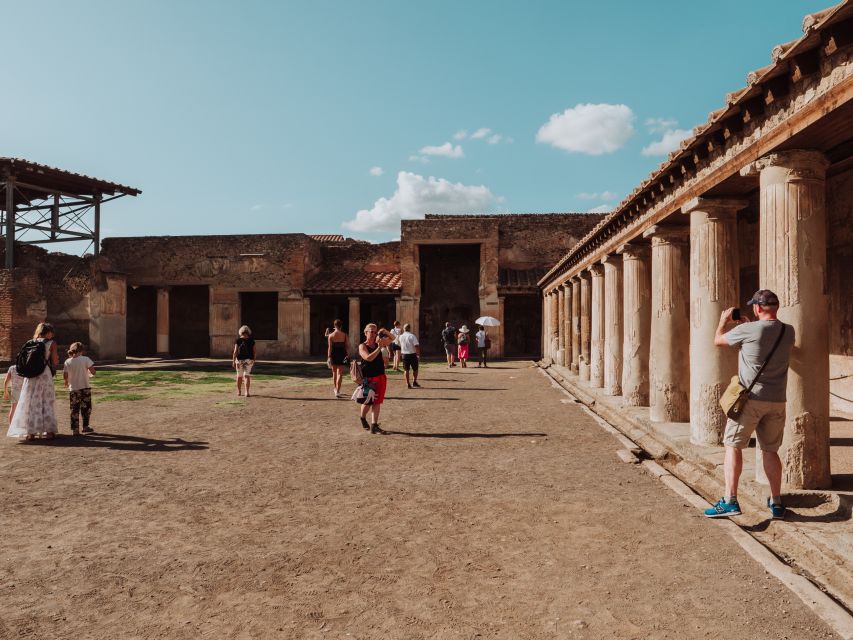
Near the end, the route includes major outdoor venues such as the Large Theatre and the Amphitheater of Pompeii. The itinerary also lists the House of the Vettii near these big spaces, so you get a little residential contrast before the final open-air hit.
This ending section works well because it broadens Pompeii from “government and homes” into “culture and public gathering.” Even if you only have 2 hours, you still leave with a sense of how people gathered for performances and how large crowds moved through shared spaces.
If your day feels packed, remember that this finale can be your closure point. You’re not rushing to squeeze in one more stop, you’re walking out of the city’s major public drama.
The tour finishes at Pompei Scavi – Villa Dei Misteri. If you’re coordinating with transport later, save that end point so you do not lose time figuring out where you are once you leave the ruins.
Price and value: what $175.74 buys in real time
$175.74 per person is not cheap for a 2-hour experience. Here’s why I think it can still be good value, assuming you want a guided, archaeologist-led highlight tour.
First, you get Pompeii entry tickets included, plus the guide. Second, you get an expert who can connect the dots quickly, especially on a site where doing it alone can turn into wandering and guessing. Pompeii is famous, but that does not automatically make it easy to read.
Third, private group pacing helps. Multiple guides are praised for keeping information flowing while still managing movement, including how to avoid the worst crowd crush on a hot day. One guide named Paola is noted for steering via quieter routes when it was busy. That kind of practical skill saves your energy, not just your attention span.
So the math is less about “how many stops” and more about “how much understanding per minute.” If you want context and better flow, the price makes more sense. If you want to roam slowly with zero structure, you might not need a guided archaeologist for only 2 hours.
Who this tour fits best, and who should think twice
This tour is a strong match if you:
- want a focused introduction to Pompeii’s Forum, baths, brothel, and major venues
- prefer a structured walk over a self-guided shuffle
- like your history explained with human-scale details, including the plaster casts
It can be less ideal if you:
- need a very slow pace with lots of rest breaks
- want only religious sites and skip the Lupanare content
- are relying on wheelchair details, because the information provided includes both wheelchair accessibility and a note that it is not suitable for wheelchair users. Since that conflicts, confirm specifics with the provider before booking.
If you have a small window and you want your Pompeii day to feel organized, this is one way to do it.
So, should you book this Pompeii archaeologist tour?
If you like your ruins with context, I’d book it. Pompeii is too big to “figure out” efficiently in just a couple of hours, and the archaeologist angle helps you read what you see instead of just taking in views.
I’d especially book if your priorities include the Forum, Basilica, Forum Baths, Lupanare, plaster casts, and the big entertainment venues like the theatre and amphitheater. That’s a lot of emotional and practical payoff for a short visit.
Skip it only if you want total freedom to linger everywhere, or if the Lupanare section makes you uncomfortable.
FAQ
How long is the Pompeii tour with an archaeologist?
The tour lasts 2 hours.
Where do I meet the guide?
Meeting points may vary depending on the option booked. One listed option is Pompei, Porta Marina (Via Villa dei Misteri, 2 is also listed as a starting option).
What sights are included in the 2-hour visit?
You will see major highlights including the Forum, Basilica, Thermal Baths (Forum Baths), an old brothel (Lupanar), and plaster casts of humans and animals. The tour also mentions a bakery area with remains of utensils and even the food.
What languages are the live guides available in?
The live guide languages listed are French, German, Spanish, Italian, and English.
Is this tour private or group?
It is listed as a private group.
Is the tour wheelchair accessible?
The information includes both wheelchair accessibility and a note that it is not suitable for wheelchair users. Because of that conflict, you should confirm the details with the tour provider before booking.
What should I bring for the tour?
Bring comfortable shoes, sunglasses, a sun hat, and water.
Is it ever free to enter Pompeii?
On the first Sunday of each month, entrance is free, but tickets cannot be reserved ahead of time, so entry is not guaranteed.
Is Pompeii entry included in the price?
Yes, Pompeii entry tickets are included, along with the guide and disposable earphones for bigger groups.
Recently reviewed around Pompei Campania
- Pompeii Audioguide – TravelMate app for your smartphone★ 3.9 · 10 reviews
- Pompeii: Entrance Ticket – Skip the Line★ 3.8 · 64 reviews
- Pompeii: AR Glasses Augmented Reality Tour★ 5.0 · 3 reviews
- Pompeii: Entry Ticket & Guided Tour with an Expert Historian★ 5.0 · 4 reviews
- Pompeii Small Group Tour – Tickets Included★ 4.7 · 72 reviews
- Pompeii and Oplontis: Small Group Tour with an Archaeologist★ 4.5 · 3 reviews
- Pompeii and House of Vettii Guided Tour★ 3.7 · 3 reviews
- Pompeii 2H Private Guided Tour with Optional Tickets★ 5.0 · 3 reviews
Pompeii Tours, compared.
Entry Ticket and Guided Tour with an Archaeologist
Read our review →

Pompeii Small Group Tour with an Archaeologist
Read our review →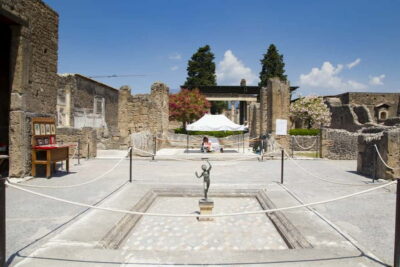
Naples or Sorrento: Full-Day Pompeii and Mount Vesuvius Tour
Read our review →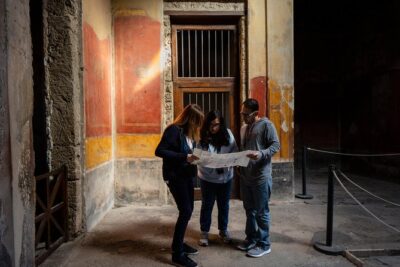
Pompeii & Mt.Vesuvius Day Tour from Naples with Pizza Lunch
Read our review →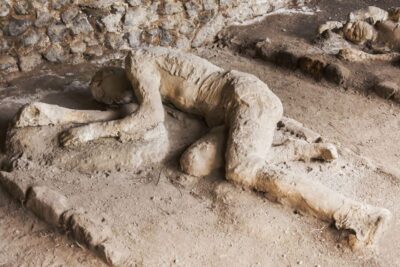
Browse the lists this tour appears in