
Reviewed · WALKING TOURS
Phlegraean Fields: Pozzuoli Guided Walking Tour
The Phlegraean Fields around Pozzuoli are interesting because you can walk through layered ancient ruins without needing to be an expert. I love how the tour strings together big standout sites with everyday city streets in the historic center, and I also like that you get headsets so the guide stays easy to hear. One thing to consider is that admission tickets are not included, so you should budget a little extra once you arrive.
In a smart, guided pace, you will see the Phlegraean Fields Archaeological Park area, the Flavian Amphitheater, and the Temple of Serapis, then finish with views along the Pozzuoli seafront. The guide is the difference-maker, and one recent highlight was Claudia, described as very pleasant and instructive.
Key things I would focus on before you go
- Meet at Pozzuoli Solfatara metro (Line 2), then start your walk right away
- 2 hours, rain or shine, with a route designed to keep moving and learning
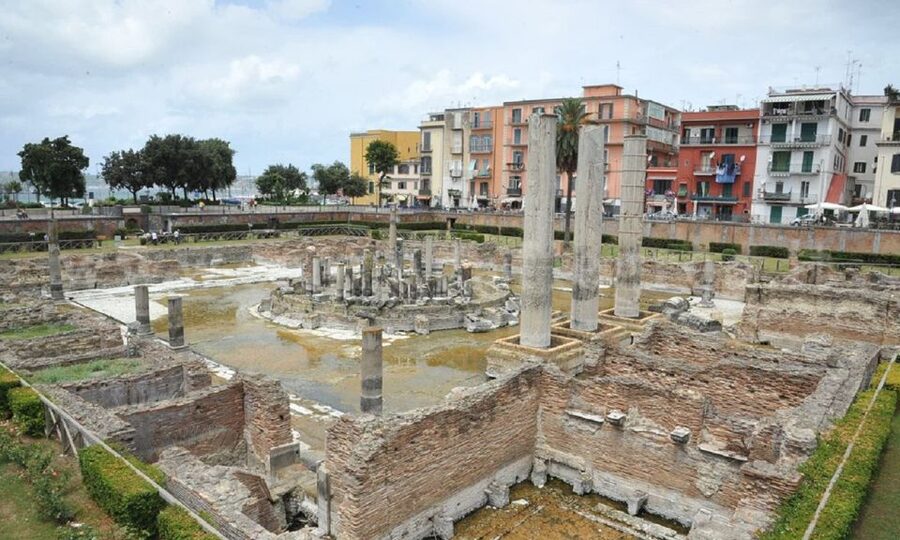
- Temple of Serapis and the Flavian Amphitheater are both major stops on the same outing
- Macellum of Pozzuoli (Roman market) gives you a local, street-level Roman Puteoli feel
- Seafront views at the end so you finish with sea air instead of just ruins
- Clarity help built in, since headsets are provided when the group is at least 6 participants
Pozzuoli’s Phlegraean Fields: why this walk feels special
Pozzuoli is one of those places where the ancient world does not stay behind museum glass. On this tour, you are moving through the same kinds of spaces people once used, and your guide keeps the route understandable. Instead of treating the ruins like disconnected photos, the walk links them into a story you can follow step by step.
I like that the experience is not only about one monument. You start with the Archaeological Park area connected to the Phlegraean Fields, then you step into the historic center of Pozzuoli. After that, the tour focuses on a cluster of high-impact ancient remains, including the Flavian Amphitheater and the Temple of Serapis. Finally, you end where the city opens up, the Pozzuoli seafront with an immense sea view.
That mix is exactly why I think this works well as an introduction. Even if you do not know Roman architecture terms, you can still enjoy the scale, the street textures, and the big visual moments. And because it is guided, you can ask questions in real time, rather than guessing what you are looking at.
More walking tours in Naples:
- Naples: Street Food Walking Tour with Local Guide
★ 4.8 · 4,256 reviews - Naples Spanish Quarters Walking Tour Street Art, Folklore & Sweet
★ 5.0 · 797 reviews - Naples: Old Town Guided Walking Tour
★ 4.8 · 553 reviews
Getting going: the Pozzuoli Solfatara meeting point and 2-hour rhythm
The meeting point is at the exit of the Pozzuoli Solfatara metro station on Line 2. Plan to arrive about 15 minutes early, and look for the guide holding the main customer name or the local tour operator logo.
This timing detail matters more than it sounds. A two-hour walking tour does not have room for delays, especially in an area where you might need a couple of minutes to orient yourself. If you show up a little early, you settle in, get oriented, and you start the route while everyone is still together.
The tour duration is two hours, and it runs rain or shine. That tells me the route is designed to keep you moving rather than waiting around for perfect weather. For planning, bring weather-appropriate layers and comfortable walking shoes. You are on your feet through the archaeological areas, then through the historic center and seafront.
One more practical plus: it is a private group. That usually means the guide can adjust pacing and questions without having to serve a large crowd.
Archaeological Park time: learning to read the Phlegraean Fields around you
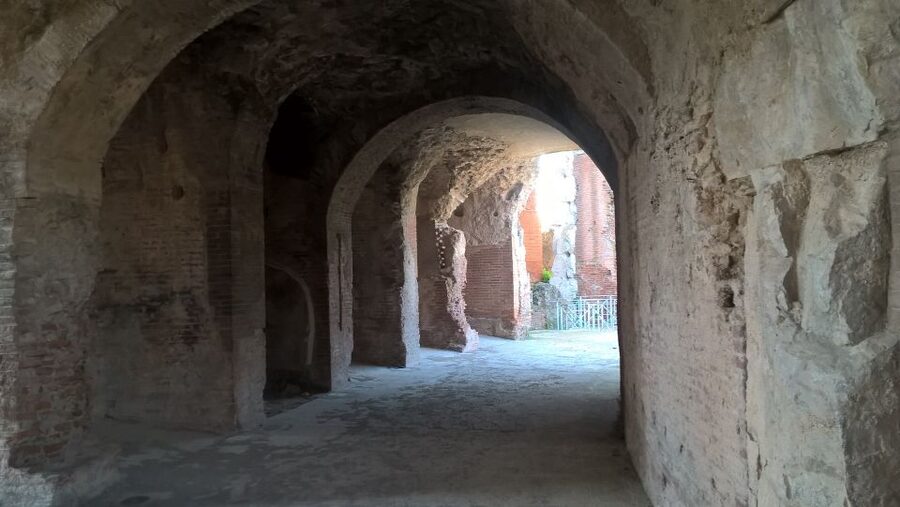
The heart of the tour begins with the Phlegraean Fields Archaeological Park area. This is where you get your framework for everything else you will see later. A guided walk is useful here because archaeological sites can look “cool” even when you do not know what they were for. The guide’s job is to help you connect what you see with what it meant.
Expect to explore the wonders of the Phlegraean Fields, guided from the metro meeting point into the park and then onward. The tour is structured so the archaeological area is not just a quick stop. You spend enough time to take in the scale of what is still there and how it connects to later, more urban ruins nearby.
I also like that the guide is answering questions as you go. That sounds obvious, but it is often the difference between a tour that feels like a lecture and one that feels interactive. If you are the type who likes to understand why something was built where it was built, this format fits.
Flavian Amphitheater: why it took so long to build
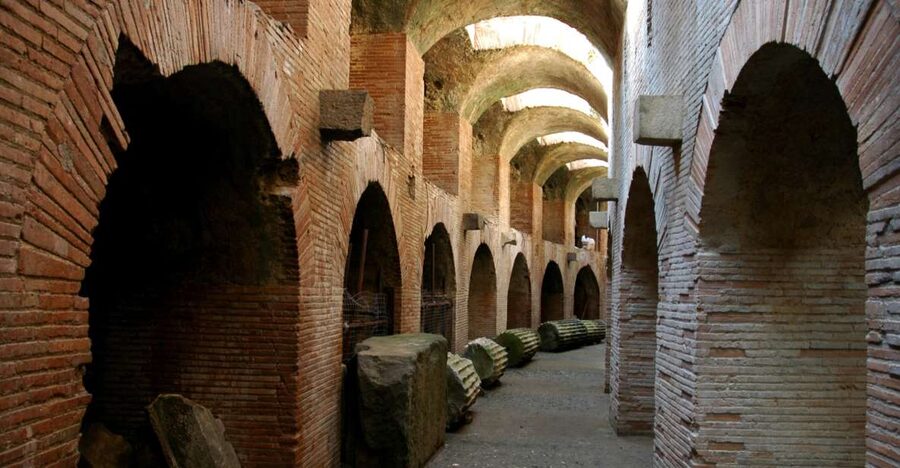
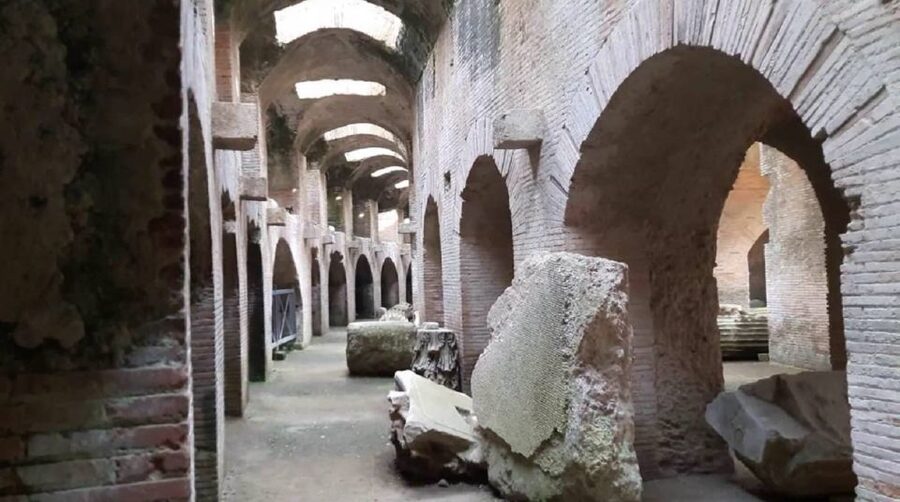
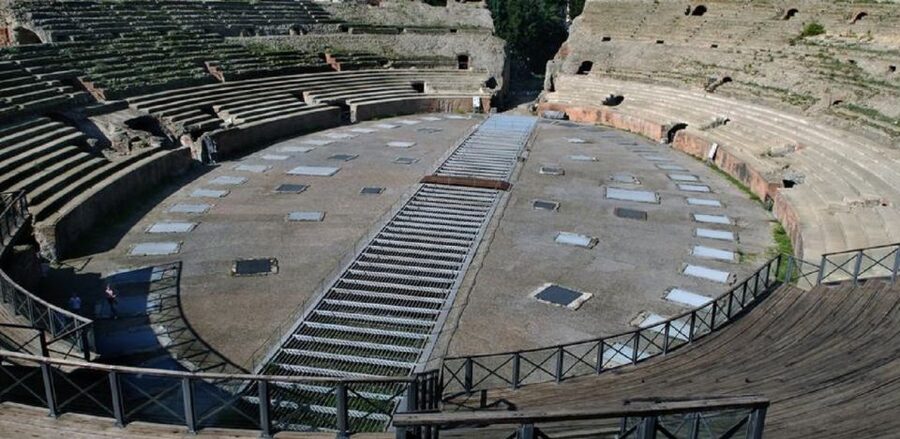
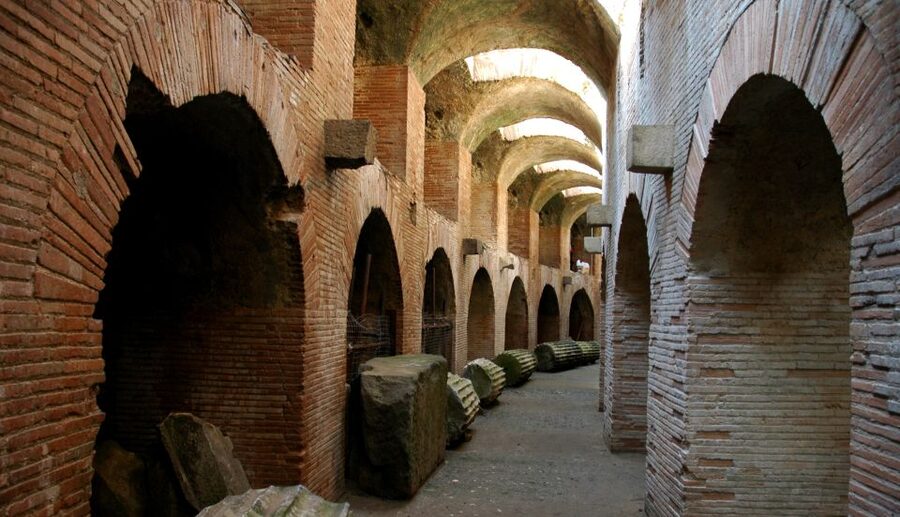
One of the biggest anchors of the walk is the Flavian Amphitheater. The tour description calls it gigantic, and the highlight is the reason it took so long to build. That is the kind of detail that turns a random ruin into a real narrative.
You are not just looking at stones. You are being guided to understand the building effort behind what you can see today. That matters because amphitheaters are always about scale and planning. Even if you only catch a few key points, knowing why construction took a long time makes the structure feel more grounded, less mysterious.
This is also a stop where the guided element helps your eyes. Without help, you might focus on one visible feature and miss how the whole site fits together. With a guide, you tend to notice the big outline first, then you get a better sense of what that outline implies.
For photo lovers, amphitheaters also tend to deliver strong sightlines. And because you will later move toward the historic center and sea views, you will not feel stuck inside one ancient bubble for the whole outing.
A few more Naples trips worth comparing
- Naples: Catacombs of San Gennaro Entry Ticket & Guided Tour
★ 4.6 · 7,941 reviews - Naples: Spanish Quarters Underground Guided Tour
★ 4.8 · 5,064 reviews - Herculaneum: Skip-the-Line Guided Tour with Archaeologist
★ 4.8 · 3,439 reviews - Mount Vesuvius: Skip-the-Line Ticket and Smart Digital Guide
★ 4.2 · 2,780 reviews
Temple of Serapis: a fascinating detour that breaks the “amphitheater loop”
Next up is the Temple of Serapis, described as fascinating. I like this stop because it changes the vibe. An amphitheater is entertainment and spectacle. A temple is different. It makes your walk feel like it covers multiple sides of Roman city life.
The tour places the Temple of Serapis as a main highlight, so you should expect more than a quick glance. The guide helps you look at what is there and connect it to why it mattered. Even if you only take away a few ideas, this is the kind of stop that adds variety to an archaeological day.
It also helps that you are not doing these sites in isolation. You are walking from the Archaeological Park area, then into the city center, and the Temple of Serapis fits naturally in that flow. In other words, it does not feel like you are hopping between unrelated attractions. It feels like a coherent route.
Historic center of Pozzuoli: ancient secrets on foot
After the major ancient landmarks, you move toward the historic center of Pozzuoli. The tour specifically says this part reveals the most ancient secrets of the city. That phrase can sound dramatic, but the practical meaning is simple: you will be walking through an older urban fabric, not just isolated ruins.
This section is where a guided walking tour really earns its keep. On your own, you might not know where to look or what streets, structures, or layouts relate back to earlier periods. With a guide, you get a framework for what you are seeing while you are actually in it.
Also, the historic center route keeps the tour from becoming only “stand and stare.” You are still seeing archaeology, but you are also getting a sense of how the city lives around these remains. That makes the experience feel more authentic, and it is easier to connect it to the seafront views at the end.
Macellum of Pozzuoli (Roman Puteoli market): seeing Rome as daily life
One of the tour stops is the Macellum of Pozzuoli, also called the public market of Roman Puteoli. This is a really smart inclusion because it shifts you from monuments to daily life.
Markets are where people gathered, traded, and socialized. Even if you are not thinking about that consciously while you walk, it changes the way you interpret the site. Instead of asking only what it looks like, you start thinking about how it would have functioned in everyday routines.
The tour description also notes that your guide will answer questions you might have. That is especially helpful at a market site, because you might wonder things like what parts did what, and how the space would have worked when it was active. A guide can explain the reasoning behind what you see, rather than leaving you with a guess.
I also like that the tour uses the name Roman Puteoli in the description. It reminds you that Pozzuoli is not just a place with ruins. It was a Roman city with a name, a role, and a culture. This stop helps you hold onto that bigger picture.
Seafront finale: the immense sea view that changes your perspective
You end by admiring the beautiful seafront of Pozzuoli, including an immense sea view. I love that the tour finishes here, because it gives you a visual reset. After ancient stones and architectural remains, you get open space and a changing horizon.
This matters for how the day “lands” in your memory. If a tour ends in another ruin, you leave still mentally stuck in close-up details. Finishing on the seafront helps you step back. It also gives you a chance to take in Pozzuoli as a living coastal city, not just an archaeological destination.
If you are doing other things later the same day, this final stop is a useful transition. You will still feel connected to the ancient narrative from earlier, but you are no longer mentally in lecture mode. You can walk, breathe, and orient yourself for whatever comes next.
What you get for the price: value for a private group up to four
The listed price is $283.21 per group, up to four people, for a two-hour guided walking tour. That pricing can be a win if you are traveling as a small unit and want a guide without splitting into a larger group.
Here is how I think about value for this specific tour:
- You are paying for more than “entry level sightseeing.” You are getting a professional guide covering multiple major landmarks, including the Flavian Amphitheater and Temple of Serapis.
- You get headsets when there are at least 6 participants, which improves clarity. In a private group, the need may be less, but the tour is still built around making the guide easy to hear.
- You also avoid the hassle of planning a route across several distinct stops. The guide handles the connections.
Admission tickets are not included. So you should budget extra for site entry where required. That is the main variable cost to keep in mind. If you are comfortable with that add-on, the base price looks reasonable for what you get, especially for couples, families, or small groups who want one guide and one clean route.
If you are solo, the per-group price can be pricier than shared group tours. But the private format often makes it worth it if you want more personalized pacing and questions.
Guide quality that actually matters: pleasant and instructive
One detail that stands out from the feedback is the guide. A recent review praised Claudia as very pleasant and instructive, and that kind of comment tells me the tour is not just about standing near ruins. It is about making them understandable.
A good guide does two things. First, they keep the story clear. Second, they answer the questions people actually ask while walking. You can feel that in a tour like this because you have several highlights in a short window.
If you are the type who likes to know what you are looking at, prioritize a guided experience like this. It is especially helpful when the route includes both major monuments and more everyday places like a Roman market.
Who should book this Phlegraean Fields walking tour
This is a strong fit if you want:
- A guided introduction to Pozzuoli and the Phlegraean Fields area without doing a complicated self-guided puzzle
- A two-hour plan that includes major ancient landmarks plus a local street feel
- A route that ends with sea views, not just another ruin
It is also a good match for small groups who want private attention. If your group includes someone who likes asking questions, the “guide will answer questions you might have” approach is exactly what you want.
If you only have one day in the region, this kind of concentrated, walkable sequence is the simplest way to see several headline sites without overplanning.
Should you book it?
I would book this tour if you want a structured walk that hits the big names around Pozzuoli, including the Flavian Amphitheater and the Temple of Serapis, then finishes with seafront views. The private group setup, plus the guidance approach, makes it easier to enjoy the ruins as more than scenery.
I would think twice if you hate paying extra for site tickets, since admissions are not included. Also, if you prefer extremely flexible, stop whenever you want pacing, keep in mind this is a two-hour guided route built to work as a full plan.
If you can handle those two points, the overall value is solid, and the guide quality angle, highlighted with Claudia’s pleasant and instructive style, is a good sign you will leave with a clearer picture of what you saw.
FAQ
Where does the tour start?
You meet the guide at the exit of the Pozzuoli Solfatara metro station (Line 2). Plan to arrive about 15 minutes early and look for the guide holding the main customer name or the local tour operator logo.
How long is the walking tour?
The tour lasts about 2 hours. Starting times depend on availability.
Is the tour outdoors and will it run in bad weather?
Yes, it takes place rain or shine.
Is this tour private?
Yes. It is listed as a private group.
What is included in the price?
A professional guide is included. Headsets are included from 6 participants onward to help you hear the guide clearly.
Are admission tickets included?
No. Admission tickets are not included and must be paid separately.
What languages are available?
The live guide is available in English, Italian, French, Spanish, and German.
What is the price and group size?
It is priced at $283.21 per group for up to 4 people.
What is the cancellation policy?
You can cancel up to 24 hours in advance for a full refund.
Recently reviewed around Naples
- DISCOVERING POMPEII – VIP tour/Small group★ 5.0 · 22 reviews
- Discovering Pompeii and Herculaneum – VIP Tour with Lunch★ 4.5 · 54 reviews
- Daytrip from Naples to Amalfi Coast, Positano, Amalfi & Ravello★ 5.0 · 22 reviews
- Cesarine: Dining & Cooking Demo at Local’s Home in Naples★ 4.5 · 16 reviews
- Flavors of Naples Decumani Street Food and Sightseeing Tour★ 5.0 · 13 reviews
- Daytrip from Port of Naples to Amalfi Coast, Sorrento & Positano★ 5.0 · 17 reviews
- Daytrip from Naples port to Pompei, Sorrento & Positano★ 5.0 · 54 reviews
- Private Half-Day Sightseeing Tour of Vesuvius National Park★ 5.0 · 7 reviews
Walking Tours, compared.

Naples Spanish Quarters Walking Tour Street Art, Folklore & Sweet
Read our review →


Naples Walking Tour with Underground Roman Ruins Ticket
Read our review →

Browse the lists this tour appears in