
Reviewed · POMPEII TOURS
Pompeii: Guided Tour with Archaeologist with max. 12 People
Pompeii is one of those places where the ruins feel like a time capsule, and a tour like this makes it easier to understand what you are actually looking at. The biggest draw is walking the city with an archaeologist guide, not just a slideshow of facts, in a small group (up to 12 people). I also like that you see both the “pretty stuff” like frescoes and mosaics and the story side, including the plaster casts of victims from AD 79. One consideration: Pompeii is outdoors and full of uneven ground and steps, so you need comfortable shoes and realistic expectations about pace, especially in hot weather.
You meet at Suisse Restaurant, your guide checks you in, and you start from Porta Marina Inferiore. The tour runs about 2 hours, and you get express entry plus a headset setup if your group size requires it (headsets are included for groups larger than 8). After the guided portion, you also get free time to roam on your own, which is key because Pompeii rewards lingering.
Key Highlights You Will Care About
- An archaeologist-led experience with Benedetto as a standout guide
- Skip-the-ticket-line express entry plus a focused 2-hour route
- Frescoes, mosaics, and marbles that explain daily life inside Roman homes
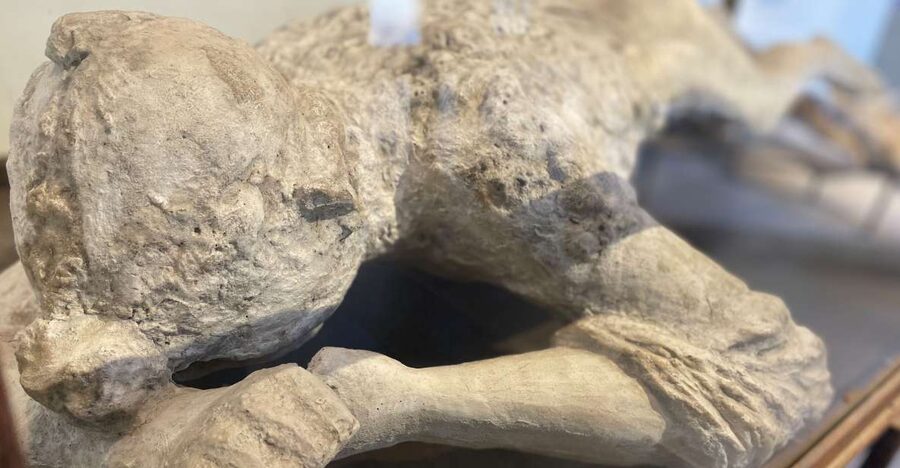
- Plaster casts of victims paired with the AD 79 eruption story
- Baths, the Forum, and the lupanare so you understand more than temples and streets
A Small-Group Pompeii Walk With Benedetto, Not a Script
This tour is built for people who want Pompeii to make sense. The guide, Benedetto Tourist Guide, is described as a real archaeologist, with experience connected to the site and ongoing study. That matters because Pompeii is not well marked in a way that tells you what each wall, doorway, or patch of stone “means.” A guide can point out what you would miss, and why it looks the way it does.
The group size keeps things human. With up to 12 people, you can ask questions and stay together without the shuffle you get in large group tours. In your group, you will also hear the guide clearly thanks to headsets if the group is over 8 people, which helps on busy days when the site gets loud.
One extra plus I appreciate: this tour is designed to help you avoid spending your day stuck behind crowds. Multiple guides have a way of saying this, but the practical result is what you feel on your feet. If the group is small and the guide knows where bottlenecks form, you are more likely to see more in the same time.
More Pompeii tours and tickets in Pompei Campania:
- Pompeii: Entry Ticket and Guided Tour with an Archaeologist
★ 4.8 · 19,459 reviews - Pompeii: Small Group Tour with an Archaeologist
★ 4.8 · 12,264 reviews - Pompeii: Skip-the-Line Entrance Ticket with Audio Guide
★ 4.0 · 2,509 reviews
Getting Oriented Fast: Starting at Suisse Restaurant and Entering Pompeii
You start at Ristorante Suisse, and your guide waits there with a sign showing your name. That is small, but it removes the common stress of arriving at a big site and trying to match faces to names while everyone else is hustling for tickets.
The tour then enters Pompeii through the Porta Marina Inferiore area. From the start, you are not just walking in a random loop. You begin with city life context, including the theaters zone, before you move into residential and civic areas. That sequencing helps your brain build a map: first the public side, then homes, baths, commerce, and finally the civic heart.
The “2 hours” framing is also realistic. Pompeii is huge, and even with a guide you will not see everything. The value here is not that you cram in every square meter. It is that the guide helps you see the most meaningful pieces in a way that makes the rest of the site easier to navigate during your own free time.
The Original Streets and Shops: Roman Life on an Actual Road
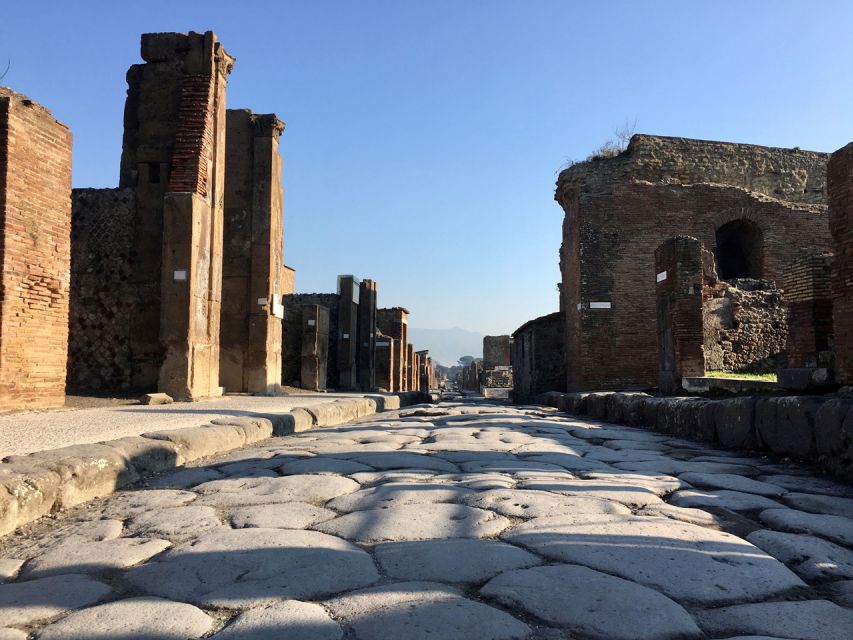
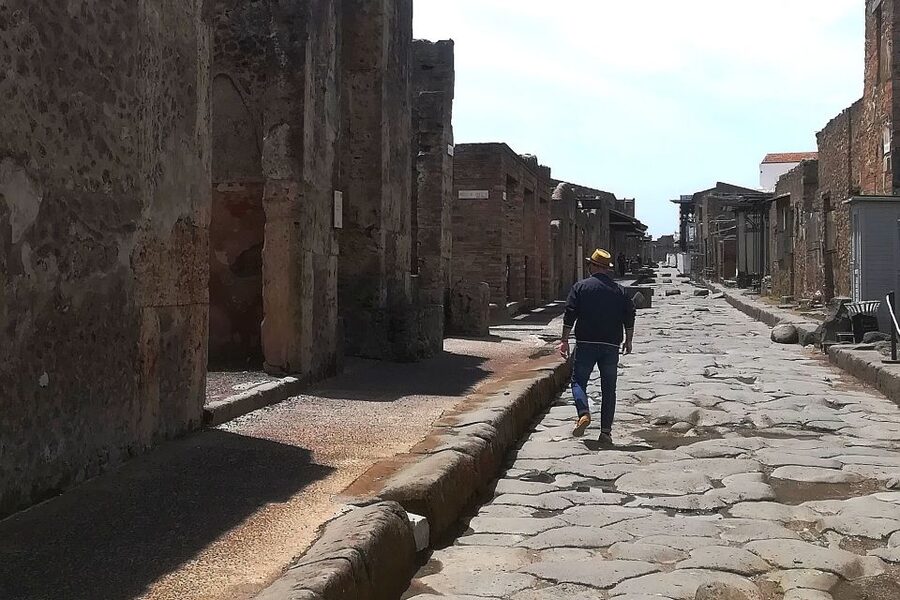
One of the most satisfying parts of Pompeii is walking along routes that feel like real streets, not museum corridors. This tour includes time on an original Roman road, and it keeps you moving through the built environment where people once lived, ate, worked, and gathered.
As you walk, you pass storefronts and familiar-style commercial spaces, including shopfronts and areas associated with daily food and snacks, like Roman bakeries and older snack-bar type spots. You get the chance to connect “this was a city” with details you can see: doorways, thresholds, and the way buildings face the street.
What I like about this approach is that it prevents the usual Pompeii mistake, treating everything as a set of isolated sights. Instead, you get a sense of circulation, how people moved, where they would pause, and how the street itself structured daily life.
House of Menander: Frescoes and Mosaics With Real Meaning
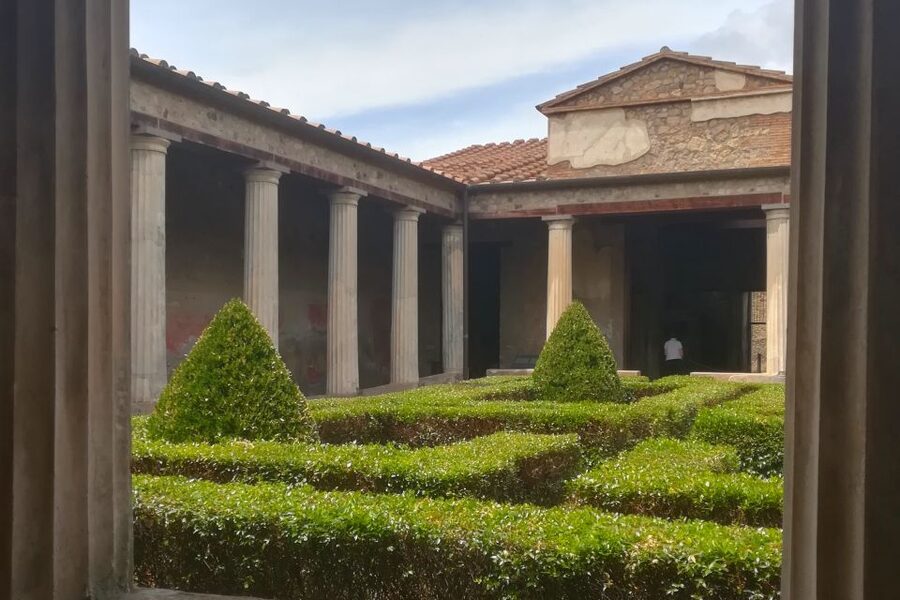
The tour includes a stop at the House of Menander, and this is where Pompeii’s art does more than look pretty. Roman homes were both private space and social space. The guide’s job is to help you understand what you are seeing on the walls and floors, and how those decorations related to wealth, taste, and status.
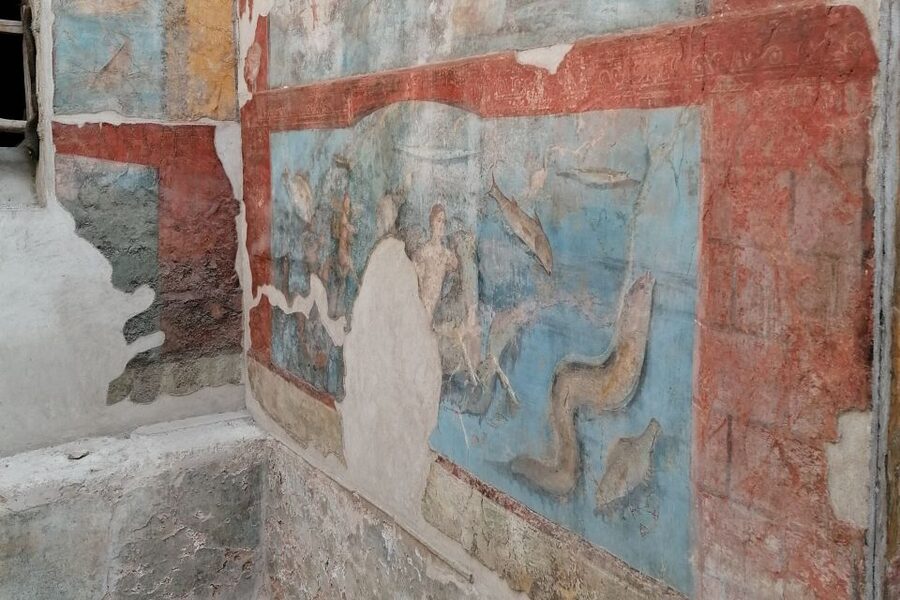
You focus on things like frescoes, mosaics, and interior decoration elements such as marbles. These materials can look like “cool visuals” on a quick visit. With a guide, they start to feel like evidence. You learn why certain rooms mattered, how decoration could signal identity, and why the layout of a house tells you how people lived inside it.
A practical tip from this kind of stop: go slow. Pompeii art is often partially worn, cracked, or damaged by time and restoration work. If you sprint through, you will miss the details that make the scenes readable. This tour’s timing is built for looking, not just checking boxes.
A few more Pompei Campania trips worth comparing
- Pompeii: Skip-the-line-Ticket and Guided Tour
★ 4.6 · 1,152 reviews - Pompeii: Guided Tour with Skip-the-Line Entry
★ 4.9 · 812 reviews - Pompeii: Skip-the-Line Entry Ticket with Digital Guide App
★ 4.1 · 770 reviews - Pompeii: Afternoon to Sunset Guided Tour with Ticket
★ 4.9 · 484 reviews
Terme Stabiane: Baths Where You Understand the Social Scene
At Terme Stabiane (the Stabian Baths), you get a different side of Roman life. Baths were not only about hygiene. They were meeting places, routine, and relaxation rolled into one.
The guide uses the setting to explain what bath culture meant, and why the layout is important. You are not just looking at pools and corridors. You are learning how Romans used these spaces as part of everyday rhythms.
This stop also gives you a useful break from the “thick of it” feeling of the busiest parts of the site. On hotter days, guides who are tuned in can help manage pacing and shade breaks. If the weather is tough, this tour tends to feel more thoughtful than a rushed, sign-and-point approach.
The Lupanare: A Sobering Look at Commerce, Sex, and Boundaries
Next up is the lupanare, commonly described as the brothel area. It is one of the sites that people either overskip or misunderstand, because it is uncomfortable and sensational.
A good archaeologist guide helps you keep it grounded. You look at what remains, but you also learn how this kind of business fit into the city economy and the social boundaries of the time. The goal is not to shock you. The goal is to connect it to the bigger picture of what Pompeii was, a functioning city with many types of work and entertainment.
You may feel a little awkward at first, and that is normal. The value is that you leave with a clearer sense of what “Roman life” included, not just what it preferred to display in official spaces like temples and forums.
Forum Civile di Pompei, Temple of Jupiter, Basilica, and Macellum
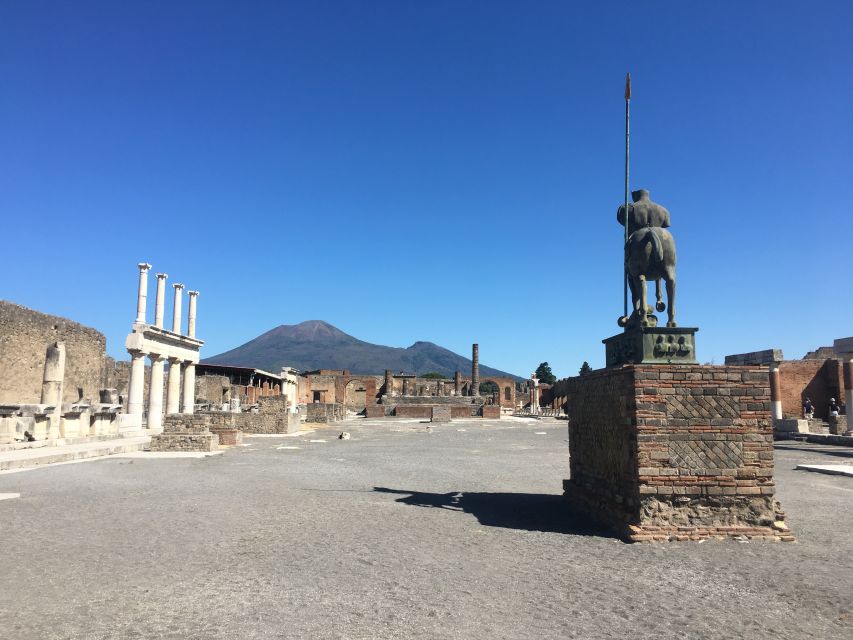
Then the tour shifts to the civic and economic core, where you can see how Pompeii operated as a political and commercial center.
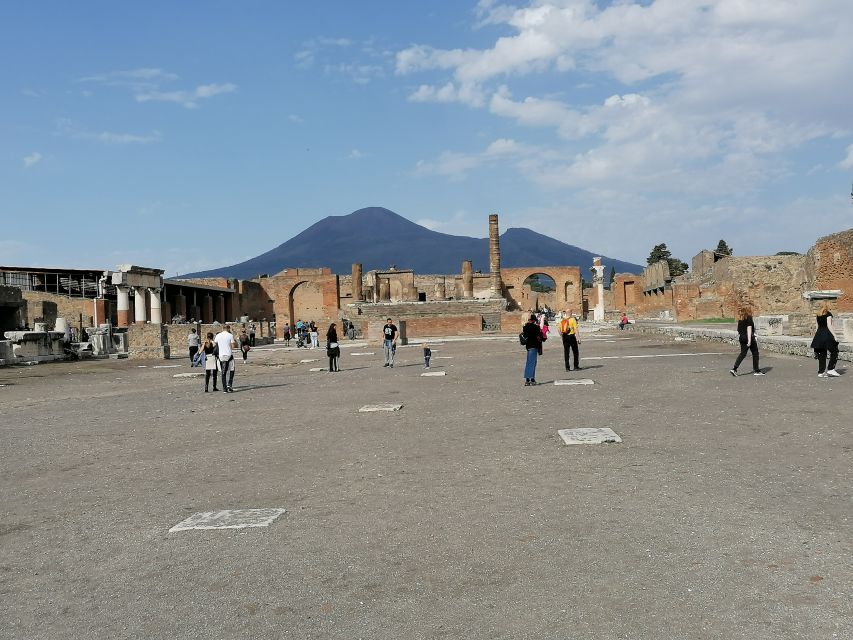
You visit the Forum Civile di Pompei, which is where public life concentrated. From there you move to the Temple of Jupiter, a stop that helps you read the religious side as part of the public landscape, not an isolated building on a hill. Next comes the Basilica, a key civic space tied to community function. You also see the Macellum of Pompeii, linked to markets and food commerce.
This set of stops gives you a full day-in-the-city feeling. Homes show private life. Streets and shops show commerce. Baths show routine and social mixing. The forum and major civic buildings show governance, religion, and public gatherings. When you see these pieces in sequence, Pompeii turns from “cool ruins” into a place that feels structured.
One more detail that helps: the guide ties each stop back to what you have already seen. So you are not starting over every time you turn a corner.
The Victims’ Plaster Casts: AD 79 Comes Into Focus
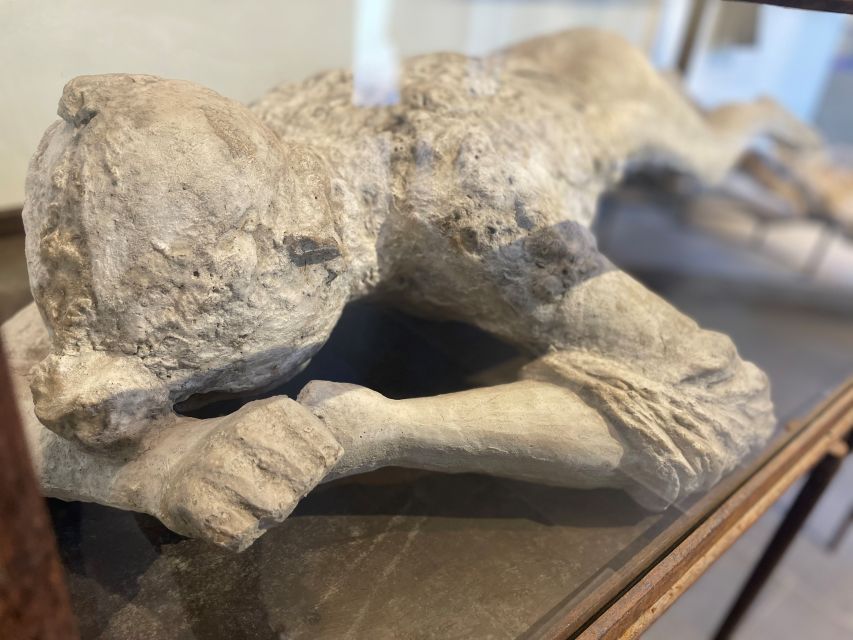
No Pompeii experience is complete without confronting the AD 79 eruption story. This tour reaches one of the most emotionally heavy parts at the end, when you see the plaster casts of the victims.
What makes this portion work is the pairing of history with physical remains. The guide explains how the eruption changed the city, and then you see the results in a form that your brain can process. It is hard, but it is also clarifying. You stop imagining Pompeii as a postcard city and start seeing it as a place where real people lived right up to the catastrophe.
You also learn why the casts are so important for understanding loss of life, not just the spectacle. They bring a human scale to the tragedy, without pretending the scene is anything other than heartbreaking.
This is the “never to be missed” part for a reason. If you skip it, you lose half the story.
How Much It Costs, and Why $65 Can Be Good Value
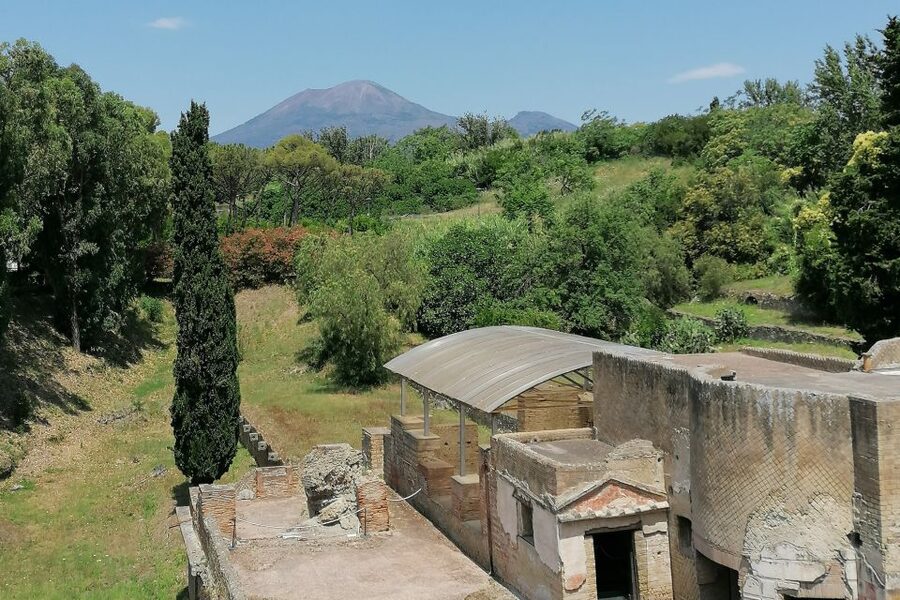
At $65 per person for about 2 hours, this tour sits in a middle range. The question is, what do you get for your money?
First, you get an archaeologist guide plus a route that prioritizes the best points for understanding Roman city life. Second, you get express entry and ticket-line skipping, which is not a small deal at Pompeii. If you have limited time, saving even 20 to 40 minutes can decide whether you feel rushed or relaxed.
Third, you get practical extras that help you during the visit, like headsets if the group is larger, and time to explore on your own afterward. That combination is why the price can make sense. You are buying direction and interpretation, not just access to stones.
If you were going alone, you could still see many sites. But Pompeii is confusing without context, and you would spend time figuring out what is important instead of learning from it.
If you want a short, high-impact Pompeii day, this feels like a strong value.
Practical Tips: Tickets Are Named, and Pompeii Is Hot and Uneven
There are a few things you should handle before you arrive.
Pompeii tickets are named. After booking, you need to provide first and last name for every participant. Also, don’t forget your passport or ID card in original form, because the ticket name matters.
For the visit itself, bring comfortable shoes, water, and a hat. Even when the route is smart, you are still walking through an outdoor archaeological site, often in direct sun.
Also note this clearly: this experience is not suitable for mobility impairments and not for wheelchair users. The terrain is uneven and the site involves stairs and awkward ground underfoot.
The good news is that because the group is small and the guide is focused on pacing, you usually spend less time waiting in bottlenecks and more time actually looking and learning.
Should You Book This Pompeii Archaeologist Tour?
Book it if you want Pompeii to feel like more than ruins with explanations. I would choose this tour when you care about Roman daily life and want the art and architecture explained in a way that connects to how people actually lived.
It is also a smart pick if you hate the idea of wandering alone trying to interpret what you see. Pompeii has almost no forgiving signage for the casual visitor, so having a guide who knows how the site works saves your energy and improves your understanding.
Skip it or reconsider if you need a fully accessible route, because this tour is not set up for wheelchairs or mobility limitations. And if you only want a quick highlight pass, you might find the 2 hours is still too much walking for your comfort. But if you are okay with a brisk, guided walk, it is a solid way to make the most of limited time.
FAQ
How long is the Pompeii guided tour?
The tour lasts 2 hours.
What is the group size for this Pompeii tour?
The group is small, with a maximum of 12 people.
Where do we meet the guide in Pompeii?
You meet at Suisse Restaurant. The guide waits at the meeting point with a sign that has your name.
Does this tour include tickets or entry?
Yes. The tour includes an express entry ticket to Pompeii.
Are headsets provided?
Headsets are included for groups larger than 8 people.
What languages is the live guide available in?
The live guide is available in Italian, English, and French.
What do I need to bring?
Bring your passport or ID card, comfortable shoes, a hat, and water.
Is this tour suitable for wheelchair users or people with mobility impairments?
No. It is not suitable for people with mobility impairments and it is not for wheelchair users.
Recently reviewed around Pompei Campania
- Pompeii Audioguide – TravelMate app for your smartphone★ 3.9 · 10 reviews
- Pompeii: Entrance Ticket – Skip the Line★ 3.8 · 64 reviews
- Pompeii: AR Glasses Augmented Reality Tour★ 5.0 · 3 reviews
- Pompeii: Entry Ticket & Guided Tour with an Expert Historian★ 5.0 · 4 reviews
- Pompeii Small Group Tour – Tickets Included★ 4.7 · 72 reviews
- Pompeii and Oplontis: Small Group Tour with an Archaeologist★ 4.5 · 3 reviews
- Pompeii and House of Vettii Guided Tour★ 3.7 · 3 reviews
- Pompeii 2H Private Guided Tour with Optional Tickets★ 5.0 · 3 reviews
Pompeii Tours, compared.
Entry Ticket and Guided Tour with an Archaeologist
Read our review →

Pompeii Small Group Tour with an Archaeologist
Read our review →
Naples or Sorrento: Full-Day Pompeii and Mount Vesuvius Tour
Read our review →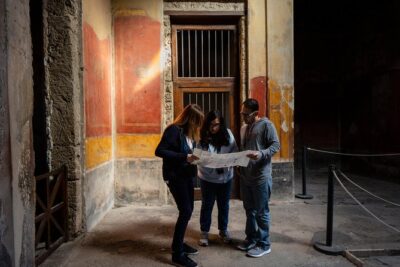
Pompeii & Mt.Vesuvius Day Tour from Naples with Pizza Lunch
Read our review →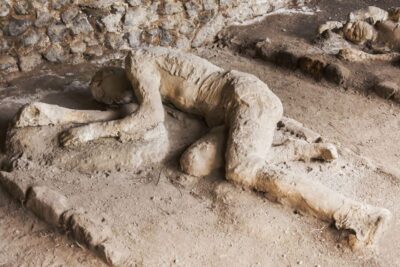
Browse the lists this tour appears in