
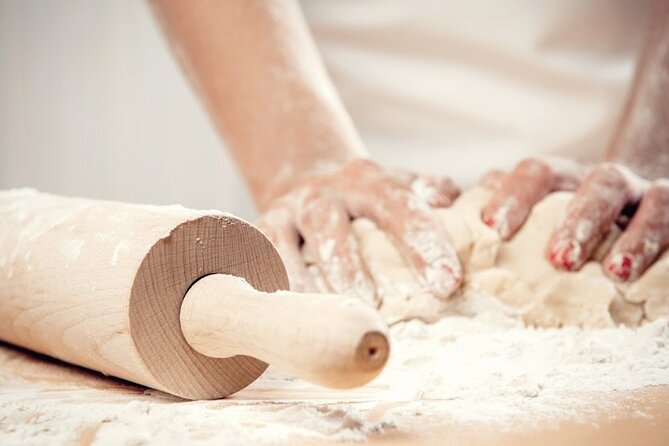
Reviewed · COOKING CLASSES
Neapolitan pasta homemade Cooking Lesson
Making pasta in Naples is interesting because it is practical, hands-on, and tied to what locals actually eat. I especially like the no-machine method and the way the class teaches traditional dough skills you can reuse at home. One consideration: this is a 2-hour, intensive format, so if you want lots of extra downtime or a slower pace, you may feel rushed.
You start with a quick orientation to pasta shapes and ingredients, then roll, cut, and fill egg pasta the traditional way. The session includes tasting high-quality local products, like organic Vesuvio tomatoes and homemade bread, and ends with your pasta served as part of lunch with wine and soda. The group size caps at 35, so it stays social, but you will still be in a real class setting with multiple hands-on steps.
Key Highlights You Should Know
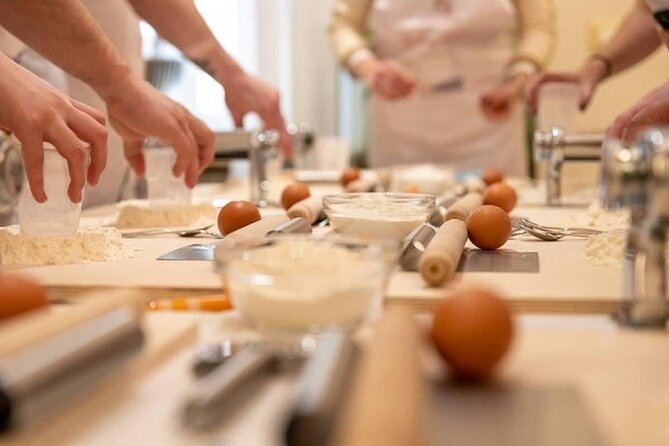
- Hand-rolled dough, no machinery: You use a rolling pin and old-school technique, so you learn the why, not just the shape.
- Neapolitan egg pasta methods: You get step-by-step guidance based on a family recipe and an 1800s-style dough approach.
- Tasting local ingredients: You try organic Vesuvio tomatoes, plus homemade bread, to understand what good inputs taste like.
- More than one pasta shape: You make ravioli and fettuccine, and you also learn how tagliolini and pappardelle are prepared.
- Two sauces with your finished pasta: Cooking and seasoning are part of the lesson, not an afterthought.
- Value through a real meal: Lunch is included, so you are not paying for just a demonstration.
From Dough to Dinner: What You Actually Learn in Naples
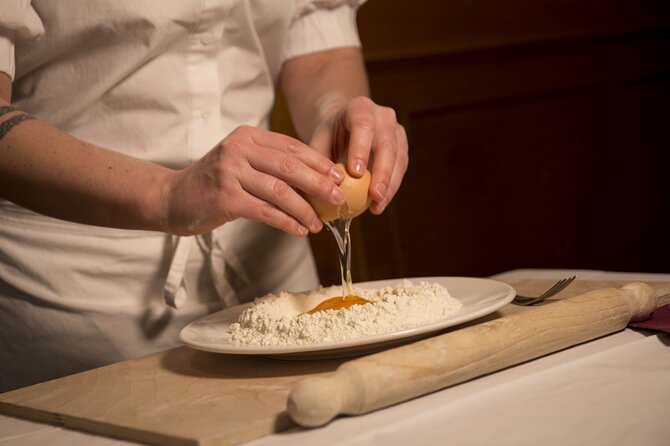
This Neapolitan pasta cooking lesson is built around one core idea: good pasta starts with the dough and the process. You are not just watching someone else work. You are using your hands, learning texture and timing, and getting enough structure that you can repeat the method later.
You will begin with a short explanation of the difference between pasta types, which matters more than you might think. Shape affects thickness, cooking time, and how sauces cling. Even if you never make ravioli at home, learning how fettuccine and other forms behave in boiling water will sharpen how you choose and cook pasta in the future.
The class then focuses on egg pasta. You make the dough using the family method, and you learn what happens during the resting period. The teacher also talks about a dough approach linked to the 1800s, plus there is a local starter involved during the rest time. You will taste local products during this stretch, which keeps the experience lively instead of waiting around.
If you want a souvenir that is edible, this is it. You leave with knowledge, not a bag of branded pasta.
More cooking classes in Naples:
- Naples: Pasta Making Class with Starter and Drink
★ 4.9 · 1,060 reviews - Naples: Pasta Cooking Class with Tiramisù and a Drink
★ 4.6 · 415 reviews - Amazing Pizza and Pasta Class at Savio’s kitchen cooking school
★ 5.0 · 104 reviews
Via delle Zite Meeting Point, Then Straight Into Cooking Mode
The session starts at Via delle Zite, 30, 80139 Napoli NA and ends back at the meeting point. The location is described as near public transportation, which is helpful if you are hopping between neighborhoods.
Because the total time is about 2 hours, the timing is more like a sprint than a leisurely cooking stroll. The upside is that you get a full arc: learning, making, tasting, cooking, and eating. The downside is that there is not a lot of slack for delays. If Naples traffic or walking time is unpredictable for you, I would build in a buffer so you do not start the class frazzled.
Group size caps at 35. In a class like this, that usually means you can socialize, but you still need to pay attention. People who enjoy doing the work step-by-step tend to have the best experience. People expecting a quiet, ultra-personal tutorial may find it a bit more energetic than they hoped.
The 1800s-Style Rest and the Local Starter Moment
One of the most useful parts for your future cooking is the dough rest explanation. Yeast is not the star here, egg pasta is. Still, resting changes how the dough handles, how it rolls, and how it behaves when cut. You will learn how to work with the dough during that downtime rather than treating it like dead time.
During the rest period, you are given a local starter. The goal is not mystery for mystery’s sake. It is to connect the dough process to a local ingredient story, and to reinforce why the teacher keeps pointing you toward high-quality product.
This is also where you taste. You get to try organic tomato from Vesuvio and homemade bread. That tasting part is genuinely practical: it trains your palate to notice what tomato sweetness and bread texture should feel like before you ever touch sauce.
If you are a food person, this tasting section will feel like a shortcut. You get a quick lesson in ingredients that can make your homemade pasta taste more like Naples and less like, well, dinner you made in a pinch.
Rolling Without Machines: Neapolitan Texture Skills You Can Reuse
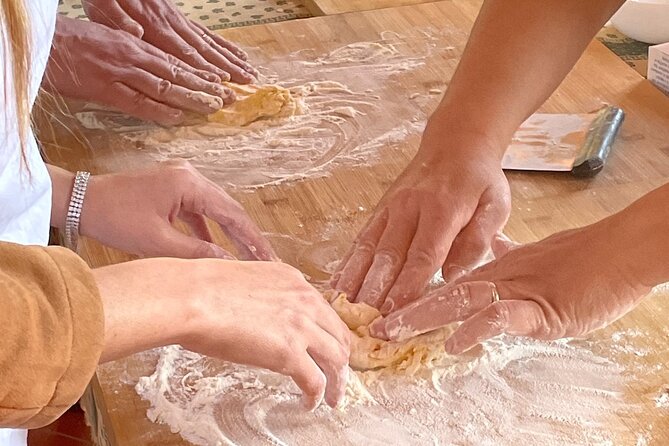
A big theme here is tradition: you roll out the dough with a rolling pin and do not use machinery. That choice is more than marketing. It teaches you how to read dough thickness and how to keep it even enough to cook properly without turning it into a sticky mess.
The class highlights traditional methods taught by grandmothers, and that translates into technique. You will learn how to work the dough, how to cut it, and how to form pasta shapes without relying on a machine that does the work for you.
This is where the hands-on attention matters most. If you have never worked with egg pasta, you might assume it is forgiving. It is somewhat forgiving, but it still responds to your touch. Rolling with care helps prevent uneven thickness, and cutting cleanly matters when you go for ravioli.
You also learn that pasta shapes are not just visual. Different shapes handle sauce differently and create different mouthfeel. Seeing and making them in the same session helps the lesson stick.
More hands-on workshops in Naples:
- Naples: Pizza-Making Workshop with Drink and Appetizer
★ 4.9 · 5,411 reviews - Authentic Pizza Making Class in Naples with Appetizers and Drink
★ 5.0 · 3,178 reviews - Naples: Neapolitan Pizza and Tiramisù Making Class
★ 4.8 · 839 reviews - Naples Pasta Class: Fettuccine & Ravioli with Grandma’s Recipe
★ 5.0 · 506 reviews
Making Ravioli and Fettuccine, Plus Tagliolini and Pappardelle
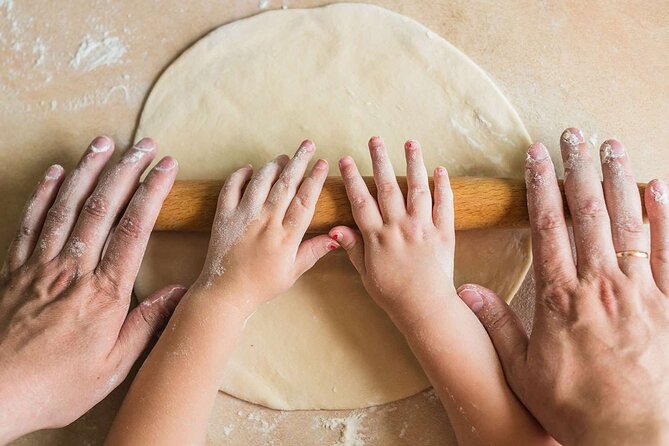
The main creations are ravioli and fettuccine. You will cut the dough, make ravioli, and prepare fettuccine from the same base sheet approach. The class also includes instruction on tagliolini and pappardelle, so you get a broader pasta toolkit rather than a single-trick skill.
For ravioli, the key step is the filling. You mix the filling ingredients and then combine it with the ravioli. That flow teaches you how to portion, how to seal, and how to keep ravioli from falling apart when cooking.
For fettuccine, the lesson focuses on cutting the dough properly into strips and keeping consistency. It is simple on paper, harder in practice. Consistency helps the strands cook evenly so you are not eating some chewy bits and some overcooked edges.
The teaching approach is helpful because it compares styles. You will see how tagliolini is different from fettuccine in thickness and how pappardelle changes the experience of eating sauce. Even if you do not make those exact shapes at home right away, you will understand how to adjust.
In the class vibe, people tend to appreciate that it feels friendly and not intimidating. One host name that comes up is Daniel, and the vibe described is that he makes pasta feel approachable and gives plenty of practical tips while you work.
Filling, Cooking, and Two Sauces at the Finish Line
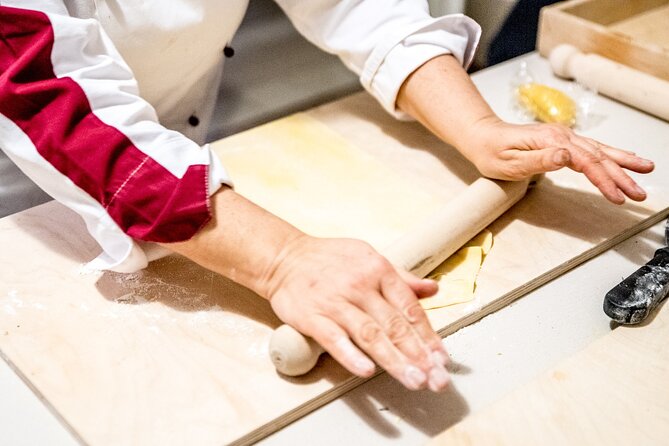
Once your pasta is shaped, you cook it in water. You will then taste it after it is ready, and it is served with two different sauces after a few minutes. This structure is smart: you learn the pasta first, then see how sauces interact with it.
Cooking pasta is one of those skills where timing matters more than people think. If the pasta is too thick or cut unevenly, the timing problem shows up fast. If you rolled and cut well, the sauce portion becomes the reward instead of the rescue.
The two-sauce setup also helps your brain. You get to compare how one pasta shape works with different flavors. It teaches you that saucing is not just pouring. It is matching texture and thickness.
And because lunch is included, this part is not a sad end where you watch a plate go by. You eat what you made, and that makes the lesson feel complete.
Lunch With Wine and Soda: Why the Included Meal Matters
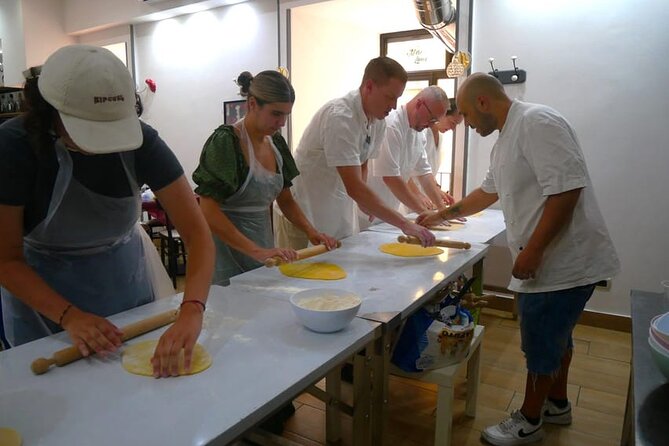
The included lunch is homemade fettuccine and ravioli with wine, plus soda/pop. That is more valuable than it sounds, because in a class like this, food can be either an afterthought or the point.
Here, the meal is the final proof that your work turned into something worth eating. You can compare the taste of your finished pasta to the ingredients you tasted earlier, like the Vesuvio tomatoes and bread. That connection between ingredients and outcome is the kind of lesson that actually sticks.
Wine is included, but the class also includes soda/pop. So you can choose what fits your style without feeling locked in.
One practical note: the class is not recommended for people who are gluten intolerant. Since pasta dough is typically built on flour, this is not the kind of class where you can assume substitutions are available.
Price in Naples: Is $90.76 Worth It?
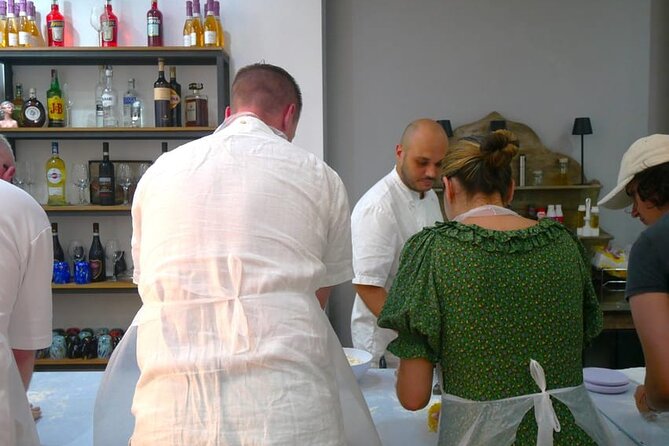
At $90.76 per person for about 2 hours, the cost sits in the mid-to-higher range for cooking classes. The question is not just whether you pay for ingredients. You pay for technique, time, and a guided sequence that ends with an actual lunch.
Here is why I think it can be good value if you want hands-on skill, not just a food tasting:
- You get to make multiple pasta types, not just one shape.
- You get instruction tied to dough, cutting, and cooking.
- You receive lunch with wine and soda, so the meal is part of what you are buying.
- You get tasting of quality inputs, including organic tomato from Vesuvio and homemade bread.
Where value can wobble for some people is expectation. If you want a long, slow course with lots of extra time to practice until everything is perfect, a 2-hour class can feel tight. A short class can also feel expensive if you were hoping for more than one meal or an extended dessert component.
But if you treat it like a focused workshop, the price makes more sense. You are paying to learn a method you can repeat.
Also, it is commonly booked about 27 days in advance, so if you plan around a specific day, book earlier rather than assuming you can walk in.
Who Should Book This Pasta Lesson (and Who Might Feel Frustrated)
This class is a strong fit if you want:
- A practical way to learn hand-rolled egg pasta in Naples
- A lesson that includes tasting and then eating what you make
- A fun, social group atmosphere with real guidance (the host, Daniel, is praised for making it easy and enjoyable)
You might reconsider if:
- You are gluten intolerant (not recommended)
- You want more than a 2-hour sprint
- You already know how to make fresh pasta and you are hoping for very advanced techniques. A class like this is designed for a wide range of skill levels, so advanced cooks may not feel challenged enough.
The ideal group for this experience is a couple, friends, or solo travelers who like interactive activities and want a memorable food skill tied to a specific place.
Practical Tips to Make Your Class Go Smoothly
Keep these basics in mind so you enjoy the experience instead of managing stress:
- Wear clothes you can get slightly messy in. Pasta dough is friendly, but flour and egg happen.
- Arrive with a little buffer. Naples timing can be unpredictable when you are walking from public transit.
- Ask questions while you are working, not only at the end. The best tips happen while your dough is in front of you.
- Take notes on the steps you care about most. Rolling, resting, cutting, and sealing ravioli are the parts you will want to repeat.
If you love ingredients, pay attention during the tasting portion. The organic Vesuvio tomato taste and the homemade bread give you a reference point for what “good” should mean.
Should You Book the Naples Homemade Pasta Lesson?
Yes, I would book it if you want a hands-on Naples cooking class that ends with a real lunch and teaches method, not just performance. The best reason to go is the combination of no-machine dough technique, ravioli plus fettuccine, and tasting quality local ingredients like organic Vesuvio tomato.
Skip it if you need a long class, want a fully gluten-free setup, or expect a high-level advanced workshop. For most visitors, though, this hits the sweet spot: you leave with knowledge you can use at home, and you get to eat what you made in the same sitting.
FAQ
How long is the Neapolitan homemade pasta cooking lesson?
It lasts about 2 hours.
What do I eat and drink during the class?
Lunch includes your homemade fettuccine and ravioli with wine, plus soda/pop.
Do I need to know how to cook pasta before I go?
No special prior skill is required. The class includes instruction on pasta types and walks you through making egg pasta.
Is this class suitable for people who are gluten intolerant?
It is not recommended for people who are gluten intolerant.
Where is the meeting point, and where does the activity end?
You start at Via delle Zite, 30, 80139 Napoli NA, Italy, and the activity ends back at the same meeting point.
What is the cancellation policy?
You can cancel for a full refund if you cancel at least 24 hours before the experience’s start time, and free cancellation is available up to that point.
Recently reviewed around Naples
- DISCOVERING POMPEII – VIP tour/Small group★ 5.0 · 22 reviews
- Discovering Pompeii and Herculaneum – VIP Tour with Lunch★ 4.5 · 54 reviews
- Daytrip from Naples to Amalfi Coast, Positano, Amalfi & Ravello★ 5.0 · 22 reviews
- Cesarine: Dining & Cooking Demo at Local’s Home in Naples★ 4.5 · 16 reviews
- Daytrip from Naples port to Pompei, Sorrento & Positano★ 5.0 · 54 reviews
- Flavors of Naples Decumani Street Food and Sightseeing Tour★ 5.0 · 13 reviews
- Daytrip from Port of Naples to Amalfi Coast, Sorrento & Positano★ 5.0 · 17 reviews
- Private Half-Day Sightseeing Tour of Vesuvius National Park★ 5.0 · 7 reviews
Cooking Classes, compared.
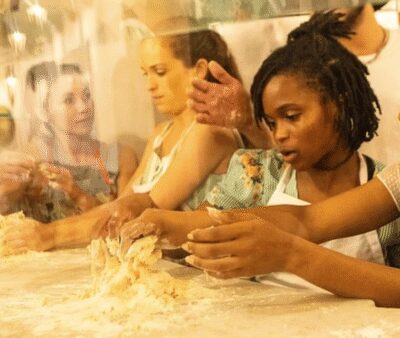

Hands-On Cooking Class & Farmhouse Tour on the Amalfi Coast
Read our review →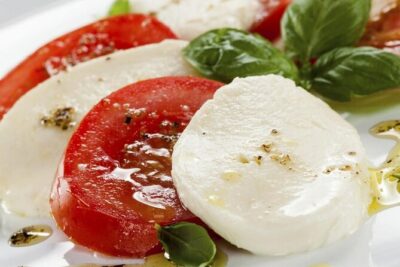
Cooking class with Pasta, mozzarella and Tiramisu with wine
Read our review →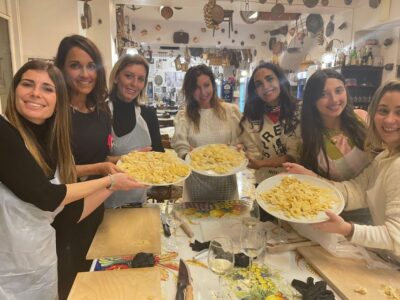
Authentic Cooking with Locals: Meal, Wine & Scenic Views
Read our review →
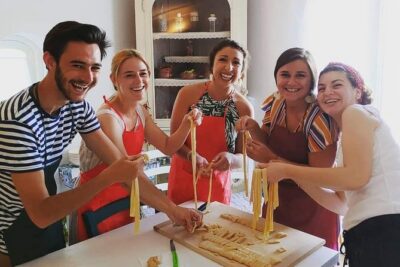
Cooking Class with Pasta, Mozzarella, and Tiramisù
Read our review →
Small-Group Cooking Class in Positano: Gnocchi, Tiramisù & Drinks
Read our review →Browse the lists this tour appears in