
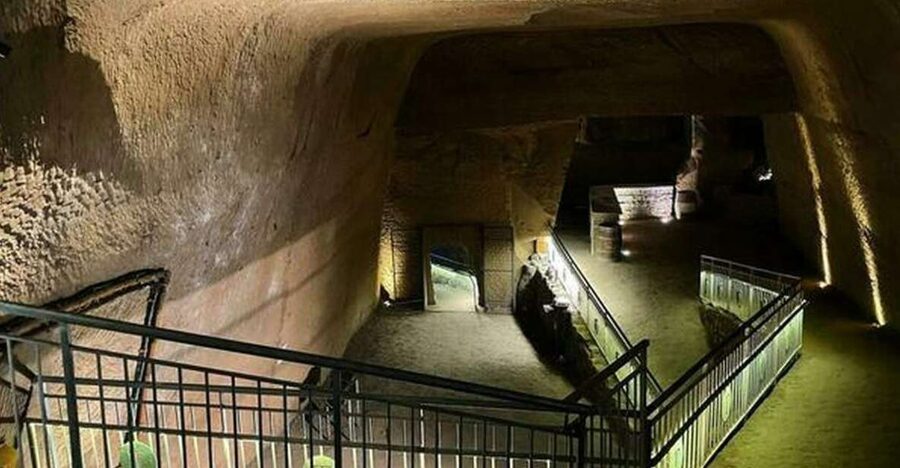
Reviewed · MUSEUMS
Naples: City and Lapis Museum Tour with an Archaeologist
Naples has a reputation for noise and chaos on the surface, but this tour is interesting because it turns the city into a time machine, starting with street-level Naples and then going way underground. I especially like the archaeologist-led approach, where you do not just look at tunnels, you learn what they were for. One consideration: it is not a casual stroll, because you will be going deep underground and the tour is not suitable for wheelchair users.
My second favorite part is the pace and size. I like that it is a small group (limited to 10), which makes it easier to ask questions and get clear explanations, even when the route gets tight. And yes, the highlight is the LAPIS Museum path, where the water system stories, and later life in those spaces, feel surprisingly real.
Key Things To Look For On This Naples Underground Tour
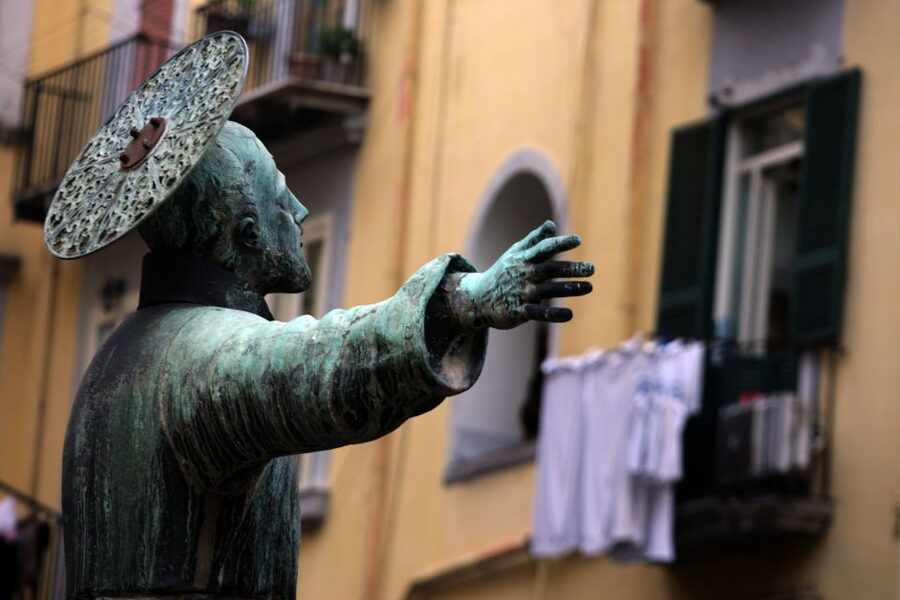
- Piazza San Gaetano orientation before you go underground, so you understand what you are about to see
- Santa Maria Maggiore stop with that steep descent to the levels below the crowd
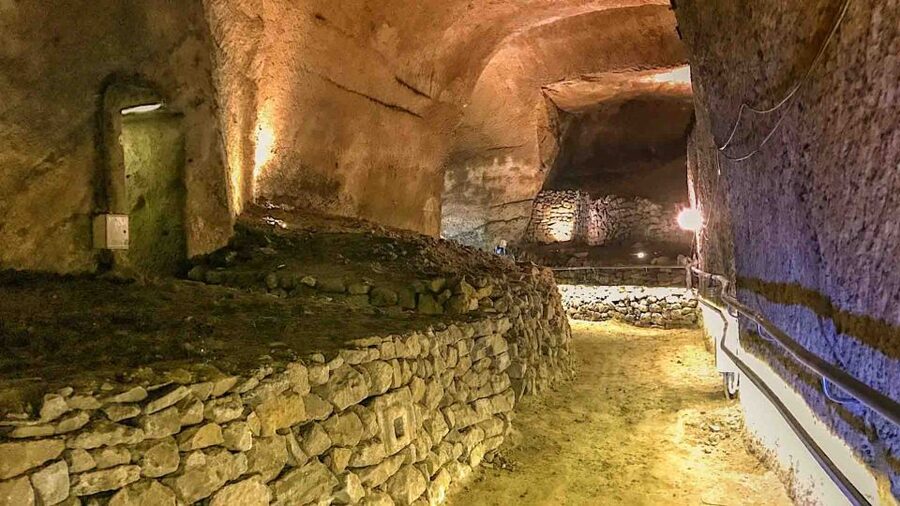
- Greek cisterns carved in stone, then Roman water collection tanks with practical engineering details
- WWII shelters threads that connect ancient infrastructure to 20th-century survival
- A guide you can actually talk to, with multiple past visitors praising guides like Riccardo and Theresa for staying engaged with questions
- A 2-hour format that packs a lot of story into a manageable time window
Where The Tour Starts, Piazza San Gaetano to Piazza Bellini
This tour is built around a classic Naples rhythm: you begin in the old core, walk through living streets, then you drop below the modern city. The route starts at Piazza San Gaetano, meeting at the foot of the statue, and it ends in Piazza Bellini. That matters because you are not just commuting to a museum, you are moving through the same neighborhoods that shaped Naples over centuries.
Piazza San Gaetano is a good “set the stage” point. You get that immediate sense of Greek-Roman Naples being close by, even when you are standing on a busy square. You will also get a taste of local street life along Via dei Tribunali, which helps the underground sections feel connected, not random.
The finish in Piazza Bellini is convenient too. You end in an area where it is easy to keep exploring afterward, whether you want coffee, a late lunch, or one more wander through the streets.
More museums and galleries in Naples:
- Naples: National Archaeological Museum Tour & Digital Guide
★ 4.2 · 177 reviews - Naples: National Archaeological Museum audio guide
★ 4.0 · 155 reviews - Capodimonte Museum in Naples
★ 4.0 · 115 reviews
Above-Ground Naples: Via dei Tribunali and the Story Behind the Sites
After meeting at Piazza San Gaetano, you head along Via dei Tribunali with your local guide. This section is not just walking between stops. It is where you get the narrative hook for what is underneath Naples, including how the “upper city” and “lower city” repeatedly influenced each other.
Next comes Basilica di San Lorenzo Maggiore. The guided time here sets you up for what follows: Naples built on Naples, with older structures hiding beneath later ones. Then you move to the Church of Purgatory, another point on the route where you get context for how religious buildings in Naples can sit on top of older layers.
What I like about these above-ground stops is that they keep you from treating the underground like a separate attraction. You start understanding it as part of the same urban system, where water, stone, religion, and survival all overlap.
The main drawback of this first half is simple: you will still be in real streets, so wear shoes ready for uneven pavement and changes in light. It is not hard, but Naples sidewalks can be a little unpredictable.
San Lorenzo Maggiore Glass Floor and the Challenge of Seeing What Matters
At Basilica di San Lorenzo Maggiore, you will get guided attention that includes a moment that feels extra “Neapolitan.” You will be able to peer through a glass floor at the remains of an ancient mosaic. Seeing something like that in place changes the way you look at the city. Instead of thinking of history as statues behind ropes, you start noticing how surfaces conceal older art and older rooms.
This stop also helps you practice a key mindset for the day: slow down and look carefully. Underground Naples is not just about depth, it is about layers. That mosaic moment gives you permission to “read” the city, then you carry that skill downward.
If you are the kind of traveler who likes details, this part will feel rewarding. If you are short on patience and want to move straight to the tunnels, you might find the above-ground pacing a bit slower. But even then, the payoff is that the later cistern and tank explanations click faster.
Going 40 Meters Down: Santa Maria Maggiore and the Start of the Real Underground Route
Then comes the moment you came for. The tour takes you 40 meters below the crowds through a doorbell in one of the oldest churches of the city, Santa Maria Maggiore. That detail is important because it signals what you will experience: this is not a straight museum staircase down. It is a hidden-access descent into the city’s lower levels.
Santa Maria Maggiore sits on older foundations. The church was built on a Pagan Roman temple dedicated to Diana, and you can still see Roman structures connected to that layered past. When you hear that kind of connection during the descent, it stops being abstract. You start to imagine sacred spaces switching purpose over centuries.
From here, the tour moves downward to the Greek cisterns, carved into the tough stone. This is where the archaeologist-led explanations really matter for your understanding. Cisterns are not “cool caves.” They are water infrastructure, and Naples was serious about storing water in a city where every decision had to work under pressure.
Practical note: the descent means you should treat footwear like equipment. Comfortable shoes are not optional, and your legs will feel the stairs and uneven surfaces.
A few more Naples trips worth comparing
- Naples: City Highlights Guided Bike Tour
★ 4.7 · 850 reviews - City Sightseeing Naples Hop-On Hop-Off Bus Tour
★ 3.5 · 619 reviews - Capri Mini Cruise and City Sightseeing Day Trip from Naples
★ 4.5 · 272 reviews - Naples: City Walking Tour w/ Underground Roman Ruins Ticket
★ 4.5 · 247 reviews
The LAPIS Museum Path: Greek Cisterns to Roman Tanks

The heart of the tour is the LAPIS Museum path, where you connect the dots between Greek and Roman water systems and how later generations used the same spaces. Once you arrive at the lowest point of the route, you walk through tunnels to reach the tanks used for the collection of water in Roman times.
This section is the most satisfying if you like “how it worked” history. You see the physical evidence, then you get the explanation: what these chambers were built to do, how they were shaped, and why the location mattered. The tour links this to the bigger theme of Naples having an underground network that people used for survival long before modern plumbing.
The tour also keeps you moving, so you do not get stuck in one long room. You travel through connected areas, which makes the underground feel like a route, not a set of disconnected rooms. That makes the story more believable and easier to remember later.
A potential drawback: this part is underground, so expect less airflow and more temperature shifts than you are used to. Dress like you will go from warm streets into cooler stone corridors.
How Medieval and WWII Naples Reused the Same Underground Spaces
Here is where this tour becomes more than archaeology. After talking about ancient function, you also learn how the same underground paths were reused in later periods. The route was used in medieval times as a secret passage by the Templar Knights, and then in 1943 as an airplane retreat in WWII.
That combination is unusual in a good way. You are not just learning “old Naples.” You are learning how Naples repeatedly repurposed its underground infrastructure when new threats showed up. It is a strong reminder that cities are living systems, and older spaces can be upgraded by necessity.
You will also have a chance to see areas where details are still preserved, including bathrooms, kitchens, and memorabilia. Even if you do not care about military history, the survival-era details help you picture real people using real spaces under real pressure.
WWII shelters Museum admission is included too, so you do not have to worry about piecing together tickets. And because the tour is organized, you experience the WWII part as part of the same chain of stories, not as a separate detour.
What the Tour Feels Like: Timing, Group Size, and Pace
This tour is 2 hours, and for Naples underground, that is a smart length. Short enough to stay energetic, long enough to cover meaningful content from above ground to deep levels.
The small group size, limited to 10 participants, is not just marketing. It helps on a tight route, and it keeps the guide responsive. Past participants have highlighted guides such as Riccardo and Theresa for passion and for patiently handling questions, and I would expect that style to matter a lot here. When you are learning underground, you want someone who can translate stone and systems into clear human stories.
You should also know the languages listed are English and Italian. If you are traveling with basic language skills, it is still manageable, but you will get the most out of it when you can follow the explanations.
The big pacing consideration is that it is a walking tour that goes underground. That means you need stamina, not just interest. If you are sensitive to stairs or tight spaces, take that seriously.
Price and Value: Is $53 Worth Two Hours?
At $53 per person for a 2-hour tour, the value comes from what is included and how it is delivered. You get a local guide plus a professional archaeologist, and you also get admission tickets for both the Roman Cistern Museum (LAPIS Museum) and the WWII Shelters Museum. That combination alone can usually cost as much as the tour in separate tickets if you book them independently.
You also get the practical win of skipping the ticket line, which matters in a city where time can evaporate fast. Add in the small group format, and the price starts to look like you are paying for access and interpretation, not just entry.
What you should consider is that food is not included. You might want to plan a snack or a full meal before you go. The packing list even suggests a packed lunch, which tells you the operator expects you to be hungry either before or after.
If your goal is a quick museum stop with minimal walking, this might feel like a lot. If your goal is a guided “how and why” story in one coherent route, the cost feels fair.
What to Bring (and What Not to Forget)
This experience is very physical compared to a sit-down museum visit, so pack for comfort. Bring comfortable shoes first. Bring your camera if you want photos, but also be mindful that underground lighting can be tricky.
The tour notes also include bringing a credit card and cash. That suggests you may want spending flexibility before or after. I would not assume you can buy food during the tour because food and drinks are not included.
Weather matters, even for an underground-heavy day. Wear weather-appropriate clothing, then dress in layers so you are comfortable when temperatures change between street level and below-ground stone spaces.
One more practical detail: pets are not allowed, but assistance dogs are allowed. If you are traveling with any support animal needs, plan ahead.
Should You Book This Naples City and LAPIS Museum Tour?
Book it if you want Naples to make sense as a layered city. I think this is especially worth it if you like practical explanations, not just pretty sights. The combination of Greek cisterns, Roman water systems, and WWII reuse gives you a storyline that is both historical and human.
You should also book if you appreciate good guiding. Several past visitors praised guides by name, including Riccardo and Theresa, for passion and for answering questions without rushing.
Skip it, or at least think carefully, if stairs and going deep underground would be a problem for you. The tour is also not suitable for wheelchair users, and it is a walking route with real time spent in stone corridors.
If you are deciding between this and a more casual Naples highlight tour, choose this when your best memories in Naples are the ones where you feel the city’s bones.
FAQ
Where does the tour meet?
Meet the group at Piazza San Gaetano at the foot of the statue. Look for the guide with a Grand Tour Experience sign.
How long is the tour?
The tour lasts 2 hours.
What languages are offered?
The tour guide speaks English and Italian.
What is included in the price?
It includes a local guide, a professional archaeologist, admission tickets to Roman Cistern Museum – LAPIS Museum, and admission tickets to WWII Shelters Museum.
Do I need to bring food or drinks?
Food and drinks are not included, so you will want to plan something for before or after the tour. The tour notes suggest bringing a packed lunch.
Is this tour wheelchair accessible?
No. It is not suitable for wheelchair users.
What should I bring?
Bring comfortable shoes, a camera, credit card and cash, plus weather-appropriate clothing. A packed lunch is also suggested.
Are pets allowed?
Pets are not allowed, but assistance dogs are allowed.
Recently reviewed around Naples
- From Naples: Pompeii & Mount Vesuvius Full-Day Private Tour★ 4.5 · 4 reviews
- Pompeii with Wine Tasting Private Tour★ 4.7 · 6 reviews
- Pompeii, Amalfi, Ravello Day Tour with Private Transfer★ 5.0 · 3 reviews
- Ruins of Pompeii & the Amalfi Coast: Full-Day Private Tour★ 5.0 · 7 reviews
- Pompeii and Herculaneum: Private Tour from Naples★ 4.6 · 12 reviews
- From Naples: Pompeii Private Tour with Transfer and Guide★ 4.7 · 23 reviews
- Pompei: Private tour of Pompei and Vesuvius from Sorrento★ 5.0 · 8 reviews
- Pizza lesson★ 5.0 · 3 reviews
Museums, compared.

National Archaeological Museum Ticket & Audio App
Read our review →
National Archaeological Museum of Naples Guided Tour
Read our review →
Vertical Lemon Farm Tour, Tastings, and Rural Museum
Read our review →
National Archaeological Museum Tour & Digital Guide
Read our review →

Sant’Aspreno ai Crociferi: Church & Jago Museum Guided Tour
Read our review →
Browse the lists this tour appears in