Reviewed · PRIVATE TOURS
Phlegraean Fields: Cuma Baia and Pozzuoli private excursion
If you like your Rome and Pompeii stories with a science lab twist, this trip is a great fit. You head out of Naples and into the Campi Flegrei, a zone of extinct and dormant volcanoes where the ground itself has a long, complicated relationship with people.
I especially love two stops: the volcanic lake of Averno for its eerie crater setting, and the Pozzuoli complex where the Macellum Temple of Serapis still shows sea-shell pitting on surviving columns, plus the area’s bradyseismic story. The main drawback to plan for is simple, it is a full 8-hour circuit with walking at multiple archaeological sites, so good shoes matter and it is not designed for wheelchair users.
Quick hits before you go
- Campi Flegrei by van, not by bus, with pick-up and drop-off options in Naples, Sorrento, or Salerno
- Pozzuoli’s Roman market complex, including the Macellum Temple of Serapis and its mollusc-hole columns
- Cumae’s acropolis ruins on the Tyrrhenian coast, with the Sybil cave sanctuary as the headline
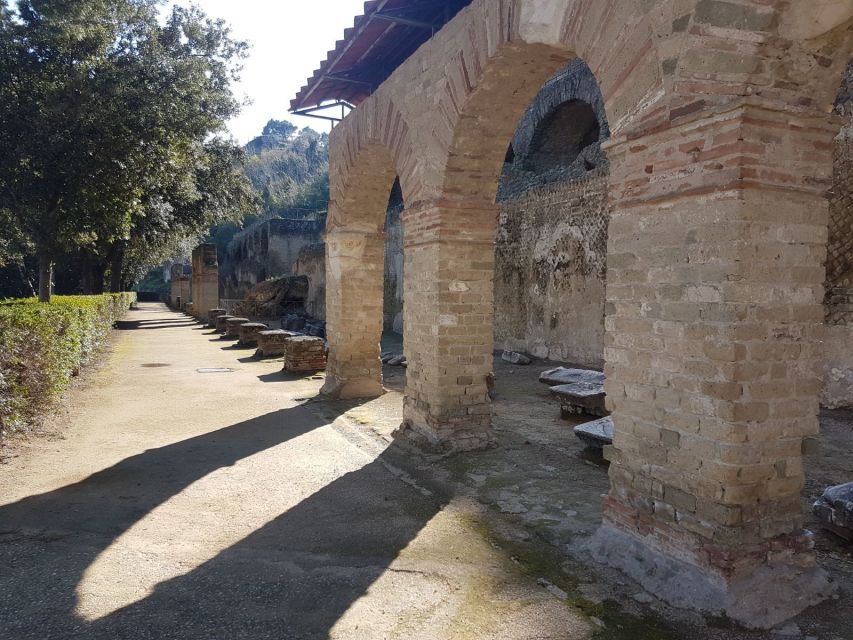
- Baiae’s seaside archaeology, including an on-site museum in the former Aragonese fortress and major temple remains
- Piscina Mirabilis at Miseno, the enormous Roman cistern tied to the navy base at ancient Misenum
- Crater lakes stops, including Averno and Fusaro, plus the Miseno area for the broader volcanic picture
Why the Campi Flegrei circuit feels different than central Naples
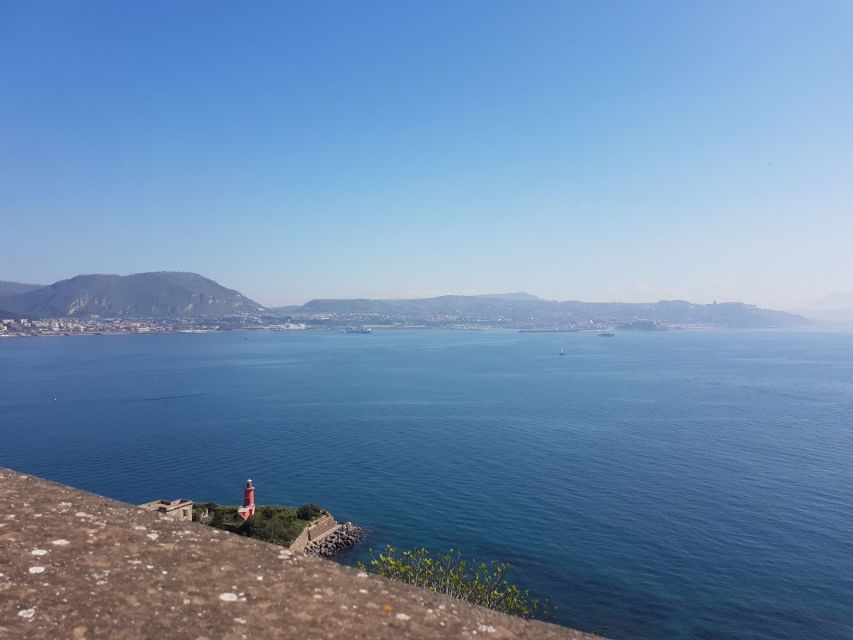
Naples is loud, fast, and full of energy. This experience takes you out into the Phlegraean Fields, where the scenery and the story change at the same time. The Campi Flegrei area is shaped by now-extinct and dormant volcanoes, plus bradyseismic phenomena, which is one reason Roman-era buildings and later excavations still feel like they are happening in slow motion.
What I like about the way the day is built is that you are not just looking at ruins. You are getting the “why” behind why the ground, water, and architecture all show up together. Volcanic lakes, coastal sites, and Roman engineering are linked in a way that feels practical, not lecture-y.
One practical note: because this is a guided, packed route, you should expect you will be moving between sites fairly consistently. If you want long unstructured wandering time, plan another day in Naples for that.
More private tours in Naples:
- Exclusive Naples Private Food Tour: 6 or 10 Tastings
★ 5.0 · 596 reviews - Private Day Tour: Sorrento, Positano, Amalfi, Ravello from Naples
★ 4.5 · 546 reviews - Private Day tour of Positano, Amalfi and Ravello from Naples
★ 5.0 · 522 reviews
Getting around with a private vehicle and a guide who keeps it moving
You get a private group and transportation by Mercedes S-Class sedan, van, or minivan, depending on what your booking needs. That matters here because Campi Flegrei sites are spread out around the Bay of Naples, and traffic can be the kind of complicated you do not want to deal with on your own.
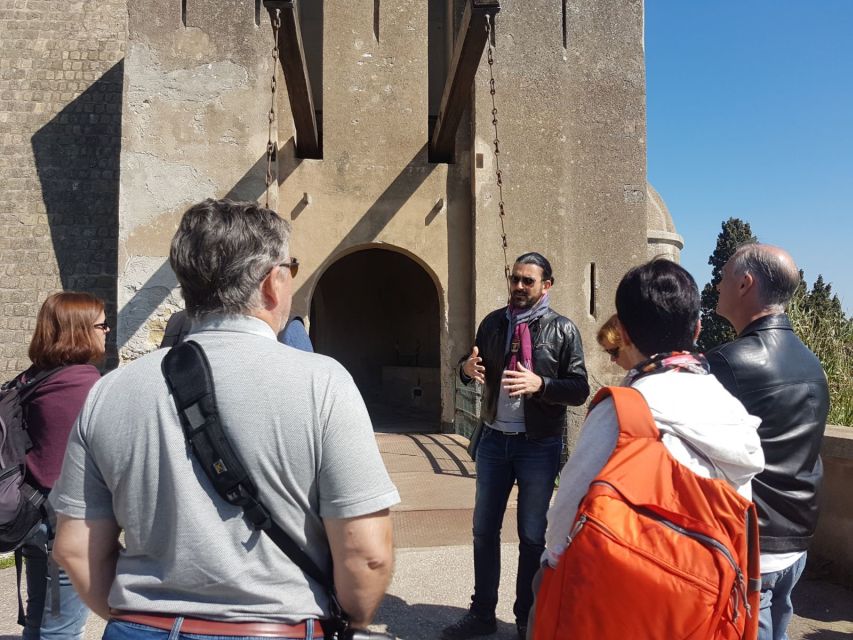
In the best experiences I’ve seen like this, the guide sets the pace. In one highly praised outing, the guide Massimo was singled out for sharing his knowledge without wasting time or energy, and the driver Giovanni was praised for careful driving in dense, tricky traffic. The takeaway for you is that the day runs smoothly because the logistics are handled, and you can focus on absorbing what each stop is.
Also, you are not stuck with one language. The live tour guide can work in Spanish, English, Italian, French, or German, and you also have an English-speaking driver included.
The Campi Flegrei start: understanding extinct volcanoes and bradyseismic ground
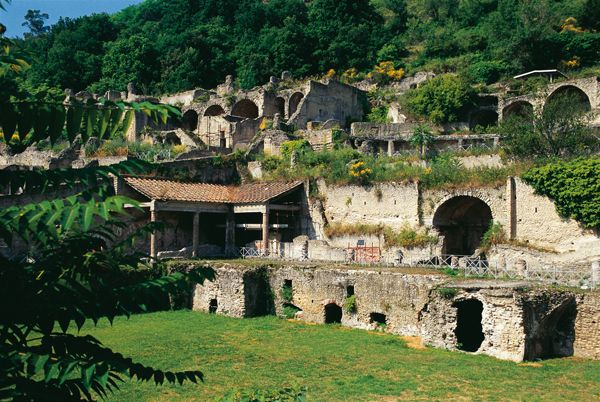
Right after pick-up, you travel into the regional park area often called the Campi Flegrei. This early guided segment is useful because it gives you a map for the rest of the day. Without that context, the volcanic lakes and the crater terrain can feel like random scenic stops.
Here’s what you learn to watch for: the area’s varied terrain comes from multiple now-extinct and dormant volcanoes. And the guide connects that to bradyseismic phenomena, which is described as being most prevalent in the Macellum area of Pozzuoli. That means when you later see Roman remains, you understand they were never sitting on “stable ground” in the way we tend to assume elsewhere.
This is also a good moment to mentally switch gears. You’re about to see Roman cities, temples, and engineering, but the backdrop is volcanic and coastal, which changes how those sites feel.
Pozzuoli’s former Roman market: the Macellum Temple of Serapis
Pozzuoli is where the day turns from scenery into concrete archaeology. You visit the former market of the Roman colony of Puteoli, excavated in the 18th century after the discovery of a statue of Serapis. That detail is not just trivia. It explains why this particular site became so important and why what you see today is tied to later rediscovery, not only original Roman use.
The Macellum complex is fascinating because it is both architectural and atmospheric. Surviving columns are described as being studded with mollusc holes, which gives you a very physical sense of water, time, and exposure. And again, the guide links the site to bradyseismic phenomena, so you’re not only admiring stone, you’re seeing how a changing environment shaped what remained and what was eventually uncovered.
One thing to keep in mind is site timing. The Macellum of Pozzuoli is closed on Monday, Tuesday, and Wednesday, and also Friday. It is open on Thursday, Saturday, and Sunday. If your trip lines up with a closure day, the tour’s order of stops may still run, but this is one of the places you do not want to miss.
Tip for your own planning: if you can choose travel dates, Thursday, Saturday, or Sunday tend to protect this highlight.
A different sort of day around the Bay of Naples:
- From Naples: Pompeii Ruins & Mount Vesuvius Day Tour
★ 4.3 · 11,459 reviews - From Naples: Sorrento, Positano and Amalfi Full-Day Tour
★ 4.6 · 10,988 reviews - From Naples: Sorrento, Positano & Amalfi Coast – Small Group Tour
★ 5.0 · 8,643 reviews - Naples: Catacombs of San Gennaro Entry Ticket & Guided Tour
★ 4.6 · 7,941 reviews
Cumae, the Sybil cave, and a Greek foundation on the Tyrrhenian coast
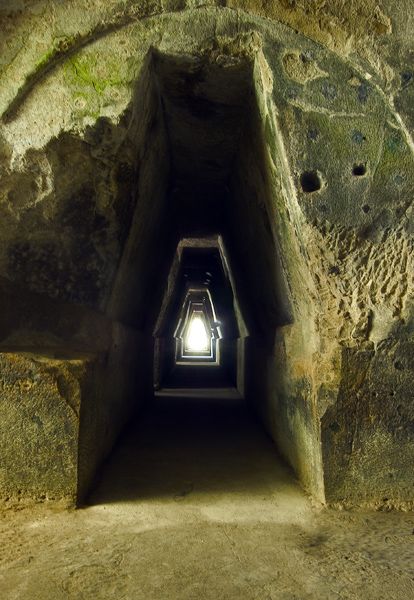
Next you head to Cuma, specifically the archaeological park and acropolis of Cumae on the Tyrrhenian Sea. This is a great stop if you like sites where multiple eras overlap, because the place is tied to Euboean Greeks from its early founding.
The best-known feature here is the Sybil cave sanctuary. Even if you’re not tracking every ancient reference, the cave sanctuary idea helps you imagine what made Cuma culturally important, not just visually interesting. It shifts the feeling from “Roman infrastructure” to “belief, legend, and the way people used places with strong reputations.”
One operational note: Cuma is closed on Tuesday. So if your 8-hour day is scheduled on a Tuesday, expect you will lose this stop entirely, and that could change how satisfying the overall circuit feels.
Baiae and the Aragonese fortress museum: temples, underwater remains, and views
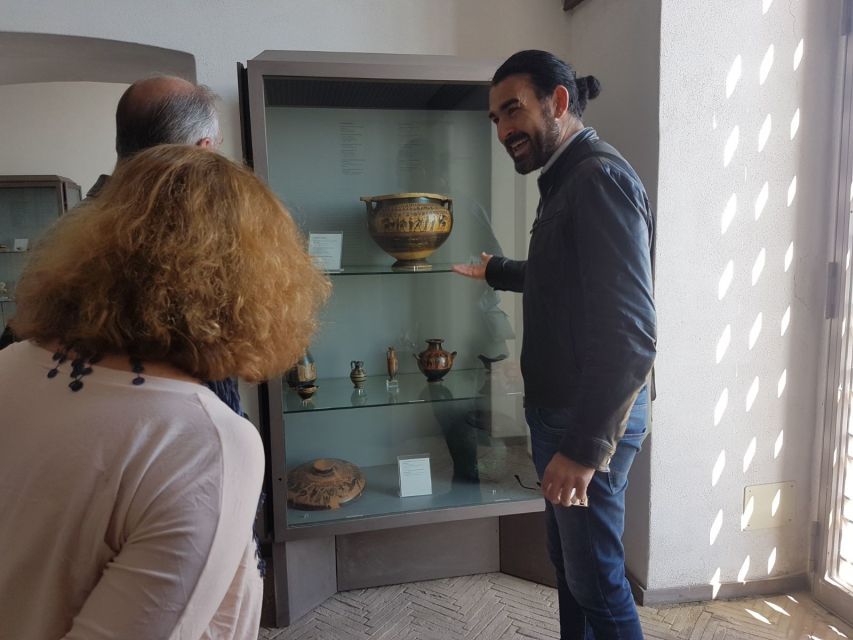
Baiae is one of those names that instantly sounds like a story from the Roman imagination, because it was a former Roman seaside resort. Here, you visit the archaeological park of Baia and Baiae, including the Museum of the Phlegrean Fields housed in the former Aragonese fortress.
The museum setting is a smart choice for this kind of day because it gives you a “warm up” for what you’re about to see outdoors. Then the outdoor remains do the talking. A lot of the site is underwater, but above ground you can still see remains of temples dedicated to Venus, Diana, and Mercury.
This is where you start to feel the unique identity of the Phlegraean Fields. The sea is not just background scenery. It is part of the archaeological logic, because it affects what survives and what you can actually walk up to.
If your schedule is Monday, note that Baiae Thermal Baths and Museum are closed on Monday. The tour includes the broader Baiae museum visit, but because closures can change exactly what portion is accessible, I’d treat Monday as a day that might reduce the value of this specific stop.
Piscina Mirabilis at Miseno: Roman engineering that still makes you pause
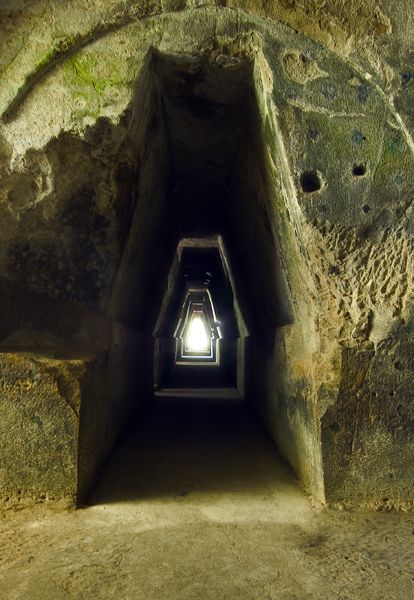
After the Baiae segment, the route continues toward Bacoli and Miseno. The big engineering highlight here is the Piscina Mirabilis, described as an enormous Roman cistern at Miseno, known in ancient times as Misenum, when it housed the largest base of the Roman navy.
This is a must-do stop if you like Roman hands-on skill. It is not just ruins posed for photos. It is a system built to function, and that changes how you interpret it. When you see the scale of something like this, you naturally think in terms of logistics: water for ships, support for thousands of people, and the kind of infrastructure empires rely on when they want to move power around.
From a visitor standpoint, this stop also balances the more “dramatic scenery” parts of the day. It is still atmospheric, but it gives your brain something concrete to hold onto.
Crater lakes around Averno, Fusaro, and the Miseno area
The day’s highlights explicitly call out the volcanic lakes, including Averno (often written as D’Averno), Fusaro, and the broader Miseno area. Even with a packed schedule, these are the kinds of stops that pay off because crater lakes are instantly legible. You do not need a map of ancient mythology to notice the volcanic shape and the water’s strange mood.
I love how this works on a personal level. After seeing Roman sites, you return to a natural feature and realize the environment is a character in the story. The lakes help you understand why people settled here, built here, and then continued to rediscover and excavate here centuries later.
If you are sensitive to strong sun or wind by the water, bring protection. Coastal areas can change quickly, and you’ll probably appreciate having a hat and sunscreen even if Naples feels mild that morning.
Price and value: what you’re paying for on a private 8-hour loop
The price listed is $558.97 per person for an 8-hour private excursion. For some travelers, that number will feel steep. But here’s the value equation I see for this exact itinerary.
You are paying for:
- A private vehicle sized as needed (Mercedes S-Class sedan, van, or minivan)
- A live guide and admission support, including skip-the-line admission fees
- A route that hits multiple major archaeological anchors around Naples, not just one site
- Pick-up and drop-off options across Naples, Sorrento, and Salerno
So the question is not only, is it expensive. It’s, are you getting a day that replaces multiple separate tickets, transport planning, and time lost figuring out schedules. On a day like this, where the sites are scattered and some are subject to weekday closures, having it bundled and timed is a real benefit.
If you’re traveling as a pair or a small group, the private format can feel more reasonable because you split the logistics, not just the ticket cost. If you’re traveling solo, you may feel it more, but you are still buying time and expertise, not just entry.
What to wear and how to pace yourself
This tour is not described as wheelchair accessible, and you will be moving through archaeological parks and outdoor areas. I’d plan for uneven ground and some steps or uphill stretches.
My practical advice:
- Wear comfortable walking shoes with grip
- Bring water and a light layer for the coastal sections
- Have a plan for photos, you’ll likely want to pause quickly at high points, then keep moving
- If you care about a specific closure-sensitive site like Cuma or the Macellum, check your day of week before you commit
Because it’s a private group, your guide can usually steer you through the day in a smarter order than you could manage alone.
Best fit: who will enjoy this day most
This is a strong match if you like:
- Roman archaeology with a volcanic setting
- Guided interpretation that connects ruins to geology and environment
- A single-day plan that hits several “major stops” instead of one or two
You might not love it if you:
- Want a slow, unstructured day with lots of free time
- Need wheelchair-friendly access
- Prefer a city-only day in Naples with less driving and fewer archaeological parks
Should you book this private Phlegraean Fields excursion?
I’d book it if you want a guided, efficient day that combines the Campi Flegrei volcanic story with top archaeological anchors like Pozzuoli, Cumae, Baiae, and Roman engineering at Miseno. The structure makes sense, and the private transport reduces stress, especially in traffic.
I’d think twice if your travel date is Tuesday and you really want Cuma, or if it’s Monday and you care about the Baiae Thermal Baths and Museum portion. In those cases, you could end up with a less satisfying version of the day than you hoped.
If you can align the day of week and you’re comfortable with a full 8-hour circuit, this private excursion is a smart way to experience what makes this corner of Campania feel unlike anywhere else around Naples.
FAQ
How long is the Phlegraean Fields: Cuma, Baia and Pozzuoli private excursion?
It lasts 8 hours.
Where can you be picked up and dropped off?
You can choose pick-up and drop-off in Naples, Sorrento, or Salerno.
Is this tour private or shared?
This is a private group tour.
What transportation is included?
Transportation is provided by Mercedes S-Class sedan, van, or minivan, with an English-speaking driver.
Are admission fees included, and do you skip the ticket lines?
Yes. The tour includes skip-the-line admission fees for the sites you visit.
What are the main stops on the route?
You’ll visit Campi Flegrei, Pozzuoli, the Macellum Temple of Serapis, Cuma, the Archaeological Park of Baia (Baiae), Bacoli, the Piscina Mirabile at Bacoli/Miseno, and Fusaro Lake.
Which days is the Macellum of Pozzuoli closed?
The Macellum of Pozzuoli is closed on Monday, Tuesday, Wednesday, and Friday, and it is open on Thursday, Saturday, and Sunday.
Is Cuma open every day?
No. Cuma is closed on Tuesday.
Is Baiae Thermal Baths and Museum open every day?
No. Baiae Thermal Baths and Museum are closed on Monday.
Is the tour wheelchair accessible?
No. It is not suitable for wheelchair users.
Recently reviewed around Naples
- Pompeii & Herculaneum Group Tour with tickets★ 4.9 · 13 reviews
- From Naples: Pompeii & Mount Vesuvius Full-Day Private Tour★ 4.5 · 4 reviews
- Pompeii with Wine Tasting Private Tour★ 4.7 · 6 reviews
- Pompeii, Amalfi, Ravello Day Tour with Private Transfer★ 5.0 · 3 reviews
- Ruins of Pompeii & the Amalfi Coast: Full-Day Private Tour★ 5.0 · 7 reviews
- Pompeii and Herculaneum: Private Tour from Naples★ 4.6 · 12 reviews
- From Naples: Pompeii Private Tour with Transfer and Guide★ 4.7 · 23 reviews
- Pompei: Private tour of Pompei and Vesuvius from Sorrento★ 5.0 · 8 reviews
Private Tours, compared.
Pompeii Ruins Private Tour with Optional Skip-the-Line Entry
Read our review →

Exclusive Naples Private Food Tour: 6 or 10 Tastings
Read our review →
Pompeii Private Tour with an Archaeologist and Skip The Line – 3 hours
Read our review →
Private Day Tour: Sorrento, Positano, Amalfi, Ravello from Naples
Read our review →
Private Day tour of Positano, Amalfi and Ravello from Naples
Read our review →
Private Amalfi Coast Tour – Enjoy it with our local english speaking driver
Read our review →