
Reviewed · HISTORICAL TOURS
Naples Historic Center: Traditions, Legends & Folklore Tour
Naples Historic Center works like a storybook you can walk through. This two-hour English tour starts at the Duomo, where you learn the legend of Saint Gennaro’s blood liquefaction and why that miracle matters to daily Neapolitan life.
I also love how the tour mixes big-name landmarks with oddball, memorable stops. You get to see the Dolls Hospital and then the skull-filled Complesso Museale Santa Maria delle Anime del Purgatorio ad Arco, where folk legend meets some very unusual art. One consideration: it is a walking route in a crowded historic center, and it is not suitable for wheelchair users.
You’ll go with a local professional guide, in a small group capped at 20 people. The walk ends back near the Duomo, so you can keep exploring on your own after you get your bearings.
Key things that make this Naples folklore tour worth your time
- Saint Gennaro at the Duomo: a miracle legend explained in a way that connects to Naples culture.
- San Gennaro street graffiti by Jorit: art you can actually point to while you walk Via Duomo.
- Dolls Hospital + Saint Gregorio Armeno: a quick hit of “craft Naples,” from repairs to nativity makers.
- Santa Maria delle Anime del Purgatorio ad Arco skulls: the souls of purgatory, plus the folk story behind them.
- Pulcinella good-luck tradition: the statue touch moment, easy to spot and fun to participate in.
- Port’Alba to Saint Chiara: seventeenth-century gate myths and a Gothic church symbol of Naples.
Starting at the Duomo, where Naples turns faith into everyday legend
Your tour begins outside the Duomo, the Cattedrale di Santa Maria Assunta. This matters because the historic center feels like it has two layers: the architecture, and the beliefs people attach to it. At the Duomo, you start with Saint Gennaro’s blood liquefaction, one of Naples most famous religious legends.
Even if you are not a religious-history person, the value here is context. Your guide explains not just what the legend is, but why it keeps showing up in Naples identity. You learn how a miracle becomes a local rhythm, something people talk about, plan around, and use as a shared reference point.
Practical tip: before you meet your group, take a minute just to look around the Duomo area. That first street-level scan helps the rest of the walk click. When you later hear how Neapolitans link faith, art, and street symbolism, you will feel it instead of just hearing it.
More history tours in Naples:
- Naples: Street Art & History Tour in the Spanish Quarters
★ 4.9 · 540 reviews - Naples: Historic Center and Sansevero Chapel Walking Tour
★ 4.8 · 208 reviews - 360 ° Naples. THE historic center of the city
★ 5.0 · 85 reviews
Via Duomo and Jorit graffiti, street art that ties into Naples devotion
From the Duomo you head along Via Duomo. One pause on this route is for a very specific kind of artwork: the San Gennaro street graffiti by Jorit. This is not “art talk” in the abstract. It is something you physically pass, with your guide showing you where to look and what the imagery is doing.
I like this stop because it turns Naples into a live museum. You see how a city’s devotion can show up on walls, not only inside churches. And because it is tied to Saint Gennaro, it also keeps the tour’s theme consistent, legends are not random stops, they keep building on each other.
If you care about art history, this is also where you can notice how good guides work. The strongest guides connect the visuals to the story, so you walk away knowing what you saw and why it matters. If you end up with a guide who sticks to names only, the effect can feel flat. That is the one risk with any walking tour in a crowded center, your experience depends heavily on the guide’s clarity.
Spaccanapoli walks best when you understand the street’s role
Next comes Spaccanapoli, one of the historic center’s main streets. This is where you start to feel how Naples is organized for walking. The street is central, but it is also full of small interruptions, gates, doorways, and side passages. That is why the guide’s timing and pacing matter. You are not just moving forward, you are being taught how to read the place.
Spaccanapoli also helps you understand why Naples legends feel close to daily life. A story does not live in a separate museum building. It sits beside shops, chapels, and neighborhoods where people actually go. You can stand on the street, look around, and realize how a legend can stay “in circulation.”
A small group helps here. With a maximum of 20 people, you can usually keep up without losing the guide in a sea of other visitors. Still, wear shoes you trust. This is a walking tour, and your legs will do most of the work.
The Dolls Hospital, then Saint Gregorio Armeno’s nativity craft world

One of the tour’s best practical ideas is placing the Dolls Hospital early enough that you still have energy to pay attention. You stop to see this fascinating place, a kind of Neapolitan institution for repairing and tending dolls. It may sound niche, but it fits the tour theme perfectly.
Why it works: it gives you a hands-on idea of what locals do to preserve everyday objects and memories. Naples is not only about grand monuments. It is also about maintenance, restoration, and the patience behind craft work.
Then you move to Saint Gregorio Armeno, a street known for artisans making nativity scenes and related creations. This is where you see “tradition” as a living workshop, not a behind-glass display. Your guide points out how skilled the makers are and what kinds of pieces they produce.
If you want a souvenir that actually feels like Naples, this is the area to focus on. Even if you do not buy, looking closely is worth it. You will see people treating small details like they matter, because in a city of layered symbolism, they do.
A different sort of day around the Bay of Naples:
- From Naples: Pompeii Ruins & Mount Vesuvius Day Tour
★ 4.3 · 11,459 reviews - From Naples: Sorrento, Positano and Amalfi Full-Day Tour
★ 4.6 · 10,988 reviews - From Naples: Sorrento, Positano & Amalfi Coast – Small Group Tour
★ 5.0 · 8,643 reviews - Naples: Catacombs of San Gennaro Entry Ticket & Guided Tour
★ 4.6 · 7,941 reviews
Via dei Tribunali and the famous pizzerias you pass without needing a full food stop
You walk along Via dei Tribunali, known for some of Naples most famous pizzerias. The important part is that the tour does not require you to stop for a meal. Instead, it uses the street as a cultural signpost.
This helps you plan the day. You get oriented toward where to eat later, without losing your tour momentum. In two hours, that kind of efficiency is a big deal. Your feet stay moving, and you still collect useful ideas.
If you want to eat after, you already know the direction to head. And if you are already planning pizza, this leg just makes the experience feel more grounded. You see the real street setting that made those pizzerias famous.
Santa Maria delle Anime del Purgatorio ad Arco, skulls, and the legend you can picture
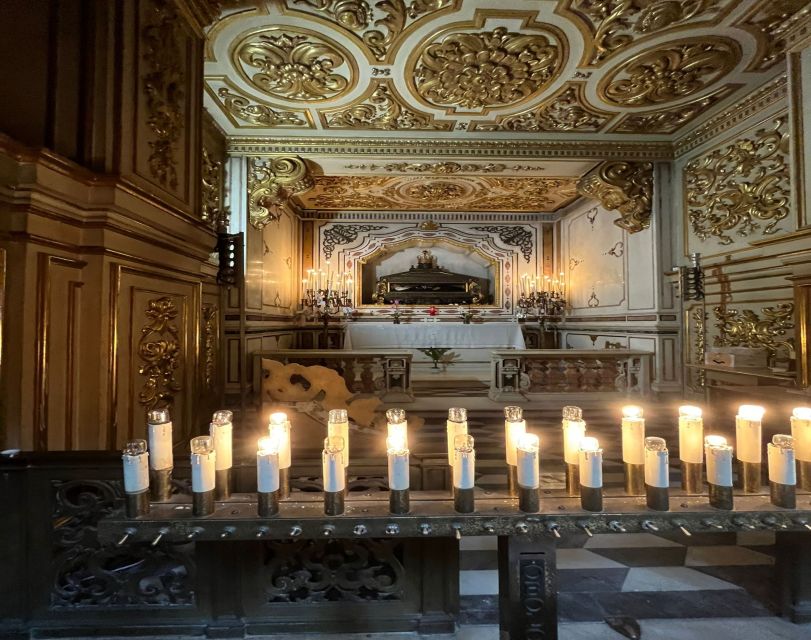
Now the tour shifts into its most memorable emotional register: the Complesso Museale Santa Maria delle Anime del Purgatorio ad Arco. This is the complex known for its famous skulls, often referred to as the souls of purgatory. Your guide shares the folk legend tied to the site, so it is not just a strange photo stop.
I love this section because it shows Naples humor and seriousness in the same breath. You get something macabre, but it is also part of a cultural system. The story gives the skulls meaning, and the meaning changes how you look at what you are seeing.
Then you get a lighthearted moment that keeps the mood from turning heavy: you touch the Statue of Pulcinella for good luck. Pulcinella is one of Naples great characters, and this touch tradition makes the whole stop feel participatory. You are not only observing, you are joining in a local ritual that people treat as normal.
Quick practical note: because this is one of the most talked-about stops, it can feel busy around arrival. Keep your pace with the group so you can hear the guide and see the site without getting stuck behind other visitors.
Oldest conservatory, possible music, and Port’Alba’s seventeenth-century mystery
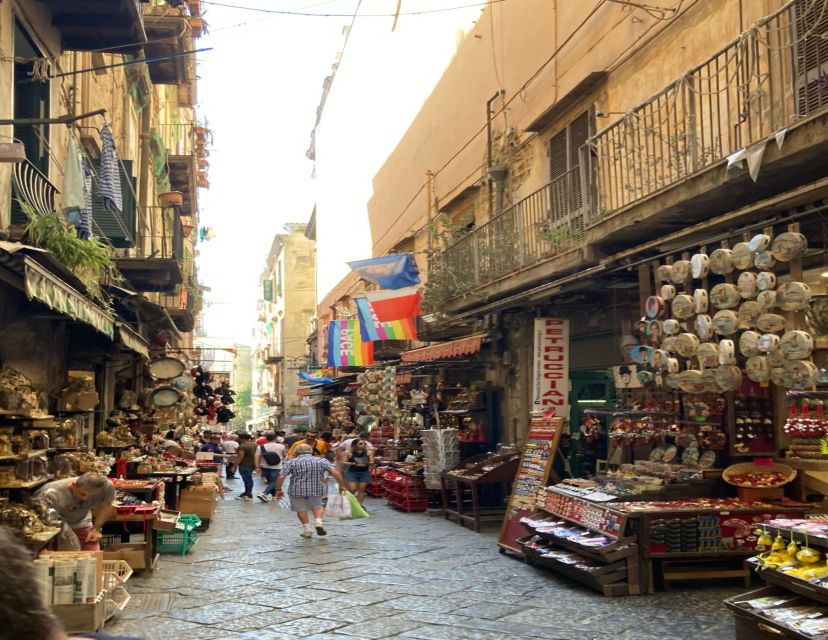
As you continue, you pass the oldest conservatory in Italy. Your guide also notes that, if you are fortunate, you may hear music along the way. Even without making promises, this is a smart kind of “Naples perk,” the city sometimes sends music up from unexpected corners.
This section also rewards you for paying attention to sounds. If you catch even a short musical moment, it turns the walking into something more than scenery. Naples can feel like it has a soundtrack if you let it.
Next comes Port’Alba, one of the city’s most beautiful seventeenth-century gates. The tour highlights its architecture and its mystical legends. I like gate stops like this because they help you picture how Naples used to manage movement and defense. Even if you never study military history, the gate makes the city’s design feel purposeful.
Your guide’s job here is to connect the gate’s shape and location to the myths people attached to it. That is what keeps the story thread alive as you move away from the Duomo zone and into the area near the Gothic church.
Saint Chiara’s Gothic church and the endgame at Gesù Nuovo Square
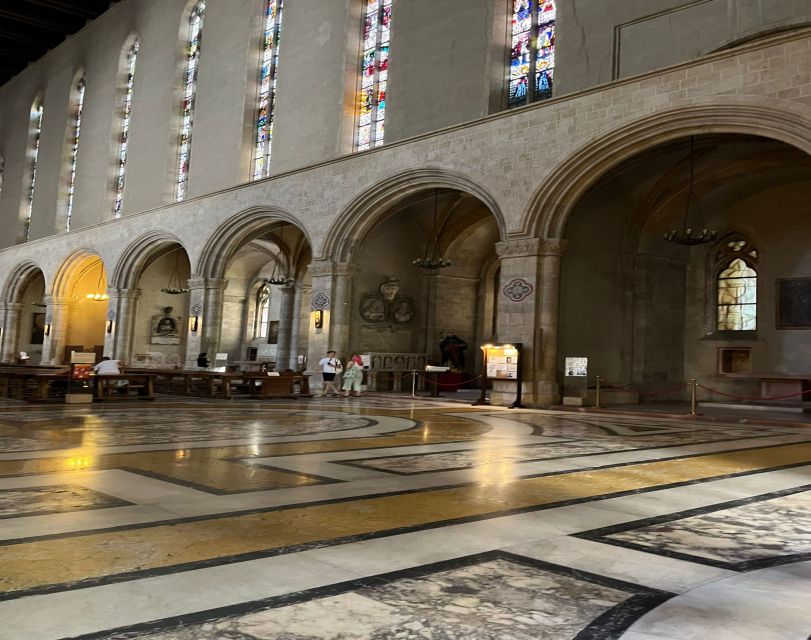
The last major church stop is Saint Chiara, described as austere and Gothic, and an important symbol of Naples. If you have been thinking that the tour is only legends and oddities, this church stop gives the other side of the city: the stone-and-spire seriousness that still defines the skyline.
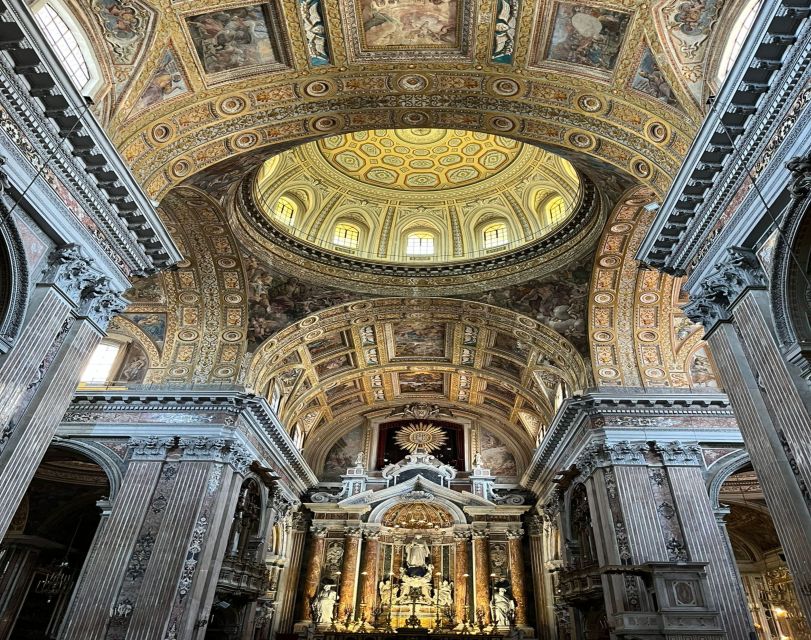
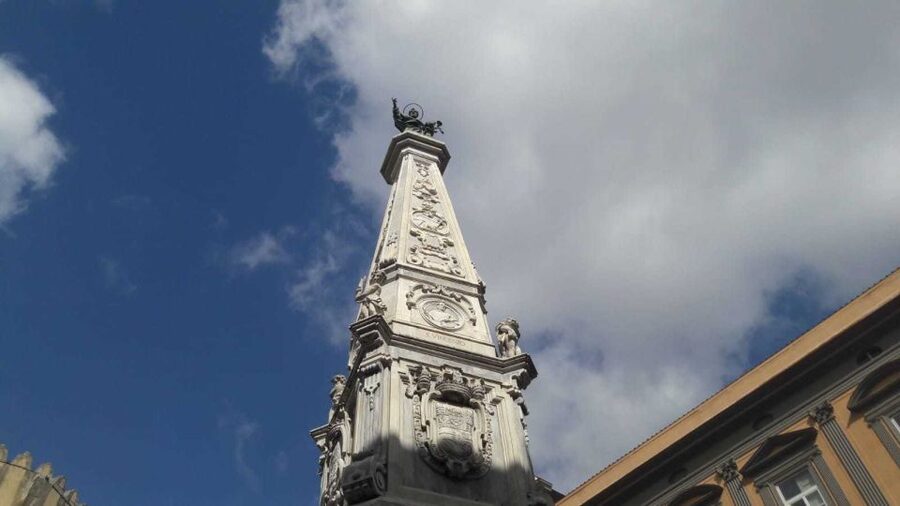
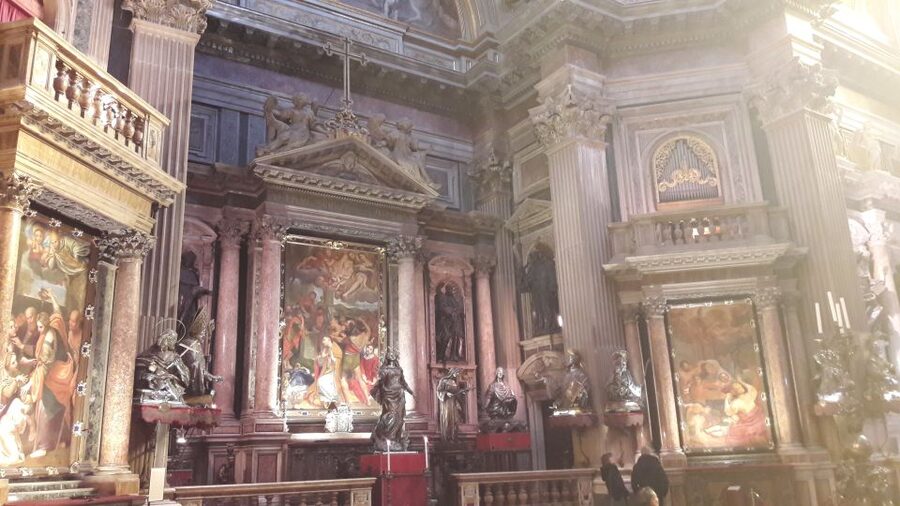
Then the tour finishes at Gesù Nuovo Square. You end back at the meeting point area near the Duomo, but your final lesson is at Gesù Nuovo Square, where your guide explains history beyond the front wall of the Church of Gesù Nuovo.
That phrase matters. It tells you the tour is not only about what you can see from the street. The guide is pointing out that sometimes the real story is partly hidden, in details, in layers, and in what the facade does not show you.
If you stay in the square afterward, you might notice how your eyes change. After a tour like this, Naples stops feeling like random streets and starts feeling like arranged scenes.
Price and what you actually get for $51.24 in Naples
At $51.24 per person for a two-hour English walking tour, you are paying for orientation plus interpretation. You are not paying for transport, meals, or a long museum visit. This is about having a local guide connect the dots between landmarks, street art, craft traditions, and folk legend.
Here is why the value can be good:
- You cover multiple signature themes (Duomo miracle, street art, craft streets, skull complex, gate myths, Gothic church) in a short time.
- You get an English guide, which is the biggest quality lever if you want the legends explained clearly.
- The group is small, capped at 20 people, which helps you hear the guide and keep moving.
One more practical point: no food and drinks are included. So if you are hungry, plan a snack break either before or after. Since you will be walking through areas famous for pizzerias, you will be perfectly positioned to eat once the tour ends.
How to judge whether this tour fits you
This tour is best for you if you like Naples as a character, not a list of monuments. You want legends with explanations, and you want stops that feel tied to daily life. It also suits you if you enjoy small side stories, like the Dolls Hospital or the Pulcinella good-luck statue moment.
It may not fit as well if you want a quiet, slow-paced church-and-art lesson. This is a walking route with set stops, and the historic center can feel crowded. Your comfort will depend on moving with the group and tolerating street bustle.
Also, it is not suitable for wheelchair users. If mobility is a concern, plan another format.
If you get a guide who uses humor and stays organized, this kind of tour feels like a cheat code for a first visit. The best version of this experience is when the guide turns landmarks into real meaning, not just facts. One guide named Ludovica is an example of the style that works well, clear explanations with humor and a friendly, helpful approach.
If you get a guide who does not connect the art, symbols, and stories, the tour can feel like a crowded walk with missing context. That is not a Naples problem, it is a guide-fit problem. The good news is the structure is strong, so a great guide makes it sing.
Should you book this Naples Historic Center traditions, legends, and folklore tour?
I think you should book it if you want your first Naples day to feel like story time with a local brain. You will see the Duomo area, street-level symbolism tied to Saint Gennaro, artisan culture in Saint Gregorio Armeno, and the skull legend at Santa Maria delle Anime del Purgatorio ad Arco. Then you end with Gothic Saint Chiara and a final lesson at Gesù Nuovo Square that helps you look past the front wall.
Skip it only if you strongly prefer a museum-only style visit, or if walking for two hours in a dense historic core is not realistic for you. Otherwise, it is a good value way to make Naples feel understandable, even if it keeps a little mystery.
FAQ
Where is the meeting point for the Naples Historic Center tour?
The meeting point is outside the Duomo, Cattedrale di Santa Maria Assunta.
How long is the tour?
The tour lasts 2 hours.
How much does the tour cost?
The price is $51.24 per person.
Is the tour guided in English?
Yes, the live tour guide speaks English.
Is hotel pickup included?
No, hotel pickup and drop-off are not included.
Is the tour suitable for wheelchair users?
No, it is not suitable for wheelchair users.
Recently reviewed around Naples
- From Naples: Pompeii & Mount Vesuvius Full-Day Private Tour★ 4.5 · 4 reviews
- Pompeii with Wine Tasting Private Tour★ 4.7 · 6 reviews
- Pompeii, Amalfi, Ravello Day Tour with Private Transfer★ 5.0 · 3 reviews
- Ruins of Pompeii & the Amalfi Coast: Full-Day Private Tour★ 5.0 · 7 reviews
- Pompeii and Herculaneum: Private Tour from Naples★ 4.6 · 12 reviews
- From Naples: Pompeii Private Tour with Transfer and Guide★ 4.7 · 23 reviews
- Pompei: Private tour of Pompei and Vesuvius from Sorrento★ 5.0 · 8 reviews
- Pizza lesson★ 5.0 · 3 reviews
Historical Tours, compared.
Street Art & History Tour in the Spanish Quarters
Read our review →
Historic Center and Sansevero Chapel Walking Tour
Read our review →
Historic Center Tour & Veiled Christ Entry Ticket
Read our review →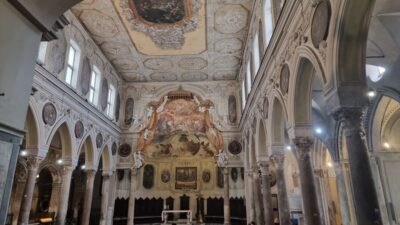

Amalfi Organic Lemon Tour & Tasting in the Historical Garden
Read our review →
Historic Center Guided Tour with Underground Ruins
Read our review →Browse the lists this tour appears in