
Reviewed · NAPLES
Forage Herbs, Make Grandma’s Ravioli & Tiramisù w Our Family
If you like the idea of learning Italian food the way families actually do it, this is for you. It’s a cooking experience above the Amalfi Coast at La Vigna degli Dei in Agerola, where herb foraging and handmade pasta are the whole point. I love how the meal starts outdoors, with Rosanna and Pasquale showing you the plants they use. I also love that you make the pasta by hand, not just watch and eat.
One thing to consider is timing. The experience is 2.5 hours, but if you’re using public transport back toward Amalfi, plan for a little extra time so you do not miss the last bus.
Key Things That Make This Experience Worth Your Time
- Herbs you pick yourself, used in the same grandmother-style ravioli filling
- Hands-on ravioli and tagliatelle, guided step-by-step by Rosanna and Pasquale
- Organic wine tasting plus a cellar visit, tied to grapes grown on their land
- Lemon tiramisù using lemons from their trees, with a coffee option
- Small group size (up to 10), so you get real attention while you cook
- Farmhouse views over the Amalfi Coast, plus a walk through gardens and animals
Entering a Family Farm Kitchen Above the Amalfi Coast
This cooking class is interesting because it does not feel like a staged demonstration. You start at a working farmhouse, La Vigna degli Dei, and the day’s rhythm follows how food fits into daily life. It’s Campania country, in Agerola, with views out toward the coast that make the whole thing feel like a real break from the tourist grind.
What you’ll notice fast is how personal the hosts make it. Rosanna and Pasquale treat the meal like a family memory, not a performance. Pasquale’s story shows up in what he grows for wine, and Rosanna’s care shows up in how you handle dough and filling.
For the best experience, come ready to get flour on your hands. You will be working, tasting, and learning in a small group setting. It is not a quick class, either. The 2.5 hours give you enough time to start, make, and actually enjoy your food while it’s fresh.
Other Naples bookings people compare this one against:
- From Naples: Pompeii Ruins & Mount Vesuvius Day Tour
★ 4.3 · 11,459 reviews - From Naples: Sorrento, Positano and Amalfi Full-Day Tour
★ 4.6 · 10,988 reviews - From Naples: Sorrento, Positano & Amalfi Coast – Small Group Tour
★ 5.0 · 8,643 reviews
The Herb Walk: Where the Meal Starts, Not Where It Ends
You begin with a walk through the farmhouse and gardens, plus time to see the animals and how the family lives around the property. Then you slow down and focus on what is growing right there. This is one of my favorite parts because it turns “Italian cooking” from a concept into something you can point to.
The herb foraging is taught with the goal of helping you recognize plants and understand how they affect flavor. The herbs you gather become the heart of the meal, especially the ravioli filling, which follows a grandmother recipe style. Even if you are not a confident gardener, you will leave knowing why those herbs taste the way they do in their food.
This farm-first approach also helps your pasta taste better. When you know where the herbs came from, you pay attention more while you’re cooking and eating. It changes the meal from just delicious into memorable.
Quick practical tip: bring a hat in summer and wear comfortable shoes. The garden walk is part of the experience, and you’ll want stable footing.
Handmade Ravioli and Tagliatelle with Rosanna and Pasquale
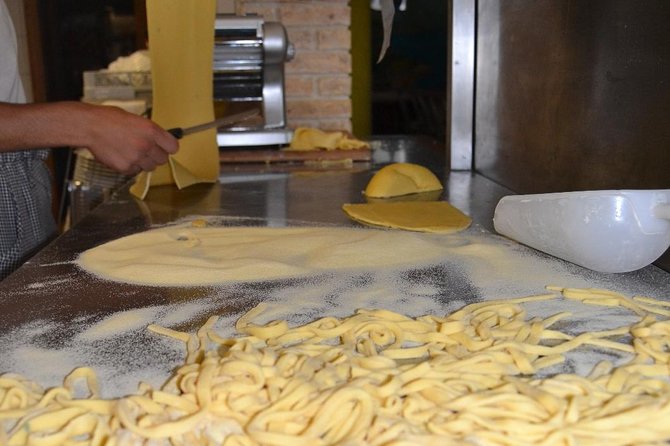
Back in the kitchen, the class shifts from outdoors to flour-dusted skill building. Rosanna and Pasquale guide you through making fresh pasta from scratch. You will prepare ravioli della nonna and also shape tagliatelle by hand.
I love that you do both. Many classes focus on one pasta shape and rush the rest. Here, you get the feel of rolling dough and cutting or filling ravioli, then you pivot to tagliatelle, where the technique is different and your hands learn another set of motions.
The hosts emphasize that these are not just “recipes you can print.” The filling and approach are passed down through family gestures, taste, and memory. That matters because it teaches you the logic of the dish, not just the steps. You’ll understand when the dough feels right and why the herbs behave differently once combined with the filling.
You also get real conversation. In multiple accounts, Pasquale comes across as fun and energetic, and Rosanna as warm and guiding. That energy helps when you’re working with dough, because handmade pasta is easier when someone keeps things light and corrects you without stress.
Wine from Their Land: Tasting and the Cellar Visit
While the pasta rests, Pasquale pours homemade organic wine made from grapes grown on the farm. This is a key value point because it ties your tasting to the same property that fed the kitchen. You are not just getting a generic glass of vino.
The experience also includes a visit to the cellar where the wine is produced and stored. Even if you do not consider yourself a wine person, a cellar visit gives you context. Wine becomes a process, not a product.
One practical detail: the timing works well. You cook, you rest, then you taste. If you try to drink too early or outside the pace of the class, it can feel rushed. Here, the structure helps you stay present for both cooking and tasting.
Also, the experience is family-run, so expect personal stories rather than a formal lecture. If you enjoy learning through anecdotes, you’ll like this part.
A different sort of day around the Bay of Naples:
- Naples: Catacombs of San Gennaro Entry Ticket & Guided Tour
★ 4.6 · 7,941 reviews - Naples: Downtown Tour with Veiled Christ & St Clare Tickets
★ 4.9 · 6,462 reviews - Naples: Pizza-Making Workshop with Drink and Appetizer
★ 4.9 · 5,411 reviews - Naples: Hop-on Hop-off Bus Tour 24-Hour Ticket
★ 4.3 · 5,157 reviews
Lemon Tiramisù and the Sweet Finish
The finale is dessert, and it leans into what the farm provides. Rosanna guides you in preparing lemon tiramisù using lemons picked from their trees. They also offer a classic tiramisù option, depending on what’s available.
Dessert is light and simple by design, not heavy and over-complicated. If you’re tired from pasta making, lemon is a smart reset. It also complements the herb-forward flavors you’ve been working with all day.
One small caution for expectations: some people have found the tiramisù portion more guided than hands-on, meaning you might do more watching than actively assembling every step. The experience is described as guided preparation, so plan to participate, but keep a flexible mindset about how much you will be doing at the exact moment.
You may also notice extra lemon spirit touches. Some accounts mention limoncello as part of the experience, and that makes sense given the emphasis on lemons and their own production. Either way, the sweet finish is built to feel like a natural end to a farm meal.
How the 2.5 Hours Actually Feel: Pace, Group Size, and Attention
This runs for 2.5 hours and keeps the group small, up to 10 participants. That matters more than it sounds. Pasta making takes time, and it is hard to get individual fixes in a larger class. Here, you are close enough to the hosts that your questions can be answered right away, and your dough is more likely to get corrected before it dries out.
The instructors speak Italian, German, and English, so you should be able to follow along comfortably. Even if your Italian is basic, the hands-on nature helps. You learn by doing and by watching the hands of people who do this every time.
In real life, the day’s pace is calm. There is time for conversation, and the meal has a natural rhythm: herbs and gardens first, pasta next, wine and cellar, dessert, then eating. That flow is part of why the experience gets such strong reactions. It feels like a proper family afternoon, not a frantic event.
Price of $73 per Person: Where the Value Comes From
At $73 per person, you’re paying for far more than a cooking lesson. You’re paying for ingredients, tools, and guided instruction that covers two pasta types, plus wine tasting, a cellar visit, and dessert. The meal you eat is the meal you cooked.
Value comes from the combination:
- Two handmade pasta formats (ravioli and tagliatelle)
- Farm foraging that directly influences your filling
- Wine tasting plus the extra element of a cellar visit
- Dessert made from lemons from their trees
- A small group so instruction is not diluted
If you try to recreate this experience at home, it is the wine and the time with the hosts that are hard to copy. You might buy ingredients, sure. But you cannot easily replicate the farm connection, the cellar context, and the family recipe approach in a normal supermarket cooking class.
So think of this as a cultural food experience plus a practical skill transfer. You leave with the memory, and you also leave with pasta-making confidence you can use again.
Getting There from Amalfi and Positano: The One Real Logistics Headache
Pickup and drop-off are not included. The operator says they can offer it on request for an additional cost. If you are not renting a car, that means you should plan your transport carefully before you fall in love with the idea.
Also, pay attention to bus timing if you are heading back to Amalfi. One person shared that the last bus back to Amalfi runs at 20:00 and that the workshop can take longer than expected. You do not need to panic. Just do not assume you can do this at the end of a tight day trip and still make every last connection.
The route to Agerola is part of the experience, too. One account calls out the drive as spectacular and mentions that you can reach much of the way by bus. Still, you will want comfortable shoes and a plan for the final walk or steps once you arrive.
If you want the simplest logistics, choose a day when you have margin. Or consider pairing it with a longer stay nearby so transport is not the stressful part.
Who This Class Is For (and Who Might Prefer Something Else)
This experience is ideal if you want a hands-on day in a real family farmhouse setting above the Amalfi Coast. You’ll like it if you enjoy practical cooking, food that tastes like it came from the place you’re standing, and hosts who treat the day as a shared family moment.
It’s also a good fit if you like small groups. With up to 10 participants, you get more attention while working with dough and filling. And if you enjoy wine beyond just a sip, the homemade organic wine and cellar visit make it feel complete.
You might think twice if you want a super structured “recipe class” where every participant performs identical steps the whole time. The experience is guided and hands-on, but certain moments, like tiramisù preparation, can vary by how the hosts pace the group.
Wheelchair accessible is listed, so it may work for visitors with mobility needs, but you should still consider the comfort level of walking on uneven garden paths. Wear supportive shoes regardless.
Should You Book La Vigna degli Dei?
I think you should book this if you want the Amalfi Coast but you also want to taste and learn something real, at ground level, on a working farm. For $73, you get a full meal you made yourself, two kinds of handmade pasta, wine tasting with a cellar visit, and dessert built around lemons from the property.
Choose it when you can plan transport with a little breathing room. If you rely on late buses back to Amalfi, pick your timing carefully.
If your goal is to cook with Rosanna and Pasquale, forage herbs, shape pasta by hand, and end with lemon tiramisù in a farmhouse kitchen above the coast, this is a strong match.
Recently reviewed around Naples
- From Naples: Pompeii & Mount Vesuvius Full-Day Private Tour★ 4.5 · 4 reviews
- Pompeii with Wine Tasting Private Tour★ 4.7 · 6 reviews
- Pompeii, Amalfi, Ravello Day Tour with Private Transfer★ 5.0 · 3 reviews
- Pompeii and Herculaneum: Private Tour from Naples★ 4.6 · 12 reviews
- Ruins of Pompeii & the Amalfi Coast: Full-Day Private Tour★ 5.0 · 7 reviews
- From Naples: Pompeii Private Tour with Transfer and Guide★ 4.7 · 23 reviews
- Pompei: Private tour of Pompei and Vesuvius from Sorrento★ 5.0 · 8 reviews
- Pizza lesson★ 5.0 · 3 reviews