
Reviewed · NAPLES
Archaeological Park of Velia “An Italian jewel, Costa Campana”
If you love ancient places that feel a little off the main tourist map, Torre Velia di Ascea in Cilento is a great target. This archaeological park lets you move through layers of Greek, Lucanian, and Roman life, from the necropolis to the Porta Rosa, all with big-sky views out over the coast.
I especially like the way the site gives you clear, walkable routes. Paths are easy to follow, you can even get onto parts of the older routes from the Roman era, and the on-site app-style support helps you connect what you are seeing with what it likely meant. A guide named Anna can turn scattered stone and alleys into a real story, and it makes the place feel way more alive.
One thing to plan for: entrance tickets are not included in the tour price, so you will want to budget that extra cost. Also, this experience depends on good weather, so if the day is bad, you will need a backup date or refund option.
Key highlights to know before you go
- A quieter slice of Cilento with archaeology that is famous, but not as crowded as the big-name neighbors
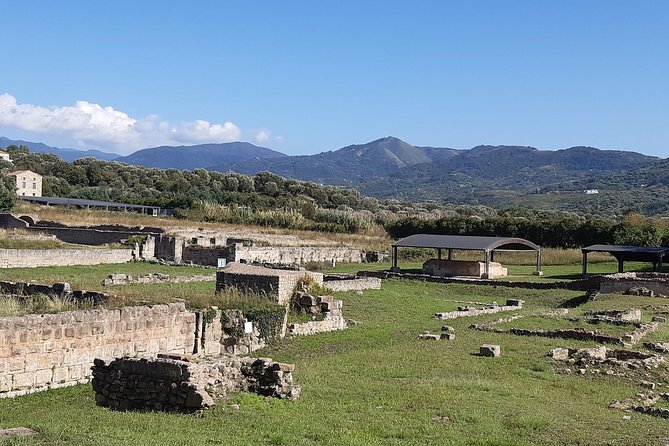
- Porta Rosa and the necropolis are the core stops, with multiple civilizations layered in one place
- Tower views give you a helpful sense of scale and geography while you listen to the guide
- Walkable paths, plus chances to step along parts of Roman-era roads
- Small group size (max 8) for a more personal guide experience
- Mobile ticket and private transport from Pisciotta make the day simpler than DIY
Torre Velia di Ascea: a quieter slice of Cilento
Cilento is one of those parts of Campania where the beaches get attention, the national parks are gorgeous, and the ruins are real, but the logistics can be tricky if you rely only on public transport. That is exactly why this kind of guided visit works so well. You get the ancient site time, without the stress of figuring out connections.
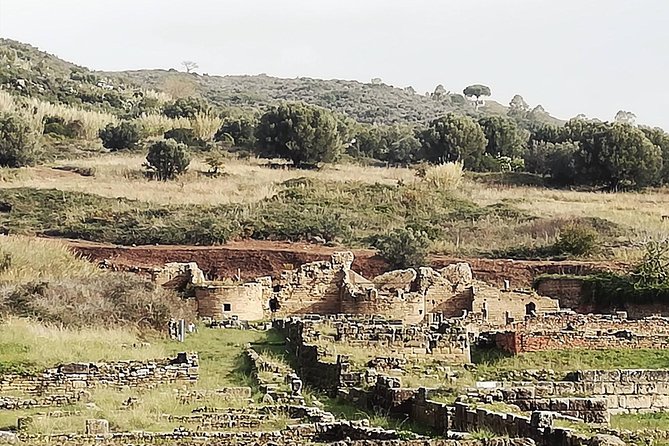
Torre Velia di Ascea sits in the Piana di Velia area, in the municipality of Ascea. The park is tied to a city with big intellectual connections too, including figures like Parmenides and Zeno, linked to the Eleatic philosophical school. And the site did not freeze in one era. It grew and changed across the Hellenistic period and deep into Roman times, which is why you see such a mix of architectural footprints.
You are not just looking at ruins behind a fence. You are walking through a place where multiple time periods overlap. That makes your visit feel less like a museum stop and more like a guided walk through a long-running city.
Other Campania bookings people compare this one against:
- From Amalfi: Li Galli Islands and Capri Full-Day Boat Tour
★ 4.6 · 182 reviews - Horse Riding on Mount Vesuvius
★ 5.0 · 85 reviews - Boat tour to discover the Costa del Mito of Capo Palinuro
★ 5.0 · 71 reviews
Getting there from Pisciotta without the day getting messy
The experience starts with private transportation from your hotel area in Pisciotta. The meeting point is listed as Via Borgo, 84066 Pisciotta SA, and the tour starts at 9:00 am. From there, you are set up for a half-day at the archaeological park.
For me, the biggest value here is not speed, it is control. Cilento can be slow to navigate by bus or train, and once you factor in walking from stops and waiting times, you lose the half-day you actually want to spend at the ruins. Private transport keeps the day tight.
Group size is also part of the magic. This is capped at 8 travelers, so you are more likely to get direct answers and slower pacing when questions come up. If you like asking why something is shaped a certain way, or what you are looking at in the moment, that small group limit helps.
At the park: Porta Rosa and the necropolis, where the timeline is visible
Your main time is at Torre Velia di Ascea, and the heart of it is the necropolis plus the Porta Rosa. These are the kinds of places where the stone is not decorative. It is functional. It tells you how people lived, buried loved ones, and moved through the city.
The necropolis is often where you first feel the depth of the site. Burial areas tend to show you what a community thought was important, and you can usually spot how different eras left different signatures on the same landscape. At Velia, the story includes Greek beginnings, then changes connected with Lucanian presence, and later Roman influence.
Porta Rosa is another anchor point. A gate is a practical structure, but it also becomes symbolic. As you move near it, you start to understand that ancient cities were not random collections of buildings. They were organized systems, and gates marked transitions, entry points, and control of movement.
If you like structure, you will appreciate how a good guide makes the site read like a map. You learn what to look at first, which walls matter, and how the different layers connect. Anna, for example, is the kind of guide who answers curiosity right away, instead of brushing it off.
The walk itself: accessible paths and Roman roads you can actually step on
One of the most practical wins at this park is that the routes are easy to access. You do not need to be a marathon hiker to enjoy the visit, and the walking is spread out enough to take in views without constant sprinting.
There is also something satisfying about walking where people once walked. More than once, visitors point out the chance to travel along parts of the older ways from the Roman era. That is a detail worth paying attention to because it changes the whole feel of the day. Instead of only viewing foundations, you are physically moving across the kinds of routes that made daily life work.
You will still want comfortable shoes. You will be on outdoor paths, and while “sturdy shoes” are not required for everyone, it is a smart idea. One person even noted they were happy wearing them, even though they were not strictly necessary.
And here is a helpful approach if you like learning while you move. Plan to use the app-style tool on your phone during the walk. It gives you extra context for different locations, so your eyes stay engaged instead of getting stuck in a loop of stone watching.
A different sort of day around the Bay of Naples:
- “Classic” Boat Trip to Capo Palinuro
★ 5.0 · 67 reviews - Baia Degli Infreschi
★ 4.0 · 28 reviews - Calabrian Alpacas Sunset Beach Experiences Pizzo VV AlpacSelfies
★ 5.0 · 28 reviews - Grotte Di Capo Palinuro
★ 4.5 · 25 reviews
The tower and the views: why the climb matters for understanding the site
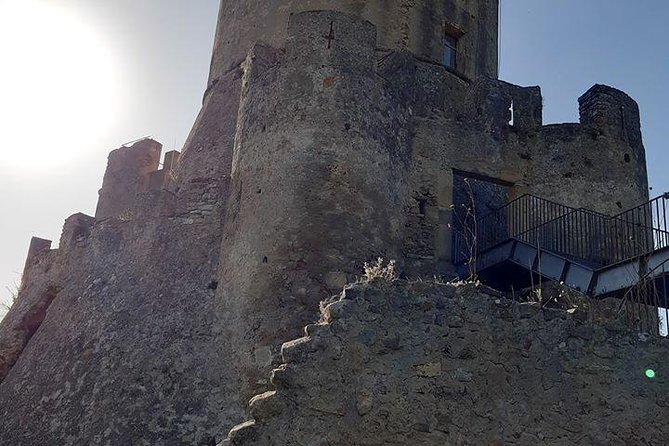
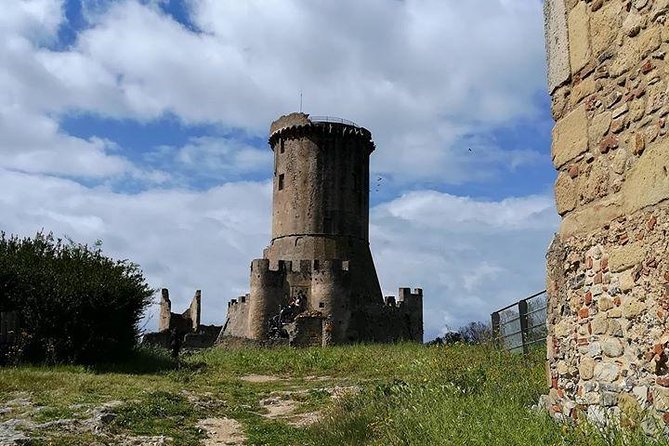
There is a tower component that is worth your attention. From up there, you get scale and geography fast. You see how the landscape sits around the ruins, and suddenly the layout clicks better when you go back down to the walls and streets.
Guides also tend to time these view moments well. You listen, you look, you connect. When you are standing high above the park, it is easier to imagine where people were coming from and how the city interacted with the coastline and nearby terrain.
Another bonus: archaeologists can be working while you visit. That means the site is not just staged for tourists. You may see ongoing work, and it adds a real-world feeling. It is a reminder that archaeology is an active job, not a finished story.
If you are the type who likes to ask questions, this is also a good moment. The guide can often explain what is being worked on, or what the visible structures suggest, based on what is happening on-site.
Timing and what 4 hours feels like in real life
The overall duration is listed at about 4 hours, but the feel of it depends on how quickly your group moves and how many questions you ask. The park portion is half-day, which means you should plan for a relaxed pace rather than a rushed checklist.
A day like this is best when you avoid piling on extra stops immediately after. Your brain needs a little settling time after an archaeology visit. The best payoff comes when you let the place sink in, even if it is just a calm lunch after you return.
Weather can also affect pacing. The experience notes that good weather is required, and if conditions are not right, they will reschedule or refund. So if you are trying to stack days, keep some flexibility.
Price and value: what $77.95 covers, and what you still pay for
The price is listed at $77.95 per person. Here is how to think about that number so you can judge value quickly.
You are paying for:
- private transportation from and back to your hotel area in Pisciotta
- a tour with an authorized guide
You are not paying for:
- entrance tickets
That means your total spend depends on the ticket cost you choose or what is required once you arrive. Still, for many people, the combination of transport plus guide time is where this tour shines. You are not trying to coordinate rides, translate complicated site details on your own, or hunt down the best route to get the most meaning from limited time.
Also, the small group cap (up to 8) is part of the pricing value. You are not being squeezed into a big bus crowd, and that usually improves both comfort and learning.
What to ask your guide (and what to watch for as you walk)
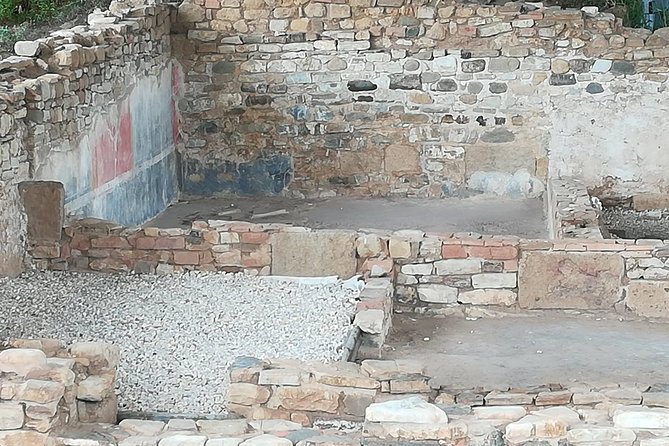
You will get the most from Torre Velia di Ascea if you treat it like a guided conversation. A good guide will point out what matters, but your job is to ask the practical questions.
I would focus on three themes:
1) How the Greek, Lucanian, and Roman layers show up in structures
2) What Porta Rosa and the necropolis communicate about city life
3) What the tower view helps you understand about layout and movement
Anna, in particular, comes up as a highlight because her style is described as professional, engaging, and attentive to questions. If you want clarity on what you are seeing, this is the kind of guide match that works.
On your side, watch for how different materials, edges, and openings suggest different construction phases. Even if you never become an archaeologist, you will start recognizing patterns. That makes the site feel easier on your brain.
A balanced expectation: this is not Paestum, and that is the point
It is natural to compare Velia to nearby well-known sites like Paestum. One review even called out how the entry ticket connection works for both Velia and Paestum. That hints at a bigger region story: Campania has many famous ruins, but they are not the same kind of experience.
Velia tends to feel more intimate and less crowded. The structures and walking routes are still impressive, but the pace invites you to slow down and read the site. If you love hearing how an ancient city worked, not just admiring major monuments, this place can feel more personal.
The flip side is that not every part of the park will feel perfectly managed. One comment complained about maintenance and signage. That does not ruin the visit for most people, but it is worth knowing if you are the type who expects everything to be spotless and perfectly labeled.
Who this tour suits best (and who might skip it)
You will likely enjoy this tour if you:
- want a half-day archaeology visit without DIY transportation stress
- like Greek and Roman sites, especially ones with visible layered history
- prefer small groups and a guide you can ask questions to
- enjoy walking on accessible paths and taking in views
You might not love it if you:
- expect entrance tickets to be included in the price
- need a highly polished experience with zero distractions, because some visitors have noted upkeep concerns
- can only travel when weather is guaranteed, since good weather is required
For families, older visitors, and history fans, the walking format is often manageable. And because the group is capped at 8, you generally get a smoother experience than you would at major, high-capacity attractions.
Should you book this Torre Velia tour from Pisciotta?
If you are staying around Pisciotta and you want real time at Torre Velia di Ascea without the hassle of getting there on your own, I think booking makes sense. The private transportation, authorized guide, small group size, and the chance to see necropolis areas and Porta Rosa in a guided walk add up to a strong value, even with entrance tickets separate.
I would book if you care about understanding what you are seeing, not just taking photos. I would also book if tower views and walking the older routes matter to you, because that is where the visit feels most memorable.
If you already have a flexible plan and you really enjoy self-guided days, you could explore on your own. But if you want your time to be efficient and your site reading to be easier, this is the kind of half-day experience that saves energy and pays off.
FAQ
How long is the Torre Velia di Ascea experience?
The tour runs for about 4 hours total, with the time at the archaeological park described as a half day.
What time does the tour start, and where do we meet?
The start time is 9:00 am, and the meeting point is Via Borgo, 84066 Pisciotta SA, Italy. The activity ends back at the same meeting point.
Are entrance tickets included in the price?
No. Entrance tickets are not included, so you should plan for that extra cost separately.
What is included in the tour price?
Your price includes transportation from and to your hotel area, plus a tour with an authorized guide.
Is the tour dependent on weather?
Yes. The experience requires good weather. If it is canceled due to poor weather, you will be offered a different date or a full refund.
What is the cancellation policy?
You can cancel for free up to 24 hours in advance of the experience start time for a full refund. If you cancel less than 24 hours before, the amount paid will not be refunded.
Recently reviewed around Campania
- Transfer From Naples area to Amalfi Coast area and vice versa★ 5.0 · 12 reviews
- Transfer From Naples area to Sorrento with 2hr stop in Pompeii★ 5.0 · 9 reviews
- Vesuvio Gran cono + Wine Tasting & Lunch + Transfer from Naples★ 4.5 · 5 reviews
- Exclusive tour in Sorrento and Pompeii with transport and tickets★ 5.0 · 3 reviews
- Transfer From Sorrento area to Naples area and vice versa★ 5.0 · 4 reviews
- Private full day tour Amalfi Coast★ 5.0 · 3 reviews
- Tour “Masseta” by scooter from Marina di Camerota★ 5.0 · 5 reviews
- Private driver from Naples airport to the center or vice versa★ 5.0 · 6 reviews