Reviewed · TICKETS
Napoli: Entrance Tickets to Sant’Anna dei Lombardi Complex
Sant’Anna dei Lombardi is interesting because it feels like Naples briefly stepped into Tuscany. I love the Giorgio Vasari sacristy frescoes and the chance to follow the story with an audioguide focused on key works. One thing to consider: the visit is not long, so you need to choose what you want to linger over instead of trying to see everything at once.
The complex, also known as Santa Maria di Monteoliveto, is centered on Renaissance art and devotional drama, including the Compianto scene. Expect the right pace if you can handle a compact route through multiple spaces. Also, plan around the fact that it is not suitable for people with mobility impairments, and flash photography is not allowed.
Key points to know before you go
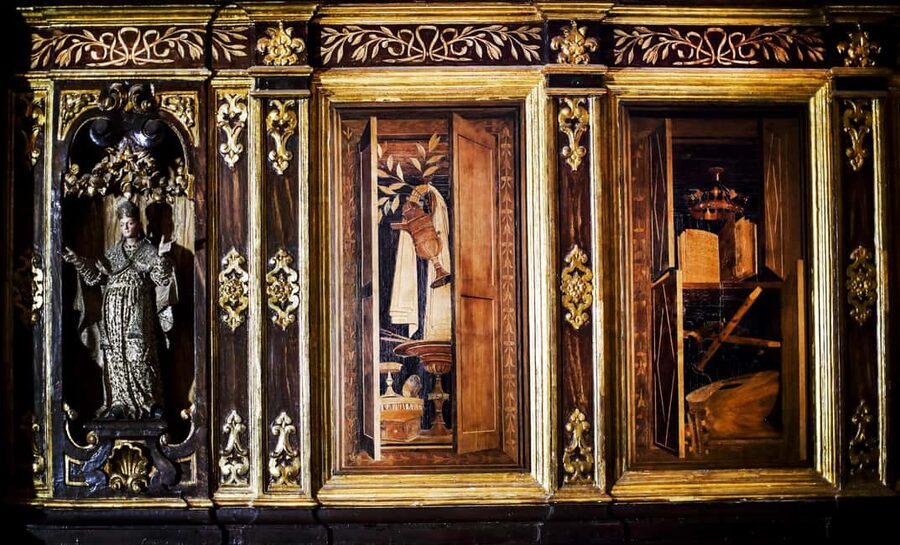
- Vasari’s sacristy vault is a top target, with an app guide built around it
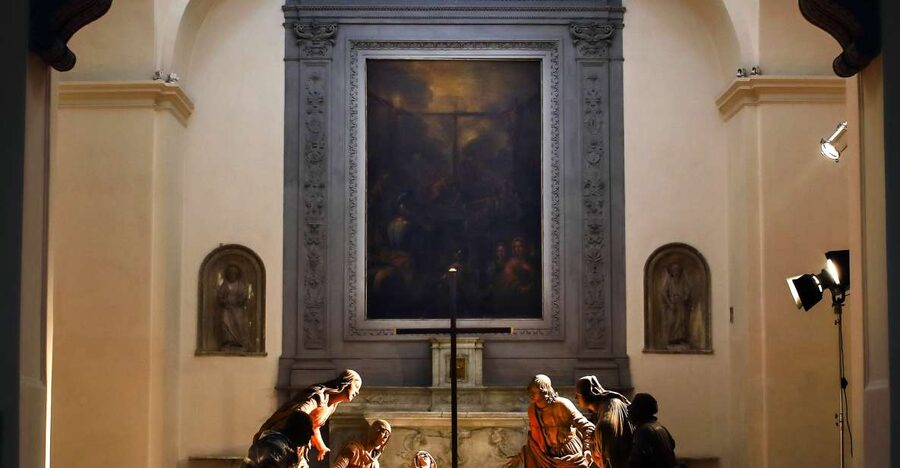
- Mazzoni’s Compianto sul Cristo Morto comes with an audioguide track so you understand what you’re seeing
- Abbots’ Cript adds a quieter, more atmospheric side to the visit
- Michelangelo’s puttino is a small but meaningful surprise
- A 30-minute format means you can fit it into a tight Naples day
- Your ticket can reduce cost at several major Naples sites
Sant’Anna dei Lombardi, a Tuscan Renaissance pocket in Naples
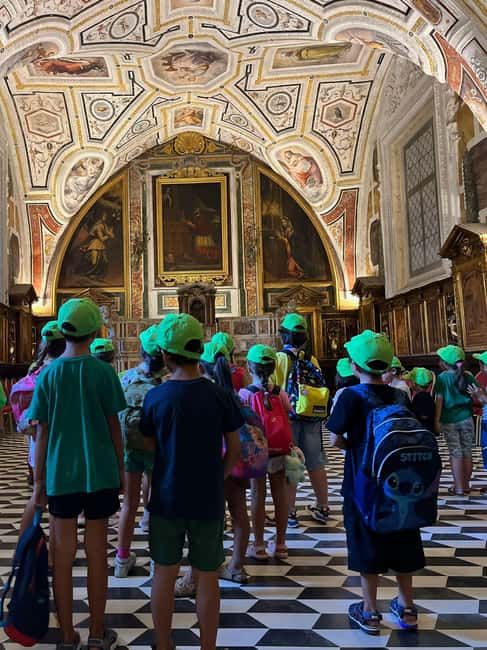
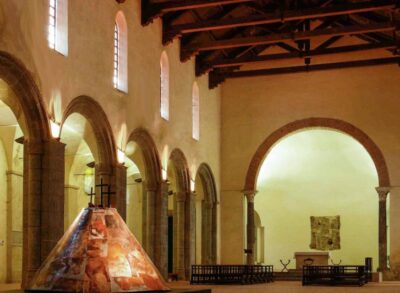
Sant’Anna dei Lombardi, or Santa Maria di Monteoliveto, gives you a rare kind of Naples contrast. Instead of only street scenes and everyday life, you get a carefully staged slice of Renaissance thinking, where artists from outside the region worked side by side with local talent.
The story starts early. The monastery was founded in 1411, and it became especially meaningful to the Aragonese dynasty. Alfonso II of Aragon visited Sant’Anna daily, so this was not just decorative. It had real importance in court life and religious routine.
What I like most is how the complex ties together place and people. The church nave has five chapels on each side-aisle, and that layout helps foreign artists connect with Neapolitan ones over time. When you walk through, you’re not just looking at art on walls. You’re seeing how relationships among artists shaped what Naples produced.
A few more Naples trips worth comparing
- Naples: Catacombs of San Gennaro Entry Ticket & Guided Tour
★ 4.6 · 7,941 reviews - Naples: Downtown Tour with Veiled Christ & St Clare Tickets
★ 4.9 · 6,462 reviews - Naples: Hop-on Hop-off Bus Tour 24-Hour Ticket
★ 4.3 · 5,157 reviews
Price and time: what $7 buys you in 30 minutes
At about $7 per person, the ticket is good value for a short, focused art visit. You’re paying for controlled access to a specific monumental complex, plus an app audioguide that points you at the works that matter most.
The duration is about 30 minutes, depending on when you enter. That matters because Sant’Anna is not built for a slow, half-day wandering style. You can still enjoy it, but you need a mindset shift. Think “targeted visit” instead of “museum marathon.”
Also check what’s not included. Food and drinks are not part of the ticket, and earphones are listed as not included. That’s a small detail, but it can matter. If you want to hear the audio tracks clearly, bring your own earphones or earbuds.
The ticket also includes discounts for other Naples attractions, including the Catacombe di San Gennaro and the Pio Monte della Misericordia (Caravaggio). If you plan to do more than one site that day or next, this can quietly stretch your sightseeing budget.
Stepping into the nave and chapel world
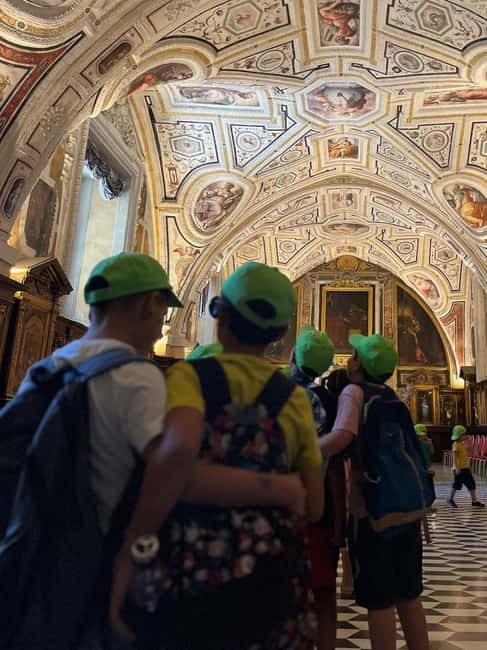
Once you enter the monumental complex, your main “map” is the church space itself. The nave is structured with five chapels on each side-aisle, and that rhythm helps you scan the interior without feeling lost.
This part of the visit is where you get a sense of the complex’s identity as a meeting point between styles and artists. You’ll see references to fruitful relationships between foreign artists and Neapolitan artists from the mid-1500s. It is not just names you can read later. It shows up in the variety of approaches and details you notice as you move.
You also have a practical advantage here: chapels give you natural “pause points.” If you find yourself rushing, pick one or two chapels to look at carefully rather than treating everything like a checklist. The goal is to make your eyes adjust to the art.
A gentle caution: because the visit is time-limited, you may feel like you’re moving faster than you want. If you know you’re the type who likes to stand and stare, set expectations now and choose the major attractions first, then enjoy the rest around them.
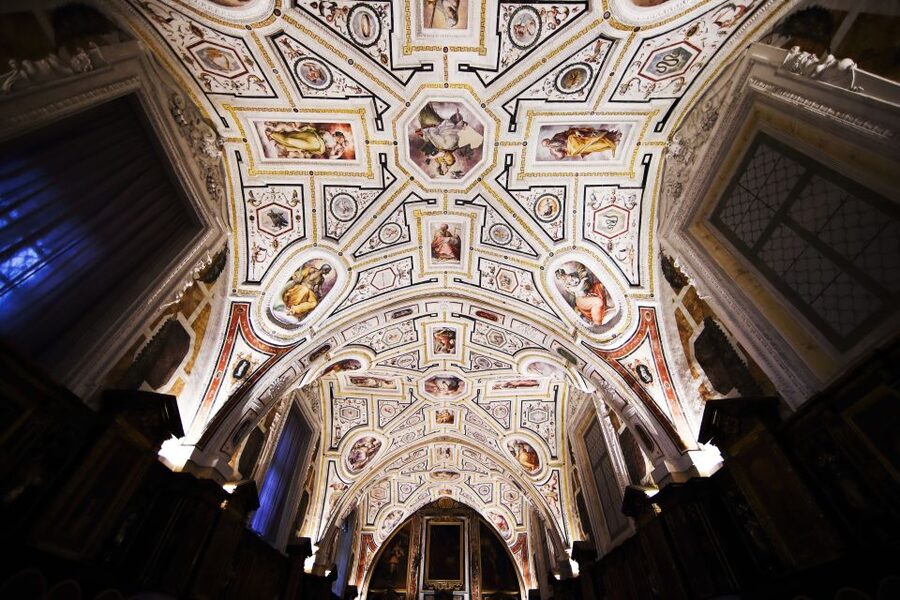
Giorgio Vasari’s sacristy frescoes, guided by your app
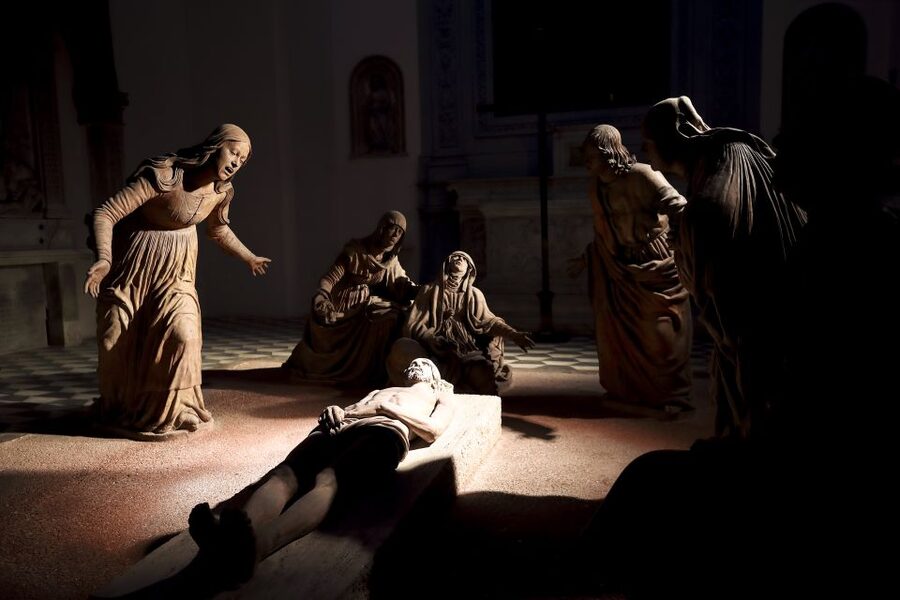
If there’s one section you should treat like your top priority, it’s the sacristy frescoed by Giorgio Vasari. The ticket includes an app audioguide specifically for the Sacristy of Giorgio Vasari, which tells me the site is ready to help you understand what you’re seeing without guesswork.
Vasari’s name matters here. He’s connected to the Tuscan Renaissance idea of design, movement, and visual storytelling. In a church space like this, that shows up in how your eye travels across the vault. Even if you’re not a Renaissance specialist, you’ll get more out of the art by having the commentary lined up right where you are.
How to enjoy it: slow down at the point the audio guide highlights. If you just wander past, the frescoes can feel like “pretty ceiling art.” With the guide, they become a scene you can follow.
One more practical note. Flash photography is not allowed. I’d still suggest turning off your flash even if you’re tempted. The lighting inside religious spaces can be tricky, and you’ll avoid irritating others by keeping things quiet and dim.
A different sort of day around the Bay of Naples:
- From Naples: Pompeii Ruins & Mount Vesuvius Day Tour
★ 4.3 · 11,459 reviews - From Naples: Sorrento, Positano and Amalfi Full-Day Tour
★ 4.6 · 10,988 reviews - From Naples: Sorrento, Positano & Amalfi Coast – Small Group Tour
★ 5.0 · 8,643 reviews - Naples: Pizza-Making Workshop with Drink and Appetizer
★ 4.9 · 5,411 reviews
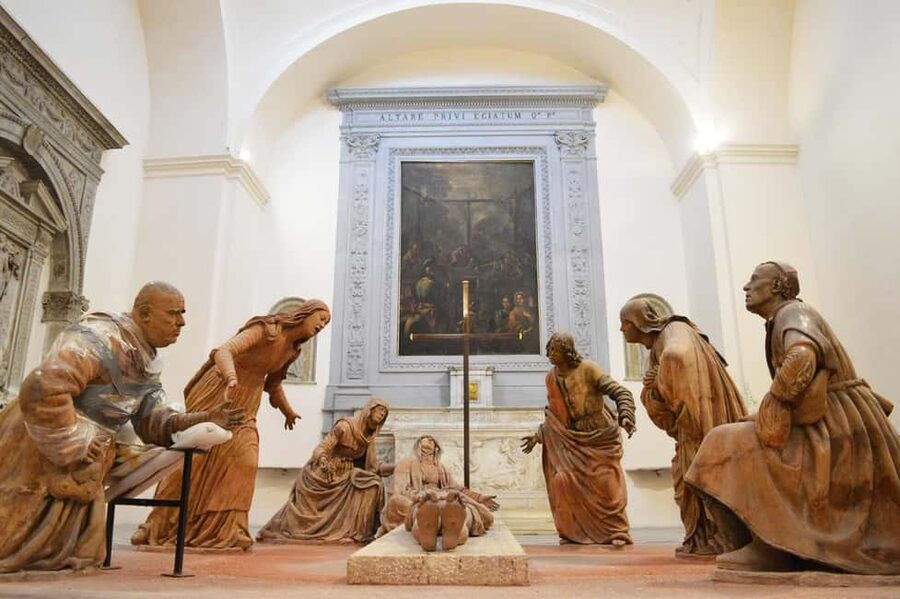
Guido Mazzoni’s Compianto sul Cristo Morto, the emotional core
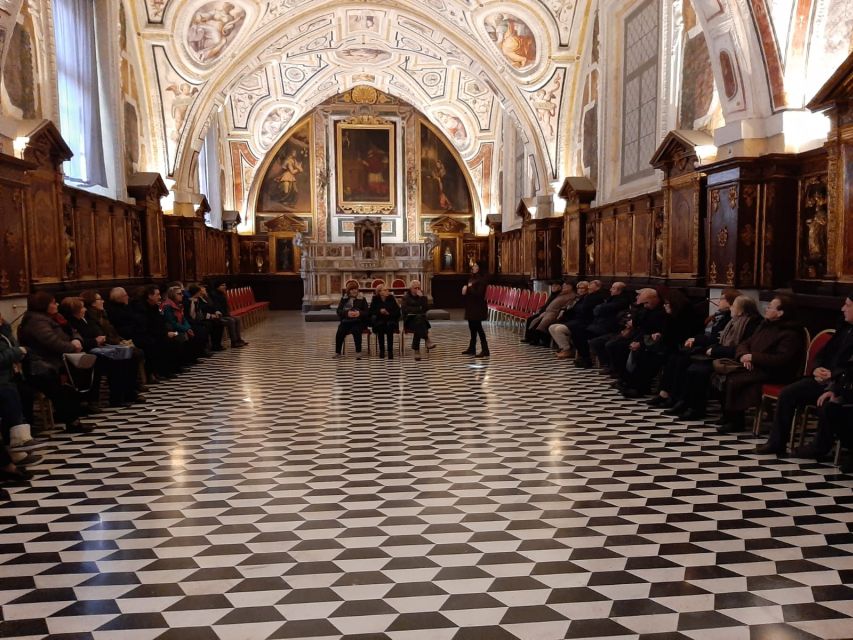
The complex’s dramatic centerpiece is the Compianto sul Cristo Morto, often described as the lamentation over the dead Christ. The app audioguide includes a dedicated track for the Lamentation Over the Dead Christe of Guido Mazzoni, so you can understand the scene as you look.
What makes this work worth your attention is the way it handles emotion. The detail is not just technical. The accuracy of details helps express character energy and the emotional force in their movements. In plain terms, the figures look like they are in motion, even though they’re sculpted.
When you stand in front of a scene like this, it’s easy to do the “tourist glance,” then move on. Try a different rhythm. Look first for body language. Then look for faces and gestures. Finally, connect them. The guide helps you do that in the order that makes sense.
This is also where the complex earns its reputation for a visit that feels more alive than you expect. You’re not only seeing art, you’re watching a constructed emotional narrative.
Abbots’ Cript and the Michelangelo puttino moment
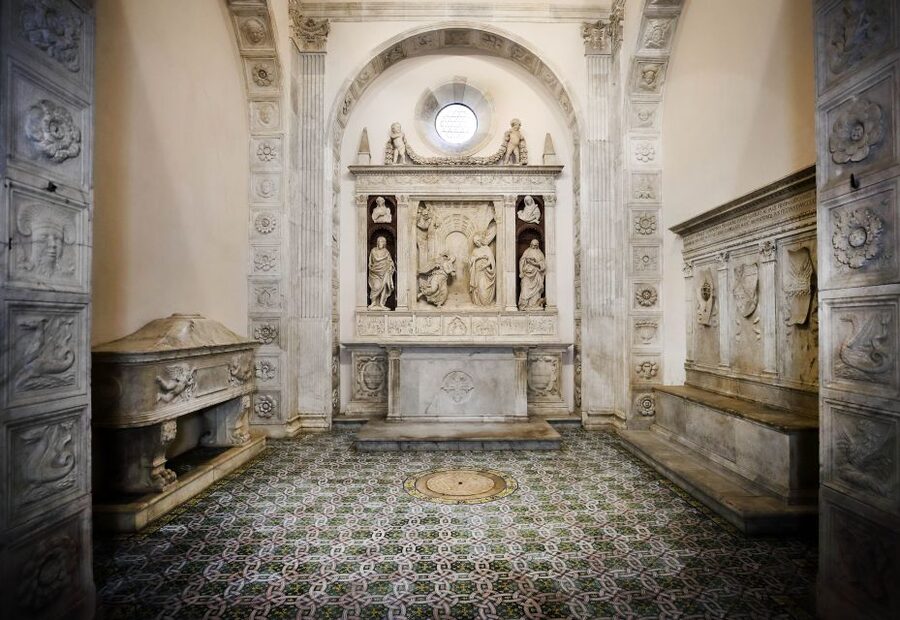
After the more obvious highlights, Sant’Anna offers a quieter layer: the Abbots’ Cript. Even if you’re not a fan of crypt spaces, it changes the mood of your visit. It’s the kind of place where religious architecture does its job, by slowing your pace without asking permission.
You also get a notable surprise tied to youth and craft: a young Michelangelo sculptured a puttino. It’s the sort of detail that can feel small in a building full of major works, but that’s exactly why it’s special. When you spot it, it becomes a “wait, really?” moment, the kind you remember later.
I’d treat this as your reset. After absorbing the Compianto’s intensity and the sacristy’s visual energy, the crypt and the puttino help you come back to the human scale. You’ll likely notice more in these calmer spaces because you’re not competing with your own adrenaline.
How to use the app audioguide without losing your place
The audioguide is included, and it covers at least two major areas: the Sacristy of Giorgio Vasari and the lamentation scene of Guido Mazzoni. That structure is actually helpful for a 30-minute experience. You’re not expected to master everything. You’re guided to the main beats.
The app offers multiple languages: Italian, English, French, German, and Spanish. Pick the language you’re comfortable with before you start, so you’re not scrambling in the middle.
Also remember earphones are not listed as included. If you plan to rely on audio, pack small earbuds. You’ll hear the narration more clearly, and you won’t feel self-conscious in a quiet church space.
Finally, flash photography is prohibited. This is one of those rules that makes the experience more pleasant. Your photos will still come out fine in lower light using your camera settings, but keep it respectful inside the complex.
Discounts for other Naples icons, and how to think about them
Your ticket includes a discount for several major Naples attractions. That’s a strong value add if your day includes more than one “heavy hitter.”
The included discount list includes:
- Catacombe di San Gennaro
- Pio Monte della Misericordia (Caravaggio)
- Archeological Museum (MANN)
- Neapolis Sotterrata: Complesso Monumentale di San Lorenzo Maggiore
- Museo Diocesano di Donnaregina
Here’s the smart way to use these discounts. Only stack them if your itinerary already fits. If you’re doing those sites anyway, Sant’Anna becomes a bargain that also primes your eye for Renaissance and religious art. If you’re only planning one or two sites, the discount part might not matter as much. Still, the audioguide and access make the ticket worthwhile even without the extras.
Who should book this Sant’Anna dei Lombardi visit
This experience fits best if you like art that has a story and you enjoy guided interpretation. The app audioguide is not just background noise. It is built around the most important works, like Vasari’s sacristy frescoes and Mazzoni’s Compianto.
You’ll also like it if you want to keep your schedule tight. A 30-minute format works well between other Naples stops, especially when the weather is changeable.
Who might want to skip it. It is not suitable for people with mobility impairments, so choose an alternative if you need step-free access. Also, if you hate audio narration and prefer silent looking, you might feel the time is too short to make use of the guide.
Should you book this ticket?
I think you should book Sant’Anna dei Lombardi if you want a high-impact, low-time investment into Renaissance art in Naples. For around $7, you get entry to a monumental complex, plus an app audioguide that specifically targets Vasari and Guido Mazzoni, two names that can otherwise feel like random labels.
It’s also a good choice when you care about details. The Compianto’s emotional movement, Vasari’s frescoed vault, the Abbots’ Cript mood, and even Michelangelo’s puttino all reward people who slow down just a bit.
I would only hesitate if you need long, unstructured time on site or if mobility is an issue. Otherwise, this is one of those visits that makes Naples feel bigger than you expected, without eating your whole day.
FAQ
How much is the entrance ticket to Sant’Anna dei Lombardi?
The price listed is $7 per person.
How long does the visit take?
The duration is about 30 minutes. Starting times vary, so you should check availability.
What is included with the ticket?
You get an entry ticket to the Sant’Anna dei Lombardi Monumental Complex and an app audioguide for the Sacristy of Giorgio Vasari and the Lamentation Over The Dead Christe of Guido Mazzoni.
What does the audioguide cover?
The app audioguide covers the Sacristy of Giorgio Vasari and the Lamentation Over the Dead Christe of Guido Mazzoni.
What languages are available on the audioguide app?
The audio guide is available in Italian, English, French, German, and Spanish.
Are earphones included?
No. Earphones are listed as not included.
Is flash photography allowed?
No. Flash photography is not allowed.
Is Sant’Anna dei Lombardi suitable for people with mobility impairments?
No. It is not suitable for people with mobility impairments.
Recently reviewed around Naples
- From Naples: Pompeii & Mount Vesuvius Full-Day Private Tour★ 4.5 · 4 reviews
- Pompeii with Wine Tasting Private Tour★ 4.7 · 6 reviews
- Pompeii, Amalfi, Ravello Day Tour with Private Transfer★ 5.0 · 3 reviews
- Ruins of Pompeii & the Amalfi Coast: Full-Day Private Tour★ 5.0 · 7 reviews
- Pompeii and Herculaneum: Private Tour from Naples★ 4.6 · 12 reviews
- From Naples: Pompeii Private Tour with Transfer and Guide★ 4.7 · 23 reviews
- Pompei: Private tour of Pompei and Vesuvius from Sorrento★ 5.0 · 8 reviews
- Pizza lesson★ 5.0 · 3 reviews
Tickets, compared.
Naples Underground Entry Ticket and Guided Tour
Read our review →
Entry Ticket and Guided Tour with an Archaeologist
Read our review →
Catacombs of San Gennaro Entry Ticket & Guided Tour
Read our review →
Downtown Tour with Veiled Christ & St Clare Tickets
Read our review →

Mount Vesuvius: Skip-the-Line Ticket and Smart Digital Guide
Read our review →